
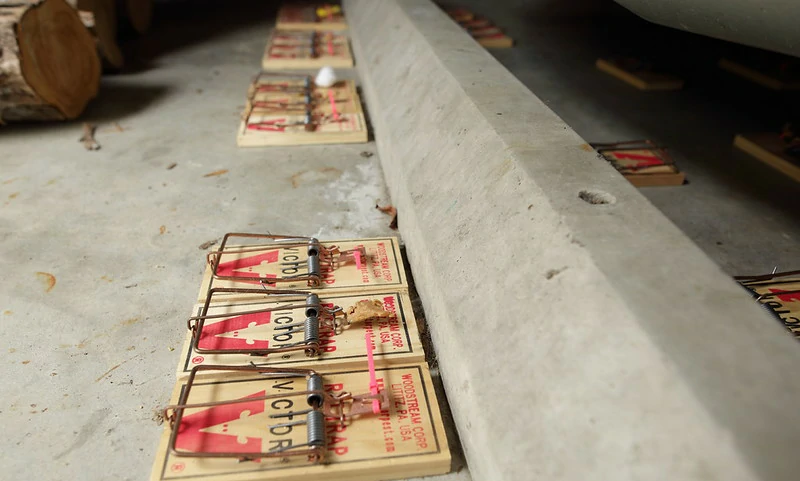
Finding mice in your home is stressful, and most people just want them gone fast.
There are a handful of common ways to do that: snap traps, glue traps (also called glue boards or sticky traps), electronic traps, live catch traps, and poison.
But once you actually look at what each method does to a mouse, a different question comes up. Are mouse traps, as a whole, a form of animal abuse?
Not all mouse traps are equal, and lumping them together misses the real picture. A well designed snap trap or electronic trap usually kills in seconds. Glue traps and poison, on the other hand, can leave a mouse suffering for hours or even days, and welfare researchers consider those two methods genuinely cruel.
So the honest answer depends entirely on which trap you’re talking about. Some methods are fast and about as humane as killing an animal can be.
Others are slow, and that slowness is exactly what animal welfare groups object to.
Not Every Mouse Trap Kills the Same Way
The word “mouse trap” covers a lot of ground, and that’s part of why this question doesn’t have one simple answer.
A snap trap kills with a fast blow to the head or neck. An electronic trap kills with a jolt of electricity.
A glue trap doesn’t kill at all on its own, it just holds the mouse in place. Poison works even slower, taking days.
Because of that range, animal welfare researchers who study this don’t treat “mouse traps” as one category.
A study published in the journal Animal Welfare looked at rat and mouse control methods used in the UK and the US. It ranked them by speed and how much distress they caused.
That study found some methods, including well designed snap traps and electric traps, usually kill fast and with little distress.
Poison, on the other hand, was flagged as one of the least humane options, since it can take days to actually work.
Snap Traps Are Actually the Method Most Welfare Groups Recommend
This surprises people who assume snap traps are the cruel old fashioned option. In reality, a properly designed and correctly set snap trap is one of the fastest, least painful ways to kill a mouse.
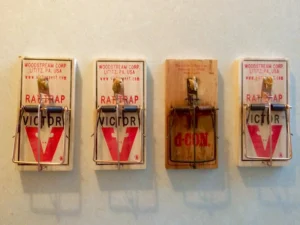
The RSPCA in Australia has directly studied and compared rodent control methods. Their guidance describes a well designed snap trap as a more humane and faster method than live trapping.
They recommend it over both glue traps and poison for this reason.
A good snap trap is built to deliver a strong blow to the back of the head or the upper neck. This causes the mouse to lose consciousness within about a minute, often within seconds.
Once the animal is unconscious, it doesn’t feel anything else.
The catch is that this only holds true if the trap is well made and set correctly. A poorly designed trap, or one with the bait placed wrong, can catch a mouse without killing it cleanly.
That leads to injury and prolonged suffering instead of a fast death.
Checking the trap regularly, at least once a day, and replacing any trap that fails to kill cleanly, makes a real difference here.
Electronic Traps Work Fast Too, But They Cost More
Electronic traps are a newer option, and they work on a similar idea to snap traps. It’s a fast, decisive kill rather than a slow one.
A mouse enters a small chamber and steps on a metal plate. The trap then delivers a high voltage shock, usually somewhere between 6,000 and 9,000 volts.
This knocks the animal out almost instantly and stops its heart within seconds.
Because the shock lasts long enough to make sure the kill is complete, there’s very little risk of an animal surviving injured. That’s actually one of the bigger problems with snap traps that misfire.
The tradeoff here is mostly practical rather than ethical. Electronic traps cost quite a bit more than a basic snap trap, and they need batteries or a power source.
They’re also usually built for one mouse at a time before you have to empty them out.
Glue Traps Are Where Most of the Cruelty Concerns Actually Come From
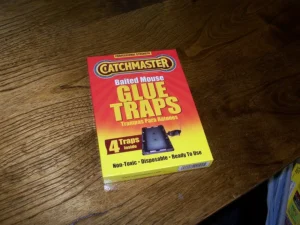
Glue traps, glue boards, and sticky traps are all the same thing. It’s a flat board or tray coated in a very strong adhesive.
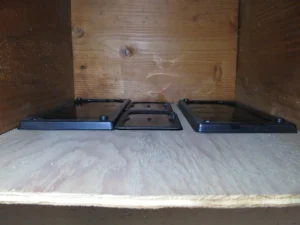
Unlike a snap trap or an electronic trap, a glue trap doesn’t kill on its own at all. Once a mouse steps onto one, its feet get stuck first.
It panics and struggles to break free, which only pulls more of its body into the glue.
Since nothing about the trap actually kills the mouse, it’s left alive and stuck. This can go on for hours, sometimes days, until it eventually dies from exhaustion, dehydration, or starvation.
The RSPCA has reviewed this method directly and describes the suffering involved as extreme. They note it can go on for hours before the animal finally dies.
This is really the core reason glue traps get singled out more than other trap types in animal welfare debates.
Glue traps also can’t tell the difference between a mouse and anything else that happens to walk across them.
Wildlife rehabilitators across the US have reported treating birds, snakes, chipmunks, and even house cats after they got stuck on a trap meant for rodents.
Poison Is Actually the Slowest and Most Painful Method of All
Poison, or rodenticide, isn’t usually thought of as a “trap,” but it belongs in this conversation. It’s one of the most common ways people deal with mice.
Most rat and mouse poisons work by stopping the blood from clotting properly. This causes slow internal bleeding that builds up over several days.
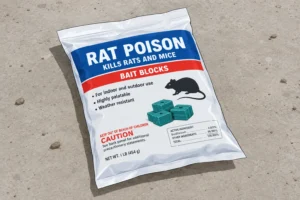
Depending on the specific poison, death can take anywhere from three to ten days after the mouse eats a lethal dose. During that time, the animal typically becomes weak, thirsty, and disoriented as the internal bleeding gets worse.
A review published in the journal Animal Welfare specifically flagged anticoagulant poisons, the most widely used type, as one of the least humane methods available.
The reasoning is pretty simple: it takes a long time, and it causes real distress along the way.
There’s also a secondary problem that doesn’t affect other trap types. A poisoned mouse that gets caught and eaten by an owl, hawk, or other predator passes the poison along too.
That means the predator suffers the same slow, internal bleeding death that the mouse did.
Live Catch Traps Sound Humane, But They Come With Their Own Problems
Live catch traps let you capture a mouse without killing it, so you can release it somewhere else afterward. On the surface, this feels like the obvious humane choice.
The reality is more complicated though. Research on relocated wild animals has found that survival rates after release are often very low.
The animal usually ends up in unfamiliar territory without food sources or shelter it knows how to find.
There’s also a welfare cost to the waiting itself. A live trap has to be checked often, ideally at least once a day.
A trapped mouse left too long can suffer from stress, dehydration, or extreme heat or cold, depending on where the trap sits.
If you do use a live trap, releasing the mouse quickly matters. Doing it reasonably close to where you caught it (though well away from your home) gives it a better shot at survival than driving it somewhere completely unfamiliar.
How Each Method Actually Compares
Here’s how the five common methods stack up against each other, based on how animal welfare researchers typically rank them.
| Method | Typical Time to Death | Welfare Ranking |
|---|---|---|
| Snap trap (well designed) | Seconds to about 1 minute | Generally considered humane |
| Electronic trap | A few seconds | Generally considered humane |
| Live catch trap | Not lethal directly, but relocation often fails | Mixed, depends on handling |
| Glue trap / glue board / sticky trap | Hours to several days | Considered inhumane by most welfare groups |
| Poison (anticoagulant) | 3 to 10 days | Considered one of the least humane options |
As you can see, the two methods that draw the most criticism, glue traps and poison, are also the two that take the longest to actually kill the animal.
Are Any Mouse Traps Actually Illegal?
In most of the US and Canada, none of these methods are illegal to buy or use in your own home. This includes glue traps.
That said, the legal picture is shifting, mostly around glue traps specifically. A handful of California cities, including West Hollywood, Ojai, and Culver City, have passed local bans on the use and sale of glue traps.
New York, New Hampshire, and California have all seen bills introduced at the state level.
In 2024, Congressman Ted Lieu introduced the Glue Trap Prohibition Act, aiming for a nationwide ban. None of those bills have passed as of this writing.
So for now, using a glue trap in your own home still isn’t a criminal offense almost anywhere in North America.
Outside North America, the picture looks different. Glue traps are already banned or heavily restricted in England, Scotland, Wales, Ireland, New Zealand, Iceland, and parts of Australia.
Poison and snap traps haven’t faced anywhere near the same level of legislative pushback. This is largely because the welfare concerns around them are much smaller when they’re used correctly.
Why the CDC Specifically Warns Against Glue Traps and Live Traps
The CDC’s concern here isn’t really about animal welfare at all, it’s about your own health.
A mouse that’s panicking and stuck on a glue board, or struggling inside a live trap, will usually urinate and defecate while it’s stressed.
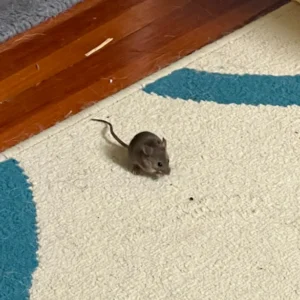
If that mouse happens to be carrying a virus like hantavirus, that waste can carry the virus too.
Hantavirus spreads to humans mainly by breathing in dust or particles from rodent droppings or urine. It can cause a serious, sometimes fatal, lung illness.
A trapped, stressed mouse tends to produce more waste right around the trap than one that was killed instantly. Because of this, glue traps and live traps can actually raise your exposure risk compared to faster methods.
For this reason, the CDC specifically recommends snap traps over glue traps or live traps for home use. They also suggest sealing up the entry points mice are using to get in.
Do Any of These Methods Actually Solve Your Mouse Problem?
Even setting welfare aside, it’s worth knowing that no trap, however it kills, fixes the reason mice are getting into your home in the first place.
Mice reproduce fast. A female house mouse can have a new litter roughly every three weeks under good conditions, with five to six pups per litter.
Catching or killing a few mice barely puts a dent in numbers like that. It also opens up more food and space for the mice left behind.
Pest control researchers have pointed out that trapping alone, without also blocking entry points and removing food sources, tends to create a cycle. New mice just keep moving in to replace the ones you caught.
Sealing entry points is genuinely the most effective long term fix. Mice can squeeze through gaps as small as a quarter inch, roughly the width of a pencil.
Even tiny cracks around pipes, vents, or door frames are worth checking and sealing with steel wool or caulk. Steel wool works especially well since mice can’t chew through it the way they can chew through plastic or foam.
Removing food sources helps a lot too. Keep food in sealed containers, and clean up crumbs or spills fairly quickly, since an easy meal is what draws mice in to begin with.
If You’re Going to Use a Trap, Here’s How to Do It Responsibly
Whichever method you choose, a few habits make a real difference in how much an animal actually suffers.
Check any trap often, ideally at least once a day, and more frequently for a live trap or glue trap specifically. The sooner you find a trapped mouse, the sooner its suffering can actually end.
If you’re using a snap trap, place it exactly as the instructions describe. Usually that means against a wall, with the trigger end facing outward.
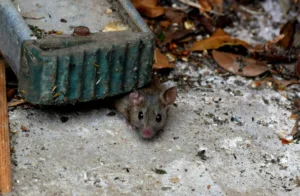
A poorly placed snap trap is far more likely to injure rather than kill cleanly.
If you already have a glue trap and find a live mouse stuck on it, the most humane thing you can do is end its suffering quickly rather than let it continue.
Many veterinarians recommend a fast method like carbon dioxide exposure or a quick, heavy blow to the head. Leaving the animal to die slowly on the glue only adds more time to its suffering.
Placing any trap only where pets and kids can’t reach it also cuts down on the risk of catching the wrong animal by accident.
Are Mouse Traps Age Restricted to Buy?
This question comes up a lot alongside the abuse question, so it’s worth a quick answer here too.
No, mouse traps of any kind, including snap traps, glue traps, glue boards, sticky traps, and electronic traps, aren’t age restricted in the US or Canada.
Anyone can buy them at a hardware store, grocery store, or online, regardless of age.
This is different from something like rodenticide in bulk quantities, which can sometimes require an ID or come with purchase limits in certain states due to poison control regulations.
Even then, small retail packs of mouse and rat poison are sold openly on store shelves without any age check at checkout.
Conclusion
Are mouse traps animal abuse? It really depends on which trap you mean. A well designed snap trap or electronic trap kills in seconds and is genuinely considered humane by most welfare researchers and organizations like the RSPCA.
Glue traps and poison are a different story. Both can leave a mouse suffering for hours or days before it actually dies.
That prolonged suffering is exactly why welfare groups, vets, and lawmakers keep pushing back against them specifically.
Legally, none of these methods, including glue traps, are classified as animal abuse in most of the US and Canada.
However, the CDC also warns against glue traps and live traps for a separate reason, since a stressed, trapped mouse raises your own risk of exposure to diseases like hantavirus.
If you’re dealing with a mouse problem and want the most humane option available, a well designed snap trap is the method most welfare groups actually recommend.
Either way, sealing up entry points and removing food sources will do more to solve your mouse problem long term than any trap, however it kills, ever will.

Hi, my name is Ezra Mushala, i have been interested animals all my life. I am the main author and editor here at snakeinformer.com.