
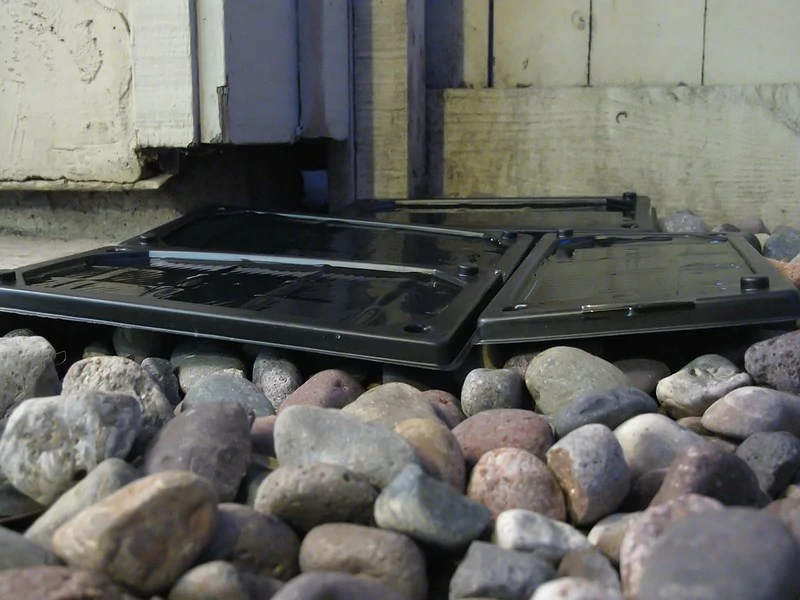
Glue traps are everywhere, from sticky cards pushed into houseplants to flat boards under kitchen sinks and long strips hanging in garages.
They’re cheap, they don’t use poison, and they catch a lot of bugs, but if you’ve ever watched a fly struggle on one, you might wonder: are glue traps cruel to insects?
Yes, glue traps can be cruel to insects. Most bugs stay stuck for hours and die slowly from exhaustion, thirst, or hunger, and growing research suggests that flies, cockroaches, and bees may feel something like pain. The science isn’t settled, though.
That answer comes with some gray areas, because pest controllers also use glue traps to find out what’s living in a building. These traps also catch a lot more than bugs, which is a big part of the story.
Below, you’ll find the facts, so you can decide what feels right for your home.
How Do Glue Traps Kill Insects?
A glue trap is a board, card, or strip covered in a thick, sticky layer, and a bug’s feet stick the moment it steps on.
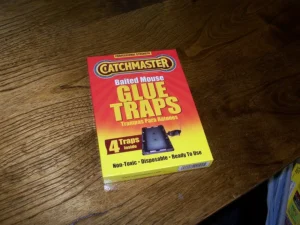
Then the struggle starts, and if you watch closely, you’ll see that the more a bug pulls and kicks, the more of its body ends up in the glue.
Legs, wings, and antennae all get stuck. Soon the bug can’t move at all.
Insects don’t breathe through lungs like you do. They breathe through tiny holes along the sides of their bodies called spiracles (basically small air openings), and glue can block them.
When that happens, a small insect like a fruit fly or fungus gnat can suffocate fairly fast. Bigger bugs usually die a different way, since a cockroach can wear itself out, lose water, and run out of energy over a day or longer.
How fast it happens depends on the bug. Some die within hours, while tougher ones can still be wiggling when you check the trap a day later.
That’s the heart of the problem. Glue traps don’t kill quickly, and that slow death is the main reason so many people call them cruel.
Can Insects Really Feel Pain?
This is the big question, and the honest answer is that nobody knows for sure. Still, the old idea that bugs feel nothing is losing ground fast.
First, a quick term. Nociception (say it like “no-sih-SEP-shun”) is your body’s alarm system for harmful things, like heat, sharp objects, or hard pressure, and almost every animal has it, including insects.
If you’ve ever seen a roach pull away from a hot surface, that’s a simple example. However, an alarm isn’t the same as pain, because pain is the feeling that goes with the alarm, and that part is much harder to measure.
In 2022, a team led by researchers at Queen Mary University of London went through more than 300 studies. They checked insects against eight signs that point to pain.
Adult flies, mosquitoes, and cockroaches did best, matching six of the eight signs, which the team called strong evidence. Adult bees, ants, moths, butterflies, and grasshoppers matched three or four signs, which they called decent evidence.
Beetles showed less so far, mostly because they’ve been studied a lot less. The team didn’t find a single insect that clearly failed a sign.
Bees stood out too, because their reactions go well beyond simple reflexes.
Why Experts Still Disagree About Whether Bugs Feel Pain
Insect brains are tiny. A fruit fly has roughly 140,000 nerve cells, a honeybee has about a million, and a person has around 86 billion.
Some biologists say that’s too little brainpower to feel pain the way you and I do. Others say size isn’t the point, because a small brain can still do some pretty clever things.
There’s also the problem of asking. A fly can’t tell you how it feels, so researchers have to guess from how it behaves, and behavior can fool you.
A bug pulling away from a hot surface might be feeling something, or it might just be running a simple program. Nobody has found a clean way to tell the two apart yet.
Still, the authors of that review pointed out that the evidence for insects is in the same range as the evidence for octopuses. The UK already protects octopuses (along with crabs and lobsters) under its animal welfare law.
None of this proves that a fly suffers on a glue trap. It does mean the question is real, and it’s why many people lean toward caution.
The Bugs That Usually End Up on Glue Traps
Pretty much anything that crawls or flies low can get stuck, and if you check a trap, you’ll usually find cockroaches first. German cockroaches (the small, light brown ones that love kitchens) and American cockroaches (the big, reddish-brown ones) both walk right onto boards.

Spiders end up on them too, since brown recluses and wolf spiders often get caught on boards you leave along walls. Pantry pests like red flour beetles and cigarette beetles get stuck as well, along with silverfish, earwigs, house crickets, and even scorpions in places like Arizona and Texas.
Flying bugs get caught on a different kind of trap. Yellow sticky cards, the small ones you push into a plant pot, catch fungus gnats and whiteflies, while hanging flypaper strips catch house flies.
Some of these bugs are real health worries. German cockroaches, for example, can spread germs around a kitchen and trigger asthma (especially if you have kids in the house).
Others, like a lone house spider, are mostly harmless. That matters, because a trap can’t tell a problem bug from one that just wandered in.
Do All Glue Traps Work the Same Way?
They all use the same basic idea, but the designs differ quite a bit. Knowing which is which can help you pick the right one, or skip them altogether.
Glue boards are flat trays with a thick layer of strong glue, and people use them mostly for roaches, spiders, and mice. Sticky cards are thin cardboard sheets with a lighter layer, like the little yellow squares you see in plant pots and greenhouses.
Enclosed traps are folded boards shaped like a tent or tunnel, with the glue sitting inside, so only bugs that crawl in get caught. Flypaper strips are long ribbons coated with glue that hang from a ceiling, and they work on house flies and other low fliers.
Texas A&M’s pest guides note that the thick base and lip of a glue board can make some crawling insects walk right around the glue. A flat sticky card often catches more bugs.
For a home, enclosed traps are usually the better pick. They lower the chance that a lizard, a bird, or your pet walks across the glue.
Are Glue Traps Cruel for Bugs Compared to Other Methods?
Here’s the fair way to look at it: almost every way of killing a bug has a downside. Swatting is usually the quickest (though a bad swat can leave a bug hurt for a while).
Bug sprays work on the nervous system. Many contain pyrethroids (man-made chemicals that overstimulate a bug’s nerves), so the bug shakes, loses control, and dies within minutes to hours.
Roach bait gels work more slowly, since a roach eats the bait, heads back to its hiding spot, and can take a day or more to die.
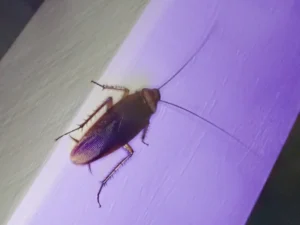
Boric acid is a stomach poison for bugs. Diatomaceous earth (a fine powder made from fossilized algae) scratches a bug’s outer shell, so it dries out.
Both of those take time too.
So are glue traps cruel for bugs? Compared to a swat, yes, because they’re slow, but compared to some baits and powders, they’re about on par.
The big difference is that you can see a glue trap’s victim struggle. Other methods hide the suffering, but they don’t always remove it.
However, other methods rarely catch animals you never meant to hurt. Glue traps do, and we’ll get to that shortly.
Why Pest Controllers Still Use Glue Traps
If glue traps are so slow, why do professionals keep using them? Most pros don’t use them to kill bugs, but to find out what’s going on in a building.
Pest controllers follow a plan called integrated pest management, or IPM (basically using the smartest, lowest-risk steps first). Watching and counting pests is step one.
A sticky trap works like a security camera that runs all day and night, showing you which bugs are around, how many, and where they travel.
Say you put a board behind a refrigerator and it fills up with tiny baby roaches. That tells you the hiding spot is close by.
Say it only catches a few big adults near the back door. That tells you the roaches are coming in from outside, maybe on a cardboard box you brought home.
Boards are also handy in restaurants, schools, and homes with small kids, because there’s no poison involved. Texas A&M’s guides say the best spots for roach boards are behind stoves and refrigerators, in cupboards, and under sinks.
Still, watching bugs is different from killing them. If you’re using a board to look, you can check it often and throw it out as soon as you’ve learned what you need.
Glue Traps Don’t Only Catch Bugs
Here’s the part that worries wildlife groups most, because a glue trap can’t tell a cockroach from a gecko.
Wildlife rescuers across North America regularly find small animals stuck on boards, including house sparrows, anoles, geckos, bats, frogs, and even snakes.
The Wildlife Center of Virginia once worked to free a milk snake from a board. That’s a long way from a cockroach.
Outdoor traps are the worst. A sticky trap hung up to catch wasps or flies (say, on a patio or in a garage) can trap songbirds that land on it.
Garages with the door open are another trouble spot, since if you leave it open, birds fly in looking for crumbs and a board on the floor is easy to land on. Pets can get stuck too, usually a curious cat or a puppy’s paw.
Freeing an animal isn’t easy. Rescuers often sedate small animals first, then loosen the glue with mineral oil or a soy solvent.
If you find a wild animal stuck on a trap, don’t pull, because pulling can tear skin or break feathers and bones. Call a wildlife rehabilitator or a local vet right away.
While you wait, you can dribble a little cooking oil around the edges to start loosening the glue. Just go slowly, and keep the animal warm and calm.
Can Glue Traps Attract Other Pests?
They can, and it surprises a lot of people. A bug stuck on a trap is basically a free meal for something else.
Pest control guides point out that both mice and American cockroaches will eat German cockroaches trapped on boards, so a trap meant for one pest can pull in another. Spiders do the same thing, and a fly stuck near a wall can draw in a wolf spider that’s out hunting.
This is why you shouldn’t leave full boards sitting around. Check them often, and swap them out once a few bugs have stuck.
A full trap also does nothing for you. It stops catching new bugs, and it just sits there as a pile of dead insects.
What the Law Says About Glue Traps in the US, Canada, and the UK
In the US and Canada, glue traps for bugs are legal, and you can pick them up at most hardware stores and grocery stores. A few cities and states are talking about limits, mostly for traps aimed at mice and rats, so it’s smart to check your local rules.
Some countries have gone further. England banned the public use of rodent glue traps on 31 July 2024, and Wales and Scotland have passed their own bans or limits.
In Australia, the state of Victoria has banned them, and New Zealand has banned or tightly limited standard glue boards too. However, nearly all of these laws are about rodents, so traps for insects are still allowed.
Still, the reasons behind the laws matter for bugs too. Lawmakers acted because glue traps cause slow deaths and catch animals by accident, and both of those problems happen with bug traps as well.
When a Glue Trap Makes Sense and When It Doesn’t
A glue trap can be a fair choice in a few cases. If you want to see how bad a roach problem is, a covered board behind your refrigerator tells you a lot.
Yellow sticky cards in houseplants make sense for fungus gnats (tiny dark flies that hover over damp soil), as long as you keep the soil from staying wet. A few cards over a couple of weeks is plenty.
A board in a storage room can also show you which pantry beetles, silverfish, or scorpions are around (just put it where kids and pets can’t reach).
Now for when it doesn’t make sense. Skip glue traps outdoors, on porches, and in open garages, where birds and lizards roam.
Skip them if you live where geckos are common. In Florida, for example, Mediterranean house geckos (small, pale lizards that come out at night) eat roaches and moths, and you don’t want them stuck.
Skip them for a single spider or fly, too. A cup and a piece of cardboard will move it outside, and nothing gets hurt.
And don’t count on a board to fix a big roach problem. It can tell you where the roaches are, but it won’t clear them out.
How Can You Use Glue Traps More Gently?
If you decide a glue trap is the right tool, you can lower the harm with a few small habits. Use as few as you can, because two or three well-placed boards tell you more than a dozen scattered around.
Pick enclosed traps over open boards when you can. The tent shape keeps lizards, birds, and pets away from the glue.
Put them inside, along walls, behind appliances, and under sinks, and keep them away from open doors, windows, and garages. Check them every day, since stuck bugs shouldn’t sit for long and a daily look also lets you catch any animal you didn’t mean to trap.
Keep a bottle of cooking oil and your local wildlife rehab number handy. If a gecko or a bird ends up stuck, you’ll want to act fast.
When a board is full, fold it in half with the sticky side in, then bag it and throw it in the trash. Once you’ve learned what you need, stop, and switch to steps that deal with the cause of the problem.
What Can You Do Instead of Using Glue Traps?
The best fix is to give bugs less reason to be there, and that does more than any trap. Roaches, silverfish, and earwigs all love moisture, so fix leaky pipes under the sink, dry out damp spots, and run a fan in the bathroom.
Seal the gaps, too. Caulk around pipes, add door sweeps, and patch torn window screens.
Keep food sealed. Store flour, rice, and cereal in tight containers (which also stops pantry beetles from spreading), and wipe crumbs off counters.
Rinse your recycling and take the trash out often, with a lid on the can. For fungus gnats, let the top of your plant soil dry between waterings, since the larvae live in damp soil and drier soil means fewer gnats.
For fruit flies, throw out overripe fruit. You can also set out a small jar of apple cider vinegar with a drop of dish soap, which usually kills flies faster than glue does.
For a single spider or fly, use the cup and cardboard trick. It takes ten seconds and costs nothing.
For a big roach problem, call a licensed pest controller. Bait gels placed by a pro work well, and they won’t catch a gecko by mistake.
Conclusion
So, are glue traps cruel to insects? They can be, because bugs stuck on glue die slowly, and research suggests that flies, cockroaches, and bees may feel something like pain.
The science isn’t settled, but it’s enough that many people choose to be careful.
At the same time, glue traps do real work. Pest controllers use them to spot an infestation early, and that can mean less spraying later.
The biggest trouble comes from the animals you never meant to catch, since geckos, songbirds, and snakes all end up on these boards.
If you use one, keep it small and keep it inside. Use a covered trap, check it daily, and stop once you know what you’re dealing with.
Better yet, start with the cause. Fix leaks, seal gaps, and keep food put away, and you may not need a trap at all.

Hi, my name is Ezra Mushala, i have been interested animals all my life. I am the main author and editor here at snakeinformer.com.