
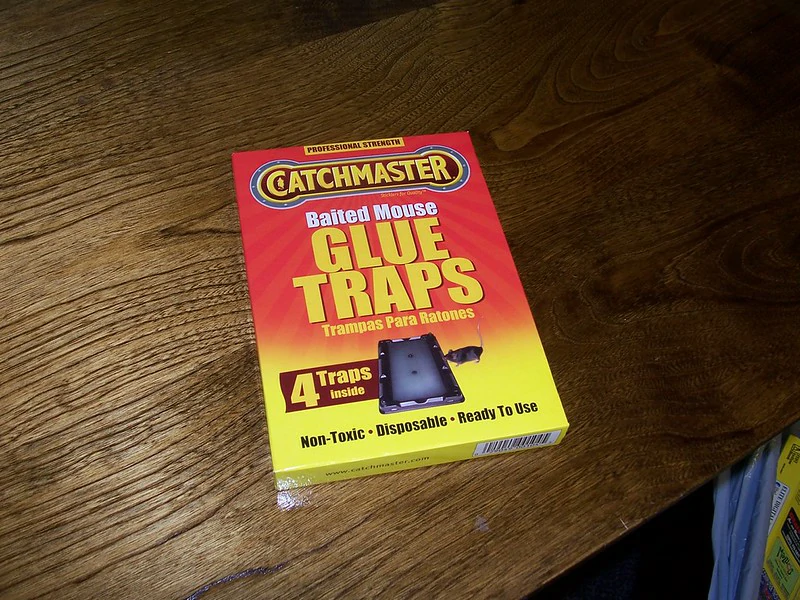
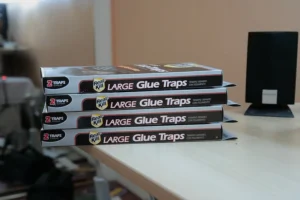
Glue traps, sometimes called glue boards or sticky traps, are one of the most common ways people try to deal with a mouse problem.
You place a sticky board along a wall, and the idea is simple: a mouse walks across it and gets stuck.
They’re cheap, they’re everywhere in hardware stores, and they don’t require you to touch a dead mouse or figure out how a spring-loaded trap works.
But do they actually catch mice reliably, and more importantly, do they actually solve the problem you’re dealing with?
Glue traps can catch individual mice, but research shows they’re far less effective than most people assume. Mice often learn to avoid or get past the glue surface after one bad run-in with it. The traps also don’t fix why mice are in your home, so the problem tends to come back.
That’s a more complicated answer than the label on the box suggests.
Let’s look at what actual field research says, where glue traps do and don’t work, and why so many pest control experts have moved away from recommending them.
What Field Research Actually Found
Most of what people believe about glue traps comes from packaging and marketing, not testing.
But there has been real field research on this, and it tells a more mixed story.
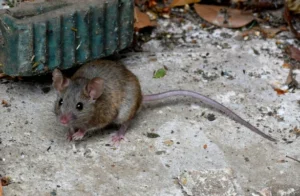
A study conducted through Purdue University, run by pest management researcher Robert Corrigan, looked closely at how wild house mice actually respond to glue traps in real environments.
The findings were surprising to a lot of people in the pest control industry.
Many mice, after their first run-in with a glue surface, either learned to avoid it entirely or found ways to get past it without getting fully stuck.
Some mice figured out how to press debris onto the glue to neutralize its stickiness.
Others simply started avoiding areas where a glue trap had been placed, even after the trap was removed.
The same research also compared glue traps directly against snap traps in the field.
It found that glue traps were not particularly effective against house mice specifically, especially compared to well-placed snap traps.
This lines up with something pest control professionals have said for decades, even while continuing to sell and use glue traps.
Robert Corrigan himself noted in his research write-up that glueboards weren’t especially effective against house mice.
How Mice Actually Sense a Glue Trap
Understanding why mice avoid glue traps starts with understanding how a mouse experiences its environment in the first place.
Mice have poor eyesight compared to their other senses.
They lean heavily on smell, touch, and their whiskers, which are called vibrissae, to build a mental map of their surroundings as they move.
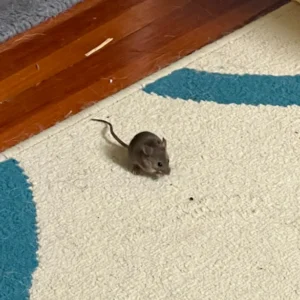
A mouse’s whiskers are extremely sensitive, picking up tiny changes in texture and airflow as it moves along a wall or through a gap.
When those whiskers brush against something unfamiliar, like the surface of a glue board, it registers as a warning sign before the mouse ever puts a foot down.
This is part of why placement and disguise matter so much for glue traps specifically.
A trap that a mouse can detect with its whiskers before committing to a step gives the mouse an easy chance to back away untouched.
Smell plays a role too. Fresh glue has a distinct chemical odor.
Some research suggests mice can detect that smell and associate it with danger after even one bad experience nearby, even if they never actually touched it.
Why Mice Sometimes Avoid Glue Traps Entirely
Mice are naturally cautious animals, and that caution plays a big role in why glue traps underperform compared to how they’re marketed.
Mice rely heavily on their whiskers and a strong sense of touch to navigate.
Anything unfamiliar on a surface they regularly travel across, like a sticky, textured glue board, can trigger avoidance behavior right away.
This is actually part of a broader pattern in rodent behavior called neophobia, which just means a fear of new things.
Mice tend to be wary of anything unfamiliar in their environment, including new objects placed in their usual paths.
Once a mouse has a bad experience with a glue trap, even a near miss, it often remembers that spot and avoids it going forward.
This means a single trap that fails to catch a mouse on day one may end up useless for the rest of its lifespan.
Pest control professionals sometimes deal with this by disguising traps or changing their placement regularly.
Even then, mice that survive a bad run-in tend to get more cautious over time, not less.
The Bigger Problem: Glue Traps Don’t Fix What’s Causing the Mice
Even when a glue trap works exactly as intended and catches a mouse, that’s often just the start of the real issue, not the end of it.
Mice don’t show up in your home randomly. They come in because there’s food, warmth, and a way to get inside, usually through gaps far smaller than most people realize.
If those three things are still there after you remove one mouse, another one tends to take its place fairly quickly.
This is sometimes called the vacuum effect, where removing one rodent just opens up space and resources for the next one to move in.
Animal welfare researchers who’ve studied rodent population dynamics point to something else too.
When part of a rodent population is removed, the survivors often breed faster in response, since there’s suddenly more food and space to go around.
So even a glue trap that catches mouse after mouse can end up working against you in the long run.
That happens if the root cause, food access and entry points, never actually gets addressed.
This is really the core argument pest professionals make against relying on glue traps as your main strategy.
Catching individual mice isn’t the same as solving a mouse problem.
Do Glue Traps Work Better for Rats Than Mice?
This is worth addressing directly, since the two get lumped together a lot, but they don’t behave the same way around traps.
Rats are generally even more cautious than mice, known for a behavior called neophobia at an even higher level.
That means brand-new objects in their environment, including a freshly placed glue trap, tend to get avoided for days before a rat will approach at all.
This makes glue traps even less reliable against rats than against mice.
Pest control professionals widely consider snap traps, bait stations, or professional-grade rodenticide programs to be far more effective for rat infestations specifically.
If you’re dealing with rats rather than mice, glue traps are generally considered one of the weaker tools available, not a strong first choice.
When Glue Traps Do Work
To be fair, glue traps aren’t completely useless, and it’s worth being accurate about when they actually do their job.
They tend to work best for young mice, sometimes called pups, that haven’t yet developed the same level of caution as adult mice.
A young mouse exploring a new space is more likely to walk straight into a glue trap than a mouse that’s already survived a close call.
They can also work reasonably well as a monitoring tool rather than a solution.
Pest control companies sometimes use glue traps specifically to figure out where rodent activity is happening, rather than as the main method of actually removing an infestation.
Placement matters a lot too.
Glue traps tend to perform best when placed directly along walls, since mice and rats naturally travel close to walls rather than out in open floor space.
This behavior is called thigmotaxis, which just means the tendency to stay close to edges and surfaces rather than crossing open ground.
Even with good placement though, the core limitation remains.
A glue trap that works once doesn’t mean your mouse problem is solved, and it definitely doesn’t mean more mice won’t show up.
How Snap Traps Compare in Effectiveness
Since glue traps are often compared directly to snap traps, it’s worth looking at how the two actually stack up.
Snap traps tend to work faster and more decisively.
A well-placed and properly baited snap trap kills on contact, rather than leaving a mouse struggling for hours or days.
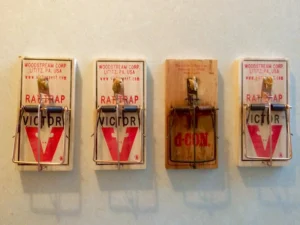
Field comparisons have generally found snap traps to be more reliable against house mice specifically, which matches what most pest control professionals will tell you if you ask them directly.
Snap traps also have a practical advantage glue traps don’t.
Once triggered, they’re done, while a glue trap can sit there ineffective for days once its adhesive weakens or gets covered in dust and debris.
That adhesive breakdown is a bigger issue than most people realize. Glue on these traps tends to lose its grip within about two weeks, especially in dusty environments.
That means old glue traps left out too long often aren’t catching anything at all.
What About Multi-Catch Traps?
Some newer glue trap products are marketed as multi-catch traps, designed to catch several mice on a single board before needing to be replaced.
These can reduce how often you need to check and replace traps, which is a real practical benefit if you’re managing a larger space.
Some professional pest control products claim to hold up to a dozen mice on one trap.
Even with this improvement though, the same core issues apply.
A multi-catch glue trap still doesn’t address entry points or food sources, and it still leaves captured mice alive and struggling until someone checks the trap.
Why Pest Control Companies Are Moving Away From Glue Traps
It’s worth noting that this shift isn’t just coming from animal welfare groups.
A growing number of pest control professionals have scaled back their own use of glue traps, for reasons that go beyond ethics.
Beyond the effectiveness concerns already covered, there’s a legal angle too.
Glue traps are now banned or restricted for public use across a growing list of places, including England, Wales, Scotland, and a handful of US cities.
This has pushed both homeowners and professionals toward other tools.
There’s also a public health consideration that doesn’t get discussed as often. There’s also a public health consideration that doesn’t get discussed as often.
The Centers for Disease Control and Prevention has actually warned against using glue traps.
A trapped, panicking rodent tends to urinate and defecate more, which can increase the risk of disease exposure rather than reduce it.
Put all of that together: mixed effectiveness, legal restrictions in a growing number of places, and a real public health argument against them.
It’s easy to see why glue traps have fallen out of favor with a lot of professionals who used to rely on them.
Does Bait Actually Improve Glue Trap Effectiveness?
Most glue traps come with some kind of built-in scent lure, often mimicking food, but a lot of pest control guides recommend adding extra bait to improve your odds.
Peanut butter and cheese are common choices, mostly because they’re strong smelling and easy for mice to detect from a distance.
Adding bait to the center of a glue trap, away from the edges, can help here.
It pulls a mouse further onto the sticky surface rather than letting it grab a quick bite from the edge and back away safely.
Some pest control guides also recommend tenting or tunneling glue traps.
This means covering them so they look like a safe, enclosed space rather than an open trap sitting in plain sight.
Mice generally prefer tight, covered spaces when they’re moving around, so this can improve results somewhat.
Even with these tweaks though, none of them address the core research finding.
A mouse that gets a partial warning, a stuck foot it manages to pull free, for example, still tends to learn from that experience and avoid the area afterward.
How Long Should You Leave a Glue Trap Out?
This matters more than most people think, and it ties directly back to the adhesive breakdown issue covered earlier.
Most glue traps start losing effectiveness within one to two weeks, especially in dusty homes, garages, or basements where debris builds up on the sticky surface quickly.
If you’re using glue traps at all, checking and replacing them regularly makes a real difference.
A trap that’s been sitting untouched for a month is often doing nothing at all, even though it still looks like it’s in place and working.
This is one more reason pest professionals tend to prefer snap traps or bait stations for anything beyond short-term monitoring.
They don’t quietly stop working the way an old glue trap does.
What Actually Works Better for Mice
If you’re dealing with a mouse problem and want something more reliable than a glue trap, a combination approach works far better than any single method alone.
- Seal entry points first. Mice can fit through gaps as small as a quarter inch, so check around pipes, vents, and foundation cracks.
- Remove food access by storing food in sealed containers and cleaning up crumbs and spills quickly.
- Use snap traps in areas where you’ve seen droppings or signs of activity, placed directly along walls.
- Try bait stations for a larger infestation, especially in areas kids and pets can’t reach.
- Call a pest control professional if the problem persists after a couple of weeks of trying these steps yourself.
Sealing entry points in particular tends to make the biggest long-term difference.
Every other method on this list is really just dealing with mice that have already gotten in, while sealing gaps stops new ones from getting in to begin with.
Conclusion
Glue traps can catch mice, but the research doesn’t support the idea that they’re a reliable or particularly effective solution on their own.
Mice often learn to avoid glue surfaces after one bad run-in. Field studies have found them notably less effective than snap traps against house mice specifically.
Even when a glue trap does its job, catching one mouse rarely solves the underlying problem.
New mice tend to move in as long as food and entry points remain available.
If you’re serious about actually getting rid of a mouse problem, rather than just catching the occasional mouse, start with sealing up your home and removing food sources.
That does far more than any single trap, glue or otherwise.
Snap traps tend to outperform glue traps where a trap is genuinely needed.
A pest control professional is usually worth calling if the problem doesn’t clear up on its own within a couple of weeks.

Hi, my name is Ezra Mushala, i have been interested animals all my life. I am the main author and editor here at snakeinformer.com.