
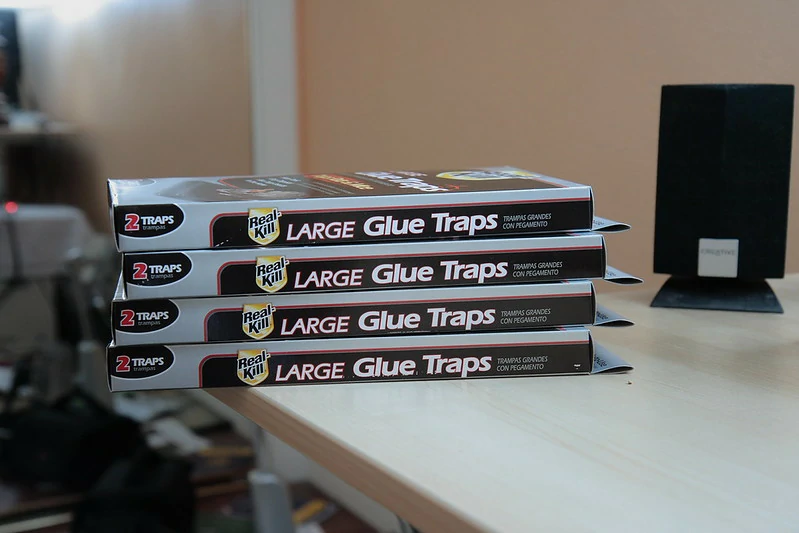
If you’ve dealt with mice or rats around your home, you’ve probably come across glue traps sitting on the shelf at the hardware store. Some people call them glue boards. Others just say sticky traps.
With Australia’s states each handling animal welfare laws differently, you might be wondering, are glue traps illegal in Australia?
It depends entirely on which state or territory you’re in. Glue traps are banned in the ACT, New South Wales, Tasmania (with an exemption for licensed professionals), and Victoria. They’re still legal in the Northern Territory, Queensland, South Australia, and Western Australia.
So there’s no single answer that covers the whole country. Whether you’re asking if glue traps are banned in Australia depends on your specific state, and the rules genuinely vary quite a bit from one place to the next.
Are Glue Traps Banned in Australia Nationwide?
No, there’s no single national law banning glue traps across Australia. Animal welfare law in Australia is handled at the state and territory level, not federally.
This means each state gets to decide for itself whether to prohibit glue traps, restrict them, or leave them fully legal. As a result, the country is genuinely split down the middle right now.
Four states and territories have banned them outright or with only narrow exceptions. Four others still allow them without any restriction at all.
Where Glue Traps Are Legal vs Illegal in Australia
| State/Territory | Legal Status | Relevant Law |
|---|---|---|
| Australian Capital Territory | Banned | Animal Welfare Regulations 2001 |
| New South Wales | Banned | Prevention of Cruelty to Animals Regulations 2025 |
| Northern Territory | Legal | No current prohibitions |
| Queensland | Legal | Animal Care and Protection Act 2001 (no explicit ban) |
| South Australia | Legal | No current prohibitions |
| Tasmania | Banned, with exemption | Animal Welfare Act 1993 |
| Victoria | Banned | Prevention of Cruelty to Animals Regulations 2019 |
| Western Australia | Legal | No current prohibitions |
As the table shows, this is genuinely a mixed bag depending on where you live in Australia.
Are Glue Traps Banned in the ACT?
Yes. The Australian Capital Territory was one of the earliest jurisdictions in Australia to ban glue traps outright.
Under the Animal Welfare Regulations 2001, glue traps are listed as a specifically prohibited trap, alongside metal-toothed rodent traps. The law defines a glue trap as any trap containing glue or a similar non-drying sticky substance.
This means it’s illegal to sell or use a glue trap anywhere in the ACT, whether you’re a homeowner dealing with mice or a professional pest control operator.
Is New South Wales One of the States That Banned Glue Traps?
Yes, and this is a fairly recent change. New South Wales banned the use of glue traps under updated regulations that came into effect in 2025.
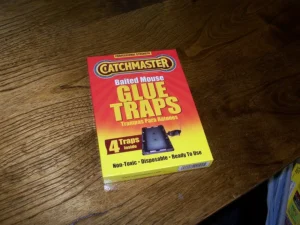
Under the Prevention of Cruelty to Animals Regulations 2025, a glue trap can’t legally be set anywhere in NSW unless it has a cage or similar barrier preventing an animal from actually touching the adhesive.
In practice, this means a standard, exposed glue trap is illegal to use anywhere in the state. Interestingly, selling glue traps in NSW isn’t banned, only setting them is.
This means you could technically still buy one at a hardware store in NSW, but using it as intended would break the law.
Local councils have pushed for the rules to go further. Blue Mountains City Council, for example, voted to advocate for a full ban on the sale of glue traps too, arguing the current setup is confusing and inconsistent.
Why Did NSW and Other States Decide to Ban Glue Traps?
The reasoning behind these bans comes down to how glue traps actually work and what happens once an animal gets stuck.
Glue traps use a thick, non-drying adhesive that holds an animal in place once it makes contact. Unlike a snap trap, which is built to kill quickly, a glue trap simply traps the animal there.
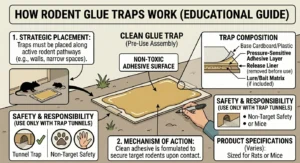
This means a mouse, rat, or any other small animal unlucky enough to get stuck can remain alive for hours, or even days, before dying from exhaustion, dehydration, or starvation.
Animals that panic while stuck often make things worse for themselves. Struggling against the glue can tear off fur, feathers, or skin, and some animals have been documented chewing through their own limbs trying to break free.
There’s also the issue of who actually gets caught. Glue traps don’t discriminate between the pest they’re meant for and any other small animal that happens to walk across them.
This includes birds, lizards, frogs, and native wildlife. This last point matters a lot in Australia specifically, since the country has such a wide range of native species.
Any of them can end up as an accidental victim of a trap meant for introduced pests like mice and rats.
What Native Australian Animals Get Caught in Glue Traps?
This is a big part of why Australian animal welfare groups have pushed so hard on this issue, more so than in some other countries.
Australia has an unusually high number of native species that are small enough to get caught on a rodent glue trap by accident. This includes small lizards like skinks and geckos, native frogs, small birds, and even bats.
Wildlife carers and rescue groups have reported cases of native wildlife getting stuck on glue traps set for introduced pests like house mice or rats. Freeing a native animal from the adhesive without causing further injury is a difficult, delicate process.
Not every animal survives it, even with help. This risk to native wildlife is specifically called out in Victoria’s regulations, since the law there doesn’t just protect pest species.
It applies to any animal capable of being trapped, which is part of why Victoria’s ban is considered one of the stricter versions in the country.
Are Glue Traps Banned in Victoria?
Yes, Victoria has one of the stricter sets of rules in the country. Under the Prevention of Cruelty to Animals Regulations 2019, it’s illegal to sell, set, or use a glue trap capable of trapping an animal anywhere in the state.
There’s a narrow exception for glue traps made just for insects. It only applies if the trap has a cage or barrier that keeps any larger animal from touching the adhesive.
This means a standard mouse or rat glue trap is completely off-limits in Victoria, for both sale and use. That’s true whether you’re a homeowner or a licensed pest control professional.
Victoria’s law is actually referenced by advocacy groups in other states and even other countries. They point to it as a stronger, more complete approach to banning glue traps, since it closes the sale loophole that some other jurisdictions, like NSW, still have.
Are Glue Traps Banned in Tasmania?
Yes, with one specific exception. Tasmania banned the use of glue board traps back in 2008, under an amendment to the Animal Welfare Act 1993.
The general rule in Tasmania is that a person can’t set, lay, or place a glue trap.
Breaking this rule carries a real penalty, including a fine of up to 100 penalty units or up to 12 months in prison for an individual, and a larger fine for a business.
However, the Tasmanian Minister has issued an exemption specifically for licensed commercial pest control operators.
This means a professional pest controller with the right license can still legally use glue boards in Tasmania. They just have to follow a specific set of industry guidelines for rodent control.
For an average homeowner in Tasmania, though, using a glue trap yourself is illegal. A licensed professional could still use one on your behalf.
Are Glue Traps Legal in Queensland?
Yes, for now. Queensland doesn’t have a law that explicitly names or bans glue traps.
The state’s Animal Care and Protection Act 2001 does require that any method used to control feral or pest animals cause “as little pain as is reasonable.”
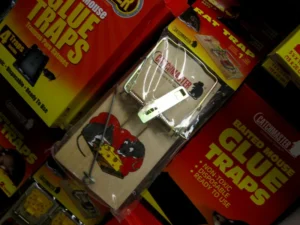
Glue traps are known to cause prolonged suffering, so this general requirement could arguably apply to them.
That said, without an explicit ban naming glue traps specifically, they remain legal to buy and use in Queensland right now.
RSPCA Queensland has said publicly that it’s advocating to have glue traps formally prohibited under this same Act, so this is an area that could change.
Are Glue Traps Legal in the Northern Territory, South Australia, and Western Australia?
Yes, in all three of these places, there’s currently no law prohibiting the sale or use of glue traps.
The Northern Territory, South Australia, and Western Australia haven’t introduced any specific regulation targeting glue traps the way the ACT, NSW, Victoria, and Tasmania have.
This means if you live in any of these three places, you can legally buy and use a glue trap for pest control without breaking any state law right now.
That doesn’t necessarily mean this will stay the case forever. Given how much movement has happened in other states over just the last couple of years, particularly with NSW’s fairly recent 2025 update, it’s reasonable to expect these remaining states could eventually introduce similar restrictions.
How Have Australia’s Glue Trap Laws Changed Over Time?
Looking at the timeline of these bans helps explain why the country’s rules look so inconsistent right now.
Tasmania was actually the first to act, banning glue board traps all the way back in 2008. For a long time after that, it was the outlier, with most other states leaving glue traps completely unregulated.
The ACT followed at some point after, adding glue traps to its list of prohibited trap types under its Animal Welfare Regulations.
Victoria then introduced its own ban through the Prevention of Cruelty to Animals Regulations 2019, closing off both sale and use in one law.
New South Wales was the most recent state to act, updating its regulations in 2025 to prohibit setting an exposed glue trap anywhere in the state.
The sale loophole there means the change didn’t go quite as far as Victoria’s approach. This pattern, individual states moving one at a time rather than a single national law arriving all at once, is common in Australian animal welfare legislation generally.
These laws are set at the state level rather than federally. Given that four out of eight states and territories have now introduced some form of ban, the overall direction is clearly toward more restriction, not less.
Local councils in places like the Blue Mountains are actively pushing their state governments to go even further.
Have Any Australian Retailers Stopped Selling Glue Traps Voluntarily?
Yes, even in states where glue traps remain fully legal, some major retailers have chosen to stop selling them anyway.
Kmart, Big W, and Target Australia have all ended sales of glue traps in their stores. Smaller chains like Cheap as Chips and Ten Tops, along with hardware retailer Mitre 10, have made the same decision after pressure from animal welfare groups.
This is a business decision, not a legal requirement, so it doesn’t apply everywhere. Some hardware and discount stores in states where glue traps remain legal still stock them.
What Happens If You Illegally Use a Glue Trap in Australia?
This depends heavily on which state you’re in, since the specific penalties vary quite a bit.
In Tasmania, an individual caught setting a glue trap faces a fine of up to 100 penalty units, or up to 12 months in prison, or both. A business caught doing the same faces a fine of up to 500 penalty units.
Victoria and NSW also carry real financial penalties for illegal use, since these fall under each state’s broader animal cruelty and welfare regulations.
In Victoria specifically, authorities have taken action against people using glue traps illegally. Some cases have involved native wildlife getting harmed, which has drawn extra attention from wildlife rescue groups in the area.
What Alternatives Exist If You Can’t Use Glue Traps Where You Live?
If you’re in a state where glue traps are banned, or you’d simply rather avoid them, there are other proven options for pest control.
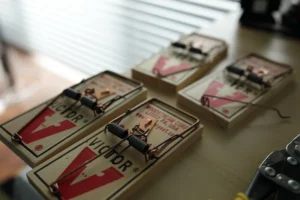
Snap traps are widely considered a faster and more humane option, since they’re designed to kill quickly rather than immobilize an animal for an extended period.
Electronic traps use a quick, high-voltage shock and are marketed as a more humane alternative that also tends to be cleaner to deal with afterward.
Sealing up entry points around your home remains one of the most effective long-term solutions. It addresses why rodents are getting inside in the first place, rather than just catching them after the fact.
Live-catch traps are also an option if you’d rather release the animal outside instead of killing it. These just take more effort since you have to actually relocate the animal afterward.
If You’re a Business or Pest Control Operator, Do Different Rules Apply?
In some states, yes, and this is worth knowing if you run a business rather than just dealing with a mouse problem at home.
Tasmania is the clearest example. While an everyday homeowner can’t legally set a glue board there, a licensed commercial pest control operator can, as long as they follow the specific guidelines set out in the Minister’s exemption.
Victoria and NSW don’t carve out the same kind of exception. In Victoria, the ban on setting or using a glue trap applies just as much to a licensed pest control professional as it does to a homeowner.
This matters if you’re running a business, like a restaurant or warehouse, that relies on a pest control contractor.
If you’re in Victoria, NSW, or the ACT, it’s worth confirming with your pest control provider that they’re not using glue traps as part of their service. Doing so would put both them and you on the wrong side of the law.
Conclusion
Whether glue traps, glue boards, or sticky traps are illegal in Australia really comes down to where you live. The ACT, New South Wales, Victoria, and Tasmania have all banned their use. Tasmania still allows licensed professionals to use them under a specific exemption.
Meanwhile, the Northern Territory, Queensland, South Australia, and Western Australia haven’t passed any law banning them. Glue traps remain fully legal to buy and use in those places right now.
Given how quickly this has changed in states like NSW, and how vocal groups like the RSPCA have been about wanting a nationwide ban, it’s worth keeping an eye on your local laws.
That’s especially true if you live somewhere glue traps are still legal, since that could realistically change in the years ahead.
For now, if you want to stay on the safe side no matter where you live in Australia, checking your specific state or territory’s current rules is the smartest first step.

Hi, my name is Ezra Mushala, i have been interested animals all my life. I am the main author and editor here at snakeinformer.com.