
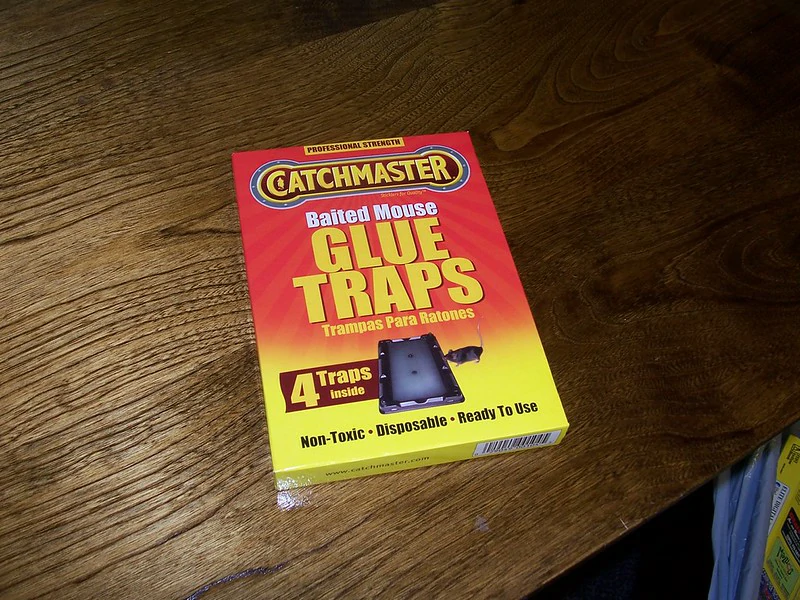
If you live in England and use glue traps, glue boards, or sticky traps to deal with mice or rats, you might have heard that the rules around them have changed quite a bit in recent years.
Pest control laws don’t always get much attention, so it’s easy to miss something like this.
So, are glue traps actually banned in England now, or is that just something people have heard secondhand?
Yes, glue traps are banned for general public use in England. Under the Glue Traps (Offences) Act 2022, it’s now a criminal offence for an ordinary member of the public to set a glue trap to catch a rodent. Only licensed professional pest controllers can still use them, and only under specific conditions.
That’s the short answer, but there’s more worth understanding about how this law actually works, when it took effect, what the penalties look like, and what you’re supposed to do instead if you’re dealing with mice or rats at home.
What the Glue Traps (Offences) Act 2022 Actually Says
The law itself is fairly direct about what counts as an offence. Setting a glue trap in England for the purpose of catching a rodent is an offence.
Setting one in a way that creates a risk of a rodent getting caught, even without that being your specific intention, is also an offence. Knowingly allowing someone else to do either of these things counts too.
There’s even a provision covering what happens if you come across a glue trap that’s already been set.
If you find one and don’t take reasonable steps to make sure it no longer poses a risk to rodents, that itself can be treated as an offence, unless you have a reasonable excuse.
When Did the Ban Actually Come Into Force?
This is where a lot of confusion comes from, since the law didn’t take effect the moment it was passed. The Glue Traps (Offences) Act received Royal Assent on April 28, 2022, which is when it officially became law on paper.
However, the Act included a built in two year lead in period, giving the government time to set up a licensing system before the actual offences took effect.
During that gap, glue traps remained legal to buy and use while the licensing scheme was being developed.
The licensing scheme itself opened for applications on June 19, 2024, with Natural England appointed as the licensing authority. The offences under the Act, the part that actually makes unlicensed use illegal, came into force on July 31, 2024.
So as of that date, using a glue trap without a licence became a genuine criminal offence in England, not just something the law technically allowed for.
What Are the Penalties for Breaking This Law?
The penalties are serious enough that this isn’t a minor technicality. Someone found guilty of setting a glue trap without a licence, or knowingly allowing someone else to, can face up to 51 weeks in prison, a fine, or both.
Failing to deal with a glue trap you’ve found already set, without a reasonable excuse, carries a fine on its own. These aren’t small, symbolic penalties, they show how seriously the law treats this issue.
Who’s Actually Allowed to Use Glue Traps Now?
The ban isn’t total. Licensed professional pest controllers can still use glue traps in England, but only under fairly narrow conditions.
Licences are issued by Natural England on what’s described as an exceptional basis, meant for situations involving a genuine public health or safety risk where no other method would reasonably work.
A general pest problem in someone’s home typically wouldn’t meet that bar on its own.
To even apply for a licence, a pest controller needs to be a professional. This means someone who provides pest control as part of a business or for a public authority.
They also need to complete specific training courses to demonstrate they understand how to use the traps responsibly.
Licence holders have to follow strict conditions once approved too, including regularly monitoring any traps they do set, so an animal isn’t left stuck and suffering for an extended period.
Why Was This Law Introduced in the First Place?
The push behind this law came largely from growing concern over how glue traps actually affect the animals caught in them.
Unlike a snap trap, which is built to kill quickly, a glue trap holds an animal in place without killing it right away. It’s often left to suffer for hours or even days before it dies from exhaustion, dehydration, or in some cases, suffocation.
Baroness Fookes, a Conservative peer who spoke in support of the bill in the House of Lords, described glue traps as tantamount to torture.
She argued that no animal, whether considered a pest or not, should have to die in such a prolonged and painful way. That view matched a broader shift in how UK lawmakers had started approaching animal welfare more generally.
The law was also shaped by concern over non target animals.
Glue traps don’t discriminate between the rodent they’re meant to catch and anything else that happens to walk across them, and reports of birds, hedgehogs, and even pet cats getting caught added weight to the argument for restricting general public use.
Does This Law Apply to the Rest of the UK Too?
No, and this is an important distinction people often get wrong. The Glue Traps (Offences) Act 2022 specifically applies to England, not the UK as a whole.
Wales moved separately, passing its own ban through the Agriculture (Wales) Act, making it the first UK nation to introduce a full ban on glue traps.
Scotland followed with its own law, the Wildlife Management and Muirburn (Scotland) Act 2024, which brought in a ban on the use, supply, and possession of glue traps starting July 1, 2026.
So if you’re anywhere in the UK, glue traps are now restricted or banned in some form nearly everywhere.
The specific laws, timelines, and exact rules still differ depending on whether you’re in England, Wales, or Scotland.
What Happens If You’re Caught Using One Illegally?
If you’re a member of the public in England and you’re found to have set a glue trap without a licence, you could be prosecuted under the Act, facing potential imprisonment or a fine. Retailers haven’t escaped scrutiny either.
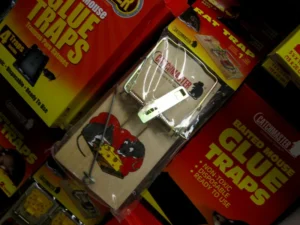
Pest control industry groups have raised concerns about stores continuing to sell glue traps or offer advice on their use in ways that seem to conflict with the law’s intent, even after the offences officially came into force.
This has led to ongoing pressure on both retailers and regulators to close gaps in how the ban is being enforced and communicated to the public.
If you’re unsure whether something you’re doing crosses a legal line, the safest approach in England now is to simply avoid using glue traps altogether unless you’re a licensed professional acting within the terms of that licence.
What Should You Use Instead in England?
If you’re dealing with mice or rats and can’t legally use a glue trap anymore, you still have several other options that remain completely legal.
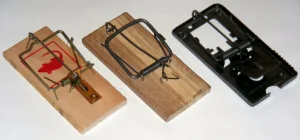
Snap traps are widely available and, when used correctly, kill quickly rather than holding an animal in place for an extended period.
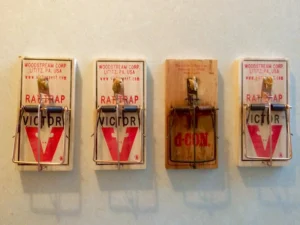
Electronic traps work on a similar quick kill principle, using a fast shock to deal with a rodent almost instantly.
Live capture traps are another option, provided you’re willing to check them regularly and release the animal somewhere appropriate rather than leaving it trapped for long stretches.
Beyond traps entirely, sealing up small gaps around doors, windows, and vents goes a long way toward preventing a rodent problem before it starts. The same goes for removing easy access to food.
Many pest control companies operating in England have also shifted their standard offerings away from glue boards entirely. They rely instead on these alternative methods now that the legal landscape has changed.
Is There Any Talk of Changing This Law Further?
Since the ban came into force, pest control industry groups have continued pushing for more clarity around a few specific issues.
Mainly, this comes down to how professionals are meant to use their licences in practice.
There’s ongoing discussion about clearly defining the exceptions for public health and safety situations, so licensed pest controllers know exactly when glue traps remain a legitimate tool and when they don’t.
There haven’t been signals of the core ban being rolled back or loosened in any way.
If anything, the direction across the UK has moved further toward restriction, not less, with Scotland’s own ban following a similar path several years after England’s law first passed.
What Counts as a Public Health or Safety Exception?
This is the part that trips people up most, since the law doesn’t hand out licences for just any rodent problem.
A licence is meant for situations where rodents pose a genuine risk to public health or safety, and where no other realistic method would solve the problem in time.
Food processing facilities dealing with a serious infestation that could contaminate products are a good example of where this bar might realistically be met.
Hospitals, care homes, or other settings where rodents could spread disease to vulnerable people are another.
An ordinary household mouse problem, even a bad one, typically wouldn’t clear this threshold on its own.
Natural England, as the licensing body, reviews applications with this distinction in mind, and licences aren’t handed out simply because someone finds glue traps convenient or already has some on hand.
This is part of why the law draws such a clear line between professional and public use.
A trained pest controller working under licence conditions is expected to monitor traps closely and act quickly if an animal is caught, something the law doesn’t assume an average homeowner would reliably do.
How Is This Law Actually Being Enforced?
Passing a law is one thing, actually enforcing it day to day is another, and this is where things get a bit murkier.
Environmental health officers and local authorities are generally responsible for investigating reports of illegal glue trap use, much like they would for other wildlife or animal welfare offences.
In practice, enforcement tends to rely heavily on reports from the public, since officers aren’t routinely inspecting homes for pest control methods.
If a neighbor, a visitor, or even a delivery person spots a glue trap being used and reports it, that’s often how these cases come to light in the first place.
Retailers have faced a different kind of scrutiny too. Pest control industry groups, including the British Pest Control Association, have pushed for stronger action against stores that keep selling glue traps to the general public.
They’ve also called out stores that fail to make clear the traps are now restricted to licensed professionals only.
Undercover investigations by welfare organizations have reportedly found retailers still offering advice on using glue traps in ways that would breach the law.
This has kept pressure on both trading standards bodies and the retailers themselves to tighten up how these products are marketed and sold.
What If You Already Own Glue Traps From Before the Ban?
This comes up often, since plenty of people bought glue traps before July 2024 without any idea a ban was coming. Simply owning glue traps you purchased before the law came into force isn’t itself illegal.
The offence is in setting one to catch a rodent, or setting one in a way that risks catching a rodent, not in owning unused stock sitting in a cupboard. That said, using leftover traps you already own is just as illegal now as buying new ones would be.
If you’ve got old glue traps at home, the safest thing to do is simply dispose of them rather than risk using something that’s no longer legal for general public use.
Most local councils accept this kind of household waste through standard collection, so getting rid of them doesn’t require anything special.
What About Landlords, Housing Associations, or Businesses?
This is worth a specific mention, since the rules apply just as much outside a typical home.
Landlords and letting agents can’t use glue traps themselves either. The same restrictions apply if a tenant asks them to deal with a rodent problem in a rented property.
Housing associations managing large numbers of properties are in the same position.
This means any pest control work involving glue traps needs to go through a licensed professional rather than being handled directly by maintenance staff.
Businesses face the same rule, whether that’s a restaurant, a warehouse, or an office building dealing with mice or rats.
This is actually one of the areas where licensed pest controllers see the most legitimate use of glue traps now.
Commercial premises with a genuine public health concern, like a food business, are more likely to meet the threshold for a licence than an average household would.
If you manage a property or run a business and you’re dealing with a rodent issue, the safest route is calling a licensed pest control company.
Trying to handle it yourself with tools that are no longer legal for general use just isn’t worth the risk.
Conclusion
Glue traps are banned for general public use in England, and have been since the offences under the Glue Traps (Offences) Act 2022 came into force on July 31, 2024.
That followed a two year lead in period after the Act first received Royal Assent back in April 2022.
Only licensed professional pest controllers, approved by Natural England under fairly strict conditions, can still legally use them.
If you’re dealing with mice or rats in your home in England, using a glue trap yourself is no longer a legal option, and doing so could result in prosecution under the terms of the Act.
Snap traps, electronic traps, and live capture traps all remain legal alternatives. The usual steps of sealing entry points and removing food sources also help prevent a rodent problem before it starts.
Whichever method you choose, understanding where the legal line sits now will keep you on the right side of the law while still dealing with the problem in front of you. Taking a little time to check the current rules before you act is always worth it.

Hi, my name is Ezra Mushala, i have been interested animals all my life. I am the main author and editor here at snakeinformer.com.