
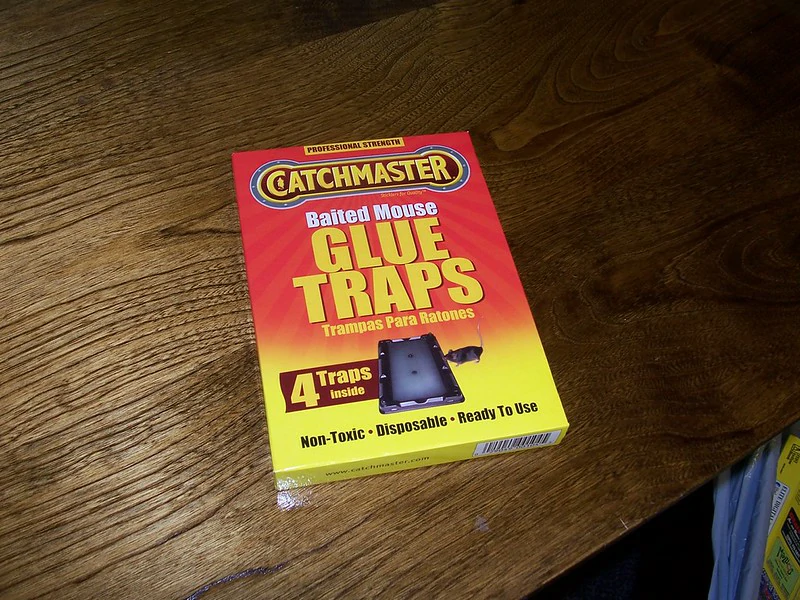
Glue traps, also called glue boards or sticky traps, have been a go-to way to deal with mice and rats for decades.
You press a sticky board flat against the floor, and any rodent that walks over it gets stuck.
They’re cheap and simple. Until recently, they were legal almost everywhere in the UK.
But the law around them has changed fast over the past few years.
If you’re dealing with a mouse problem right now, you’re probably wondering: are glue traps illegal in the UK?
Yes, glue traps are now illegal for the public to use in most of the UK. England banned public use in July 2024, Wales banned it in 2023, and Scotland’s ban came into force on July 1, 2026. Northern Ireland is the only part of the UK where glue traps are still fully legal.
That’s the short version. The details matter a lot here though, since the rules aren’t quite the same in every part of the UK.
The penalties for breaking them are also steeper than most people expect.
Why the UK Banned Glue Traps in the First Place
Glue traps don’t kill a rodent quickly. A mouse or rat that gets stuck on one is usually still alive a full day later.
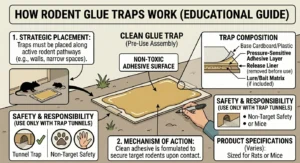
It typically dies from exhaustion, dehydration, or suffocation, not anything quick.
The British Veterinary Association has described the injuries plainly. Trapped animals often tear their own skin, break limbs, and lose fur trying to break loose.
It’s a slow, rough way for an animal to die. That’s the core reason lawmakers moved against it.
There’s also the problem of who else gets caught. Glue traps can’t tell the difference between a mouse and anything else that happens to walk over them.
The RSPCA received over 200 reports in five years of non-target animals getting stuck in glue traps. That included wild birds, hedgehogs, and even pet cats.
So you’ve got two problems stacked together. A slow death for the animal the trap is meant to catch, plus a real risk to animals it was never meant to catch at all.
That combination is what pushed England, Wales, and Scotland to ban public use, one after another.
England’s Glue Trap Ban Explained
England was actually the last of the three nations to bring its ban into force, even though the law had been in the works for years before that.
The Glue Traps (Offences) Act 2022 passed long before it actually took effect.
That gap gave retailers and the public time to use up existing stock and switch to other methods.
That transition period ended on July 31, 2024. From that date, it became a criminal offence for a member of the public to set a glue trap to catch a rodent in England.
It’s also an offence to set one in a way that risks catching a rodent, even if that wasn’t the plan.
The penalties aren’t small either. Anyone caught breaking this law can face up to 51 weeks in prison, an unlimited fine, or both.
There’s a lesser-known part of the law too, and it catches people off guard. Say you come across a glue trap with a live rodent stuck to it.
If you don’t do anything to help, that can be an offence on its own, unless you have a reasonable excuse not to act.
There’s one exception to all of this. Licensed pest control professionals can still use glue traps in England, but only under strict conditions.
A license has to come from Natural England. It’s only meant to be granted when there’s no other workable option, and when public health or safety is genuinely at risk.
Think somewhere like a data center or a power station, where rodents chewing through wiring could cause real harm.
That’s the kind of situation the license route was built for, not a typical house with a mouse problem.
Even with a license, professionals still have to check their traps regularly.
They also have to take steps to avoid catching anything other than the rodent they’re targeting.
Are Glue Boards Still Sold in Shops in England?
Here’s the part that trips a lot of people up. The ban stops people from using glue traps. It doesn’t stop stores from selling them.
Glue boards are still sitting on shelves in DIY stores across England, and they’re still available online too, often with little or no warning about the law attached.
A report from Wildlife Poisoning Research UK looked into this directly.
Published in September 2025, it found glue traps were still widely available to buy in England more than a year after the ban took effect.
This has pushed animal welfare groups to warn shoppers directly. Just because something is for sale doesn’t mean it’s legal for you to use.
If you buy one and set it in your house to catch a mouse, you’re breaking the law. That’s true even if the shop never told you that.
Wales Was the First UK Nation to Ban Glue Traps
Wales actually moved first, before England or Scotland got there.
The Agriculture (Wales) Act 2023 included a full ban on glue traps, which made Wales the first part of the UK to outlaw them outright.
England built a licensing system for professionals into its version of the ban. Wales took a more complete stance instead, without that same carve-out.
The core reasoning was the same as England’s though.
It came down to the suffering caused to trapped animals, plus the risk posed to pets and wildlife that were never the target in the first place.
If you live in Wales, the short version is simple.
Glue traps, glue boards, sticky traps, whatever you want to call them, aren’t something you can legally use to deal with mice or rats in your home.
Scotland’s Glue Trap Ban Came Into Force in 2026
Scotland’s ban is the newest of the three, and it’s also the broadest.
It comes from the Wildlife Management and Muirburn (Scotland) Act 2024, and it officially came into force on July 1, 2026.
What makes Scotland’s law stand out is how much ground it covers. It’s not just illegal to use a glue trap on a rodent in Scotland now.
It’s also an offence to set one in a way likely to hurt any animal.
Supplying or offering to supply a glue trap is banned too, and so is simply possessing one without a reasonable excuse.
That last part matters a lot. In England and Wales, the laws mainly target using the trap itself.
In Scotland, just having a glue trap sitting in your house without a good reason can be enough to put you on the wrong side of the law.
Anyone caught breaking Scotland’s glue trap law faces serious penalties. That includes prison time along with a substantial fine.
The law does still leave a door open for professional pest controllers in genuinely critical situations, similar to England’s setup.
The fine print on exactly how that licensing route will work is still being clarified though.
Northern Ireland Has No Glue Trap Ban Yet
This is the one part of the UK where the picture looks completely different. As of now, glue traps remain fully legal in Northern Ireland, both to buy and to use.
Animal welfare groups in Northern Ireland have been actively campaigning for a ban, hoping to bring the region in line with the rest of the UK.
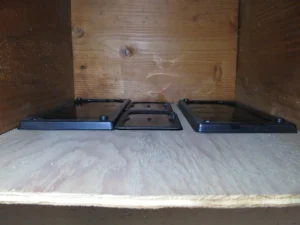
The USPCA in particular has raised the issue directly with the Department of Agriculture, Environment and Rural Affairs.
Petitions calling for a ban have circulated too, gathering public support for change.
So far, no legislation banning glue traps has actually passed in Northern Ireland.
If you live there, using a glue trap to catch a mouse or rat isn’t currently against the law, even though it now is everywhere else in the UK.
Quick Reference: Where Glue Traps Are Legal vs Illegal in the UK
| Nation | Public Use Legal? | Law | Effective Date |
|---|---|---|---|
| England | No (licensed pros only) | Glue Traps (Offences) Act 2022 | July 31, 2024 |
| Wales | No | Agriculture (Wales) Act 2023 | 2023 |
| Scotland | No (licensed pros only, pending clarity) | Wildlife Management and Muirburn (Scotland) Act 2024 | July 1, 2026 |
| Northern Ireland | Yes | No ban currently in place | N/A |
As you can see, Northern Ireland really is the outlier at this point. Every other part of the UK has moved to restrict or fully ban public use.
Pressure is building for Northern Ireland to eventually follow the same path.
What Counts as a Glue Trap Under the Law?
It’s worth being clear about what the law actually covers, since not every sticky product falls under these bans.
A glue trap, under the UK’s legal definition, is a board coated with a non-drying glue.
It’s usually made of cardboard or plastic, and it’s placed where a rodent is likely to walk across it and get stuck.
That’s different from typical sticky insect traps, the kind used for flies or aphids.
Those usually hang vertically and were never designed to catch mammals in the first place.
So if you’re using a sticky trap specifically for insects, that’s a separate category. These rodent bans don’t touch that kind of trap at all.
Are Glue Traps Also a Problem for Pets?
Yes, and this is part of why the bans gained so much public support.
Cats in particular are drawn to the smell and texture of a glue trap, and once a paw or a patch of fur gets stuck, panic usually makes things worse.
A struggling cat can end up with the glue spreading to its face, eyes, or mouth.
Getting the animal loose safely often means using something like cooking oil to loosen the adhesive, and even then, vet attention is usually needed.
Dogs can get caught too, especially smaller breeds that go nose-first into tight spaces like under cabinets or behind appliances.
This is a big part of why groups like the RSPCA pushed so hard for these bans. A trap set for a mouse doesn’t know the difference between a rodent and a family pet.
What Should You Use Instead of Glue Traps?
If you’re dealing with a rodent problem and can’t legally use a glue trap anymore, you still have plenty of options.
None of them carry the same welfare concerns or legal risk.
- Snap traps are still legal across the UK and kill a rodent quickly rather than leaving it to suffer.
- Humane live-capture traps catch the rodent unharmed so you can release it elsewhere.
- Sealing entry points around your home stops mice and rats from getting in to begin with.
- Removing food sources makes your home far less appealing to rodents in the first place.
- Calling a licensed pest control professional is often the safest route for a bigger infestation.
Snap traps in particular have become the go-to replacement. They’re widely available and affordable.
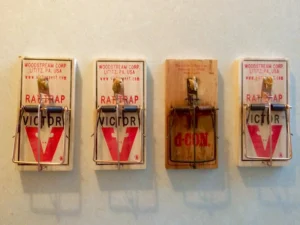
They also don’t come with the same legal or ethical baggage that glue traps now carry across most of the UK.
If you go with a live-capture trap, it’s worth checking local guidance first.
Releasing a rodent in the wrong spot can just move the problem to someone else’s house, or cause other issues depending on where you live.
How Snap Traps Actually Compare in Cost and Effort
A lot of people stuck with glue traps for years simply because they were cheap, often under a pound for a pack.
Snap traps cost a little more per unit, but not by much. Most hardware stores and supermarkets carry them right next to where glue boards used to sit.
The bigger difference is in effort, not price.
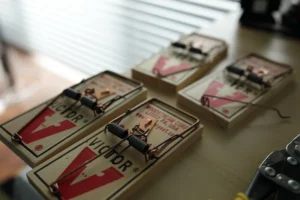
A snap trap needs to be baited and positioned correctly to work well, which takes a bit more thought than just laying down a sticky board.
Once you get the placement right though, snap traps tend to work faster too.
A rodent is caught and dealt with in one motion, rather than being left stuck for hours or days waiting for someone to check on it.
For most households, the switch ends up being a fairly small adjustment once you know what you’re doing.
What Happens If You’re Caught Using a Glue Trap Illegally?
The consequences depend on where you are, but none of them are something to brush off.
In England, using a glue trap without a license can lead to up to 51 weeks in prison, an unlimited fine, or both.
Scotland’s penalties are similarly serious, including the possibility of prison time for a breach.
It’s also worth remembering that simply finding a glue trap with a live animal stuck to it, then walking away, can count as an offence in England.
That’s true unless you have a genuine reason not to help.
The law expects people to actually act, not just avoid using traps themselves.
Given how steep these penalties are, it’s really not worth digging out an old glue trap you might still have sitting in a cupboard from before the ban.
How This Compares to Other Countries
The UK isn’t acting alone here. Several European countries, including Ireland, have already banned glue traps outright.
Ireland’s ban actually goes back much further than the UK’s.
Glue traps have been prohibited there since 2003 under wildlife protection regulations, decades before England, Wales, or Scotland caught up.
Iceland, New Zealand, and parts of Australia have also outlawed glue traps on similar welfare grounds.
In the United States, there’s no federal ban, though momentum is building at a local level. West Hollywood became the first US city to ban glue traps back in 2023.
A bill called the Glue Trap Prohibition Act has also been introduced in Congress, though it hasn’t passed into law yet.
So the UK’s shift away from glue traps fits into a broader, global pattern rather than standing apart from it.
Conclusion
Glue traps have gone from a common household pest control method to something that’s now illegal to use across most of the UK.
England, Wales, and Scotland have all banned public use.
Each did it through a slightly different law, and England and Scotland both allow narrow exceptions for licensed professionals.
Northern Ireland remains the only part of the UK where glue traps are still fully legal. That could change if ongoing campaigns succeed.
If you’re dealing with mice or rats, the safest and most future-proof approach is to skip glue boards entirely.
Snap traps, humane live-capture traps, and basic prevention steps like sealing up entry points will deal with the problem just fine.
They also keep you clear of the animal welfare concerns that got glue traps banned in most of the UK to begin with.

Hi, my name is Ezra Mushala, i have been interested animals all my life. I am the main author and editor here at snakeinformer.com.