
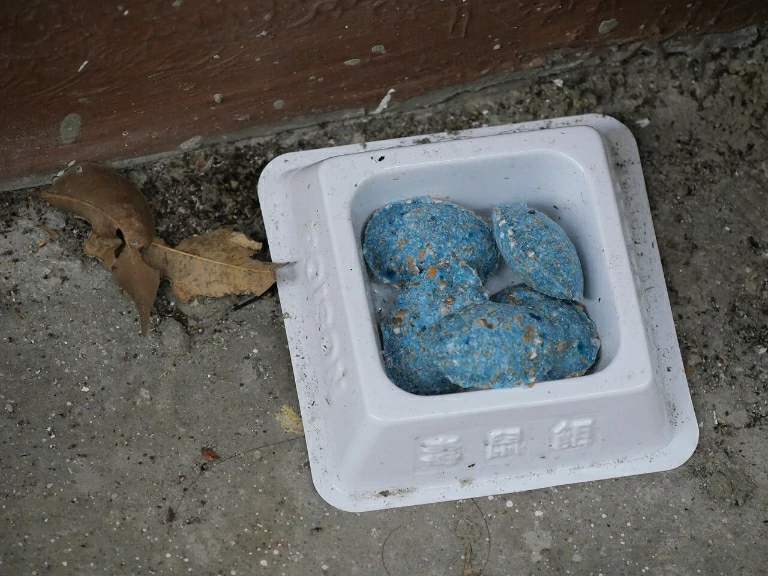
If you have a rat problem, poison is usually the first thing people reach for. But if you have a dog, a cat, or you just like the owls that hunt around your yard, that idea probably makes you nervous.
Rat poison doesn’t stay contained to rats. It moves.
A poisoned rat can wander off, get eaten by a hawk, or get sniffed out by your dog before it even dies. So is there rat poison that won’t hurt an animal like that?
No rat poison is completely risk free to pets or wildlife. Still, some types are a lot safer than others. First generation anticoagulants and cholecalciferol based baits carry a much lower risk of secondary poisoning than second generation anticoagulants like brodifacoum.
The short version is that not every rat poison works the same way. Some build up in a rat’s liver and stay there for months. Anything that eats that rat later gets poisoned too.
Why Rat Poison Ends Up Hurting Animals That Were Never the Target
This mostly comes down to something called secondary poisoning. That just means an animal gets poisoned not by eating the bait itself, but by eating a rat that already did.
Most rat poisons don’t kill instantly. A rat can eat the bait, then keep wandering around for several days before it actually dies.
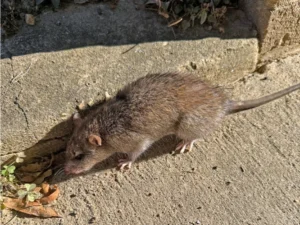
During that time, the poison keeps building up inside its body, mostly in the liver. If a cat, a dog, or a hawk catches that rat before it dies, or eats the body after, all that poison goes with it.
The Wildlife Center of Virginia has found that most rodenticide poisoning cases in wild animals happen exactly this way. It’s rarely an animal eating the bait itself. It’s a predator eating an already poisoned rodent.
So the real danger isn’t just how toxic a poison is to a rat. It’s how long that poison sticks around in the rat’s body afterward, just waiting to be passed along.
Which Rat Poisons Are Most Likely to Cause This Problem?
Not every rat poison carries the same risk. The Environmental Protection Agency (EPA) sorts rat poisons into three groups, and knowing which group a product falls into tells you a lot.
Second generation anticoagulants are the ones to really watch out for. This group includes brodifacoum, bromadiolone, difenacoum, and difethialone.
These were built to kill a rat after just one feeding. That sounds like a good thing. But it actually makes the secondary poisoning problem worse.
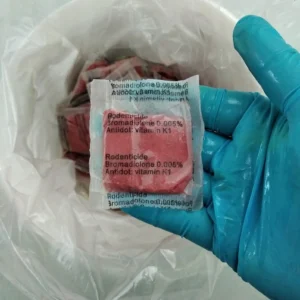
Here’s why. Even one dose can be lethal, but the rat doesn’t die right away. It can take four to fourteen days for the poison to actually finish the job.
During that whole time, the rat keeps eating more bait if it’s around. That means the poison stored in its liver keeps climbing, often far past what would have killed it on its own.
Researchers with the group Raptors Are The Solution traced brodifacoum poisoning directly to two young Cooper’s hawks. The hawks were found dead in a backyard pool in Berkeley, California.
That’s how directly this kind of poison can travel from a rat, into a hawk, and cause real harm.
A Side by Side Look at the Safer and Riskier Options
This is really the heart of the question, so it helps to see everything laid out together. Some rat poisons genuinely break down faster and pass through the food chain less. Others do the exact opposite.
| Poison Type | Examples | Secondary Poisoning Risk | Notes |
|---|---|---|---|
| Second generation anticoagulants | Brodifacoum, bromadiolone, difenacoum, difethialone | High | Stays in the liver for months, the most common cause of poisoned hawks and owls |
| First generation anticoagulants | Warfarin, chlorophacinone, diphacinone | Lower | Usually needs several feedings to work, breaks down faster in the body |
| Cholecalciferol (vitamin D3 based) | Sold under names like Selontra, Terad3 | Lower, but not zero | Causes a fatal calcium overdose instead of blocking blood clotting, no antidote exists |
| Bromethalin | Sold under names like Tomcat, Assault | Moderate | Affects the nervous system instead, still risky if a pet eats it directly |
| Zinc phosphide | Sold under various agricultural brands | Lower for secondary poisoning | Releases toxic gas in the rat’s stomach, mostly a risk if a pet eats bait directly |
| Non-poison options | Snap traps, Rat-X, ContraPest | None | Physically kill or sterilize rats, no toxin ever enters the food chain |
Cornell Wildlife Health Lab explains that anticoagulants vary a lot in how toxic they are to animals that were never the target.
First generation anticoagulants like warfarin usually need to be eaten several times before they cause real harm. That one detail is a big part of why they’re considered safer.
Cholecalciferol works in a completely different way. Instead of stopping blood from clotting, it pushes calcium levels way too high, which becomes fatal.
It’s often marketed as safer for wildlife. Still, that doesn’t mean it’s harmless to a curious dog that gets into a bait station.
Worth knowing too, some rat populations have actually developed resistance to first generation anticoagulants like warfarin.
This is especially true in areas where they’ve been used heavily for decades. That resistance is part of why second generation products became so popular with pest control companies in the first place, even though they carry the higher wildlife risk.
Traps Are Still the Safest Route If Pets Are Around
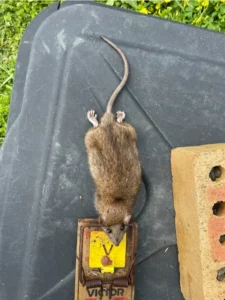
If protecting pets and wildlife is your main goal, skipping poison entirely is really the most reliable option. A snap trap kills a rat directly. There’s no leftover toxin for anything else to eat later.
Live traps work too, though you’d need a plan for releasing the rat somewhere far enough that it doesn’t just wander back.
There are newer non-toxic products worth knowing about too. Rat-X dehydrates rats instead of poisoning them, so nothing toxic ever moves up the food chain.
ContraPest works differently again. It’s a fertility control product, not a poison. It reduces rat numbers over time instead of killing individual rats outright.
None of these options work as fast as poison does on a large infestation. Still, they remove the secondary poisoning risk completely, which matters a lot if your dog likes to dig around outside.
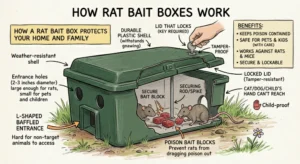
If You Do Use Poison, the Bait Station You Choose Matters
Sometimes an infestation is bad enough that poison feels necessary. If that’s where you land, the bait station you pick matters just as much as the poison itself.
The EPA created a tiered system for consumer bait stations, ranked Tier 1 through Tier 4, based on how resistant they are to kids, dogs, and weather.
Tier 1 stations resist all of that. Tier 4 stations offer the least protection of the four.
Since June 2011, EPA rules have required that rat and mouse poisons sold to regular consumers come packaged with a bait station. This cuts down on kids and pets getting into the bait by accident.
A good bait station keeps the bait itself out of reach. But it does nothing to stop a hawk from eating an already poisoned rat out in the open. That gap only closes with a lower risk poison, or no poison at all.
What This Actually Means If You Have Pets or Local Wildlife You Care About
If you’re dealing with rats and you’re worried about your dog, your cat, or the hawks and owls around your property, a few choices make the biggest difference.
Skip second generation anticoagulants if you can. They’re the most common cause of secondary poisoning in hawks, owls, and foxes, mainly because of how long they linger in a rat’s liver.
If you need something stronger than traps, first generation anticoagulants or cholecalciferol based products carry a lower risk. Neither one is completely risk free if a pet gets into the bait directly, though.
Always use a proper tamper resistant bait station. Place it somewhere pets and wildlife genuinely can’t reach, not just somewhere that’s convenient for you.
And if it’s an option at all, pairing exclusion work with snap traps is really the safest route for everyone. Exclusion just means sealing up the gaps rats use to get inside.
That includes the rat, too. It at least dies quickly instead of suffering for days.
What Poisoning Actually Looks Like in a Dog or Cat
It helps to know what secondary or direct poisoning actually looks like, since the signs are different depending on which type of poison is involved.
With anticoagulants like brodifacoum or warfarin, the danger is internal bleeding. A dog or cat that’s been poisoned might have pale or bleeding gums, blood in their urine or stool, or start breathing fast and shallow.
The tricky part is the delay. Symptoms often don’t show up for three to five days after exposure, since the body has stores of clotting factors that take time to run out.
Bromethalin works completely differently. Instead of affecting blood clotting, it causes swelling in the brain. A pet exposed to bromethalin might seem wobbly, have muscle tremors, or in bad cases have seizures or trouble walking.
There’s no antidote for bromethalin poisoning, which makes it one of the more dangerous options if you have curious pets around.
Cholecalciferol poisoning looks different again. Since it pushes calcium levels too high, a poisoned pet might seem unusually thirsty, urinate more than normal, and become weak or lethargic over a day or two.
What To Do If Your Dog or Cat Gets Into Rat Poison
If you know or even just suspect your pet has eaten rat poison, call your vet, an emergency animal hospital, or a pet poison hotline right away. Don’t wait to see if symptoms show up first, since internal damage can already be happening.
Try to bring the poison’s packaging with you, or a photo of it if the packaging is gone. Vets need to know the exact active ingredient, since anticoagulants, bromethalin, and cholecalciferol are all treated in completely different ways.
Never try to make your dog or cat throw up on your own unless a vet specifically tells you to. If your pet is already having seizures or isn’t fully conscious, inducing vomiting can actually make things worse.
The good news is that when pets get treated quickly, most of them recover fully. Anticoagulant poisoning in particular responds well to vitamin K treatment if it’s caught in time.
Which Wild Animals Are Most at Risk Near Your Home?
If you live somewhere with owls, hawks, or foxes around, it’s worth knowing they’re often the ones paying the price for rat poison, not the rats themselves.
Great horned owls and red-tailed hawks are common backyard hunters across most of the US and Canada, and both species show up again and again in rodenticide poisoning studies.

They hunt rats and mice as a normal part of their diet. That puts them right in the path of secondary poisoning.
Foxes and coyotes are also frequent victims, since they’ll scavenge a dead or dying rat just as easily as they’d hunt one themselves.
Barn owls are a special case worth mentioning too. A single barn owl family can eat over a thousand rodents in a breeding season, which is part of why groups like the Barn Owl Trust actively push people toward non-poison rat control.
An owl that effective at controlling rats naturally is worth more alive than any bait box.
If you’d rather support these natural predators than risk poisoning them, skipping second generation anticoagulants is really the single biggest thing you can do. E
ven switching to snap traps for a few weeks can make a real difference if you know owls or hawks are active nearby.
Is Rat Poison Ever Really “Pet Safe”?
A lot of rat poison packaging uses words like “safer” or “pet friendly,” and it’s worth knowing what that actually means before you trust it completely.
Most rat poisons sold to regular consumers are legally required to carry an EPA warning on the label. It usually says something close to this: the product is extremely toxic to fish, birds, and other wildlife, and scavenging animals might be poisoned if they eat an animal that’s already eaten the bait.
That warning has to be there by law, even on products marketed toward pet owners. So “pet safer” almost always means lower risk, not zero risk.
A product like Rat-X or a cholecalciferol based bait can genuinely be safer than brodifacoum. Still, safer isn’t the same as harmless, especially if a dog eats the bait station’s contents directly instead of through a poisoned rat.
The only rat control method with zero poisoning risk is one that involves no poison at all, which is really why traps and exclusion work keep coming up as the go-to advice from wildlife groups and vets alike.
Conclusion
There’s no rat poison out there that’s completely safe for every animal around it. Still, there’s a real gap between the options. Second generation anticoagulants like brodifacoum carry the highest risk of secondary poisoning because they sit in a rat’s liver for months after it’s eaten.
First generation anticoagulants and cholecalciferol based baits are generally less likely to cause this problem. That’s mainly because they don’t build up in the body in the same way.
If protecting pets and wildlife matters to you, the safest approach is usually to skip poison altogether. Snap traps, exclusion work, and newer non-toxic products like Rat-X all get the job done without putting anything else at risk.
If you do decide poison is necessary, choose a lower risk active ingredient, and always use a proper tamper resistant bait station. It’s a simple habit, but it goes a long way toward keeping everything except the rats out of harm’s way.
At the end of the day, the goal isn’t just killing rats, it’s doing it in a way that doesn’t quietly take out the hawk, the owl, or the family dog along with them. A little research before you buy the first bait box you see makes a real difference.

Hi, my name is Ezra Mushala, i have been interested animals all my life. I am the main author and editor here at snakeinformer.com.