
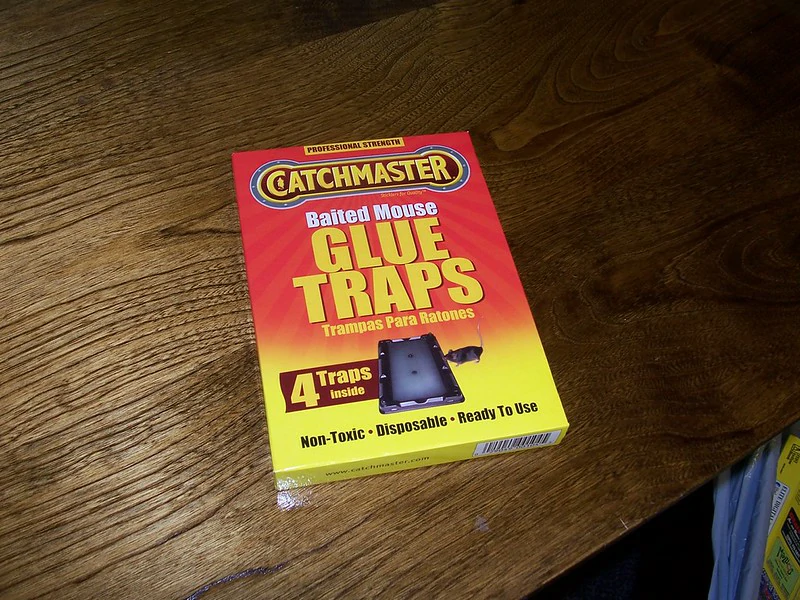
Catchmaster is one of the best-known names in glue traps, and you’ve probably seen those yellow and black boxes on a shelf at a hardware store or a big box retailer.
If you’ve got kids or pets at home, it’s smart to stop and ask before you set one down: are Catchmaster glue traps poisonous?
No, Catchmaster glue traps aren’t poisonous. The company says the glue is non-toxic and pesticide-free, and its safety data sheets list the traps as non-hazardous. They don’t kill with poison, since they just hold bugs and mice in strong, sticky glue.
That’s the short version, and it’s good news if you’re worried about poison around your family. But “not poisonous” doesn’t mean “totally harmless,” so there are a few things you should know before you use one.
Here’s what’s in the traps, what could go wrong, and how to use them safely if you decide to.
What Are Catchmaster Glue Traps and How Do They Work?
Catchmaster makes a lot of different glue traps, and they all work the same basic way. A board, tray, or strip is covered in a thick layer of glue that never dries, and anything that walks or flies onto it gets stuck.
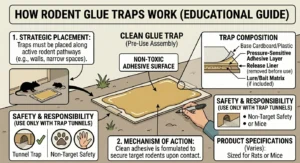
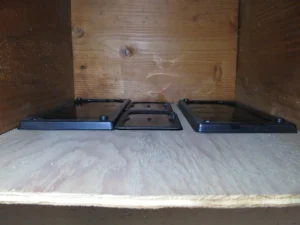
The mouse boards (like the 72MAX) are flat trays sized for mice, while the 48ROO is made for rats. There are also traps for fruit flies, roaches, pantry moths, spiders, and flying insects, plus fly strips that hang from a ceiling.
Some boards come with a scent to draw pests in (like the smell of food), and the company’s safety sheets describe those as scent-free or “non-allergenic synthetic scents.” The point is to make the board smell interesting to a hungry mouse or bug.
The key thing to know is that these traps don’t have a kill mechanism. They don’t use poison, chemicals, springs, or electricity, so the glue does all of the work.
Do Catchmaster Glue Traps Have Poison on Them?
No, Catchmaster glue traps don’t have poison on them. The company describes its glue as non-toxic and pesticide-free, and it says it makes its own products, so it controls what goes into them.
That matters because many pest products you’ll find on the same shelf do use poison. Rodent baits and bait stations, for example, are loaded with chemicals that make a mouse or rat sick, but a glue trap isn’t one of those.
A mouse that gets stuck on a Catchmaster board isn’t being poisoned. It’s being held in place, and it dies slowly from exhaustion, thirst, or hunger instead.
Insects work the same way. They get stuck and can’t get away, and no insecticide is involved.
So if you’re asking whether you could poison yourself, your kids, or your pets by touching one, the answer is no, but the glue still deserves some care.
What the Safety Data Sheets Really Say
A safety data sheet (or SDS) is a document that tells you what’s in a product and how to handle it safely. Companies have to supply them for products like these, and you can usually find them on the maker’s website.
Catchmaster’s sheets for its adhesive traps list the products as non-hazardous under OSHA standards (OSHA is the US agency that sets workplace safety rules). They also show no reportable ingredients under two US chemical laws.
The sheets do give advice for contact. If you get glue on your skin, you remove it with mineral spirits or vegetable oil.
The exact recipe of the glue is a trade secret, so you won’t see a full ingredient list on the box. That’s normal for adhesives, but it also means you’re relying on the company’s word and its paperwork.
You’ll also see an EPA establishment number printed on the packages. That number just identifies the factory where the trap was made, so it doesn’t mean the government has tested or approved the trap itself.
Is the Glue Itself Toxic If You Touch It?
Catchmaster says it isn’t, but it’s still very sticky, and you won’t want it on your hands. The company’s own advice is to handle the traps with gloves.
If glue gets on your skin, don’t scrub hard, because that can irritate it. Rub a little cooking oil or mineral oil into the spot, let it loosen the glue, and then wash with soap and water.
The same trick works on clothes and furniture (even a couch cushion). Oil breaks the glue down, and a little dish soap cleans up the oily patch afterward.
Getting glue in your eye is a different matter. Rinse with plenty of clean water, and if it stays sore or blurry, call your doctor or a poison control center (in the US, that’s 1-800-222-1222).
Some people also get itchy or red skin from sticky products, even when they’re labeled non-toxic. If that happens to you, stop using the trap and wash the area well.
What Happens If a Dog or Cat Eats a Catchmaster Glue Trap?
Dogs and cats sometimes chew on things they shouldn’t, and a glue board with a mouse stuck to it can look like a snack. The good news is that the glue itself isn’t a poison.
A retailer’s Q&A for the mouse boards points out that a dog would have to eat “huge” amounts of the glue to be at risk of poisoning. If your pet swallowed a bit and seems fine, that’s a good sign.
The bigger worry is the board. A swallowed chunk of cardboard or plastic can get stuck in your pet’s stomach or intestines, and that’s a real emergency.
So watch for vomiting, a swollen belly, no appetite, or tiredness over the next day or two. If you see any of those, or if you know your pet ate a lot, call your vet right away.
It’s also worth calling your vet if your pet ate a trap with a mouse on it. The mouse may carry germs like salmonella, and a stuck mouse can be hurt in ways that matter to your pet.
Are Catchmaster Glue Traps Safe Around Kids?
Catchmaster glue traps are non-toxic, so a child who touches one won’t be poisoned. The trouble is that they look interesting, and a toddler who finds a board on the floor may press a hand or a face into it.
The glue is strong and it grips skin and hair, so getting it off can be scary for a child. Stay calm, since a panicked kid can make it worse.
Use oil and a gentle touch, as described in the next section. If a child gets glue in their eyes or mouth, rinse with water and call poison control or your doctor.
The best fix is to keep the traps where kids can’t reach them. Put them behind appliances, inside cabinets, and under heavy furniture, not out in the open along a hallway.
If you’ve got a crawling baby or a curious toddler, you may want to skip glue traps altogether. A closed electronic trap or a covered snap trap in the same spot is much harder for small hands to get into.
What to Do If a Pet or Child Gets Stuck
Catchmaster’s own safety page gives a simple set of steps, and they match what animal rescue groups suggest. First, sprinkle shredded paper or bits of paper towel over the exposed glue so nothing else sticks.
Next, gently rub a light coat of vegetable or mineral oil around the stuck spot. Wait a few minutes, since the oil takes time to loosen the glue.
Then lift your pet or child off carefully, and wash the area with soap and water. Finally, throw the board away.
Don’t pull. Yanking can tear fur or skin, and that’s what makes the whole thing worse.
If it’s a pet, wipe away as much oil as you can with dish soap so your pet doesn’t lick it off. If your pet is very scared, hurt, or stuck in a large area, take it to a vet.
Non-Toxic Doesn’t Mean Gentle: How These Traps Really Kill
Here’s the part that surprises a lot of people. A glue trap can be non-poisonous and still cause a lot of suffering.
A mouse stuck on a Catchmaster board panics and pulls, and it can tear its skin or break its legs.
Animal welfare groups say it can take a day or longer to die, from thirst, hunger, blood loss, or exhaustion.
Vets and groups like the RSPCA call glue boards cruel for that reason, and England, Wales, Scotland, New Zealand, and Ireland have all banned or limited them. A few California cities have too, and some big retailers have stopped selling them.
Catchmaster itself doesn’t recommend using its traps to catch wild animals alive. It tells you to call a vet or a wildlife rehabilitator if a non-target animal gets stuck.
So when you ask whether a glue trap is poisonous, you’re asking about the chemicals. That’s a fair question, but it isn’t the only one worth asking.
What About the Fly Traps and Insect Monitors?
Catchmaster’s insect traps use the same non-toxic idea. The fruit fly trap, the roach and insect monitor, the pantry moth trap, and the spider and insect boards don’t contain insecticide.
Some of the fly traps do have a lure. The safety sheet for one lists a tiny amount of a fly attractant, which is a scent that draws flies in, and the sheet still calls the product non-hazardous.
These traps are also used by pros as monitors. They help you see what’s around, like whether you’ve got German cockroaches or pantry moths, before you decide what to do.
Hanging fly strips are the one to watch. Don’t hang them over food, a dining table, or a pet’s bowl, since dead flies and glue can drip or fall.
For insects, the ethics are less clear than they are for mice (since nobody knows for sure what a fly feels), but the research on insect pain is growing.
If you’d rather not use glue, a fly swatter or a cup and card will do the job for a single bug.
Do Catchmaster Glue Traps Smell or Give Off Fumes?
For the most part, no. The company’s safety sheets list the odor as scent-free or lightly scented with synthetic scents, and they classify the products as non-hazardous under normal use.
Some boards do have a faint smell, since the scent is there to draw in mice and bugs. Most people never notice it, but if you’re sensitive to smells, set the trap in a well-aired spot.
The bigger smell problem comes later. A mouse that dies on a board and sits there for a day or two can start to stink, especially in a closed cupboard or a warm room.
That’s one more reason to check your traps daily. A quick look keeps the smell down, and it means a stuck animal doesn’t sit there longer than it has to.
Can Catchmaster Glue Traps Spread Germs?
They can, and it has nothing to do with the glue. A stuck mouse is terrified, and it will often urinate and defecate on the board as it struggles.
Mouse droppings and urine can carry germs like salmonella. Deer mice, which live in sheds, barns, and cabins across much of the US and Canada, can also carry hantavirus.
That’s one reason the CDC has cautioned against glue traps. If you touch the board or the mouse with bare hands, you could pick up germs.
So wear gloves when you handle any trap with a mouse on it. When you’re done, wash your hands well with soap and water.
Don’t sweep or vacuum dry droppings, since that can put dust in the air. Wet them down with disinfectant first, then wipe them up with paper towels.
How to Use Catchmaster Glue Traps More Safely
If you decide to use them, a few habits will cut your risk. Start by putting traps only where pets, kids, and wildlife can’t reach them, like behind the fridge, under the sink, and inside closed cabinets.
Keep them indoors. Outdoor glue traps catch songbirds, lizards, chipmunks, and even snakes, and you can’t stop that once a board is out in the open.
Catchmaster’s own advice is to fold a mouse board into a box shape, which keeps dust off the glue and helps it work longer. A folded board is also harder for a pet’s paw to reach.
Check every trap every day. If you find a mouse stuck, don’t leave it there, because the kindest thing is to call a vet or a wildlife rehabilitator right away.
Wear gloves whenever you pick one up. Keep a bottle of cooking oil in the kitchen, so you’re ready if a pet or child gets stuck.
Keep boards out of very hot spots like attics in summer. Heat can soften glue and make a mess.
When a board is full or no longer sticky, fold it in half with the glue inside, bag it, and put it in the trash.
What Are Safer and Kinder Options Than Glue Traps?
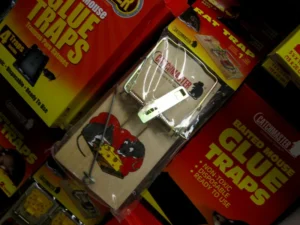
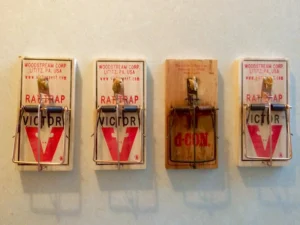
Glue traps are safe from poison, but there are options that are better for pets, kids, and animals. A good snap trap usually ends a mouse’s life in a split second, and an enclosed one keeps the spring out of reach.
Electronic traps are another good choice. The mouse steps into a closed box, gets a short shock, and dies within seconds, and you never have to touch it.
For insects, you can reduce the cause of the problem. Fix leaky pipes, seal cracks, keep food in tight containers, and wipe up crumbs.
For mice, sealing matters most. They can squeeze through a gap about 1/4 inch wide (about the size of a pencil), so stuff holes with steel wool and seal them with caulk.
If you’ve got a big infestation, a licensed pest controller can set up a plan that fits your home. They can also use traps in ways that lower the risk to pets and kids.
Conclusion
So, are Catchmaster glue traps poisonous? No. The company says the glue is non-toxic and pesticide-free, and its safety sheets list the traps as non-hazardous, so you won’t be poisoned by touching one.
The traps still need care. The glue is very sticky, a swallowed board can block a pet’s gut, and a stuck mouse can spread germs.
The bigger issue is that glue traps cause slow suffering, and they catch animals you never meant to trap. That’s why vets and animal welfare groups push back on them.
If you use one, keep it indoors and out of reach, wear gloves, and check it daily. Keep cooking oil handy in case a pet or child gets stuck.
And if you’d rather skip the risks, a good snap trap, an electronic trap, or a sealed-up house will do the job without the mess.

Hi, my name is Ezra Mushala, i have been interested animals all my life. I am the main author and editor here at snakeinformer.com.