
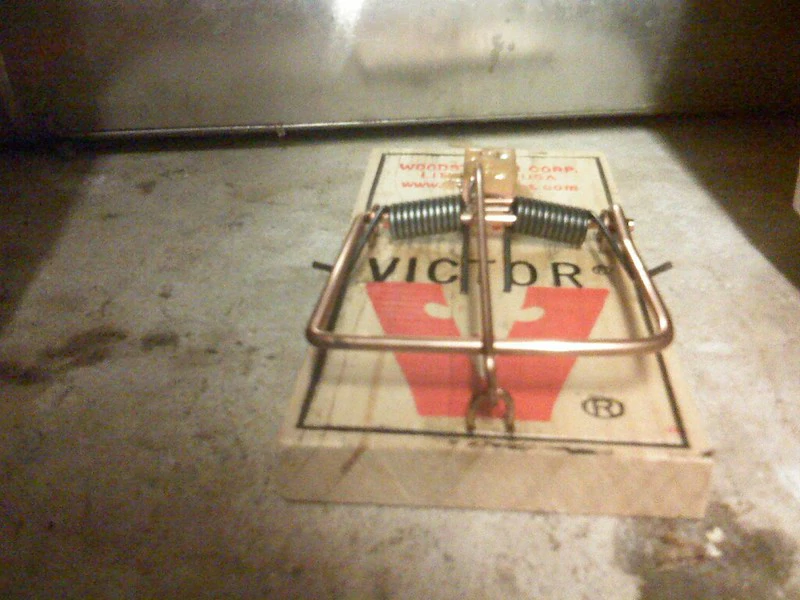
Mouse traps have been around for well over a century, and most of us have set one at some point, usually after hearing scratching inside a wall at night. But since a trap ends a mouse’s life, it’s fair to feel uneasy about it, so are mouse traps cruel?
It depends on the trap. A well-made snap trap or electronic trap usually kills a mouse in a split second, which most experts call the most humane choice for a mouse inside your home. Glue traps, poison, and badly set traps are the cruel ones.
The right answer really comes down to which trap you pick and how you use it. Some traps end a mouse’s life in a moment, while others leave it suffering for hours or even days.
Knowing the difference can help you choose a trap you feel good about, so here’s how each kind stacks up.
What Counts as Cruel When It Comes to Mouse Traps?
When experts judge a trap, they don’t just ask whether it kills the mouse. They ask how much pain and fear the mouse goes through, and for how long.
A fast death with very little distress is the best you can hope for in pest control. A slow one, or one where the mouse stays awake and scared, is the worst.
Animal welfare experts look at a few things. They check how quickly the mouse loses consciousness (the point where it can’t feel anything anymore), whether it gets hurt but survives, and how long it waits in the trap.
Fear counts too, because a mouse you keep alive for hours is stressed even if it isn’t injured.
Judged this way, traps fall into three groups. The quick ones are good snap traps and electronic traps, the stressful ones are live traps you forget to check, and the slow, painful ones are glue boards and poison.
Are Snap Traps Cruel?
Not usually, as long as you pick a good one and set it right. A snap trap swings a spring-loaded bar down on a mouse’s neck or upper back, and a well-built one can end its life in a fraction of a second.
A big 2003 review of rodent control (done at Massey University in New Zealand) backs this up. It found that well-designed snap traps and electric traps usually kill swiftly with little distress, while sticky boards and some poisons cause serious suffering.
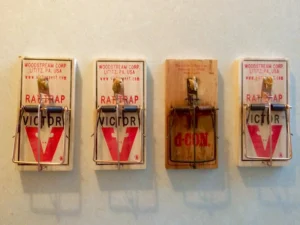
Pest control pros agree, and a snap trap is the tool most of them reach for first when mice get into your house.
It’s also the fastest way to solve the problem, and a faster fix means fewer mice suffering overall. One mouse today can turn into a whole nest of them by next month, so catching it early is easier on everybody.
Still, “well-designed” is the key part of that finding. Not every trap on the shelf is the same, and the cheap ones can let you down.
What Goes Wrong When a Snap Trap Doesn’t Work Right?
Snap traps can fail, and that’s where the cruelty comes in. A mouse that steps on the edge might get caught by a foot, a leg, or the tail instead of the neck.
Then it’s stuck, hurt, and scared until you find it. That’s a bad outcome, and it happens more often with flimsy traps.
Lab tests on trap models have shown that some close much harder and faster than others. So two traps that look the same on the shelf can behave very differently.
Old traps are a problem too, because if yours has a rusty spring, a bent bar, or a worn trigger, it can turn a quick trap into a slow one.
Size matters as well, because a mouse trap is built for a mouse. A rat trap is too stiff for a mouse’s weight (it can walk right across without setting it off), and a mouse trap won’t hold a rat.
If you ever find a mouse alive and hurt in a snap trap, you need to end its suffering fast. If you don’t think you could do that, that’s a good sign to pick a different kind of trap.
How to Set a Snap Trap So It Kills Fast
Start with a sturdy, newer trap that has a wide trigger plate. Pros like these because a mouse has a bigger spot to step on, so it’s more likely to be caught the right way.
Put traps along walls, behind boxes, and in dark corners where you’ve found droppings. Mice like to run along edges, so set each trap with the trigger side against the wall.
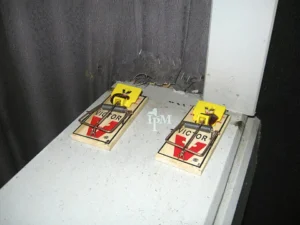
Use a pea-sized dab of peanut butter, pressed into the trigger. Be careful with it if other people use the area, since peanut allergies are common.
Chocolate, a bit of bacon, or a pinch of cotton or yarn (mice love nesting material in the fall) all work too.
Set more than one trap, and put them close together. Mice sometimes jump over a single trap, but they can’t jump over three in a row.
Check your traps every morning, and again in the evening if you can. A quick check means a mouse never waits long, and it keeps the smell down.
Are Electronic Mouse Traps More Humane Than Snap Traps?
Electronic traps are battery-powered boxes. A mouse walks in, steps on metal plates, and gets a short, high-voltage shock that usually kills it within seconds.
Welfare reviews rank electrocution traps right alongside the best snap traps for speed. They have some real perks, too.
The mouse is hidden inside the box, so you never have to see it or touch it. They’re also safer around kids and pets than an open snap trap, since little fingers and paws can’t reach the plates.
However, they cost more than a snap trap, and they need fresh batteries to work well. If the batteries run low, the trap might not do its job, so check the indicator light.
Don’t confuse these with the ultrasonic plug-in gadgets sold to scare mice away. Pest experts say those high-frequency devices aren’t effective, so they just leave mice living in your walls.
Are Live Catch Traps Really Kinder?
On paper, a live trap sounds like the gentle choice, since the mouse is caught alive and you let it go. In real life, it’s more complicated.
A mouse is tiny and burns energy fast. Stuck in a small box without food, water, or a place to hide, it can get stressed, cold, and weak in just a day.
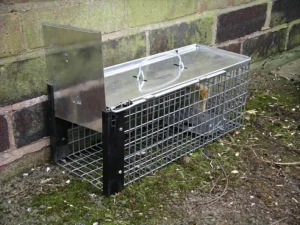
That’s why pest companies tell you to check live traps every few hours. If you forget one overnight or while you’re at work, a live trap can turn out crueler than a quick snap.
Live traps also tend to catch fewer mice than snap traps, because many mice learn to avoid the door. So you may end up with more traps and more waiting.
Then there’s the question of what happens once the mouse is out of the trap. That’s where things get tricky.
Why Mice Released Outside Often Come Back
If you’ve ever wondered whether a mouse can find its way back home, the answer is yes. In one well-known study reported by the CDC, researchers live trapped deer mice in a house and let them go outside.
They released the mice farther and farther away, up to 1,500 meters (about nine-tenths of a mile). Some of them still made it back inside, and a few came back in less than a day.
Adult mice were the best at it. All five adults in the test returned to the house.
Mice moved to a place they don’t know face other problems. They have no food stashed away, no nest, and no safe hiding spots, and the local mice may not welcome them.
Studies on wild mice moved far from home also found that they survive less often. So letting one go at the end of the road isn’t always the kind choice it feels like.
There’s a health side too, because deer mice (common in sheds, cabins, and barns across the western US and Canada) can carry hantavirus, a serious lung illness. The authors of that study said their results strongly support snap trapping mice in homes.
In some places, it’s also against the law to release trapped animals somewhere else, so check your local rules.
Why Glue Traps Are the Cruelest Option
A glue trap holds a mouse in place with a thick, sticky layer, and nothing about it is quick. The mouse panics, pulls, and often tears its skin or breaks limbs trying to get free.
It can stay stuck for hours or days, slowly running out of energy and water. The 2003 review pointed to sticky boards as a serious welfare concern, and it’s the main reason that so many people want them banned.
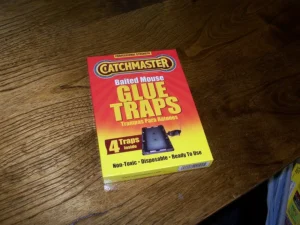
England made it illegal for the public to set rodent glue traps in July 2024. Wales and Scotland have their own bans or limits, and Victoria in Australia and New Zealand have acted too.
Glue traps also catch whatever happens to walk by. Wildlife rescuers regularly find songbirds, lizards, and even snakes stuck on them.
If you’re trying to be kind to mice, this is the one trap to avoid.
What About Poison?
Poison baits might seem like the easy way out, since the mouse eats the bait and goes off to die somewhere else. But most baits sold for homes are anticoagulants (chemicals that stop blood from clotting), and the way they work isn’t gentle.
A mouse can take several days to die. During that time, it can get weak, tired, and sick from bleeding inside its body.

The 2003 review flagged these poisons as a serious welfare concern as well. And the harm often doesn’t stop at the mouse.
When owls, hawks, foxes, or bobcats eat a poisoned mouse, they can get sick too. This is called secondary poisoning, and it’s a big reason wildlife groups push back on rodent poison.
Poison also puts curious kids and pets at risk. If you do use bait, you should keep it in a locked, tamper-proof station that’s out of reach.
Poisoned mice also tend to die inside walls and ceilings. That means a smell you can’t fix, and a bigger mess than any trap would leave you.
Do Mice Feel Pain and Fear?
Yes, they do. Mice are mammals, and their nervous systems work a lot like ours.
Lab teams have even built a “mouse grimace scale.” It tracks tiny changes in a mouse’s face (squinting eyes, puffed cheeks, ears pulled back) that show when it’s hurting.
Mice feel fear too. They squeal at pitches we can’t hear, and they get stressed when they’re trapped or handled roughly.
So it makes sense to care about how a mouse dies, even if you have no choice but to get rid of it. But there are real reasons to act.
House mice can spread germs like salmonella, and they chew on wires, contaminate food, and trigger asthma. They also multiply quickly, since a female can have a new litter of five or six pups every few weeks.
That means a couple of mice can turn into dozens in a few months. Doing nothing isn’t kind to you or to the mice, because a bigger problem usually ends up with more poison and more traps.
What Do Mouse Traps Do to Other Wildlife and Pets?
Traps can’t tell a house mouse from other small animals. Chickadees, sparrows, chipmunks, and shrews all get caught in open traps left outside, and even a raccoon can fall victim to a big rat trap.
Your pets and kids can get hurt too, since a snap trap can pinch a curious dog’s nose or a toddler’s finger.
The fix is simple. Keep your traps inside, behind furniture or appliances, and tucked into covered bait boxes that let mice in but keep larger animals out.
If you have outdoor cats or backyard birds, skip open traps on porches and patios. Check each one daily, and take traps in at night if you’re not using them.
Which Type of Mouse Trap Should You Choose for Your Home?
If you want the kindest option that still works, a good snap trap or an electronic trap is usually the best pick.
Snap traps are cheap and quick, so they’re a fair choice if you’re comfortable setting and checking them, and you can buy several for the price of one fancy gadget.
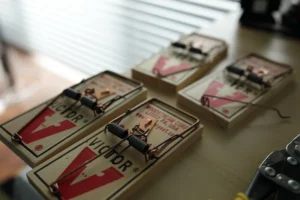
Electronic traps cost more up front, but you never have to see or touch the mouse. That makes them a nice fit if the thought of a snap trap makes you squeamish, and they’re easier to use around kids because the plates sit inside a closed box.
Enclosed snap traps are a third choice, and they’re basically a plastic tunnel with a snap trap hidden inside. Mice run in, the bar does its job, and your dog’s nose or your cat’s paw can’t reach the spring.
Live traps only make sense if you can check them every couple of hours and you’re ready to deal with the mouse afterward. For most homes, that’s a lot to ask, and the mouse often comes right back.
Skip glue boards and poison completely. Both can cause days of suffering, and both put pets and wildlife at risk.
Whichever trap you choose, buy one made for mice, and put it where mice actually run, like along walls and behind appliances. A good trap in the wrong spot won’t catch anything, and that just drags the problem out.
How Can You Make Mouse Control Kinder?
The kindest thing you can do is stop mice from getting in at all. Once your home is sealed, you’ll need fewer traps, and fewer mice will ever have to die.
Mice can squeeze through gaps as small as 1/4 inch (about the width of a pencil). So walk around your house and look for holes near pipes, dryer vents, garage doors, and the foundation.
Stuff gaps with coarse steel wool, which mice can’t chew through, then seal them with caulk or metal flashing. Add door sweeps to the bottom of exterior doors, and fix torn window screens.
Timing matters too. Mice move indoors as the weather cools, so fall is the best time to seal up, especially if you live somewhere with cold winters like Minnesota or Ontario.
Take away their food as well, because if you leave it out, mice will keep coming back. Store flour, cereal, and pet food in glass or hard plastic containers, sweep up crumbs, and keep trash cans tightly lidded.
Outside, pull firewood piles away from your walls. Trim back shrubs and vines that climb up the house, since house mice are good climbers.
How to Check Traps and Dispose of a Mouse Safely
Always wear gloves when you handle a trap or a dead mouse. Mice can carry germs, and you don’t want to touch them with your bare hands.
The CDC suggests spraying the mouse and trap with a disinfectant (a mix of bleach and water works) before you touch them. Then place the mouse in a plastic bag, seal it, and put that bag inside a second one before tossing it in the trash.
Wash your hands well with soap and water when you’re done. Clean the area around the trap, too.
When you clean up droppings, don’t sweep or vacuum them dry. That can kick germs into the air, so wet them down with disinfectant and wipe them up with paper towels instead.
Conclusion
So, are mouse traps cruel? It depends on the trap.
A good snap trap or electronic trap usually ends a mouse’s life in a moment, which is why most experts see them as the most humane choice for a home.
Glue traps and poison are the cruel ones, since both can leave a mouse suffering for hours or days. Live traps sound kinder than they are, because mice are stressed in them and often find their way back.
If you need to use a trap, pick a sturdy one, set it well, and check it often. Keep it inside, where wildlife and pets can’t reach it.
Better yet, start with the cause. Seal the gaps, put the food away, and your home won’t give mice much reason to come in.

Hi, my name is Ezra Mushala, i have been interested animals all my life. I am the main author and editor here at snakeinformer.com.