
If you’ve read anything about glue traps recently, you’ve probably come across strong opinions on both sides. Veterinary groups call them cruel. Some countries have banned them outright.
Yet in most of the world, glue traps, also known as glue boards or sticky traps, are still sitting on store shelves completely legally.
So why are glue traps legal in so many places, despite all the criticism?
Glue traps are legal in most places because they’re classified as mechanical traps, not pesticides or chemical products. That puts them outside the laws that regulate most pest control tools. Combined with slow-moving legislation and genuine debate over alternatives, this has kept them legal almost everywhere except a handful of countries and states.
That’s really the short version. The full picture involves how laws get written, what counts as a “trap” under different legal systems, and why banning something that’s been used for decades takes longer than you’d expect.
Glue Traps Don’t Meet the Legal Definition of a Pesticide
This is probably the single biggest reason glue traps have stayed legal almost everywhere, even in places actively debating a ban.
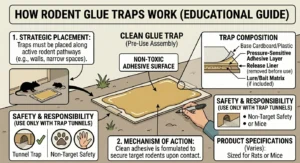
Most laws that regulate pest control products are built around the idea of a pesticide, a chemical substance meant to kill or repel a pest. Glue traps don’t use any chemical to kill anything. The adhesive itself isn’t toxic. It simply immobilizes whatever touches it.
Because of this, glue traps often fall completely outside the legal definition lawmakers originally wrote their pesticide laws around. This isn’t a loophole someone snuck in on purpose. It’s more that the law was written for a different kind of product entirely.
Glue Traps Were Around Long Before Modern Animal Welfare Laws
Part of why glue traps ended up in this gray area comes down to simple timing.
Sticky trapping methods go back thousands of years, with early versions used in ancient Rome, Greece, and Egypt using natural tree resin instead of manufactured adhesive.
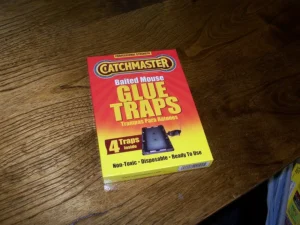
Modern glue traps, made with synthetic adhesive, became common household products by the mid-20th century. That’s long before most current animal welfare legislation existed.
By the time countries started writing detailed animal welfare laws, usually from the 1970s onward, glue traps were already an established, widely sold product. Lawmakers writing those newer laws were often focused on more visible forms of animal cruelty.
Think of the treatment of farm animals or pets, rather than pest control tools that had already been sitting on shelves for decades.
This is a common pattern with a lot of older, established products. It’s much easier to write a law preventing a new product from being sold than it is to go back and ban something that’s already deeply built into an existing industry.
Israel is a clear example of how this plays out in a real legal system. In 2017, an animal welfare group petitioned the country’s Supreme Court, asking it to force a ban on glue traps under the country’s pesticide regulations.
The court rejected the petition. Its reasoning was straightforward.
Glue traps simply don’t meet the legal definition of a “pesticide” under Israeli law. That means the existing regulations couldn’t be used to ban them, no matter how harmful the court considered them to be.
This same basic issue shows up in Canada too. In British Columbia, the Ministry of Environment has said it doesn’t have the authority to ban glue traps under the province’s Integrated Pest Management Act.
That law specifically doesn’t classify snap traps, pheromone traps, or glue traps as pesticides.
Glue Traps Are Considered Mechanical Devices, Not Chemical Products
This ties directly into the pesticide classification issue, but it’s worth understanding on its own. It explains why regulators treat glue traps so differently from something like rat poison.
A mechanical trap, whether it’s a snap trap, a live-catch cage, or a glue board, works through a physical mechanism rather than a chemical reaction.
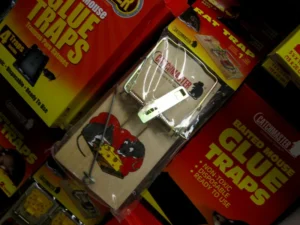
Regulatory agencies like the EPA in the United States generally don’t require the same registration and review process for purely mechanical traps that they require for chemical pesticides.
This distinction matters a lot in how laws get written. A chemical pesticide has to go through testing, registration, and ongoing safety review before it’s allowed on the market.
A glue trap, since it’s just cardboard or plastic and a sticky adhesive, usually doesn’t trigger any of that same regulatory process.
If you’ve ever wondered why a glue trap can just sit on a shelf next to snap traps with no warning label at all, this is really the reason.
This is part of why glue traps have historically been treated more like a simple household tool, similar to a fly swatter.
Laws Take Time to Catch Up With Public Opinion
Even in places where lawmakers agree glue traps cause real suffering, actually passing a law banning them takes time, sometimes years.
A bill has to be written, introduced, debated, and voted on, and that process looks different depending on the country or state.
In the United States, the Glue Trap Prohibition Act was introduced in Congress back in 2024. As of now, it still hasn’t passed into law.
Similar bills have been introduced in states like New York and New Hampshire. Cities like West Hollywood and Ojai in California passed their own local bans while waiting for state or federal movement.
This is a pretty normal pattern in how legislation works.
Public opinion, petitions, and advocacy campaigns tend to move faster than actual lawmaking. A petition can gather thousands of signatures in weeks. Passing an actual law, especially one that affects an entire industry built around selling a legal product, usually takes much longer.
So if you’re waiting on a ban to show up where you live, it may take a while yet.
The Pest Control Industry Still Relies on Glue Traps
This is a practical reason that doesn’t get discussed as much, but it plays a real role in why bans move slowly.
Glue traps are cheap, widely available, and useful in specific situations, particularly for monitoring pest activity or catching insects in tight spaces where other traps don’t fit.

Pest control companies, food processing facilities, and warehouses have used them for decades as part of standard pest management.
When a country or state proposes a ban, industry groups often push back. That’s not necessarily because they think glue traps are humane, but because a full ban removes a tool they’ve relied on and may not have an immediate replacement for.
In England, this tension led to a compromise rather than a full ban. The Glue Traps (Offences) Act 2022 makes it illegal for the general public to use glue traps on rodents.
Licensed pest control professionals, though, can still get a license to use them in specific, limited situations where no other method will work.
This kind of middle-ground law is often what happens when there’s a real conflict between animal welfare concerns and an industry that’s built years of practice around a product.
Why Don’t General Animal Cruelty Laws Already Cover Glue Traps?
This is a fair question, since most countries do have some form of animal cruelty law on the books already.
The issue usually comes down to how those laws define cruelty. Most animal cruelty laws were written with direct, intentional acts of harm in mind, like beating an animal or deliberately starving one.
Using a store-bought pest control product as intended, even if the outcome is prolonged suffering, doesn’t always fit neatly into that legal definition.
The person setting the trap isn’t directly inflicting harm with their hands, and the product is legally sold for exactly this purpose. Because of that, prosecutors and courts have generally not treated it as a cruelty offense.
This is a big part of why animal welfare groups have pushed for laws that specifically name glue traps, rather than relying on general cruelty statutes.
A specific law removes the ambiguity. A general cruelty law leaves too much room for a case to fail based on how “intent” or “cruelty” gets legally defined.
Even Where Glue Traps Are Restricted, Enforcement Is a Separate Problem
This is a part of the picture that’s easy to miss if you only look at what the law says on paper.
England’s licensing system is a good example. Even though it’s now illegal for regular people to set a rodent glue trap without a license, the law isn’t being consistently followed or enforced.
An undercover investigation by Humane World for Animals UK in 2025 found that a large share of independent hardware and DIY stores were still selling glue traps to the public.
Not one of the retailers checked warned customers that using the traps without a license was against the law.
The British Pest Control Association has publicly criticized this gap. They argue that the legal loophole around retail sales has made the licensing system far less effective than it was meant to be.
This shows that even a country with an actual law on the books can end up with glue traps being effectively legal in practice. Enforcement simply hasn’t caught up with the legislation.
There’s Genuine Disagreement Over What Counts as a Humane Alternative
Part of why glue traps haven’t been banned everywhere comes down to an unresolved debate about what should replace them.
Veterinary and animal welfare groups generally point to snap traps and electronic traps as more humane options. Both are designed to kill quickly rather than immobilize an animal for an extended period.
However, some pest control professionals argue that glue traps still serve a purpose in certain situations, like monitoring where pests are entering a building.
They say other tools genuinely can’t replace that as effectively. Because of that disagreement, some lawmakers hesitate to pass an outright ban without a clear consensus on what should be used instead.
This matters most in commercial or industrial settings, where pest control is a legal requirement in the first place.
Glue Traps Are Legal in Most of the US and Canada Specifically
Zooming in on North America specifically helps explain the current situation a bit more clearly.
In the United States, there’s no federal law banning glue traps. The Glue Trap Prohibition Act remains a proposed bill, not an actual law, and only a handful of California cities have passed local bans so far.
In Canada, the situation is similar. There’s no federal or provincial ban anywhere in the country, though British Columbia has come the closest, with municipalities and the BC SPCA pushing hard for one.
Both countries show the same basic pattern. You’ve got strong public criticism and growing advocacy, but a legal and regulatory system that hasn’t caught up yet.
Part of that comes down to the pesticide classification issue, and part of it comes down to the simple fact that passing new legislation takes time.
Does the Legal Status of Glue Traps Say Anything About How Humane They Are?
Not really, and this is worth being clear about if you’re trying to decide whether to use one yourself.
A product being legal doesn’t necessarily mean it’s considered safe or humane by the people who study it.
Veterinary groups, including national veterinary associations in multiple countries, have publicly stated that glue traps don’t meet basic humane standards for killing an animal.
Legal status often comes down to how a law was written decades ago and what category a product happens to fall into. It also comes down to how quickly, or slowly, legislation moves, rather than any genuine judgment on whether something is humane.
This is actually a pretty common pattern outside of pest control too. Plenty of products and practices remain legal for years after significant evidence or public opinion has shifted against them, simply because changing the law is a slower process than changing people’s minds.
Do Retailers Play a Role in Why Glue Traps Stay Legal?
Yes, in a quieter way than lawmakers or industry groups, but it’s still worth understanding.
Retailers are generally allowed to sell any product that hasn’t been specifically banned. Glue traps have historically sat right next to snap traps and rodenticides on store shelves without much distinction between them.
Since most shoppers don’t think to question whether a product on a store shelf might be controversial, retailers rarely face pressure to pull a legal item.
That said, this has started to shift in recent years. Major retailers like Dollarama and Dollar Tree in Canada have voluntarily stopped selling glue traps.
Kmart, Big W, and Target in Australia have done the same, after sustained pressure from animal welfare organizations, even in places where selling them remains completely legal.
This shows that public pressure can sometimes move faster than legislation. A retailer can choose to stop selling something overnight, while passing an actual law banning it can take years of committee hearings, votes, and political negotiation.
Still, voluntary retail decisions only go so far. They don’t stop other stores from continuing to sell the same product, and they don’t create any actual legal consequence for someone who wants to keep using one they already own.
Is This Likely to Change Soon?
Based on the current trend, it’s reasonable to expect more restrictions over time, even if a complete worldwide ban isn’t coming anytime soon.
Countries that have already banned or restricted glue traps, like England, Ireland, New Zealand, and several Australian states, generally went through the same pattern.
Years of advocacy and public pressure came first, followed by a specific law once enough political will built up. The US and Canada both appear to be somewhere in the middle of that same process right now.
Active bills, petitions, and local bans are already in place, even without a full national law yet.
Conclusion
Glue traps are legal in most places mainly because they’re classified as mechanical traps rather than chemical pesticides. That puts them outside the laws most governments use to regulate pest control products.
This isn’t a deliberate loophole so much as an outdated classification that hasn’t caught up with modern concerns.
On top of that, legislation simply takes time. Industry groups have pushed back against full bans, and there’s genuine disagreement over what should replace glue traps in every situation where they’re currently used.
Even in places with actual restrictions, like England, enforcement hasn’t always kept pace with the law, which means glue traps can remain widely available even where they’re technically illegal to use.
None of this means glue traps are considered safe or humane by the experts who study animal welfare.
It just means the legal system hasn’t fully caught up yet. Based on the pattern in other countries, it’s likely to keep shifting toward more restriction rather than less in the years ahead.

Hi, my name is Ezra Mushala, i have been interested animals all my life. I am the main author and editor here at snakeinformer.com.