
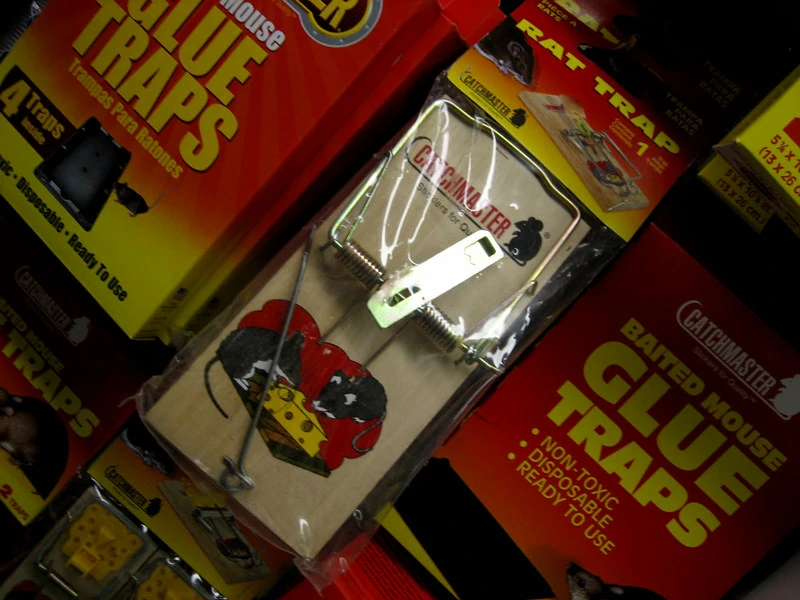
If you’ve got mice getting into your home, glue traps have probably shown up on your radar at some point. They’re cheap, easy to find at almost any hardware store, and glue boards or sticky traps, as they’re also called, promise a simple fix.
But before you set one down, it’s worth asking a more specific question: are glue traps bad for mice?
Yes, glue traps are bad for mice. A mouse caught on a glue board doesn’t die right away. It gets stuck alive and can struggle for hours or even days before dehydration, exhaustion, or suffocation finally kills it. Along the way, mice can suffer serious injuries as they struggle to break free.
That’s the short version, but there’s a lot more worth knowing about exactly what actually happens to a mouse once it’s stuck, and why researchers who study this closely rate it as one of the harsher ways to deal with a rodent problem.
What Happens the Moment a Mouse Touches the Glue
A mouse’s first instinct when its feet stick to a glue trap is to pull away and keep moving. That instinct works against it immediately.
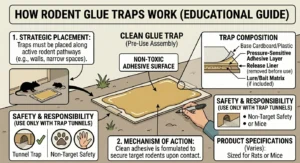
Every attempt to break free presses more of its body into the adhesive. A stuck foot becomes a stuck leg, then a stuck side, and within a short time, the mouse can be almost entirely pinned to the board.
Researchers going back to a 1983 study by Frantz and Padula documented mice found with fur pulled out and skin torn from this exact struggle. Some had broken limbs from the force of trying to twist free.
This isn’t a rare worst case scenario. It’s a documented, repeated pattern in how mice respond to being stuck.
How Long Does It Take a Mouse to Die on a Glue Trap?
This is one of the most important things to understand, since it’s really the center of why glue traps are considered so hard on mice specifically. Death isn’t quick.
Research reviewed by welfare scientists Mason and Littin found that mice can take anywhere from several hours to several days to die once trapped, depending on how long the trap goes unchecked.
The same 1983 study found mice covered in their own waste after just three to five hours. That’s a sign of how much stress and fear they were already experiencing early on.
Death usually comes from a combination of exhaustion, dehydration, and starvation.I n some cases, a trapped mouse may also struggle to breathe if its nose and mouth become obstructed by the adhesive.
None of these are quick outcomes. A snap trap, by comparison, is built to end things in a fraction of a second when it works correctly.
Why Struggling Makes Things Worse, Not Better
It might seem like a mouse’s best chance is to keep fighting to get free, but with a glue trap, that instinct actually backfires. The adhesive is built to hold tighter the more something moves against it.
This means the natural response to danger, which usually helps a mouse escape a predator, becomes the thing that traps it more completely.
Eyes can also become damaged from contact with the glue. In some cases a mouse’s mouth becomes stuck shut, meaning it can’t eat or drink even if food and water happen to be nearby.
What the Research Says About Mouse Suffering
This isn’t just anecdotal. Formal welfare assessments have looked specifically at what glue traps put a mouse through, and the findings are consistent.
The RSPCA in Australia has reviewed the evidence and classified the welfare impact of glue boards as prolonged and extreme, based on studies of how long the suffering lasts and how severe it tends to be.
A 2026 expert workshop involving over a dozen animal welfare specialists reached a similar conclusion. It rated glue traps as causing very poor welfare outcomes even under the most charitable assumptions.
That workshop specifically assumed the traps were being used by trained professionals checking them every 15 hours and euthanizing any mouse found alive with a quick blow to the head.
Even under those conditions, meant to represent best practice rather than a worst case, the researchers still rated the method as causing extreme suffering.
For context, that’s a far more careful setup than what happens in most homes, where a trap might go unchecked for a day or more without anyone specifically trained in how to end a mouse’s suffering quickly.
Does a Mouse Actually Feel Fear and Pain Like This?
It’s a fair question, and the answer from veterinary experts is yes. Mice have nervous systems built the same basic way mammals generally are, which means they’re capable of experiencing real pain and real fear, not just a reflexive response.
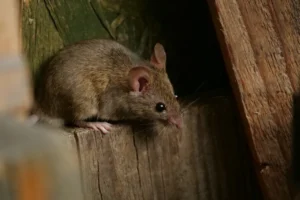
Veterinarians who’ve studied trapped rodents have pointed to specific signs of this distress, including heavy urination and defecation, a response tied to fear across most mammals, not just mice.
Vocalizing, sometimes described as squealing, has also been documented in trapped mice, another sign that what’s happening isn’t painless.
Mice are also social animals, and a lactating female caught on a glue trap can’t get back to her young, adding a layer of distress beyond just her own physical suffering.
Are Baby Mice Affected Differently Than Adults?
Yes, and not necessarily in a way you’d expect. Younger mice are lighter and often less strong than fully grown adults.
That means they can become completely stuck to a glue trap almost instantly, with even less ability to resist the adhesive than an adult mouse has.
At the same time, a young mouse separated from its mother, or a nursing mother separated from her litter, adds a wider impact beyond the individual animal caught in the trap.
If a lactating female gets stuck, her pups back in the nest are left without a source of food. That can affect them even though they were never anywhere near the trap itself.
This ripple effect isn’t something most people think about when they set out a single glue board in the kitchen or garage. But it’s a real part of the picture researchers point to when assessing how harmful these traps are to mouse populations more broadly.
Is There Any Version of a Glue Trap That’s Less Harsh on Mice?
Somewhat, though none of them fully solve the underlying problem. Some products marketed as catch and release traps use a lighter adhesive designed to let a mouse struggle free after a short time rather than holding it indefinitely.
These reduce the total time a mouse spends stuck, which does lessen the severity somewhat.
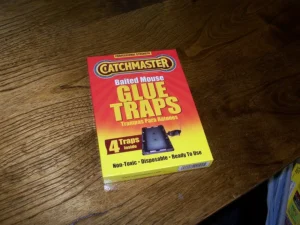
However, they’re also considerably less effective at actually catching anything, since the same weaker glue that lets a mouse escape also makes it easier to avoid in the first place.
Checking a standard glue trap frequently, ideally every hour or two rather than once a day, also shortens how long a mouse suffers if one does get caught.
It doesn’t eliminate the underlying cruelty, but it does reduce how extreme the outcome ends up being compared to a trap left untouched for a full day or longer.
What Vets Recommend If You Find a Mouse Still Alive
If you’ve already used a glue trap and find a mouse stuck and alive, you’re left with a genuinely hard decision, and it’s worth knowing what the options actually are.
Attempting a release is one path, done by slowly working vegetable or mineral oil into the points of contact to loosen the glue without tearing skin.
This takes patience, since rushing it can cause the exact kind of injury you’re trying to prevent. If the mouse seems alert and unhurt afterward, it can be kept somewhere warm and quiet for a short recovery period before being released outdoors.
If the mouse is badly injured, or the situation doesn’t allow for a safe release, veterinary and welfare organizations generally point to one option: a single, quick, decisive action to end its suffering (done by a professional)
Neither option is pleasant. But leaving a stuck, struggling mouse untouched for hours or days is the outcome that causes the most harm by far.
Why This Matters If You’re Just Trying to Solve a Mouse Problem
None of this means you have to accept mice living in your walls or cupboards. It just means glue traps come with a cost that’s worth knowing about before you reach for one.
Snap traps, when set correctly, are built to end things quickly rather than hold a mouse in place for an unknown stretch of time. Electronic traps work on a similar quick kill principle, using a fast shock rather than a slow physical struggle.
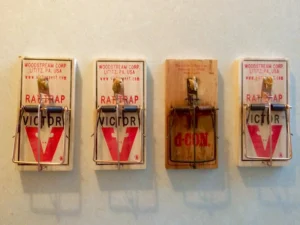
If the goal is simply fewer mice in your home, these options tend to get you there with far less prolonged suffering involved.
Sealing up the small gaps mice use to get in, and removing easy food sources like open pet food or crumbs left on counters, also cuts down on how often you need to deal with a trapped mouse in the first place.
Do Mice Feel This the Same Way a Larger Animal Would?
This comes up a lot, since it’s easy to assume a small animal somehow experiences less. That assumption doesn’t hold up scientifically.
Mice share the same basic nervous system structure as other mammals, including the pain receptors and stress hormone responses that drive fear and physical suffering.
Studies measuring stress hormones like corticosterone in mice show clear, measurable spikes in response to fear and restraint. That’s the same basic biological response you’d see in a larger animal facing a threat it can’t escape.
Size doesn’t change the underlying biology here. A mouse’s smaller body just means a faster path to exhaustion and dehydration, not a reduced capacity to feel what’s happening to it.
This is part of why veterinary groups have pushed back hard against the idea that rodents are somehow a lesser case compared to other trapped animals. The nervous system doing the work is built the same way, just packaged into a smaller body.
How This Compares to Other Common Mouse Control Methods
It helps to see where glue traps land next to the other options most people consider. Snap traps, when set and placed correctly, are built to kill within a fraction of a second.
That means there’s very little window for suffering if the trap works as intended.
Poison baits work through an entirely different mechanism, causing internal bleeding over several days as the mouse’s blood fails to clot properly.
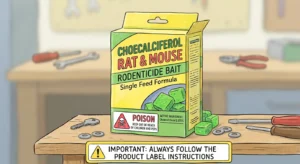
This method also involves real suffering, just spread out differently and usually out of sight, since a poisoned mouse often dies somewhere inside a wall or under a floor rather than in plain view.
Live catch traps avoid killing the mouse at all, provided they’re checked often and the mouse is released somewhere appropriate afterward.
Left unchecked for too long, though, a trapped mouse can still suffer from stress, dehydration, or extreme temperatures depending on where the trap sits.
Compared to all of these, glue traps stand out for combining two things that don’t usually go together: a slow death, and a level of physical trauma from the animal’s own struggling that the other methods generally don’t involve.
What This Means If You Still Decide to Use One
Understanding all of this doesn’t necessarily mean glue traps are off the table for everyone, since plenty of people still end up using them, often because that’s what happened to be available.
If that’s the situation you’re in, a few things genuinely reduce how much a mouse ends up going through.
Checking the trap as often as realistically possible, ideally multiple times a day rather than once, cuts down the window of suffering significantly.
Placing the trap somewhere you’re likely to notice quickly, rather than a forgotten corner of a basement or garage, makes a real difference too.
Having a plan ready before you ever set the trap also matters more than it might seem.
Knowing in advance whether you’re prepared to attempt a release, or whether you’ll need to act quickly to end a trapped mouse’s suffering, means you won’t be scrambling to figure out what to do the moment you actually find one stuck.
Do Wild Mice React Differently Than House Mice?
Not really, at least not in any way that changes the core welfare picture. House mice (Mus musculus), the species most commonly caught in home glue traps, respond to being stuck the same basic way any small rodent does.
That means panic, struggle, and the same cascade of physical consequences that come from fighting against an adhesive that only tightens its grip.
Wild deer mice or field mice that occasionally wander indoors show the same pattern when caught. The species doesn’t change the underlying biology of how the trap works or how the animal experiences it.
What can differ slightly is how quickly exhaustion sets in, since smaller or younger mice tend to tire out faster than a larger, healthy adult.
But the overall outcome, a prolonged struggle followed by a slow death if left unchecked, stays consistent across nearly every small rodent species that ends up stuck on one of these traps.
Conclusion
Glue traps are hard on mice in a very specific, well documented way. A mouse caught on one doesn’t die quickly, it’s held in place while its own instinct to struggle makes things worse.
That often leads to torn skin, broken limbs, or worse, before exhaustion, dehydration, or suffocation eventually ends things hours or even days later.
Researchers, veterinarians, and welfare organizations who’ve studied this closely tend to agree this is one of the more severe outcomes a mouse can go through.
If you’re dealing with a mouse problem and want a faster outcome for the animal, a snap trap or an electronic trap will generally get the job done without days of struggling first.
Whatever method you choose, checking it often and being ready to act quickly if you find a mouse still alive will always reduce how much suffering is actually involved. That small habit alone makes a bigger difference than most people realize.

Hi, my name is Ezra Mushala, i have been interested animals all my life. I am the main author and editor here at snakeinformer.com.