
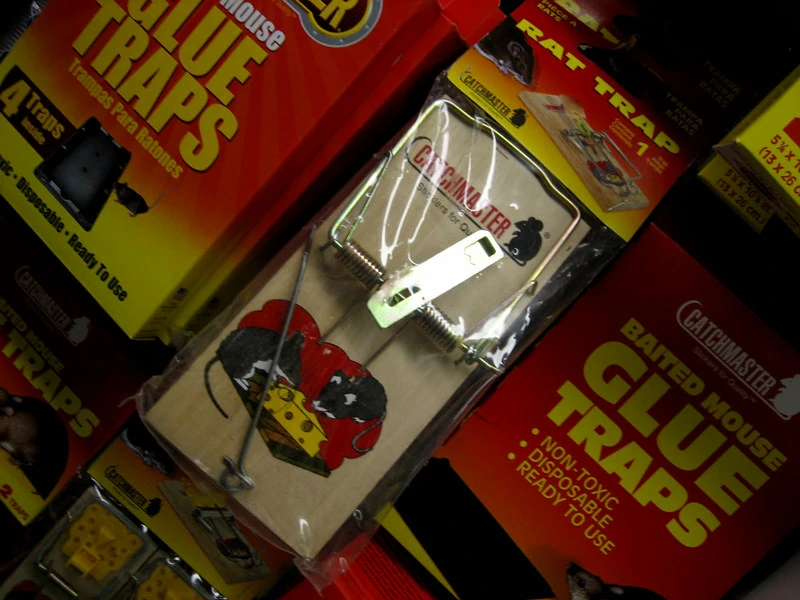
If you’ve got a mouse problem, you’ve probably stood in the pest control aisle wondering which trap to grab.
Glue traps, also called glue boards or sticky traps, sit right next to the classic spring-loaded snap trap, and both promise to solve the same problem.
So which one actually works better, glue traps or snap traps?
Snap traps are generally more effective and considered more humane than glue traps. A well designed snap trap kills quickly and doesn’t rely on the mouse walking across a specific spot the way a glue trap does. Glue traps are cheaper and easier to place in tight spots, but research has found mice often learn to avoid or escape them.
So the honest answer depends on what you’re weighing more heavily. Cost and convenience, or actual results and how much the mouse suffers along the way.
Let’s go through both sides properly.
How Each Trap Actually Works
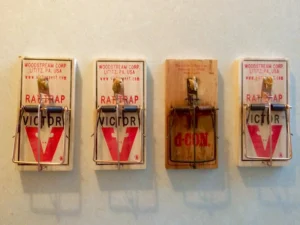
A snap trap uses a spring-loaded bar that snaps down fast when a mouse triggers the trigger plate, usually while going for bait.
Done right, it delivers a quick blow to the head or neck.
A glue trap, glue board, or sticky trap works completely differently. It’s a flat surface coated in a very strong adhesive, and a mouse gets stuck the moment it steps onto it.
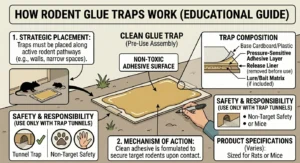
Unlike a snap trap, a glue trap doesn’t kill on its own. It just holds the mouse in place until it eventually dies from exhaustion, dehydration, or starvation, unless someone intervenes first.
That basic difference is really the foundation for almost every other comparison between the two. One causes a fast death, and one causes a slow one.
Which One Actually Catches More Mice?
This is where things get more interesting than most people expect.
The research doesn’t line up with the assumption that glue traps are simply “easier” and therefore more effective.
A field study conducted at Purdue University tested glue traps against snap traps and other trap types in real agricultural and livestock buildings over several years.
Researchers watched mice at night to see how they actually reacted to the traps.
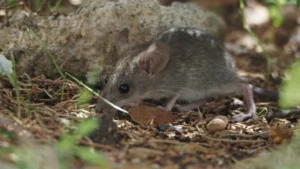
What they found was that many mice, especially ones with any prior experience around glue traps, learned to avoid them.
Some even physically neutralized the glue surface, sometimes by dragging debris or bedding material over it. The same study found that capture rates favored non-glue traps by a meaningful margin.
That said, results aren’t universal.
A separate study out of India’s Central Arid Zone Research Institute found glue traps actually outperformed some single-catch trap types in certain settings, particularly in poultry farms.
Part of the reason is that glue traps can catch several rodents in one setting rather than just one at a time.
The honest takeaway is that neither trap type wins outright on effectiveness. It depends heavily on the environment, how experienced the local mouse population is, and how the traps are placed.
Snap Traps Are More Reliable in Certain Conditions
Snap traps have a few practical advantages that don’t show up in a simple side-by-side spec comparison.
They aren’t affected by dust, humidity, or cold weather the way glue traps are.
A glue trap’s adhesive can actually stop working properly in very cold temperatures. Dusty environments can also coat the glue and reduce its stickiness over time.
Snap traps also don’t fail because of oily bait or nearby oily substances, which is a genuine problem for glue traps.
Grease or cooking oil residue near a glue trap can mess with how well the adhesive grips.
The tradeoff is that snap traps need more precise placement. They won’t work in a space with less clearance than the trap needs to snap shut.
They can also be triggered early by debris or insects moving across them.
Glue Traps Have Real Practical Advantages Too
To be fair to glue traps, they solve some problems that snap traps genuinely can’t.
They’re flexible in a way a rigid snap trap isn’t. A glue board can be laid flat, folded into a box shape, cut down, or custom fit into oddly shaped gaps that a mouse might travel through.
They also work well in extremely tight spaces where a snap trap physically wouldn’t fit or wouldn’t have room to trigger properly.
Multi-catch glue traps can catch more than one mouse in a single placement, which matters if you’re dealing with a larger infestation rather than just one or two mice.
Cost is another factor. Glue traps are typically cheaper per unit than snap traps, though they’re single-use.
The cost difference shrinks quite a bit if you’re dealing with an ongoing problem and reusing snap traps over and over.
The Welfare Difference Is Where This Comparison Gets Serious
Effectiveness aside, the bigger reason this comparison comes up so often is animal welfare. This is where the two methods really diverge.
The RSPCA in Australia has directly compared trap types. They describe a well designed snap trap as faster and more humane than both live trapping and glue traps.
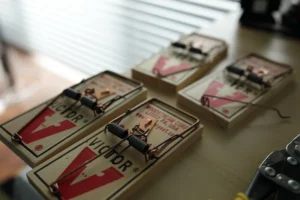
A snap trap that works correctly kills within about a minute, often within seconds. Once the mouse is unconscious, it doesn’t feel anything else.
A glue trap doesn’t offer anything close to that. Since it doesn’t kill the mouse directly, the animal is left alive and stuck.
This can go on for hours, sometimes days, until it finally dies from exhaustion, dehydration, or starvation.
This is really the core reason welfare groups, veterinarians, and a growing number of lawmakers have pushed back against glue traps specifically, in a way they haven’t for snap traps.
What Happens When Either Trap Goes Wrong
Neither method is foolproof, and it’s worth understanding what a failure actually looks like for each one.
A poorly placed or poorly designed snap trap can catch a mouse without killing it cleanly, if the mouse only triggers part of the mechanism.
This leads to injury and prolonged suffering rather than the fast death the trap is supposed to deliver.
Checking the trap regularly and replacing any that fail to kill cleanly reduces this risk quite a bit.
A glue trap “failing” looks different. Since it was never designed to kill quickly in the first place, a “working” glue trap and a “failing” one can look almost identical from the outside.
Either way, you’re looking at a live, stuck, suffering mouse.
The main risk unique to glue traps is catching the wrong animal entirely.
Wildlife rehabilitators across the US have reported treating birds, snakes, chipmunks, and even house cats after they got stuck on a trap meant for rodents.
Cost and Convenience Compared Side by Side
Here’s how the two stack up on the practical, day-to-day factors people actually care about.
| Factor | Snap Trap | Glue Trap / Glue Board / Sticky Trap |
|---|---|---|
| Cost per unit | Higher, but reusable | Lower, but single-use |
| Setup difficulty | Requires careful placement | Very easy to place |
| Works in tight spaces | Sometimes limited by size | Very flexible |
| Affected by cold or dust | No | Yes |
| Time to death | Seconds to about 1 minute | Hours to several days |
| Risk of catching wrong animal | Low | Higher |
| Welfare ranking | Generally considered humane | Considered inhumane by most welfare groups |
Looking at this table, snap traps come out ahead on welfare and reliability in certain conditions.
Glue traps win on upfront cost and flexibility in tight or oddly shaped spaces.
Is One of Them Actually Illegal?
Snap traps face essentially no legal restrictions anywhere in the US or Canada. Glue traps are a different story.
Glue traps are still legal to buy and use across almost all of North America, but that’s slowly starting to change.
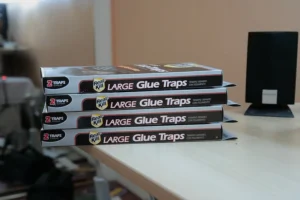
A handful of California cities, including West Hollywood, Ojai, and Culver City, have banned the sale and use of glue traps entirely.
New York, New Hampshire, and California have all seen bills introduced at the state level.
In 2024, Congressman Ted Lieu introduced the Glue Trap Prohibition Act, aiming for a nationwide ban. None of these bills have passed as of this writing.
Outside North America, glue traps are already banned or heavily restricted in England, Scotland, Wales, Ireland, New Zealand, Iceland, and parts of Australia. Snap traps haven’t faced anywhere near this level of pushback.
What the CDC Actually Recommends
The CDC has a clear stance here, and it comes down on the side of snap traps for a health reason rather than a welfare one.
A mouse that’s panicking and stuck on a glue board will usually urinate and defecate while it struggles.
If that mouse is carrying a virus like hantavirus, that waste can carry the virus too.
Since a trapped, stressed mouse produces more waste right around the trap than one killed instantly, glue traps can actually raise your exposure risk.
For this reason, the CDC specifically recommends snap traps over glue traps for home use.
Which One Should You Actually Use?
If effectiveness, welfare, and health risk are all on your mind, snap traps come out ahead in most home situations.
This is especially true if you’re dealing with mice in fairly accessible spots like along walls or behind appliances.

Glue traps still make sense in a narrower set of situations. Mainly very tight, oddly shaped gaps where a snap trap physically won’t fit.
They also work well as a monitoring tool, helping you figure out where mice are actually active before committing to a different trap type in that spot.
If you do use a glue trap and find a live mouse stuck on it, the most humane thing you can do is end its suffering quickly rather than let it continue.
Leaving it to die slowly only adds more time to its distress.
Whichever trap you choose, checking it often, at least once a day, makes a real difference in outcomes either way.
Which One Is Safer Around Pets and Kids?
Both trap types carry some risk if a curious pet or small child gets to them, but the risks look different.
A snap trap can genuinely injure a finger, paw, or nose if it’s triggered while something is still close to the mechanism. This is a real, if uncommon, risk with any spring-loaded trap.
A glue trap doesn’t have a mechanical injury risk in the same way, but a pet that gets stuck can panic and struggle just as badly as a trapped mouse would.
Freeing an animal from strong adhesive safely is genuinely difficult without professional help.
Placing either trap type somewhere pets and small children can’t reach, like inside a cabinet with a small gap or tucked behind heavy furniture, lowers the risk with both.
If a pet does get stuck on a glue trap, don’t try to pull it free yourself, since this usually tears fur or skin. Vegetable oil can help loosen the glue, and a vet or wildlife rehabber can finish the job safely.
Neither Trap Solves the Root Problem
It’s worth remembering that catching individual mice, with either method, doesn’t fix why mice are getting into your home in the first place.
Mice reproduce fast. A female house mouse can have a new litter roughly every three weeks under good conditions.
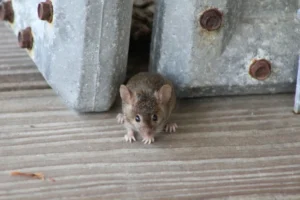
Because of that, trapping alone rarely keeps pace with a growing population.
Sealing up entry points is the most effective long term fix. Mice can squeeze through gaps as small as a quarter inch, roughly the width of a pencil.
Even tiny cracks around pipes, vents, or door frames are worth checking and sealing with steel wool or caulk.
Removing food sources helps too. Keep food in sealed containers, and clean up crumbs or spills fairly quickly, since an easy meal is what draws mice in to begin with.
Does This Comparison Change for Rats Instead of Mice?
Everything above holds true for rats too, but the practical differences between glue traps and snap traps get more pronounced with a bigger animal.
Rat-sized snap traps need to deliver a much stronger blow to kill cleanly, since rats are heavier and more powerful than mice. A snap trap sized for mice won’t work safely or effectively on a rat.
Glue traps face a bigger problem with rats specifically. A rat is often strong enough to partially free itself from the adhesive, sometimes at the cost of losing fur, skin, or even a limb in the process.
This makes the welfare concern even more serious with rats than with mice, since a partially escaped, injured rat can survive in significant pain for an extended period rather than staying fully stuck.
Because of this, most professional pest control guidance leans even more heavily toward snap traps or other quick-kill methods when rats, rather than mice, are the target.
Do Pest Control Professionals Prefer One Over the Other?
Professional exterminators tend to use both, but usually for different purposes rather than picking one as an overall favorite.
Snap traps and electronic traps are typically the go-to for actually eliminating mice, since a fast, reliable kill matters more in a professional setting where results need to be consistent.
Glue traps show up more often as a monitoring tool in commercial and industrial settings, placed along walls to track where rodent activity is happening before committing serious effort to a specific area.
This professional pattern actually lines up well with what the research suggests. Glue traps are useful for detection, while snap traps tend to be the more dependable choice when the goal is actually getting rid of the mouse.
Conclusion
Are glue traps better than snap traps? On effectiveness, it genuinely depends on your specific situation.
Research has found mixed results depending on the environment and how experienced local mice are with each trap type.
On welfare, snap traps are clearly the better choice. A well designed snap trap kills in seconds, while a glue trap, glue board, or sticky trap can leave a mouse suffering for hours or even days.
Glue traps still have real practical advantages, mainly lower upfront cost and the ability to fit into tight or unusually shaped spaces a snap trap can’t reach.
If you’re choosing based on what most welfare groups, vets, and even the CDC recommend, snap traps come out ahead for most home situations.
Either way, sealing up entry points and removing food sources will do more to solve your mouse problem long term than either trap ever will on its own.
Whichever one you pick, treating the trap as a short-term tool rather than a permanent fix will save you a lot of repeat trips to that same pest control aisle.

Hi, my name is Ezra Mushala, i have been interested animals all my life. I am the main author and editor here at snakeinformer.com.