
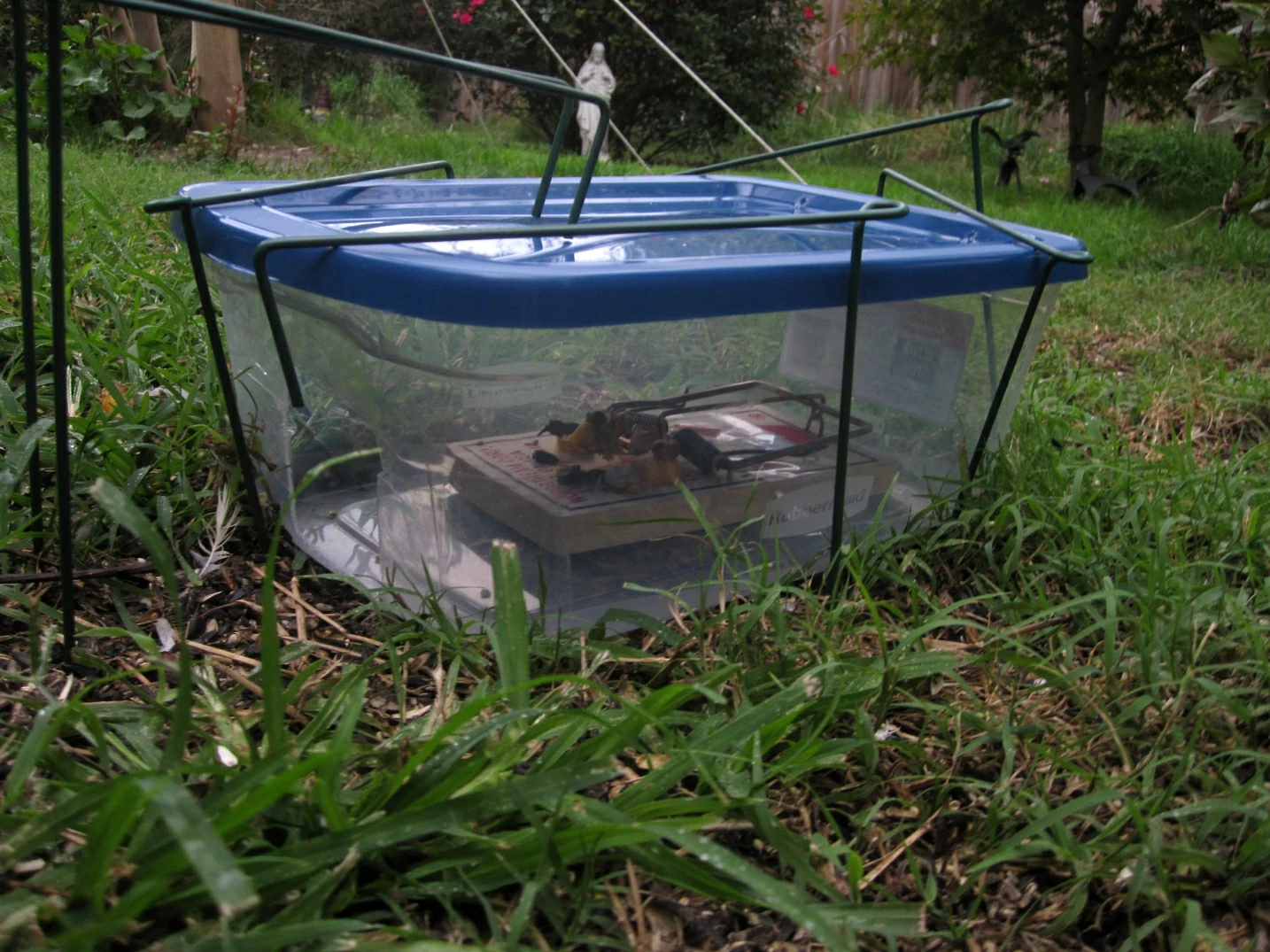
There’s no shortage of ways to trap a rat, from a classic snap trap to poison bait stations to calling in a professional outright.
With that many choices, it’s easy to end up buying the wrong one, or trying three different methods before something finally works. So what’s actually the best way to trap rats?
For most homeowners dealing with a small to moderate rat problem, snap traps placed along walls near confirmed activity are the best overall method. They’re affordable, effective, and don’t carry the poisoning risk that bait stations do. Larger infestations usually call for a combination of methods, or professional help.
The truth is there isn’t one single “best” method for every situation. What works well for a garage with two or three rats isn’t the same as what you’d need for a full-blown infestation spread across a house.
Let’s go through each option honestly, including where each one falls short.
Snap Traps Are the Best Starting Point for Most People
Snap traps are the classic option, and for good reason. A spring-loaded bar snaps down when a rat disturbs the trigger, usually killing it instantly.
They’re affordable, reusable, and don’t involve any chemicals, which makes them a safer choice around kids and pets compared to options that rely on poison.
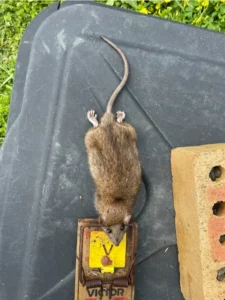
You also get immediate, visible confirmation that a trap worked, instead of wondering whether a rat wandered off somewhere to die out of sight.
The tradeoff is that snap traps only work if you actually know where rats are active. A snap trap placed randomly in a room with no real rat traffic will likely sit empty no matter how good the bait is.
This is why snap traps work best once you’ve confirmed activity through droppings, gnaw marks, or grease smudges along a wall.
Used correctly, in the right spot, with fresh bait, they remain one of the most reliable tools available to a homeowner.
Bait Stations Work Differently, With Real Tradeoffs
Bait stations use poison disguised as food, housed inside a tamper-resistant box designed to keep pets and children out. A rat eats the bait, then either dies near the station or carries the poison back to share with others in its nest.
This second part is actually a real advantage in certain situations.

Since the poison can spread through a colony, bait stations can sometimes reach rats a snap trap never would, especially ones hiding somewhere you haven’t found yet.
Bait stations are also less dependent on precise placement than snap traps. Since they lure rats in with disguised bait, they can work reasonably well even if you’re not entirely sure exactly where the rats are traveling.
The downside is real, though. It takes a day or two for the poison to work, so you won’t get the same immediate confirmation a snap trap gives you.
There’s also a real risk if a pet or child manages to access the bait, or if a pet eats a poisoned rat before it’s found and disposed of.
Because of this risk, most pest professionals recommend using bait stations carefully, or leaving them to a licensed technician entirely, especially in homes with young kids or curious pets.
Electronic Traps Offer a Cleaner Middle Ground
Electronic traps use a battery-powered mechanism that delivers a quick, lethal shock once a rat enters to reach the bait inside.
They combine some of the best parts of snap traps and bait stations. Like a snap trap, they kill quickly and don’t rely on poison. Like a bait station, they’re enclosed, so you don’t have to see or directly handle the rat until you’re ready to dispose of it.
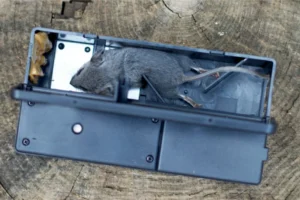
Most electronic traps also include an indicator light to show when they’ve caught something, so you’re not left checking an empty looking trap over and over.
The main downside is cost, since electronic traps run noticeably more expensive than a basic snap trap, especially if you need several of them for a bigger area.
For homeowners who want a humane kill without chemicals and less hands-on handling, electronic traps are often worth the extra cost.
Live Traps Are Gentler, But Come With Real Downsides
Live traps capture a rat without killing it, holding it inside a small cage until you release it elsewhere.
This appeals to people who don’t want to kill an animal, and it’s a completely understandable instinct. The problem is what happens after the catch.
You’re left handling a live, stressed rat, and simply releasing it nearby often means it just finds its way right back inside your home.
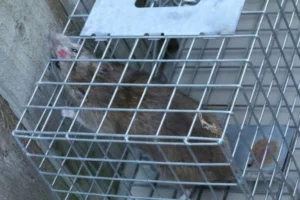
Relocating a rat any real distance away, often a mile or more, raises its own complications. It may not even be legal in your area, and there’s a real question of whether the rat can survive in unfamiliar territory.
Some wildlife agencies actually discourage this practice, since a relocated rat frequently just becomes a different neighborhood’s problem.
Live traps aren’t a bad option, but they come with more effort and complexity than most people expect going in.
Glue Traps Are Widely Available, But Rarely Recommended
Glue traps use a sticky adhesive surface that immobilizes a rat once it steps onto it.
They’re cheap and simple to set out, which is part of why they’re so common. But most pest control professionals actually steer people away from them for a few solid reasons.
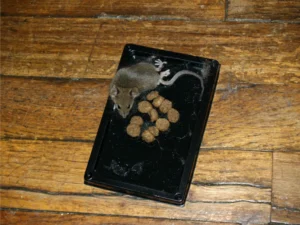
They’re not selective, meaning pets, birds, or other unintended animals can get stuck just as easily as a rat can. They also don’t kill quickly, so you’re often left dealing with a live, distressed animal that’s still stuck and struggling.
Given the more humane and more effective alternatives available, glue traps are generally considered one of the weaker choices on this list, even though they’re often one of the cheapest and easiest to find at a hardware store.
Why Trap Placement Matters More Than Trap Type
No matter which method you choose, placement has a bigger impact on success than the specific trap or bait station you pick.
Rats travel the same paths over and over, almost always hugging walls, pipes, and other continuous surfaces rather than crossing open floor space. This is a survival habit, not a preference, since staying close to a wall keeps a rat partially hidden and near an escape route.
The best placement for any trap type is directly along one of these paths, ideally right where you’ve already spotted droppings, gnaw marks, or grease smudges.
A great trap in a random open spot will almost always underperform a basic trap placed exactly where rats are already traveling.
Comparing the Main Trapping Methods Side by Side
Since each method has real strengths and real drawbacks, it helps to see them laid out together.
| Method | Speed | Safety Around Pets/Kids | Best For |
|---|---|---|---|
| Snap traps | Instant | Safe if placed carefully | Most homeowners, confirmed activity |
| Bait stations | 1-2 days | Riskier, poison involved | Larger or hidden infestations |
| Electronic traps | Instant | Safe, enclosed | Homeowners wanting less handling |
| Live traps | Instant capture | Safe, but relocation is tricky | People unwilling to kill rats |
| Glue traps | Slow, not lethal | Not selective, risky for pets | Generally not recommended |
Looking at this side by side, snap traps and electronic traps come out ahead for most typical home situations, offering a strong mix of speed, safety, and reliability without the risks that come with poison or the complications of live capture.
How Much Does Each Method Actually Cost?
Cost is a real factor for most people deciding between methods, and the differences add up more than you might expect.
Snap traps are the cheapest option by far, often just a few dollars each, and they’re reusable for years with basic cleaning between catches. For a small infestation, a handful of snap traps can cost less than a single visit from a pest control company.
Bait stations sit in the middle, with the station itself being a one-time cost but the poison bait needing regular replacement. Ongoing costs can add up if an infestation drags on for weeks or months.
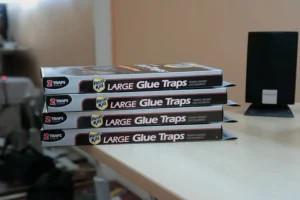
Electronic traps cost more upfront, often several times the price of a basic snap trap, but they don’t require replacing bait or chemicals, so the cost mostly stops after the initial purchase.
Professional pest control tends to be the most expensive option in the short term.
But it often solves a larger problem faster than DIY methods can, which can actually save money if it prevents weeks of an infestation causing property damage or repeated trap purchases.
How to Decide Which Method Fits Your Situation
With so many options, it helps to think through a few honest questions about your specific situation before choosing.
If you know exactly where rats are active, thanks to droppings, gnaw marks, or grease smudges along a specific wall, snap traps or electronic traps are usually your best bet. Precise placement is their biggest strength.
If you’re unsure where the infestation is coming from, or you suspect rats are hiding somewhere hard to reach like a wall void or crawl space, a bait station can cover more ground without needing pinpoint placement.
If you have young children or pets in the home, safety should weigh heavily in your decision. Snap traps and electronic traps carry no poisoning risk, which makes them a meaningfully safer choice in a busy household.
If the problem feels bigger than a handful of rats, with activity in multiple rooms or during daylight hours, it’s worth strongly considering professional help rather than continuing to experiment with DIY methods on your own.
For a small problem, a couple of well-placed snap traps might be all you need. But once an infestation grows past a certain point, professional help genuinely becomes the more effective option, not just the more convenient one.
A licensed pest control technician has access to tools, monitoring methods, and experience most homeowners simply don’t. They can identify entry points you’d likely miss on your own, and they know how to combine trapping, exclusion, and bait placement into one coordinated plan instead of guessing your way through it.
This matters because rats reproduce fast. A single female rat can have up to 6 litters a year, with as many as a dozen babies per litter, so a problem that starts small can grow into something much bigger within just a few months.
If you’re seeing rats during the day, hearing activity in multiple rooms, or catching several rats a week with no sign of the problem slowing down, that’s usually a sign you’ve moved past what home trapping alone can realistically handle.
Indoor vs Outdoor Trapping Calls for Different Choices
Where you’re trapping changes which method makes the most sense, since indoor and outdoor environments come with different risks and different rat behavior.
Indoors, safety around kids and pets usually takes priority, which is part of why snap traps and electronic traps tend to be the better choice inside a home. Bait stations carry more risk indoors simply because there’s more chance of a curious pet or child finding one.
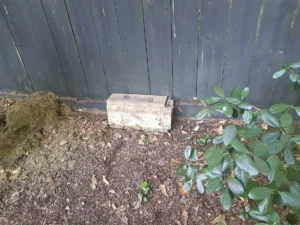
Outdoors, in a yard, shed, or garage, bait stations become a more reasonable option, especially in areas kids and pets don’t regularly access. Weather resistance also matters more outdoors, since a snap trap left exposed to rain can rust or stop functioning properly over time.
Outdoor rats also tend to have more competing food sources nearby, from gardens to trash to fallen fruit, so bait and trap placement often needs to be more deliberate outside than it does indoors, where rats have fewer alternatives to begin with.
If you’re dealing with rats in more than one location, like both a garage and an attic, it’s common to use a different method for each space rather than trying to force one single approach to work everywhere.
Combining Methods for the Best Overall Results
Rather than picking just one method and hoping it’s enough, the most effective approach often combines a few different tools at once.
Snap traps placed along active walls handle the rats you already know about. Sealing entry points with steel wool and caulk stops new rats from replacing the ones you’ve caught.
Removing food sources, like unsecured pet food or trash, makes your home less appealing in the first place.
For larger or more stubborn infestations, adding a bait station in a hard-to-reach area (like a crawl space or wall void) can help reach rats that never cross paths with your snap traps at all.
This layered approach tends to work faster and more permanently than relying on a single method, since it addresses the rats that are already inside and closes off the reasons new ones would want to come in.
Timing and Patience Matter More Than People Expect
Even the best method won’t produce instant results, and it helps to know what a realistic timeline actually looks like.
Rats are naturally cautious around new objects, a trait called neophobia. It can take several days for a rat to approach a brand new trap with any confidence, so an empty trap after a day or two isn’t necessarily a sign something’s wrong.

Pre-baiting, meaning leaving a trap unset with food on it for a few days before actually arming it, can speed this process up considerably.
Rats that get comfortable feeding from an unset trap are far more likely to approach it confidently once it’s finally set to catch them.
Rats are also nocturnal, so most activity happens overnight. Checking traps first thing in the morning, rather than expecting results during the day, gives you a much more accurate picture of what’s actually working.
Conclusion
The best way to trap rats really depends on your specific situation, but for most homeowners, snap traps placed carefully along walls near confirmed activity offer the best mix of cost, safety, and reliability.
Electronic traps are a strong upgrade if you’re willing to spend a bit more for a cleaner, hands-off kill.
Bait stations and live traps both have their place, but they come with real tradeoffs, whether that’s the poisoning risk of bait or the hassle of relocating a live rat.
Glue traps, despite being cheap and common, are generally the weakest option on the list.
For a small problem, one good method placed correctly is often enough. For anything bigger, combining a few methods together, or bringing in a licensed professional, tends to solve the problem faster and more completely than sticking with just one approach and hoping for the best.

Hi, my name is Ezra Mushala, i have been interested animals all my life. I am the main author and editor here at snakeinformer.com.