

If you’ve spotted a rat in your yard or heard scratching in your walls, you’re probably searching for something you can try right now, before calling in a professional. Homemade rat repellents are popular for exactly this reason.
They use things you likely already have at home, and they feel safer than putting down poison, especially if you have kids or pets running around. But do homemade rat repellents actually work?
Some homemade rat repellents, like peppermint oil, predator urine, and clove oil, do have real, measurable effects on rat behavior in scientific studies. Others, like mothballs and dryer sheets, don’t work at all and can even be unsafe to use.
The honest answer sits in the middle. A handful of natural repellents really do push rats away, at least for a while, and there’s real research behind them.
But none of them fix a rat problem on their own, and a few popular “remedies” you’ve probably heard about are complete myths.
Let’s go through what actually works, what doesn’t, and how to use the ones that do.
Why Rats Respond So Strongly to Smell
Rats rely on smell more than almost any other sense they have. It’s how they find food, avoid danger, and figure out if an area is safe to explore.
A rat’s nose is built for this job. Rats have around 1,200 different smell receptor genes, compared to roughly 800 in dogs, so their sense of smell is genuinely much sharper than what most animals walk around with.

This is exactly why scent based repellents can work at all. A smell that’s mildly annoying to you can be overwhelming to a rat, especially in a small, enclosed space like a wall cavity or a cabinet.
Still, a sharp nose also means rats can get used to a smell over time. If a repellent doesn’t change or get reapplied, a rat that’s hungry or has nowhere else to go will often push through the smell anyway.
Peppermint Oil Actually Has Real Research Behind It
Peppermint oil is probably the most talked about natural rat repellent, and it’s not just a rumor.
A study published through Chulalongkorn University’s veterinary science department actually tested peppermint oil (along with other essential oils) on rats in a controlled setting.
It found a real repellent effect compared to untreated areas.
That’s a meaningful difference from a lot of other home remedies, since this one has an actual study behind it and not just word of mouth.

Here’s the catch, though. Even pest control companies that acknowledge peppermint oil works are quick to point out that the effect fades fast.
The scent breaks down within a few days, so it has to be reapplied constantly to keep doing anything.
To use it, soak cotton balls in pure peppermint essential oil (not diluted spray versions, which are much weaker) and place them along walls, in cabinets, near entry points, and anywhere you’ve noticed droppings or gnaw marks.
Replace them every 2 to 3 days.
Peppermint oil works best as a short term nudge in a small area, like keeping rats out of a specific cabinet or a car engine bay.
It’s not strong enough to protect an entire house on its own.
Predator Urine Triggers a Real Fear Response
This one might sound strange, but it’s actually one of the better supported repellents out there. Coyote and bobcat urine (sold commercially for this exact purpose) can trigger a genuine fear response in rats, not just a bad smell reaction.
Research published in the journal Physiology & Behavior found that rats exposed to these predator scents actually changed how they moved and spent noticeably less time in the treated areas.
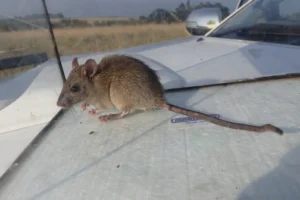
That’s a real behavioral shift caused by fear, not simply rats turning up their noses at something unpleasant.
This makes sense when you think about it from the rat’s side. A rat has spent its whole life avoiding coyotes, foxes, and bobcats. Even a trace of that smell can set off the same alarm bells a live predator would.
To use predator urine, soak cotton balls or small rags in it and place them around the outside perimeter of your home, especially near burrows or entry points.
Replace them every 7 to 10 days, since the scent does fade with weather and time.
This works better outdoors than indoors. Inside a house, the smell can be overwhelming for people too, so it’s really meant for yards, gardens, sheds, and the areas right around your foundation.
Clove Oil and Eucalyptus Oil Show Promise in Lab Testing
Clove oil doesn’t get talked about as much as peppermint, but it’s actually backed by some solid research too.
A compound found in clove oil, called trans-caryophyllene, has shown real repellent activity against rats in testing.
Eucalyptus oil has similar research behind it. A study out of Punjab Agricultural University’s Department of Zoology specifically tested eucalyptus oil against Rattus rattus (the common house rat) and found it had a genuine repellent effect in a controlled setting.
Both oils work the same basic way peppermint does. Soak cotton balls, place them in problem areas, and replace them every few days as the scent fades.
You can also combine clove, eucalyptus, and peppermint oil together on the same cotton balls. Since they’re all working through slightly different compounds, mixing them may cover a bit more ground than using just one alone.
Chili and Pepper Based Repellents Irritate Rats Without Harming Them
Chili powder, cayenne pepper, and other spicy repellents work a bit differently than scent alone. The capsaicin in chili peppers, the compound that makes them hot, irritates a rat’s nose and mouth if it tries to sniff or chew through a treated area.
Research on wintergreen oil combined with chili backs this up. Field testing found a genuine repellent effect, which lines up with how commonly chili shows up in homemade rat repellent recipes.
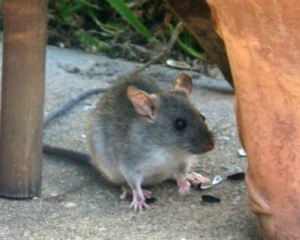
To make a simple version, mix cayenne pepper or chili powder with water and a small amount of dish soap. The soap helps it stick to surfaces. Spray the mix along baseboards, in cabinets, or near entry points, or just sprinkle dry chili powder directly in problem spots.
Keep in mind this one can irritate your own eyes and throat too if you use a lot of it in a small indoor space, so it’s worth cracking a window while you apply it.
Why Mothballs Are Actually a Bad Idea
Mothballs are one of the most commonly recommended rat repellents, and they’re also one of the least effective. The active ingredient, naphthalene, is present in such a small amount per mothball that the smell is nowhere near strong enough to push out a determined rat.
There’s a bigger problem here too. Mothballs are legally classified as a pesticide by the Environmental Protection Agency, and using them for anything other than what’s listed on the label (moths and fabric pests) actually violates federal law.
That’s not a small technicality either. Naphthalene fumes are genuinely toxic to breathe in over time, and mothballs pose a real poisoning risk if a curious pet or small child mistakes one for candy.
If you’ve been tempted to scatter mothballs in your attic or basement to keep rats out, it’s worth skipping this one entirely. It likely won’t work, and it comes with real health risks that the other repellents on this list don’t carry.
Dryer Sheets and Bar Soap Don’t Repel Rats at All
This is one of the most persistent myths out there, and it’s worth addressing directly. Dryer sheets, scented bar soap, and similar household items don’t repel rats in any meaningful way.
In fact, the opposite can happen. Rats have been documented pulling dryer sheets apart and using the soft fibers to build nests. A dryer sheet left in your attic could end up helping a rat get comfortable instead of scaring it off.

If you’ve tried tucking dryer sheets into drawers, vents, or corners of your garage, don’t feel bad. It’s an extremely common tip you’ll find all over the internet. It just doesn’t hold up once you look at how rats actually behave.
Ammonia Is Debated, and Worth Using Carefully If At All
Ammonia sits in a gray area compared to the other repellents here. The idea is that its sharp smell mimics predator urine closely enough to spook rats.
Some pest professionals do list it as a mild deterrent.
That said, the effect seems to be inconsistent and short lived at best, and ammonia comes with its own downsides. It has an extremely strong smell that’s unpleasant for people too, which makes it a poor choice for anywhere you spend time indoors.
If you want to try it anyway, mix ammonia with water in a spray bottle and apply it outdoors, away from where you or your family would be breathing it in regularly.
Never mix ammonia with bleach or any cleaning product containing bleach, since this creates toxic fumes that are genuinely dangerous to breathe.
Given the mixed results and the safety concerns, ammonia is probably the weakest option on this list, even compared to the other short term repellents.
Do Ultrasonic Repellent Devices Actually Work?
Ultrasonic devices are marketed as a plug in solution that emits high frequency sound waves rats supposedly can’t stand. They’re popular because they don’t involve any smell, spraying, or mess at all.
The problem is the research doesn’t back them up. Testing by Consumer Reports found zero reduction in rat activity across a wide range of frequencies in a controlled setting.
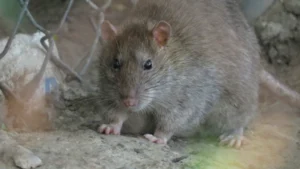
Part of the issue is physical. Sound waves at these frequencies don’t travel well through walls, furniture, or around corners. Even if a rat could be bothered by the sound, it’s easy for the rat to just move to a spot where the device can’t reach.
If you already own one, it’s probably not doing any harm, but it’s not worth relying on as your main defense against rats.
Marigolds and Other Plants Can Help Keep Rats Out of Gardens
If your rat problem is mostly outdoors, in a garden or around your yard, certain plants may offer a bit of extra protection.
Marigolds, mint, daffodils, and alliums like onion and garlic all have strong scents that rats tend to avoid.
Planting these around the edges of a garden bed or near your home’s foundation won’t guarantee rats stay away. But it can make the area a little less inviting, especially combined with predator urine or peppermint oil.
This approach works best as one layer of a bigger strategy, not a stand alone fix. That’s the same way most of the repellents on this list work.
Repellents Alone Rarely Solve a Real Rat Problem
Here’s the part that’s easy to overlook when you’re trying repellents one by one, hoping something sticks.
Even the ones backed by real research are, at best, a short term nudge, not a long term solution.

Pest control professionals are pretty consistent on this point. Rats that already feel safe in a space, with food and shelter nearby, are much harder to push out with smell alone. Rats that are just passing through are a much easier target.
This is why exclusion (sealing up the gaps and holes rats use to get inside) is the single most effective long term step you can take. Rats can squeeze through openings as small as half an inch, about the width of your finger.
Even a small unsealed gap around a pipe or under a door can be all it takes. Steel wool, hardware cloth, and metal flashing are what pest professionals reach for. Rats can chew through wood, plastic, and foam, but they can’t chew through metal.
Combining Repellents With Exclusion for Better Results
The most effective homemade approach isn’t picking one repellent and hoping for the best. It’s layering a few different things together while also cutting off the reasons rats came inside in the first place.
Start by walking the outside of your home and looking for gaps around pipes, vents, utility lines, and the foundation. Seal anything you find with steel wool packed tightly into the gap, then cover it with caulk or expanding foam to hold it in place.
Next, remove what’s actually drawing rats to your home to begin with. Store food (including pet food) in sealed containers, take out trash regularly, and clean up any spilled birdseed or fallen fruit in your yard.
Once you’ve handled exclusion and food sources, repellents like peppermint oil or predator urine can earn their keep.
Use them to discourage rats from lingering near entry points while you finish sealing everything up, or as extra protection in a specific spot like a garage or shed.
Comparing the Most Common Homemade Rat Repellents
There are so many repellents floating around online. It helps to see how they actually stack up against each other.
| Repellent | Research Support | Best Used | Main Downside |
|---|---|---|---|
| Peppermint oil | Real study showing repellent effect | Small indoor areas, cabinets, engine bays | Fades within days, needs frequent reapplication |
| Predator urine (coyote/bobcat) | Strong, published behavioral research | Outdoor perimeter, yards, burrows | Strong smell, not ideal indoors |
| Clove oil | Lab research on key compound | Combined with other oils indoors | Limited on its own |
| Eucalyptus oil | University lab study on house rats | Indoor problem areas | Needs frequent reapplication |
| Chili/cayenne pepper | Field research support | Baseboards, cabinets, entry points | Can irritate human eyes and throat |
| Mothballs | No real evidence, illegal for this use | Not recommended | Toxic to pets and children |
| Dryer sheets | No evidence, rats use them as nesting material | Not recommended | Can attract rats instead |
| Ammonia | Mixed, weak evidence | Outdoor use only, with caution | Strong odor, dangerous if mixed with bleach |
| Ultrasonic devices | No measurable effect in testing | Not recommended as a main solution | Sound doesn’t travel through walls well |
Looking at this side by side, a pattern shows up pretty clearly. The repellents with real research behind them (peppermint, predator urine, clove, eucalyptus, chili) all work through your sense of smell in a direct, physical way.
The ones that don’t work (mothballs, dryer sheets, ultrasonic devices) tend to rely on rats being bothered by something in a way that just isn’t backed up once someone actually tests it.
When to Call a Pest Control Professional Instead
Homemade repellents can genuinely help with small problems, like discouraging one or two rats from getting comfortable in your garage or garden. But there’s a point where it makes more sense to bring in a professional instead of continuing to experiment on your own.
If you’re seeing rats during the day, that’s often a sign of trouble, since they’re usually nocturnal and daytime activity tends to mean a large population.

Finding droppings in multiple rooms or hearing consistent scratching in your walls or ceiling are other signs the infestation has moved past what home remedies can realistically handle.
Rats also reproduce fast. A single female rat can have up to 6 litters a year, with as many as a dozen babies per litter. A small problem can turn into a large one within just a few months if it isn’t addressed.
A licensed pest control technician can find entry points you might miss.
Rats often use gaps in rooflines, foundation vents, and spots where different building materials meet, places that aren’t always obvious just walking around your yard.
What About Homemade Rat Traps Instead of Repellents?
If repellents alone aren’t cutting it, trapping is usually the next step, and it pairs well with everything covered here.
Snap traps and live traps both work fine for homeowners, as long as they’re placed correctly. Rats prefer to move with their bodies touching a surface rather than out in the open, so traps work best set up against walls.
Peanut butter, bacon, and nesting materials like cotton balls tend to work better as bait than cheese, despite what cartoons might have you believe.
Rats are drawn to high calorie, high protein food, and nesting material appeals to their instinct to build a safe, warm spot.
Combining exclusion, a couple of the repellents covered here, and a few well placed traps tends to get rid of a small rat problem faster than relying on just one method alone.
Conclusion
Homemade rat repellents aren’t a myth across the board, but they’re also not the complete fix a lot of people hope for.
Peppermint oil, predator urine, clove oil, eucalyptus oil, and chili based sprays all have real research behind them. They can push rats away, at least for a while and in a limited space.
On the other hand, mothballs, dryer sheets, and ultrasonic devices are largely myths that don’t hold up once tested. Mothballs in particular carry real safety risks that make them not worth trying at all.
The repellents that do work are best used as one part of a bigger approach. Pair them with sealing up entry points and removing the food and shelter that drew rats to your home in the first place.
Used together, and reapplied consistently, these methods can make a real difference. Catch the problem early, and you can stop a small visit from turning into a full blown infestation.

Hi, my name is Ezra Mushala, i have been interested animals all my life. I am the main author and editor here at snakeinformer.com.