
Rat poison seems simple on the surface, a rat eats it, then it dies. But what’s actually happening inside the rat’s body is a lot more interesting than most people realize. So how does rat poison actually work?
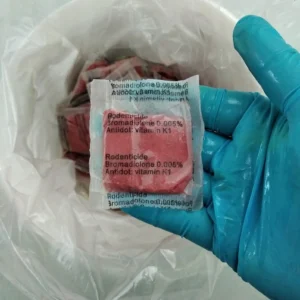
Most rat poisons work in one of two ways. Anticoagulants stop the rat’s blood from clotting, causing slow internal bleeding over several days. Non-anticoagulants like bromethalin and zinc phosphide attack the nervous system or cause a toxic chemical reaction, working faster but through a completely different process.
Both approaches get the job done, but they do it in ways that couldn’t be more different from each other. Understanding how each one actually works helps explain why some poisons act in hours while others take weeks.
The Two Main Categories Of Rat Poison
Every rat poison sold today falls into one of two broad categories, based on how it actually kills the rat.
Anticoagulants are the most common type. These poisons stop blood from clotting properly, which leads to internal bleeding that builds up over time.
Non-anticoagulants work through completely different mechanisms. This group includes bromethalin, zinc phosphide, and cholecalciferol, each of which attacks the rat’s body in its own distinct way.
Knowing which category you’re dealing with tells you a lot about how fast the poison will work and what’s actually happening to the rat after it eats the bait.
How Anticoagulant Rat Poison Works
Anticoagulants work by blocking an enzyme in the rat’s liver called vitamin K epoxide reductase. This enzyme normally recycles vitamin K so the body can keep using it.
Vitamin K is essential for making certain proteins, called clotting factors, that allow blood to clot properly. Without a steady supply of usable vitamin K, the rat’s body can’t make these clotting factors anymore.
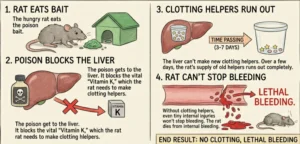
At first, this doesn’t cause any obvious symptoms. The rat’s existing clotting factors are still around, and they don’t run out immediately.
Over the next few days, though, those existing clotting factors get used up faster than the body can replace them. Once that happens, even small everyday injuries, the kind a rat gets just from moving around and chewing on things, stop healing properly.
Blood slowly leaks into tissues and body cavities instead of clotting shut. This internal bleeding builds up gradually until it becomes severe enough to cause death, usually affecting the lungs, gut, or other soft tissue first.
Why Do Anticoagulants Take So Long To Work?
This slow process is exactly why anticoagulant poisons take days to weeks to actually kill a rat. It’s not one dramatic injury causing death, it’s a gradual buildup of small, unhealed ones.
First-generation anticoagulants, like warfarin, are relatively weak and clear out of the body fairly quickly. This is why they need repeated feedings over several days to keep blocking the enzyme faster than the rat’s body can work around it.
Second-generation anticoagulants, like brodifacoum and bromadiolone, are much more potent and stick around in the body far longer. A single feeding delivers enough poison to keep blocking that enzyme for days, even without the rat eating any more of it.
This is part of why second-generation anticoagulants became so popular. They don’t need the rat to keep coming back to the bait station to finish the job.
How Bromethalin Works Differently
Bromethalin doesn’t touch the blood clotting system at all. Instead, it goes after the rat’s nervous system directly.
Once a rat eats bromethalin, its liver converts it into a more active compound called desmethylbromethalin. This compound messes with how cells in the brain and spinal cord produce energy.
Specifically, it messes up something called oxidative phosphorylation, which is the process cells use inside tiny structures called mitochondria to make usable energy. Without enough energy, nerve cells can’t run their sodium and potassium pumps properly.
These pumps normally keep the right balance of fluid inside and outside each cell. When they stop working right, fluid starts building up inside brain and spinal cord tissue.
This fluid buildup is called cerebral edema, which just means swelling caused by trapped fluid in the brain. The swelling puts pressure on the nervous system, leading to tremors, loss of coordination, paralysis, and eventually death.
Why Bromethalin Works Faster Than Anticoagulants
Because bromethalin attacks the nervous system directly rather than slowly depleting a supply of clotting factors, it doesn’t need days of buildup to start causing real damage.
A rat can start showing symptoms within hours of eating a lethal dose, and death typically follows within one to two days. This makes it one of the faster non-anticoagulant options on the market.
Interestingly, rats tend to stop eating bromethalin bait once they’ve had enough for a lethal dose. This happens because the poison starts affecting their body relatively quickly, which naturally cuts off further feeding.
How Zinc Phosphide Works
Zinc phosphide takes an entirely different approach from either anticoagulants or bromethalin. It relies on a chemical reaction that happens right inside the rat’s stomach.
When zinc phosphide comes into contact with stomach acid, it reacts and releases phosphine gas. This gas is toxic and gets absorbed directly into the rat’s bloodstream.
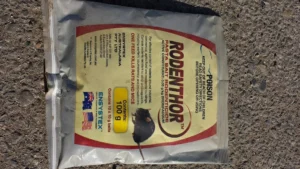
Once absorbed, phosphine gas messes with the rat’s ability to use oxygen at the cellular level. Basically, cells throughout the body lose the ability to produce energy properly, similar to a fast internal suffocation.
This process happens quickly, which is why zinc phosphide is known as one of the faster-acting rodenticides. Death usually occurs within a few hours to a day after a lethal dose is eaten.
How Cholecalciferol Works
Cholecalciferol takes a completely different route, one based on vitamin D3, the same vitamin your own body needs in small amounts to stay healthy.
In the tiny amounts found in food or supplements, vitamin D3 helps the body absorb calcium properly. But rat poison uses it in a dose far higher than anything found naturally.
This massive overdose of vitamin D3 causes calcium levels in the rat’s blood to spike dramatically. That excess calcium starts depositing in soft tissues throughout the body, especially the kidneys.
Over the course of a few days, this calcium buildup causes serious kidney damage and messes up how the heart and other muscles function. Death usually follows within three to five days after a lethal dose.
Comparing How Each Poison Type Works
Here’s a side-by-side look at what’s actually happening inside the rat’s body with each poison type.
| Poison Type | What It Targets | How It Causes Death |
|---|---|---|
| Anticoagulants | Blood clotting system | Slow internal bleeding over several days |
| Bromethalin | Nervous system | Brain and spinal cord swelling |
| Zinc Phosphide | Cellular oxygen use | Internal gas release, cellular suffocation |
| Cholecalciferol | Calcium regulation | Kidney failure from calcium overload |
Even though all four categories end in death, the actual process inside the rat’s body looks completely different depending on which type it ate.
Rat Poison Doesn’t Work The Same Way On Every Animal
Since different poisons target different body systems, they don’t affect every species the same way. This is part of why dogs and cats are more sensitive to certain poisons than others.

Dogs, for example, are quite sensitive to anticoagulants and can develop serious symptoms if they eat poisoned bait or a poisoned rat. Cats tend to be more resistant to anticoagulants, though they’re not immune.
Bromethalin affects cats more severely than dogs, with a much lower amount needed to cause serious harm. This is part of why identifying exactly which poison was involved matters so much if a pet gets into something it shouldn’t have.
Some Rats Have Become Resistant To These Poisons
Over the decades, some rat populations have developed genetic resistance to certain anticoagulants, especially older first-generation ones like warfarin.
This resistance comes from a mutation in the same gene responsible for the enzyme anticoagulants target, called VKORC1. Rats with this mutation have a version of the enzyme that’s harder for the poison to block.
In areas where anticoagulants have been used heavily for a long time, this resistance can spread through a local rat population over many generations, since resistant rats survive and pass the trait to their offspring.
This is part of why non-anticoagulant poisons like bromethalin or zinc phosphide, which work through completely different mechanisms, can still be effective even in areas where anticoagulant resistance has become common.
There’s No Antidote For Some Rat Poisons
One important difference between these poison types shows up when it comes to treatment, especially if a pet accidentally gets into some.
Anticoagulant poisoning has a fairly straightforward antidote: vitamin K. Since the poison works by blocking the body’s ability to use vitamin K, giving extra vitamin K can help restore normal blood clotting.
Bromethalin doesn’t have a specific antidote. Since it works by messing with cellular energy production directly, there’s no simple substance that reverses the damage, so treatment focuses on supportive care instead.

Cholecalciferol poisoning is also difficult to treat, since the damage comes from a buildup of calcium that needs to be actively managed, often over several days, rather than reversed with a single medication.
This is a big reason why identifying the exact poison involved matters so much in an emergency. A vet’s treatment plan looks completely different depending on which of these mechanisms is actually at play.
What Happens Physically As The Poison Takes Effect?
With anticoagulants, a rat often seems completely normal for the first day or two, since visible symptoms don’t show up until existing clotting factors run low.
As bleeding builds up internally, a rat may become weak, lose its appetite, and start seeking out water, since its body is trying to compensate for blood loss.
With bromethalin, symptoms tend to show up faster and more dramatically, often including tremors, loss of coordination, and difficulty moving normally within a day or two of a lethal dose.
Zinc phosphide symptoms can show up within hours, sometimes including vomiting, difficulty breathing, and visible distress, since the phosphine gas affects the body quickly and directly.
Why Do Manufacturers Choose Different Mechanisms For Different Products?
Poison manufacturers don’t just pick a mechanism at random. Each one comes with tradeoffs in speed, safety, and how well it works against resistant rat populations.
Anticoagulants remain popular because their slow, gradual action prevents bait shyness, the tendency for rats to avoid bait after seeing another rat get sick or die nearby.
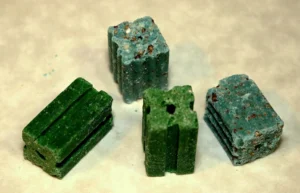
Bromethalin and zinc phosphide are chosen when speed matters more, such as on farms or during severe infestations where a slower solution isn’t practical.
Cholecalciferol has become more popular partly because it offers a genuinely different mechanism from anticoagulants, which helps it remain effective even against rats that have developed anticoagulant resistance.
How Bait Formulas Get Rats To Actually Eat Them
None of these mechanisms matter if a rat won’t eat the bait in the first place, so manufacturers put real effort into how the poison itself is packaged.
Bait blocks are typically mixed with food ingredients rats naturally seek out, like grains, peanut butter flavoring, or fish meal. These ingredients mask the taste of the active ingredient, which would otherwise make a rat suspicious of the food.
Bait blocks made with wax also help the poison survive damp conditions, which matters a lot for outdoor placements or humid crawl spaces where a plain pellet might break down before a rat finds it.
Manufacturers also add a bittering agent in some products. This mainly discourages kids or pets from continuing to chew on it if they get past a bait station, even though it doesn’t affect how the poison works on the rat itself.
Some Poisons Affect Predators That Eat Poisoned Rats
One consequence of how these poisons work shows up in what’s called secondary poisoning, when an animal gets sick or dies from eating a rat that had already eaten poison.
This is a bigger risk with anticoagulants, especially the strong, long-lasting second-generation ones. Since these poisons build up in the rat’s liver and stay there for days, a hawk, owl, or fox that eats a poisoned rat can end up absorbing a meaningful dose of the same poison.

Bromethalin and zinc phosphide carry a lower secondary poisoning risk in comparison, mainly because they act faster and don’t accumulate in body tissue the same way anticoagulants do.
This is part of why wildlife groups and some regulators have pushed for tighter restrictions on second-generation anticoagulants specifically. Owls and hawks that naturally hunt rodents are often the ones most affected by secondary exposure.
How Scientists Actually Measure This
Everything described here comes from real toxicology research, much of it going back decades. Scientists test these mechanisms using something called an LD50 study, which measures how much of a substance it takes to kill half of a test group of rats.
These studies also involve close monitoring of what happens inside the rat’s body at each stage. This includes blood tests, tissue samples, and in some cases post-mortem examination to confirm the actual cause of death matches the expected mechanism.
This research is part of why we know so precisely how each poison type works, down to the specific enzyme an anticoagulant blocks or the exact cellular process bromethalin gets in the way of. It’s also how manufacturers fine-tune concentrations to be effective on rats while meeting safety standards set by regulators like the EPA.
Modern rodenticide labels are built on decades of this kind of research. This is part of why a product sold today looks so different from something sold in the 1950s, even if the basic mechanism, like blocking vitamin K, has stayed conceptually the same.
Conclusion
Rat poison works through a surprisingly wide range of mechanisms, even though the end result is always the same. Anticoagulants quietly block the body’s ability to use vitamin K, leading to slow internal bleeding over days or weeks.
Bromethalin attacks the nervous system directly by starving brain cells of energy, causing dangerous swelling. Zinc phosphide creates a toxic gas right inside the rat’s stomach, while cholecalciferol overloads the body with calcium until the kidneys fail.
Each mechanism comes with its own timeline, its own risks, and in some cases, its own antidote or lack of one. Understanding how these poisons actually work explains why some products act in hours while others take weeks.
It also explains why treatment for accidental pet exposure looks so different depending on which poison is involved.

Hi, my name is Ezra Mushala, i have been interested animals all my life. I am the main author and editor here at snakeinformer.com.