
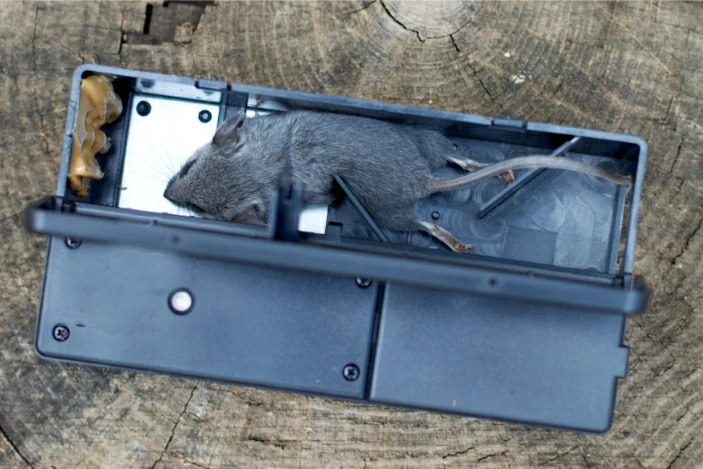
Electric rat traps are marketed as the cleanest, most humane way to deal with a rat problem, promising a quick, painless death with none of the mess of a snap trap or the risk of poison.
That’s a compelling pitch, but is it actually accurate? Are electric rat traps really as humane and effective as the packaging suggests?
Electric rat traps are generally effective, often killing a rat on first contact, and they’re widely considered more humane than glue traps or poison. But they’re not flawless. Some consumer reports describe incomplete shocks that fail to kill instantly, and effectiveness depends heavily on the specific trap’s voltage and design.
The honest picture sits somewhere between the marketing claims and the horror stories you might find in online reviews.
Understanding how these traps actually work, and where they can fall short, helps you make a more informed choice than either extreme gives you.
How Electric Rat Traps Actually Work
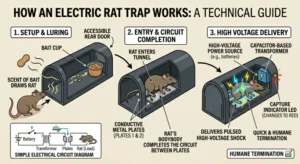
An electric rat trap, sometimes called a rat zapper, lures a rat inside an enclosed chamber using bait, usually something strong smelling like peanut butter.
Once the rat is fully inside and touches two metal contact plates, it completes a circuit and receives a high-voltage shock.
The goal is a fast, lethal jolt strong enough to stop the rat’s heart almost instantly. Most models run on batteries, and many include an indicator light that shows when a kill has happened, so you’re not left checking an empty looking trap over and over.
Compared to a snap trap, the whole process is more enclosed and self-contained. You won’t see the moment of the kill, and many models let you dispose of the rat without ever touching it directly, which is a real advantage if you’re not comfortable handling a trap by hand.
What “Humane” Actually Means for a Kill Method
Before judging whether electric traps are humane, it helps to know what that word actually means in a practical sense.
The American Veterinary Medical Association defines humane euthanasia as a death that’s as rapid, painless, and free of distress as possible.
Under that standard, speed genuinely matters. A death that takes several seconds of suffering is meaningfully less humane than one that happens almost instantly.
This is exactly where the real debate around electric traps lives. When they work as designed, delivering a strong, well-placed shock, they can produce a death that’s about as fast as anything short of a perfectly placed snap trap. The problem is the word “when.”
The Real Research Behind Trap Effectiveness
A 2024 study published in the journal Pest Management Science took a genuinely close, technical look at what actually makes a rodent trap humane, examining both mechanical snap traps and electronic traps.
The researchers measured the actual voltage, current, and energy delivered to a rodent’s body across different electronic trap models.
Based on established data around human electrical safety, they noted that a current of 30 to 50 milliamps is enough to cause a fatal heart rhythm disruption.

The traps they tested were capable of reaching that level.
In plain terms, the traps that are properly designed and functioning correctly can absolutely deliver a lethal, fast acting shock. The stronger the voltage and the lower the resistance of the rat’s body, the more effectively the current does its job.
That’s a meaningfully more precise answer than what you’ll find on most packaging, and it supports the idea that electric traps can be genuinely humane when they’re working as intended.
Why Some Electric Traps Fail to Deliver a Clean Kill
Here’s where the picture gets more complicated. Not every electric trap performs the way it’s designed to, and there are real, documented complaints about incomplete or failed shocks.
Some consumers report that their trap didn’t fully electrocute the rat, leaving the animal alive and shocked repeatedly over several minutes rather than killed instantly.
A company that makes a competing (non-electric) humane trap has specifically pointed to this as a serious welfare concern with electric traps as a category.

Several factors can cause this. A rat that only partially touches both contact plates may not complete a strong enough circuit for an instant kill.
Battery strength matters too, since a weakening battery delivers less voltage than a fresh one, even if the trap still looks like it’s working.
Trap quality varies a lot between brands as well. A poorly designed or cheaply made electric trap may simply not generate enough voltage to guarantee a fast death, even under ideal conditions.
How to Improve Your Odds of a Humane, Effective Kill
If you’re going to use an electric trap, there are real steps that meaningfully improve both its effectiveness and how humane the outcome actually is.
Choose a trap from a reputable brand, ideally one that publishes its voltage specifications rather than just marketing language like “instant” or “painless.” Traps that are vague about their actual electrical output are harder to trust.
Keep batteries fresh. Since voltage drops as batteries weaken, replacing them regularly (rather than waiting until the trap seems sluggish) helps make sure the trap is always delivering its full intended shock.
Check the trap regularly, ideally at least once a day. Since rats are most active between dusk and dawn, checking first thing in the morning gives you the best chance of finding and properly disposing of a catch quickly, rather than leaving a trap unchecked for days.
Place the trap correctly, following the same rules as any other trap type. Rats travel along walls and established paths, so a trap sitting in an open area, however well designed, is far less likely to catch anything at all.
How Electric Traps Compare to Other Methods
Looking at electric traps next to the alternatives helps put both their strengths and their limitations into perspective.
Snap traps, when properly set and triggered correctly, also produce a fast death, and they’ve been refined over more than a century of use.

Their main downside compared to electric traps is that a poorly triggered snap can result in an injury rather than a clean kill, similar to the failure mode electric traps can have with an incomplete shock.
Glue traps are widely considered the least humane option available, since they don’t kill at all, they simply immobilize a rat that then struggles, sometimes for hours or days, until it’s found.
Compared to glue traps, even an imperfect electric trap is a significant improvement.
Bait stations use poison, which causes death over a day or two rather than instantly. This is generally considered less humane than a quick mechanical or electrical kill, though it does have the advantage of reaching rats that never come across a physical trap at all.
Against this full lineup, electric traps land somewhere near the top for humaneness when they function correctly, comparable to a well-placed snap trap, and meaningfully better than glue traps or poison.
Comparing Kill Methods on Speed and Reliability
Since speed is such a central part of what makes a method humane, it helps to see how the main options stack up directly.
| Method | Typical Time to Death | Reliability | Handling Required |
|---|---|---|---|
| Electric trap | Nearly instant, when working correctly | Variable, depends on model and battery | Minimal, often no direct contact |
| Snap trap | Nearly instant, when triggered correctly | High, if placed and set properly | Direct handling to reset/dispose |
| Bait station (poison) | 1-2 days | High, but delayed | Handling of poisoned bait and carcass |
| Glue trap | Hours to days, doesn’t reliably kill | Low from a welfare standpoint | Direct handling of a live, stuck animal |
Looking at this side by side, electric traps and snap traps both offer the fastest, most humane outcomes when they function as intended, while glue traps stand out as the clear outlier on the welfare side of the comparison.
Are Electric Traps Worth the Extra Cost?
Electric traps typically cost several times more than a basic snap trap, which raises a fair question about whether the extra expense is actually worth it.
For someone dealing with a small number of rats and comfortable handling a traditional snap trap, the extra cost may not add much practical benefit.
A well-placed snap trap can be just as fast and humane, at a fraction of the price.
For someone who wants to avoid directly handling a trap, or who’s dealing with recurring activity and wants a reusable, no-mess option, the higher upfront cost can be worth it over time. Most models last for years with just battery changes and occasional cleaning.
It’s also worth factoring in reliability when comparing cost. A cheaper electric trap from an unknown brand may not deliver the same tested effectiveness as a well-reviewed model, so spending a bit more on a reputable trap can matter more than the price difference alone suggests.
Safety Considerations Around Kids and Pets
Electric traps are generally considered one of the safer options for households with children or curious pets, though they’re not entirely without risk.
Most models are designed to prevent shocks to anything too large to trigger the internal mechanism properly, and the chamber is typically enclosed enough that a curious pet can’t easily reach the contact plates.
This is a real safety advantage compared to bait stations, where accidental poisoning is a genuine risk.

That said, it’s still worth keeping any trap, electric or otherwise, out of direct reach of small children and pets when possible, and following the manufacturer’s specific safety guidance for the model you choose.
No trap is entirely without any risk, even when it’s designed with safety in mind.
If you have a particularly determined or large dog, it’s worth checking your specific trap model’s size and containment rating before assuming it’s fully pet-proof.
Some smaller electric traps are only rated for mice and small rats. A larger, more persistent animal could potentially force the chamber open in a way a smaller curious pet wouldn’t.
Why Marketing Claims Alone Shouldn’t Convince You
If you’ve shopped for an electric trap, you’ve probably seen words like “instant,” “painless,” and “100% humane” plastered across the packaging.
It’s worth being a little skeptical of language like that, and not just for electric traps specifically.
Every trap manufacturer, whether they’re selling snap traps, electric traps, or anything else, has an incentive to describe their product in the most reassuring terms possible.
That doesn’t mean the claims are false, but it does mean they’re not exactly neutral either.
This is part of why independent testing, like the 2024 Pest Management Science study, matters so much. It’s not funded by a company trying to sell you a specific trap, and it measured actual electrical output rather than repeating a manufacturer’s marketing copy.
When you’re comparing traps, it’s worth looking past the front-of-box language and searching for a brand that publishes real voltage specifications or has been independently reviewed.
A company willing to share the actual numbers behind its claims is generally more trustworthy than one relying purely on reassuring adjectives.

If you’ve set up an electric trap and you’re not catching anything, or you’re worried it might not be delivering a clean kill, there are a few things worth checking before you assume the trap itself is broken.
Start with the batteries. If it’s been more than a few weeks since you replaced them, swap them out even if the indicator light still looks normal, since a weakening battery can still power the light without delivering a full lethal shock.
Next, check your bait. If you’re not seeing any activity at all, the bait may have dried out and lost its smell, especially if it’s been sitting for a week or more.
Fresh, strong smelling bait like peanut butter makes a real difference in whether a rat even approaches the trap in the first place.
Take a look at where you’ve placed it too. Even the best electric trap will sit untouched if it’s not positioned along a wall or path where rats are actually traveling.
Look for droppings, gnaw marks, or grease smudges nearby, and move your trap closer to that activity if you haven’t already.
If you do catch a rat but you’re concerned the kill wasn’t clean, that’s worth taking seriously rather than brushing off.
Consider trying a different brand, since trap quality really does vary, and a model with published, verified voltage specs is generally a safer bet than one that’s vague about its actual performance.
Cleaning and Disposal After a Catch
Once your trap has caught a rat, how you handle the aftermath matters both for hygiene and for keeping the trap working well for next time.
Wear gloves when emptying the trap, even though most models let you avoid direct contact with the rat itself. Rats can carry bacteria like salmonella, and it’s worth treating any contact with the trap or its chamber with a bit of caution.
Most electric traps are designed to be emptied by opening a hinged door or sliding out a tray, letting the rat drop directly into a bag or trash bin without you needing to touch it.
Double bagging the rat before placing it in an outdoor trash bin is a simple extra step that keeps things sanitary.
After disposal, wipe down the inside of the trap’s chamber, since residue or lingering scent can sometimes affect how future rats respond to it.
A quick wipe with a disinfectant cleaner, followed by drying it fully before the next use, keeps the trap working the way it’s supposed to.
Conclusion
Electric rat traps are, on balance, both effective and humane, but with real caveats worth taking seriously. When a quality trap is working correctly, with fresh batteries and proper placement, it can deliver a fast, lethal shock that compares favorably to even the best mechanical snap trap.
The documented failures, incomplete shocks that fail to kill instantly, are real and worth taking seriously.
But they tend to trace back to specific, avoidable causes: weak batteries, poor trap quality, or a rat that doesn’t make full contact with both plates.
Choosing a reputable brand, keeping batteries fresh, and checking the trap regularly go a long way toward closing that gap. Place it correctly, along a wall where rats actually travel, and it’ll do its job the way it’s meant to.
Used thoughtfully, electric traps hold up well against the alternatives. They land near the top of the list for both effectiveness and humane treatment of the animal.

Hi, my name is Ezra Mushala, i have been interested animals all my life. I am the main author and editor here at snakeinformer.com.