
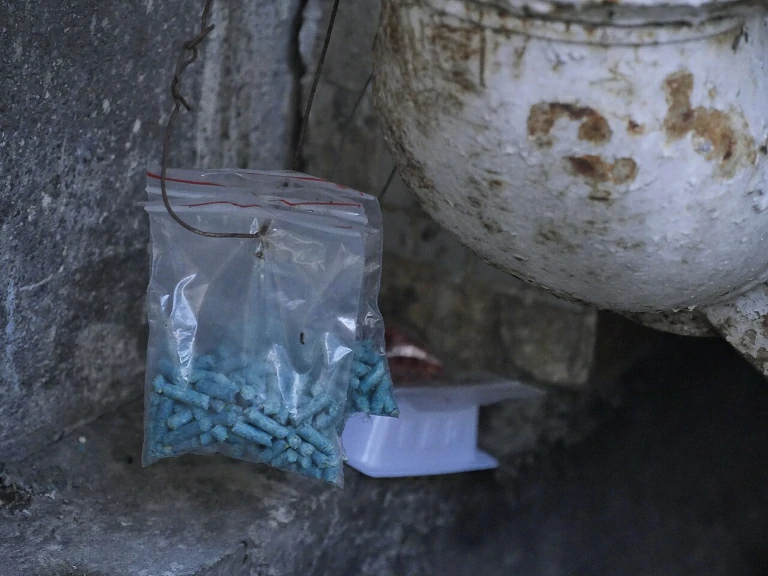
When you’re shopping for rat poison, you might see terms like “first generation” and “second generation” on labels or in product descriptions.
These terms refer to different types of anticoagulant poisons. So what is second generation rat poison, and how is it different from first generation?
Second generation rat poison contains anticoagulant ingredients like brodifacoum, bromadiolone, difenacoum, or difethialone. These poisons are much stronger than first generation anticoagulants. A rat only needs to eat second generation poison once to get a lethal dose, whereas first generation poisons require multiple feedings over several days. Second generation poisons were developed in the 1970s and 1980s to kill rats that had become resistant to first generation poisons like warfarin.
Second generation anticoagulants are more effective but also more dangerous to pets, wildlife, and people. This is why their use has become more restricted in recent years.
The History of Anticoagulant Rat Poisons
To understand second generation poisons, you need to know the history of anticoagulant rat poisons.
Warfarin was the first widely used anticoagulant rat poison. It was developed in the 1940s and became popular in the 1950s.
Warfarin worked by stopping blood from clotting. Rats would eat it over several days, and eventually they’d bleed internally and die.
Warfarin was a huge breakthrough. Before that, rat poisons were things like arsenic and strychnine, which were dangerous to everyone, not just rats.
Warfarin worked great for decades. But by the 1970s, a problem emerged. Some rat populations had developed genetic resistance to warfarin.
These “super rats” could eat warfarin and not die. The poison just didn’t affect them. This was a huge problem for pest control.
Scientists went back to the lab and developed new anticoagulants that would work on resistant rats. These became known as second generation anticoagulants.
The first second generation anticoagulants were brodifacoum and difenacoum, developed in the 1970s. Bromadiolone and difethialone came later.
These new poisons were much more potent than warfarin. They worked on resistant rats and killed after just one feeding.
Second generation anticoagulants became the industry standard. They were so effective that first generation poisons almost became obsolete.
Common Second Generation Anticoagulants
There are four main second generation anticoagulants used in rat poisons today.
| Second Generation Anticoagulant | How Common It Is |
|---|---|
| Brodifacoum | Very common |
| Bromadiolone | Very common |
| Difenacoum | More common in Europe |
| Difethialone | Less common |
Brodifacoum is probably the most well-known. It’s extremely potent. Rats only need to eat about 1 to 2 grams of bait to get a lethal dose.
Brodifacoum is used in many popular rat poison brands. It’s effective but also really dangerous to pets and wildlife.
Bromadiolone is similar to brodifacoum but slightly less potent. It’s still a single-feed poison, meaning one feeding is enough to kill a rat.
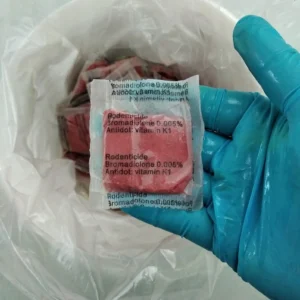
Bromadiolone is common in products like Tomcat and some D-Con formulations (before D-Con reformulated for consumers).
Difenacoum is used mainly in Europe and some other parts of the world. It’s less common in the United States but works the same way as brodifacoum and bromadiolone.
Difethialone is the newest second generation anticoagulant. It was developed more recently and is supposed to work faster than the others.
All four of these work basically the same way. They stop blood from clotting, causing internal bleeding and death.
How Second Generation Poisons Work
Second generation anticoagulants work by blocking vitamin K in the rat’s body.
Vitamin K is needed to make clotting factors. Clotting factors are proteins that help blood clot when you get injured.
When a rat eats second generation poison, the poison gets absorbed through the stomach and enters the bloodstream.
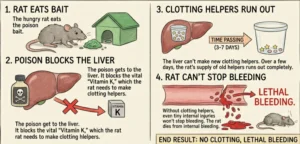
It travels to the liver, where vitamin K is normally used to make clotting factors. The poison blocks this process.
As the rat’s body uses up the existing clotting factors and can’t make new ones, the blood becomes thinner and thinner.
Any tiny injury, even just normal wear and tear on blood vessels, causes bleeding that doesn’t stop.
The rat bleeds internally over the course of 3 to 7 days. By the end, the rat has lost so much blood that it dies from anemia and organ failure.
The key difference from first generation poisons is potency. Second generation poisons are 100 to 1000 times more potent than warfarin.
This means a rat only needs to eat a small amount one time to get a lethal dose. With warfarin, the rat needed to eat the poison multiple times over several days.
Why Second Generation Poisons Were Developed
The main reason for developing second generation anticoagulants was resistance.
By the 1970s, warfarin had been used so widely for so long that rats in many areas had evolved resistance to it.
This resistance is genetic. Rats with a certain gene mutation can eat warfarin and not die. These rats survive and reproduce, passing the resistance gene to their offspring.
Over generations, entire rat populations in some areas became resistant to warfarin.
Pest control companies were having serious problems. Warfarin didn’t work anymore in many places. They needed something stronger.
Second generation anticoagulants solved this problem. Even resistant rats couldn’t survive these new poisons.
The other advantage was the single-feed feature. With warfarin, rats needed to keep eating the poison over days. If they stopped eating it, they might not get a lethal dose.
With second generation poisons, one good feeding was enough. This made rat control more reliable and faster.
First Generation vs Second Generation: Key Differences
Let’s break down the main differences between first and second generation anticoagulant rat poisons.
| Difference | First Generation | Second Generation |
|---|---|---|
| Potency | Less potent; higher doses needed | More potent; lower doses needed |
| Feedings required | Usually multiple feedings over several days | Often effective after one feeding |
| Speed | Usually takes several days to kill | Usually takes several days to kill |
| Resistance | Less effective against resistant rats | Generally more effective against resistant rats |
| Environmental persistence | Breaks down more quickly | Persists longer in the environment |
| Secondary poisoning | Lower risk | Higher risk |
| Safety | Generally less hazardous after a single exposure | More hazardous after a single exposure |
| Availability | Still available but less common | Common, though some products are being restricted |
Potency: Second generation poisons are much stronger. They work at lower doses.
Feedings required: First generation poisons like warfarin require multiple feedings over 3 to 7 days. Second generation poisons kill after just one feeding.
Speed: Both take about the same time to kill (3 to 7 days), but second generation poisons reach a lethal dose faster.

Resistance: First generation poisons don’t work on resistant rats. Second generation poisons work on all rats, including resistant ones.
Environmental persistence: Second generation poisons stay in the environment longer. They break down more slowly than first generation poisons.
Secondary poisoning risk: Second generation poisons are more dangerous for secondary poisoning. They accumulate in rats’ bodies at higher levels, so predators that eat poisoned rats are more likely to be poisoned themselves.
Safety: First generation poisons are safer for pets and wildlife because they require multiple exposures to be lethal. Second generation poisons can kill from one exposure.
Availability: First generation poisons are still sold but are less common. Second generation poisons were the standard for years, though some are now being restricted.
Brand Names and Products
Many popular rat poison brands use or have used second generation anticoagulants.
Tomcat rat poison blocks often contain bromadiolone, a second generation anticoagulant. You can find these at most hardware stores.
D-Con used to sell products with brodifacoum and bromadiolone. They stopped selling these to consumers in 2015 and switched to cholecalciferol, but professional products might still have anticoagulants.
Havoc rat bait contains brodifacoum. This is a professional-grade product often used by pest control companies.
JT Eaton Bait Block uses brodifacoum or diphacinone depending on the specific product. Some of their products are second generation.
Contrac rat poison contains bromadiolone. This is another professional product.
Ramik makes both first and second generation products. You need to check the label to see which active ingredient a specific Ramik product contains.
When buying rat poison, always read the active ingredient list. The package will tell you if it’s a first or second generation anticoagulant.
Environmental and Wildlife Concerns
Second generation anticoagulants have become a major environmental concern.
These poisons persist in the environment for a long time. They don’t break down quickly.
When a rat eats second generation poison, the poison accumulates in the rat’s liver and tissues at high concentrations.
If a hawk, owl, fox, coyote, or other predator eats that poisoned rat, the predator gets a big dose of poison too.

Because second generation poisons are so potent, even eating one poisoned rat can be enough to kill a predator.
Studies have found high levels of second generation anticoagulants in dead birds of prey across the United States. Many of these birds died from rat poison.
Even predators that don’t eat rats directly can be affected. For example, a bobcat might eat a mouse that ate crumbs from a poisoned rat. The poison moves up the food chain.
Domestic animals are also at risk. Cats and dogs that hunt or scavenge can eat poisoned rodents.
This environmental damage has led to calls for restricting or banning second generation anticoagulants.
Regulations and Restrictions
Because of safety and environmental concerns, second generation anticoagulants have faced increasing regulation.
In 2008, the EPA issued new rules for rodenticides. They wanted to reduce risks to children, pets, and wildlife.
The rules required certain products to be sold only to licensed professionals. Consumer products had to meet stricter safety standards.
Some manufacturers, like D-Con, chose to reformulate their consumer products with different active ingredients rather than comply with the new rules.
In 2020, California banned the use of second generation anticoagulants in most situations. This was driven by wildlife deaths, especially among mountain lions and raptors.
Other states have considered similar bans. Hawaii and Maryland have restrictions on second generation anticoagulants.
In the European Union, second generation anticoagulants are also restricted. They can only be used by professionals in many cases.
These regulations vary by location. In some places, you can still buy second generation anticoagulant rat poison at the store. In other places, only licensed pest control professionals can use them.
Always check local regulations before using rat poison.
Why Professionals Still Use Second Generation Poisons
Despite the concerns, pest control professionals still use second generation anticoagulants in many situations.
The main reason is effectiveness. These poisons work, and they work reliably. For severe rat infestations, especially in commercial or agricultural settings, they’re often the best tool.
Professionals are trained to use these poisons safely. They know how to place bait stations so that non-target animals can’t access them.
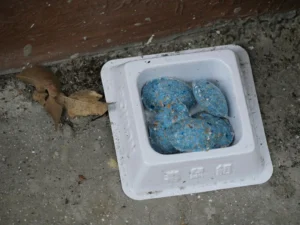
They also monitor their bait stations carefully. If a dead rat is found, they remove it so that predators and scavengers can’t eat it.
In areas with resistant rat populations, second generation poisons might be the only option that works.
Professionals weigh the risks and benefits. In some situations, the risk of disease from an uncontrolled rat infestation outweighs the environmental risks of using poison.
But many professionals are also moving toward integrated pest management (IPM). This means using a combination of methods including traps, exclusion, and sanitation, with poison as a last resort.
Alternatives to Second Generation Poisons
If you’re concerned about the risks of second generation anticoagulants, you have alternatives.
First generation anticoagulants like diphacinone and chlorophacinone are still available. They’re less potent but still effective, especially if you don’t have resistant rats in your area.
Non-anticoagulant poisons like bromethalin and cholecalciferol work differently. They don’t have the same secondary poisoning risks as anticoagulants.
Snap traps are a non-poison option. They kill rats instantly. The downside is you have to check and reset them regularly.
Electronic traps use a high-voltage shock. They’re effective and quick.
Live traps catch rats without killing them. You then have to release the rat somewhere far from your home.
Exclusion is the best long-term solution. This means sealing up holes and gaps so rats can’t get into your home in the first place.
Sanitation also helps. Rats are attracted to food and shelter. If you eliminate these, rats will go somewhere else.
An integrated approach using multiple methods is often more effective than relying on poison alone.
How to Use Second Generation Poisons Safely
If you choose to use second generation rat poison, follow these safety rules.
- Always use tamper-resistant bait stations. Don’t scatter loose poison where pets, children, or wildlife can get to it.
- Place bait stations in areas where rats travel but pets and kids don’t go. Good locations include crawl spaces, attics, and along the outside foundation of your home.
- Secure the bait stations. Many stations can be staked down or locked. This prevents them from being moved or opened.
- Check bait stations regularly. Remove any dead rats you find so that pets and wildlife can’t eat them.
- Keep the poison packaging. If someone or something gets poisoned, you’ll need to know the exact active ingredient for treatment.
- Store unused poison in a locked cabinet, out of reach of children and pets.
- Follow all label directions exactly. The label is a legal document and tells you how to use the product safely.
- If you have pets or wildlife in the area, consider using first generation anticoagulants or non-anticoagulant poisons instead.
Conclusion
Second generation rat poison contains anticoagulants like brodifacoum, bromadiolone, difenacoum, or difethialone. These poisons are much stronger than first generation anticoagulants like warfarin. They kill rats after just one feeding and work on rats that are resistant to first generation poisons.
Second generation anticoagulants are effective but come with serious environmental and safety concerns. They persist in the environment, accumulate in poisoned rats, and cause secondary poisoning in predators and scavengers.
Because of these concerns, many areas are restricting the use of second generation anticoagulants. If you use rat poison, consider first generation anticoagulants or non-anticoagulant alternatives. Always use bait stations, follow label directions, and protect pets and wildlife.
The best rat control is prevention. Seal up your home, eliminate food sources, and use traps when possible. Save poison for situations where other methods haven’t worked.

Hi, my name is Ezra Mushala, i have been interested animals all my life. I am the main author and editor here at snakeinformer.com.