
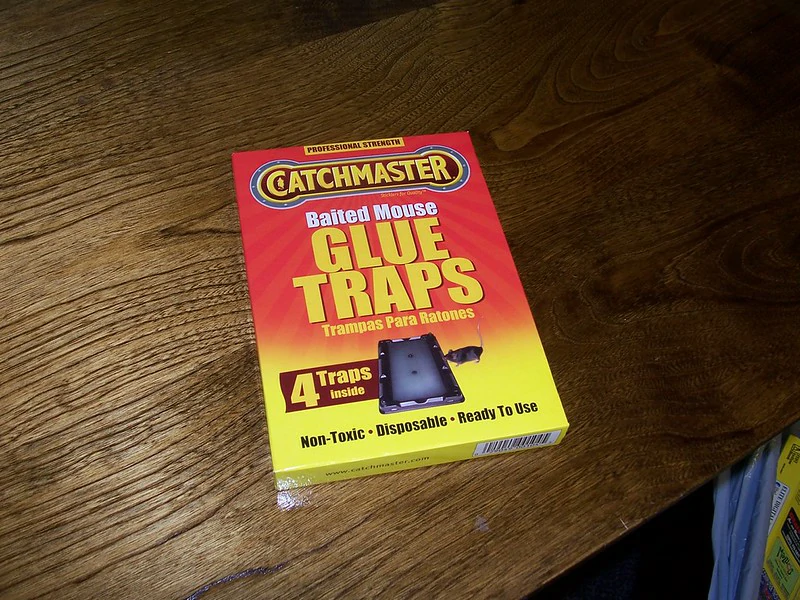
Finding a rat or mouse stuck on a glue trap leaves you with an unpleasant job, and doing it the right way keeps you and your family healthy. So how do you dispose of a rat glue trap?
To dispose of a glue trap, wear thick gloves, spray the trap with disinfectant, and seal it in a plastic bag. Put that bag inside a second bag, seal it too, and place it in your outdoor trash.
The goal is to keep germs, smells, and leaks locked inside one sealed package. It isn’t complicated, but a few small details matter, and the first one is making sure the animal isn’t still alive.
Gather These Supplies Before You Start
It’s much easier when everything’s ready before you pick up the trap, so you’re not digging around for a bag in dirty gloves.
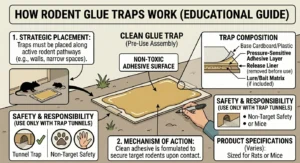
Here’s what you’ll need:
- Thick rubber, latex, vinyl, or nitrile gloves (nitrile is a strong, synthetic rubber)
- Two plastic bags, like grocery bags or small trash bags
- A twist tie or a piece of string
- A household disinfectant, or bleach and water
- Paper towels
- A trash bin with a tight lid
If there’s any chance the animal is still alive, add a towel and a bottle of cooking oil to the pile, just in case (you’ll see why in a few sections). Then work calmly, because rushing is how spills happen.
Why You Should Always Wear Gloves When You Handle a Glue Trap
Before you touch the trap, put on your gloves. This isn’t optional, it’s a basic safety step.
Rats and mice can carry germs that make people sick, such as hantavirus (a virus that can cause a serious lung illness) and leptospirosis (a bacterial infection that spreads through urine). They can also carry salmonella, which causes stomach cramps, diarrhea, and fever.
All of these germs can be found in urine, droppings, and saliva, and a trap that’s been sitting for a while will often have some of that on it. So even if the animal is no longer alive, the germs can stay behind.
Gloves also protect you from the glue, which is incredibly sticky and can take a long time to scrub off your skin.
Thin gloves can work okay for a quick job. However, thicker rubber gloves hold up better, and the glue is less likely to stick to them.
Whatever gloves you wear, spray or wash them with disinfectant or soap and water before you take them off. Then throw disposable ones away, and don’t try to reuse them.
How to Double-Bag a Glue Trap, Step by Step
The standard way to get rid of a glue trap is to double-bag it before it goes in the trash. Here’s exactly how to do it.
First, put on your gloves, spray the trap with household disinfectant, and let it soak for about five minutes. This kills germs before you move anything, and it keeps dust from floating up when you pick the trap up.
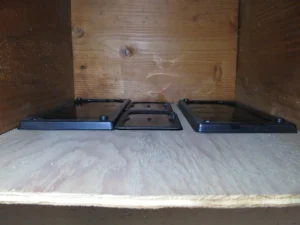
Next, grab two plastic bags that are big enough to hold the whole trap (grocery bags or small trash bags work fine, as long as you can still close them).
Put one bag inside the other so you can work with both at once. That’s a lot easier than bagging the trap twice.
Pick the trap up by its edges (not the middle, where the animal is) and slide the whole thing into the inner bag. Don’t try to peel the animal off first, and leave everything together.
Tie the inner bag shut tightly (a twist tie works well), then seal the outer bag the same way. This double layer keeps smells in, and it stops leaks if the body starts to break down.
Take the bag straight outside and put it in your trash bin, because the smell can get strong fast, especially in warm weather. Don’t leave it sitting in the house, even if it’s sealed.
Last, take off your gloves and wash your hands with soap and water, even if the gloves never seemed dirty.
What Should You Do If the Rat Is Still Alive on the Trap?
Sometimes you’ll check a trap and find the animal is still alive. If that happens, stop, and don’t bag it or throw anything away yet.
A live animal on a glue trap is frightened and stressed, so it needs help quickly. However, handling it yourself usually isn’t the best choice.
A scared rat can bite and scratch hard, and it may do it before you see it coming. Its urine and droppings can also carry diseases, and a stressed animal may lose both while you’re holding it.
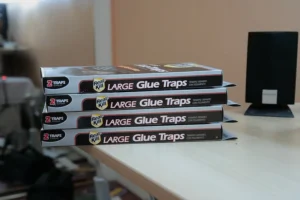
So the safest choice, for you and the animal, is to get professional help.
A vet, animal control, a wildlife rehabilitator (a trained person who cares for hurt wild animals), or a pest control company can free it or end its life quickly and humanely.
Call ahead, since not every place takes rats or mice. Many pest control companies handle this all the time, though, and some emergency vets do too.
If you can’t reach anyone and you decide to free it yourself, go slowly. Wear thick rubber gloves and cover the animal gently with a towel to keep it calm.
Then put a few drops of cooking oil or baby oil where its fur meets the glue, so the glue loosens and you can slowly work the animal loose. Slide a tissue under any freed fur or feet so they don’t stick again.
Once it’s loose, put it in a box with air holes and take it outside, away from your home, where local rules allow. However, an animal that’s hurt, weak, or very tired shouldn’t be let go on its own.
If you do get bitten or scratched, wash the spot with soap and water right away and call a doctor. Rat bites can spread germs, such as rat-bite fever (a bacterial infection).
Please don’t try to end its life yourself unless you’ve been trained. Doing it wrong can cause more harm and stress.
Once the animal is off the trap, follow the double-bagging steps above for the used trap, and throw away any tissue or paper towels you used.
Can You Throw Rat Glue Traps in Regular Trash?
Yes, you can usually put a glue trap in your regular household trash as long as it’s properly bagged. You don’t need a special disposal service.
The double bags keep smells and fluids away from the other garbage, and most trash collectors are fine with that as long as everything’s sealed.
That said, it’s smart to check your local rules, because some cities and counties have their own rules for pest animal remains. What’s okay in one place might not be okay in another.
In most cases, though, double-bagging the trap and tossing it is perfectly legal, since the trash goes to a landfill where it’s buried.
Use your outdoor bin, ideally one with a tight lid, and keep the bag out of your kitchen garbage so it’s out of your living space as fast as possible.
Should You Bury a Rat Glue Trap Instead of Trashing It?
Some people would rather bury a dead rodent than throw it out. That can work, but there are a few things to think about first.
You’d need to dig a hole deep enough that dogs, cats, and wild animals can’t dig it back up. A shallow hole may let the smell lead them right to it.
Pick a spot far from gardens, wells, and any water you use, since you don’t want anything from the body seeping into the soil where you grow food or find drinking water.
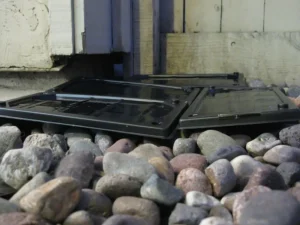
Keep the trap double-bagged before it goes in the ground, because that helps hold the germs in.
Burying may not be allowed where you live, since some places worry about groundwater and disease. If you’re not sure, call your local health department.
For most people, tossing the bagged trap in the trash is easier and works just as well. Burial is really only worth it if you’ve got the space and local rules allow it.
Clean the Spot Where the Trap Was Sitting
You’re not quite done once the trap is gone, because the spot where it sat needs a good cleaning too.
Spray the area with a household disinfectant, or mix 1 and a half cups of bleach in 1 gallon of cold water (that’s about 1 part bleach to 9 parts water).
Mix it fresh each time, since bleach loses strength as it sits. Then wet the whole area well and let it soak for about five minutes, which is long enough for the disinfectant to actually kill germs.
Wipe it up with paper towels and put them in a bag with your other trash. Don’t use a cloth you plan to wash and use again.
The CDC also advises against sweeping or vacuuming droppings, because that can kick up dust that may carry germs you can breathe in.
If any fluids got on the floor, clean those up the same way. Never mix bleach with ammonia or other cleaners, because that can make dangerous fumes.
Open a window while you work, and wash your hands well when you’re done.
How to Get Rid of the Smell Left Behind
Smell is one of the worst parts of using glue traps, especially if an animal has been stuck for a while or you don’t find it right away.
The odor comes from waste and, if the animal has died, from the body starting to break down. That can start sooner than most people expect.
This is why checking your traps often matters so much, since the sooner you find a catch, the less time there is for a smell to build.
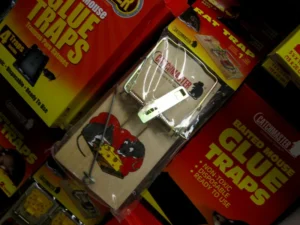
Double-bagging helps hold the smell in, so make sure both bags are tied really tight.
For the room, open your windows and let fresh air move through. Then use an odor neutralizer (something that breaks down smells, not just an air freshener that covers them up).
You can also leave out bowls of white vinegar or baking soda overnight, since both soak up odors from the air. Toss them in the morning.
If the smell has soaked into carpet or fabric, try a cleaner made for pet odors, which usually works well on rodent smells too.
If you can see urine or droppings on fabric, wash it in hot water with detergent, or steam clean it, which kills germs as well as smells.
If a bad smell sticks around and you can’t find the source, there may be another animal hiding somewhere, like inside a wall. That’s a good time to call a pest control company.
Can You Reuse a Glue Trap, or Should You Throw It Away?
Glue traps are made for one use, so once something gets stuck, the whole trap should go in the trash. Some people try cleaning a trap and adding fresh glue, but that’s a bad idea.
First, you can’t fully clean a used trap, since hair, fluids, and germs usually stay behind, and other rodents may smell that and stay away.
Second, the glue loses its stickiness, especially after something has pulled on it, so fresh glue on top of old glue usually doesn’t hold well.
Third, trying to scrape a body off a trap is messy, and it raises your chance of coming into contact with germs, which is a risk you don’t need to take.
Traps are cheap, so it’s just not worth the hassle. If you need another one, buy a fresh trap.
You Can Get Help If You Can’t Deal With the Trap Yourself
Not everyone can handle this job, and that’s okay. If you’re too squeamish, or the situation is just too much, you’ve got options.
You can call a pest control company, since they deal with this all the time and most will take care of it for a fee.
You can also ask a friend or neighbor who’s more comfortable with it, and there’s no shame in asking, since some people simply handle this better than others.
Local animal control may help in some areas. They’re more likely to help with larger animals, but it’s worth a quick call.
If you rent, your landlord or property manager may be willing to handle it, especially if rodents are a problem for the whole building.
Whatever you do, don’t leave the trap sitting out, because the longer it sits, the stronger the smell gets and the more time germs have to spread.
Check Your Glue Traps Often, At Least Twice a Day
If you’ve got glue traps set, you can’t set them and forget them, because they need regular checks.
Look at them at least twice a day, once in the morning and once in the evening. Rodents are usually most active at night (mostly between dusk and dawn), so the morning check is when you’ll most often find a catch.
More checks are even better, and if you know rodents are active, some people check every few hours.
Frequent checks are better for the animal, since it won’t be stuck for long. They also help with smell, because a trap that’s sat for a day stinks much more than one found within a few hours.
If you’ll be away for more than a day, don’t set glue traps, or ask someone to check them for you. Never leave them out while you’re on vacation or away for a weekend.
Glue Traps Aren’t Great for the Environment
Glue traps are made of plastic and adhesive (a fancy word for glue), and neither one breaks down quickly in a landfill.
When you toss a used trap, both the trap and the animal end up there. The body will break down over time, but the plastic can stick around for decades.
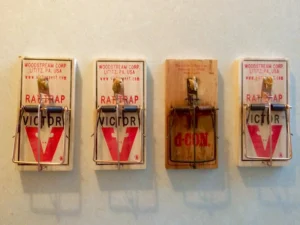
If that bothers you, think about snap traps, which you can clean and reuse many times, so they make less waste. Many pest control pros also prefer them because they work fast when they’re set up right.
Live cage traps are another option, though they need to be checked often, and you’ll need to follow local rules about releasing animals.
If you already have glue traps, only set them where you’re actually seeing signs of rodents, since ten traps in the trash is a lot more waste than two.
There’s no truly “green” way to throw out a used glue trap, so the best you can do is use fewer of them.
Some Places Limit or Ban Glue Traps, So Check Your Local Rules
Glue traps are banned in some places because of animal welfare concerns. England, for example, has banned them, and so have parts of Australia.
Rules in the US differ from state to state and city to city, and some stores have stopped selling them.
Before you buy more, take a minute to look up the rules where you live, because a quick search or a call to your local health department can save you trouble.
If glue traps aren’t allowed, you can still deal with rodents, since snap traps and sealing up entry points work well in most homes.
How to Stop Rats From Coming Back
Traps only deal with the rodents that are already inside. To keep new ones out, you need to find out how they’re getting in and why they’re there.
Start by sealing gaps, since rats can squeeze through holes about the size of a quarter and mice through ones about the size of a dime.
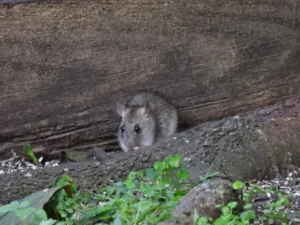
Use steel wool, metal mesh, or caulk to close up cracks around pipes, vents, and doors. Check the outside of your house too, since entry points often start there.
Next, take away their food by keeping pet food and bird seed in tight containers and storing your trash in a bin with a tight lid.
Also clean up clutter and trim back bushes close to your house, because rodents love hiding spots near walls.
Do these things and you’ll likely need far fewer traps. If the problem keeps coming back, a pest control pro can help you find the entry points.
Conclusion
Disposing of a glue trap is simple, but you need to do it carefully. Wear thick gloves, spray the trap with disinfectant, double-bag it, seal both bags tightly, and put it in your outdoor trash.
If the animal is still alive, don’t throw the trap out, and don’t handle it yourself if you can help it. Call a vet, animal control, a wildlife rehabilitator, or a pest control company for help.
Check your traps at least twice a day, clean the area with disinfectant, and wash your hands even if you wore gloves. If you can’t handle it yourself, there’s no shame in asking for help.
For the future, think about snap traps and sealing up entry points, since they create less waste and some places don’t allow glue traps anyway.

Hi, my name is Ezra Mushala, i have been interested animals all my life. I am the main author and editor here at snakeinformer.com.