
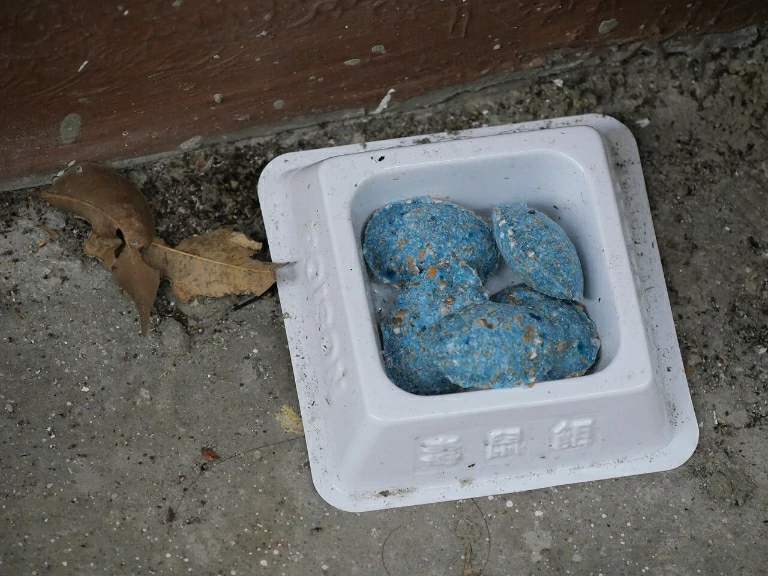
Wildlife plays a crucial role in controlling rat populations naturally. Foxes, coyotes, hawks, owls, snakes, and even domestic cats all hunt rats and mice.
But rat poison doesn’t discriminate. It can kill any animal that eats poisoned rats or accidentally consumes the poison directly. So what rat poison is safe for wildlife?
No rat poison is completely safe for wildlife. First-generation anticoagulants like warfarin and diphacinone pose the lowest risk because they break down faster in animals’ bodies and require multiple feedings to be lethal. However, even these can harm wildlife through secondary poisoning. Mechanical traps and exclusion methods are the only truly wildlife-safe options for rat control.
The hard truth is that if you use any poison to kill rats, you’re putting wildlife at some level of risk. Even the “safer” options can accumulate in predators that eat multiple poisoned rats.
The only way to completely protect wildlife is to avoid using poison altogether.
How Rat Poison Moves Through the Food Chain
Understanding how rat poison affects wildlife requires looking at the whole food chain, not just rats.
When you put out rat poison, you’re not just targeting rats. You’re introducing a toxin into the entire ecosystem.
A rat eats the poison and becomes sick but doesn’t die right away. While the poison is working (which can take days with anticoagulants), the rat is slower, weaker, and easier to catch.
Predators notice this. A fox, hawk, or owl sees an easy meal and catches the rat.
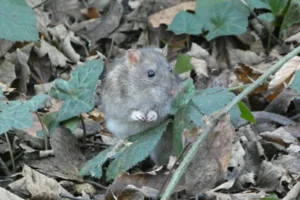
Now the poison is in the predator’s body. If it’s a second-generation anticoagulant like brodifacoum, it stays in the predator’s liver and fat tissue for weeks or months. The predator doesn’t just eat one rat though. It might eat several in a week.
Each poisoned rat adds more toxin to the predator’s system. Eventually, the poison builds up to lethal levels. The predator starts bleeding internally, becomes weak, and dies. If that predator has babies, they starve because the parent can’t hunt anymore.
But it doesn’t stop there. If the dead predator is a hawk or owl, scavengers like vultures or ravens might eat its body. The poison moves into the scavengers.
If it’s a fox or coyote, larger scavengers or even insects that eat the carcass can be affected.
This is called bioaccumulation, and it’s why rat poison is so devastating to wildlife populations. One poison application can ripple through the ecosystem for months.
First-Generation vs. Second-Generation Anticoagulants
Just like with owls, the type of rat poison makes a huge difference in how dangerous it is to wildlife.
First-generation and second-generation anticoagulants work the same way, but their effects on wildlife are very different.
First-generation anticoagulants (warfarin, chlorophacinone, diphacinone) require rats to eat them multiple times over several days to build up a lethal dose.
These poisons also metabolize and leave an animal’s body relatively quickly.
If a coyote eats a rat that was poisoned with diphacinone three days ago, much of the poison has already been broken down and eliminated from the rat’s body. The coyote might ingest a small amount of poison, but probably not enough to cause serious harm.
Second-generation anticoagulants (brodifacoum, bromadiolone, difethialone, difenacoum) were developed to kill rats with a single feeding.
They’re much more potent and persist in an animal’s body for weeks or even months.
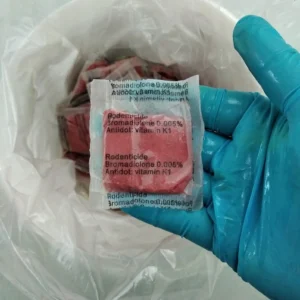
When a bobcat eats a rat poisoned with brodifacoum, the poison is still fully active in the rat’s liver and tissues, even if the rat has been dead for days.
The bobcat gets a significant dose of poison. If it eats several poisoned rats over a couple of weeks, the poison accumulates and can kill the bobcat.
Studies of wildlife mortality show that second-generation anticoagulants are found in the bodies of dead predators far more often than first-generation types.
In some areas, over 80% of dead mountain lions, bobcats, coyotes, and foxes test positive for these poisons.
Wildlife Most at Risk from Rat Poison
Some types of wildlife are more vulnerable to rat poison than others. Animals that primarily hunt rodents face the highest risk because they’re most likely to eat poisoned rats.
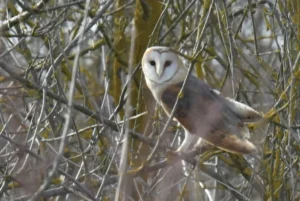
Birds of prey like owls, hawks, and eagles are extremely vulnerable. These birds can eat several rodents per day, and if those rodents are poisoned, the toxin builds up quickly. Barn owls are particularly at risk because they specialize in hunting rats and mice.
Foxes and coyotes also face high risk. They’re opportunistic hunters that will readily eat sick or dying rats. A study in California found that 79% of dead coyotes had rat poison in their systems.
Bobcats and mountain lions eat smaller prey that hunt rodents, so they can get poisoned through a two-step process. They eat a fox or a bird of prey that ate poisoned rats, and the poison transfers to them.
Scavenging animals like vultures and ravens eat dead animals they find. If they eat a rat or predator that died from poison, they can be poisoned too. Turkey vultures are especially vulnerable because they feed almost exclusively on carrion.
Even domestic cats and dogs are at risk. Outdoor cats that hunt mice and rats can be poisoned by eating contaminated prey. Dogs sometimes eat rat poison directly if they find bait blocks that aren’t in secured stations.
How Wildlife Gets Poisoned
There are two main ways wildlife can be poisoned: primary poisoning and secondary poisoning. Understanding both helps you see why even careful poison use can harm animals you never intended to affect.
Primary poisoning happens when an animal eats the poison directly. This might be a raccoon that breaks into a garage and eats rat poison blocks. Or a deer that finds grain-based rat bait and eats it. Or a curious dog that finds poison pellets under a house.
Non-target animals are often attracted to rat poison baits because they’re made to be appealing. They’re usually grain-based or have flavors that smell good to many animals, not just rats.
Bright colors can actually attract certain animals instead of deterring them.
Secondary poisoning happens when a predator or scavenger eats an animal that consumed poison. This is far more common than primary poisoning and affects a much wider range of wildlife.
The rat poison remains active in a poisoned rat’s body for days or weeks, depending on the type of poison used. Any animal that eats that rat also ingests the poison.
This includes animals that would never intentionally eat rat poison directly, like owls, hawks, foxes, and bobcats.
Why “Pet-Safe” or “Child-Safe” Doesn’t Mean Wildlife-Safe
Many rat poisons are marketed as “pet-safe” or “child-safe” because they come in locked bait stations that dogs and children can’t open. But these bait stations do absolutely nothing to prevent secondary poisoning.
The bait station keeps your dog from eating the poison directly, which is good. But it doesn’t stop rats from eating the poison, leaving the bait station, and then being caught by wildlife. The poison still enters the food chain.
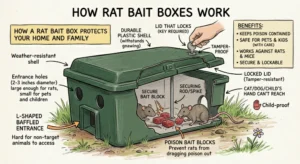
Some products claim to be safer because they use “safer active ingredients.” But even first-generation anticoagulants can cause secondary poisoning if a predator eats enough poisoned rats.
The only difference is that it takes more exposure than with second-generation poisons.
The term “wildlife-safe” doesn’t exist on rat poison labels because no poison is actually safe for wildlife.
Marketing terms like “safer,” “reduced risk,” or “pet-safe” create a false sense of security that leads people to use these products without understanding the real risks to the ecosystem.
Products with Lower Wildlife Risk
If you absolutely must use poison, choose products with first-generation anticoagulants as the active ingredient. Look for warfarin, chlorophacinone, or diphacinone on the label.
Some specific products include Ramik Green Bait Packs (diphacinone), JT Eaton Anticoagulant Bait Blocks (diphacinone), and some formulations of Tomcat products that use diphacinone instead of the more toxic bromethalin or second-generation anticoagulants.
Always read labels carefully. Many brands make multiple products. Tomcat, for example, makes some products with diphacinone and others with brodifacoum or bromethalin. You need to check the active ingredients every time you buy.
Avoid any product containing brodifacoum, bromadiolone, difethialone, difenacoum, or bromethalin. These are highly toxic to wildlife through secondary poisoning.
Also avoid zinc phosphide products if you have scavenging wildlife in your area. While zinc phosphide has a lower secondary poisoning risk than anticoagulants, it can still poison predators or scavengers that eat freshly poisoned rats.
Wildlife-Friendly Alternatives
The best way to protect wildlife is to avoid poison completely. Mechanical traps are highly effective and have zero risk of secondary poisoning.
Snap traps kill instantly and can be reused indefinitely.
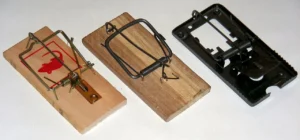
Electronic traps are another excellent option. These deliver a high-voltage shock that kills rats in seconds. They’re enclosed, so you don’t see the dead rat. Just empty the trap and reset it.
Live traps allow you to catch and release rats far from your property. This takes more work and may not be legal in all areas (some places require you to euthanize trapped rats). But it’s completely safe for wildlife.
Exclusion is the single best long-term solution. Find every possible entry point rats could use to get into your building and seal them.
Rats can fit through holes the size of a quarter, so you need to be extremely thorough. Use steel wool, copper mesh, or hardware cloth because rats can chew through most other materials.
Remove attractants. Secure garbage in metal cans with tight lids. Don’t leave pet food outside. Clean up bird seed spills daily. Harvest fruit from trees promptly.
Compost in enclosed bins, not open piles. Without easy food access, rats will move to locations where food is more readily available.
Natural predators are the ultimate wildlife-friendly solution. Install owl boxes, hawk perches, and brush piles that attract snakes and other rodent hunters.
A family of barn owls can eat over 3,000 rodents per year. Let nature do the pest control work.
Legal Restrictions on Rat Poison
Growing awareness of the wildlife impacts has led to new regulations in many areas. California passed restrictions in that prohibit the use of both first and second-generation anticoagulants for most residential purposes.
Only licensed pest control professionals can use them, and only in specific situations.
Canada has implemented similar restrictions in certain provinces. The European Union has strict regulations on which rodenticides can be used and how they must be applied.
Some cities and counties have gone even further, banning certain rat poisons entirely within their borders. Boulder, Colorado, for example, has prohibited the use of second-generation anticoagulants on city property.
These regulations exist because the science clearly shows that these poisons are devastating wildlife populations. As more research emerges, more areas are likely to restrict or ban the most dangerous products.
Check your local and state regulations before purchasing or using rat poison. What’s available at a hardware store might not be legal to use in your specific location.
What to Do If You Find Poisoned Wildlife
If you find a wild animal that appears sick or dying and you suspect poison, contact a licensed wildlife rehabilitator immediately. Don’t try to treat the animal yourself. Rodenticide poisoning requires specific veterinary treatment including vitamin K injections and supportive care.
Signs of anticoagulant poisoning in wildlife include lethargy, difficulty breathing, bloody discharge from the nose or mouth, pale gums, bruising, and weakness. Animals might also appear unusually tame or unafraid because they’re too weak to flee.

Report dead wildlife to your state wildlife agency, especially if you find multiple dead animals or birds of prey. Wildlife agencies track these incidents and use the data to understand the scope of rodenticide impacts.
If you know or suspect someone is using rat poison illegally or in ways that violate label directions, report it to your local animal control or state environmental agency. Improper use of rodenticides is often illegal and can result in fines.
Save packaging or take photos of any rat poison products you find that might be related to wildlife deaths. This information can help authorities identify the source and potentially prevent future incidents.
Conclusion
No rat poison is truly safe for wildlife. First-generation anticoagulants like warfarin and diphacinone pose lower risks than second-generation poisons, but they can still harm predators and scavengers through secondary poisoning.
The only completely wildlife-safe approach is to avoid poison entirely. Use snap traps, electronic traps, and exclusion methods instead. Support natural predators by installing nest boxes and protecting habitat.
Wildlife provides free, effective pest control if we let them do their job. Foxes, coyotes, hawks, owls, and snakes evolved to hunt rodents.
When we poison the prey base, we destroy our best allies in pest management. The smart choice is to work with nature, not against it.

Hi, my name is Ezra Mushala, i have been interested animals all my life. I am the main author and editor here at snakeinformer.com.