
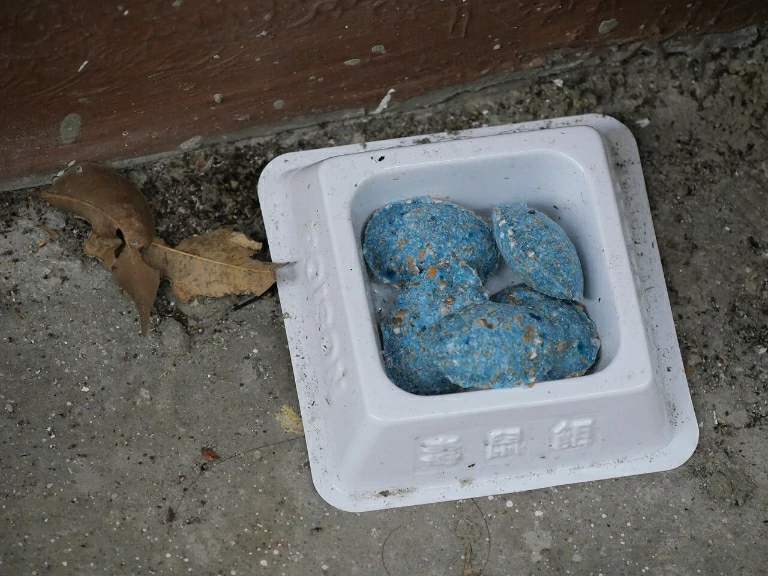
If you live in California and you’re dealing with a rat problem, you need to know what you’re actually allowed to use.
California has some of the strictest rat poison laws in the country, and using the wrong product can lead to steep fines.
The state has banned nearly every anticoagulant rat poison because of what it does to owls, hawks, bobcats, and mountain lions.
These animals end up eating poisoned rodents. So what’s actually left that’s legal? And what does that mean if you’ve got rats in your walls right now?
In California, first-generation anticoagulant rodenticides (warfarin, chlorophacinone, and diphacinone) are now restricted materials and are banned from most uses. Diphacinone has been restricted since January 1, 2024, while most chlorophacinone and warfarin uses were banned as of January 1, 2025. Bromethalin and cholecalciferol (vitamin D3) rodenticides are still legal for homeowners to buy and use. Zinc phosphide is legal too, but mostly for licensed professionals. Most uses of second-generation anticoagulants (brodifacoum, bromadiolone, difenacoum, difethialone) have been banned since January 1, 2021, with limited exemptions.
Knowing what’s legal, and using it the right way, is the only way to stay out of legal trouble in California.
California’s Legal Rat Poisons and Their Restrictions
| Poison Type | Legal Status | Where You Can Buy It | Required Usage Method | Major Restrictions | Who Can Use It |
|---|---|---|---|---|---|
| First-generation anticoagulants (Warfarin, Chlorophacinone, Diphacinone) | BANNED for nearly all uses since January 1, 2025 | Licensed pest control dealers only, for narrow allowed uses | Restricted material permit generally can’t even be issued for these | Blocked in homes, offices, schools, stores, and most other everyday settings | Almost no one, small exceptions for farms, water infrastructure, and public health emergencies |
| Second-generation anticoagulants (Brodifacoum, Bromadiolone, Difenacoum, Difethialone) | BANNED for most uses since January 1, 2021 | Licensed pest control dealers only, for narrow allowed uses | Restricted material permit and other requirements may apply | Blocked in homes and most other everyday settings, with limited exemptions for specific uses | Almost no one, with exceptions for certain government, agricultural, infrastructure, and public health uses |
| Bromethalin | LEGAL | Hardware stores, farm supply stores, online | Follow label directions, bait stations are standard | Must follow all label rules; wildlife groups want it banned next | Homeowners and professionals |
| Cholecalciferol (Vitamin D3) | LEGAL | Hardware stores, farm supply stores, online | Follow label directions, bait stations recommended | Must follow all label rules | Homeowners and professionals |
| Zinc Phosphide | LEGAL for professionals, mostly off-limits for consumers | Professional supply only in most areas | Applied by licensed professionals in most cases | Not sold to consumers in many counties; outdoor use restricted | Mainly licensed professionals |
| Snap traps (non-poison) | LEGAL and encouraged | Everywhere | No restrictions | None | Everyone |
| Electronic traps (non-poison) | LEGAL and encouraged | Hardware stores, online | No restrictions | None | Everyone |
This table shows what you’re actually allowed to use for rat control in California right now, and how you’re supposed to use it.
First-Generation Anticoagulants Are Now Banned for Almost Everyone
For years, first-generation anticoagulants were the poison most Californians reached for. That’s not true anymore.
These poisons (warfarin, chlorophacinone, and diphacinone) work by stopping blood from clotting. A rat that eats enough of it dies from internal bleeding over several days.
California banned diphacinone at the start of 2024. Then, starting January 1, 2025, the state added chlorophacinone and warfarin to that ban too. That closed the loop on every first-generation anticoagulant.
So what does “banned” actually mean here? These three poisons are now classified as restricted materials in California.
For almost every normal use (your home, an office, a school, a restaurant, a warehouse) a permit for that use simply can’t be issued. It’s not that you need extra paperwork, the use itself isn’t allowed anymore.
There are a small number of narrow exceptions written into the law. Farms growing crops or raising livestock can still use these poisons on the agricultural property itself.
So can water utilities protecting reservoirs and pipelines, vector control agencies handling public health threats, and a handful of other cases the law spells out by name.
If you’re an average homeowner in California, though, this section of the poison aisle is closed to you now. What used to be the go-to, budget option is off the table.
Where First-Generation Anticoagulants Still Get Used
Even with the ban in place, first-generation anticoagulants haven’t disappeared completely from California.
You’ll mostly find them now on working farms, where they’re used to protect crops and stored feed from rodents. A vineyard, orchard, or dairy operation can still buy and use these products for that purpose.
They also show up around water infrastructure. Reservoirs, pumping stations, and irrigation systems can be protected with these poisons when rodents threaten the equipment.

Vector control districts, the agencies that manage public health threats like disease-carrying rodents, keep access to these poisons too.
So do a few other narrow categories, like certain food processing facilities and medical waste sites.
What you won’t find anymore is first-generation anticoagulant bait in your neighborhood hardware store, sold for use in a house, apartment, office, or yard. That use is gone.
Even in the places where these poisons are still allowed, the person using them has to follow strict label rules. A restricted material classification means the state is watching how, where, and by whom these products get used.
If you’re trying to solve a rat problem at home, this section of the law simply doesn’t apply to you anymore. You’ll need to look at what’s still legal for regular consumers, which brings us to bromethalin and cholecalciferol.
Bromethalin Is Legal Now, But Its Future Is Shaky
Bromethalin is a non-anticoagulant rodenticide, and right now, it’s legal in California.
This poison works completely differently than the anticoagulants. It causes swelling in the brain, and there’s no antidote if a pet or person gets into it.
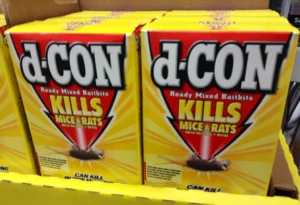
You can still buy bromethalin products at most hardware and farm supply stores across the state. They’re often sold as “single-feed” poisons, since a rat usually only needs to eat it once for it to be lethal.
Bromethalin stayed legal because it hasn’t been tied to the same scale of wildlife deaths through secondary poisoning (an owl or bobcat eating a poisoned rat) that anticoagulants have. But that’s starting to shift.
Wildlife groups and California regulators are watching bromethalin closely now. It’s the natural next target after the anticoagulant bans, and there’s a real chance it gets restricted in the next few years.
If you use bromethalin, follow the label exactly. Use a bait station even if the label doesn’t strictly require one, since that cuts down the risk to your pets and any wildlife nearby.
Keep in mind that if California does ban bromethalin down the road, you’ll need to stop using it and get rid of what’s left the right way.
Cholecalciferol (Vitamin D3) Is Still a Legal Option
Cholecalciferol rodenticides are legal in California, and they’ve become more common now that the anticoagulants are banned.
This poison is basically a massive overdose of vitamin D3. It pushes calcium levels in the blood way too high, which leads to kidney failure and death.
You can find cholecalciferol products at hardware stores and online. They’re sometimes marketed as “safer,” but that’s a little misleading, since they’re still toxic to pets and wildlife if eaten.
These products stayed legal because they work through a completely different mechanism than anticoagulants. So far, they haven’t been shown to cause the same scale of environmental harm, though they still carry real risk.
You have to follow the label directions on any cholecalciferol product. Bait stations might not always be required by the label itself, but using one anyway is smart, since it keeps your pets away from the bait.
One thing worth knowing: cholecalciferol works more slowly than some other poisons, usually taking two to four days to kill a rodent.
That can feel frustrating if you want a fast fix, but it’s the trade-off for staying inside California’s legal options.
Zinc Phosphide Is Legal, But Mostly Just for Professionals
Zinc phosphide is legal in California, but there are real limits on who can actually buy and use it.
This poison reacts with the acid in a rodent’s stomach and creates toxic phosphine gas. It works fast and it’s effective, but that same speed makes it risky to handle.
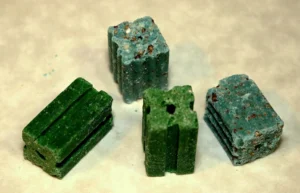
In most California counties, you can’t buy zinc phosphide as a regular consumer. It’s sold to licensed pest control professionals only.
That restriction exists for a good reason. The gas zinc phosphide produces is dangerous to people and pets too, not just rodents, so it takes careful training to place and handle safely.
If you’re a homeowner, you generally won’t be able to use zinc phosphide yourself. Getting it applied means hiring a licensed pest control company.
A handful of agricultural counties allow farmers to buy and use zinc phosphide with the right training and licensing, but that varies quite a bit depending on where you are.
Professional application actually works out safer in the end. Licensed operators know how to place the poison in a way that kills rats effectively while keeping the risk to people, pets, and wildlife as low as possible.
How to Know If a Rat Poison Is Actually Legal to Use
When you’re shopping for rat poison in California, here’s how you can check that what you’re buying is actually legal to use.
First, check the active ingredient on the label. Brodifacoum, bromadiolone, difenacoum, and difethialone are all second-generation anticoagulants, and they’re banned for consumer use.
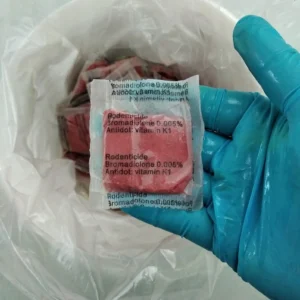
If the label says warfarin, chlorophacinone, or diphacinone, that’s a first-generation anticoagulant.
As of 2025, those are banned from nearly every consumer use too. Don’t assume an older product on a store shelf is still fine to use just because it’s still sitting there.
Bromethalin and cholecalciferol are the two ingredients you actually want to see if you’re shopping as a regular homeowner. Both are still legal.
Look for language on the packaging confirming the product is meant for sale and use here in California. Reputable manufacturers now label this clearly, since the rules have changed so often in the last few years.
If you’re buying online, check that the seller actually ships to California and that the product is legal to use once it gets there. A responsible retailer won’t ship a banned product straight to a California address in the first place.
When you’re not sure about a product, the safest move is to call your county agricultural commissioner’s office directly. They can tell you exactly whether a specific product is legal to use where you live.
The Label Is the Law in California
In California, pesticide labels, including rat poison labels, actually carry the force of law. This matters more than most people realize.
Every word on that label is legally binding. If it tells you to use the product a certain way, you have to use it that way, or you’re breaking the law.
That covers dosage amounts, where you’re allowed to place the bait, the timing of application, how you actually apply it, and every safety step listed.
Say a label reads “for indoor use only,” and you go ahead and use the product outside anyway. You’ve broken California law at that point, even if the product itself is perfectly legal to own.
If the label calls for a bait station and you skip it, that’s a violation too.
Penalties for breaking label rules can be just as harsh as penalties for using a banned poison outright, sometimes running into thousands of dollars in fines.
Always read the full label before you use any rat poison. Don’t rely on what you did last time, or what a neighbor told you worked for them.
What California-Specific Label Language Looks Like
Products sold in California often carry specific label language that lines up with the state’s rules. Here’s what to watch for.
Many labels now warn about secondary poisoning risks to predators, especially mountain lions, bobcats, owls, and hawks.
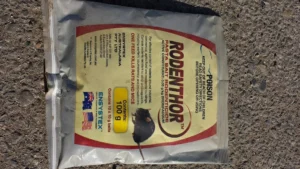
Some labels spell out restrictions on outdoor use, or on use anywhere near open space or wildlife habitat.
You’ll also see labels with California-only use restrictions that don’t appear on the same product sold in other states.
Labels have to include proper disposal instructions for leftover bait and dead rodents, which matters even more in California given how much the rules have shifted lately.
Products that used to contain first-generation anticoagulants should carry updated language showing the restricted material status those ingredients now have.
If you’re holding onto an older product bought before 2025, its label might not show the current law at all. The current law still applies, regardless of what an outdated label says.
Where to Buy Legal Rat Poison in California
Legal rat poison is easy enough to find in California once you know what to look for.
Hardware stores like Home Depot, Lowe’s, and Ace Hardware carry bromethalin and cholecalciferol products that comply with state law. It’s still smart to check the label yourself before you buy.
Farm and ranch supply stores, like Tractor Supply and local feed stores, carry these same legal poisons too, often in larger quantities.
Some big-box retailers like Walmart and Target stock rodent control products as well, though the selection can be more limited.
Online retailers like Amazon, Chewy, and specialty pest control sites sell California-legal products. Just make sure the listing specifically says it can ship to and be used in California.
Local pest control supply stores might carry professional-grade products, but some of those are restricted to licensed applicators only.
Always double-check that what you’re buying is actually legal before you purchase it, even if it’s sitting right there on a major retailer’s shelf.
Products slip through occasionally, especially with how quickly California’s rules have changed lately.
What Pest Control Professionals Can Use
Licensed pest control operators in California have access to a few more tools than homeowners, but they’re bound by the same anticoagulant bans everyone else is.
Professionals can use bromethalin and cholecalciferol products, the same ones homeowners can buy, though they sometimes get access to stronger, professional-strength versions.
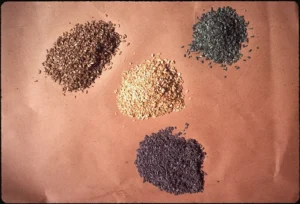
They can also use zinc phosphide in the situations where it’s allowed, which most homeowners simply can’t do on their own.
In rare cases, professionals working in agriculture or public health can apply for special permits to use restricted anticoagulants. These permits are hard to get and heavily monitored by the state.
Licensed operators are required to keep detailed records of every rodenticide application, including the product, the location, the date, and the amount used.
They also face tighter oversight than the average homeowner does. A violation can cost them their license, along with steep fines on top of that.
Because of how tight the rules have gotten, many pest control companies in California are shifting away from poison altogether. A growing number now lean on integrated pest management instead, which relies on traps and exclusion first.
California Wants You to Try Integrated Pest Management First
California actively pushes integrated pest management, usually shortened to IPM, over just relying on poison to control rats.
IPM is a full approach that combines several strategies to control pests while cutting down on pesticide use.
For rats, that means inspecting your property, sealing entry points, trapping, cleaning up food sources, and changing the habitat that draws them in.
Plenty of California cities and counties now require or strongly encourage pest control companies to try IPM before ever reaching for poison.
Some government buildings and schools in California are required to use IPM, and can only turn to poison as a last resort.
IPM starts with figuring out how rats are getting into your property in the first place, then sealing those entry points. This step is called exclusion, and it’s the most effective long-term fix there is.
Next comes cleanup: getting rid of food sources, standing water, and the clutter or debris rats like to nest in.
Trapping plays a big role too. Snap traps, electronic traps, and live traps all catch rodents without any poison involved.
Poison only gets considered after these other methods have been tried and haven’t worked well enough.
California offers free educational resources about IPM on state websites, and some counties even run IPM workshops for residents who want to learn more.
Non-Poison Options That Are Always Legal
The safest legal choice in California is to skip poison completely and use non-toxic rat control instead.
Snap traps are fully legal, effective, and quick, they kill instantly. You can use as many as you want, wherever you want, with no restrictions at all.
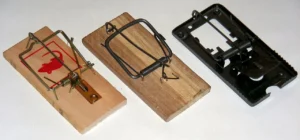
Electronic traps that deliver a high-voltage shock are legal and work well. They’re self-contained, so you can place them almost anywhere.
Live traps that catch rodents without killing them are legal too. You can release the rats far from your property, though you should check local rules about where releasing is actually allowed.
Sealing up entry points with steel wool, hardware cloth, or other materials rats can’t chew through is legal and it’s the approach California actively wants you to try.
Ultrasonic devices that claim to repel rats are legal, though how well they actually work is still up for debate.
Cleaning up your yard, clearing brush piles, and securing your garbage are always legal moves, and they genuinely help cut down the rat population around your home.
These methods aren’t just legal. California’s wildlife and environmental agencies actively want people to use them instead of poison.
Conclusion
In California, first-generation anticoagulant rodenticides (warfarin, chlorophacinone, and diphacinone) are now banned from nearly every consumer use, effective January 1, 2025.
Bromethalin and cholecalciferol are still legal, and zinc phosphide remains legal too, though it’s mostly limited to licensed professionals. Every second-generation anticoagulant has been off-limits to consumers since 2020.
The safest route is still to skip poison altogether and lean on snap traps, electronic traps, and sealing up entry points instead. These stay legal no matter what, carry no restrictions, and won’t put you at risk of a fine.
If you do decide to use poison, make sure it’s actually legal first, and follow the label exactly. Then weigh whether the risk is really worth it compared to traps and other methods that don’t rely on poison at all and work just as well.

Hi, my name is Ezra Mushala, i have been interested animals all my life. I am the main author and editor here at snakeinformer.com.