
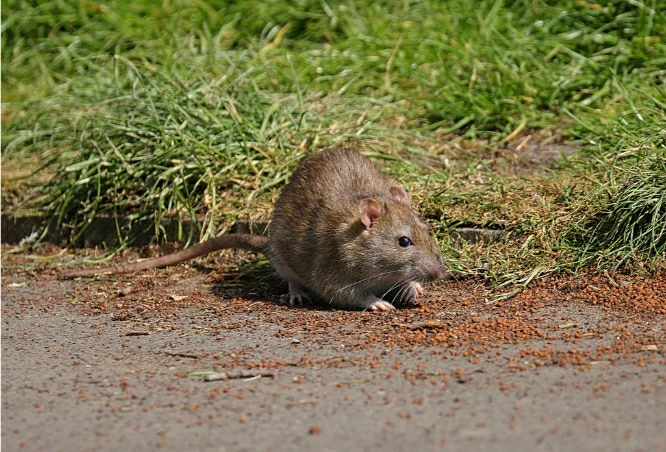
When you set out rat poison, you want to know if it’s working and how long before you’ll see results.
Understanding the timeline helps you know whether your baiting strategy is effective or if you need to make changes. How long does rat poison take to show results in rats?
Most rat poisons take 3 to 7 days to show visible results after rats eat a lethal dose. Anticoagulant poisons (the most common type) typically kill rats within 4 to 6 days, while bromethalin works faster at 1 to 3 days. You’ll know the poison is working when you notice decreased bait consumption, fewer signs of rat activity, reduced droppings, and occasionally finding dead rats. The exact timeline depends on the poison type, how much the rat eats, and the rat’s size and health.
The waiting period between putting out poison and seeing dead rats or decreased activity can be frustrating, but understanding why poison takes time helps you be patient and use it effectively.
Why Rat Poison Doesn’t Kill Instantly
Rat poison is designed to work slowly rather than killing rats immediately after they eat it. This delayed action is actually intentional and makes the poison more effective.
If poison killed rats instantly or within a few hours, surviving rats would learn to connect eating the bait with their companions dying. They’d develop bait shyness and refuse to eat it.

The delayed effect means rats don’t associate the bait with danger. They eat it, feel fine for days, and come back for more. By the time they get sick, they’ve already consumed a lethal dose.
Slow-acting anticoagulants allow rats to eat the bait multiple times. Each feeding builds up the poison in their system until it reaches fatal levels.
Rats are naturally cautious about new foods. A slow-acting poison gives them time to overcome their initial wariness and eat enough to ensure death.
The gradual onset of symptoms also means poisoned rats are less likely to display distress behaviors that warn other rats away from the bait.
Timeline for Anticoagulant Rat Poisons
Anticoagulant poisons are the most widely used type of rat poison, accounting for about 90% of products available.
Anticoagulants prevent blood from clotting by interfering with vitamin K, which is essential for producing clotting factors. Without proper clotting, rats bleed internally.
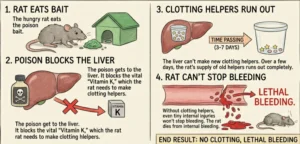
The bleeding starts small but accumulates over days. Eventually the internal bleeding becomes severe enough to cause weakness, shock, and death.
Understanding their timeline helps you know what to expect.
First-Generation Anticoagulants: 5 to 7 Days
Products containing warfarin, chlorophacinone, or diphacinone are first-generation anticoagulants. These require multiple feedings over several days for rats to consume a lethal dose.
Rats need to eat this poison repeatedly for 3 to 5 consecutive days to build up enough in their system. Death occurs 5 to 7 days after they start feeding.
If a rat only eats the poison once or twice and then stops, it might survive because the dose wasn’t sufficient.
Second-Generation Anticoagulants: 3 to 5 Days
Products with bromadiolone, brodifacoum, or difethialone are second-generation anticoagulants. These are much more potent and can kill rats with a single feeding.
After eating a lethal dose, rats typically die within 3 to 5 days. Some might die as quickly as 2 days while others take up to 7 days.
The speed depends on how much poison the rat ate in one session. A rat that gorges on bait will die faster than one that just nibbles.
Second-generation anticoagulants accumulate in the rat’s liver and stay in the system much longer than first-generation ones, which increases the chance of a lethal dose from fewer feedings.
Timeline for Bromethalin Rat Poison
Bromethalin is a neurotoxin that works completely differently from anticoagulants. It attacks the nervous system and brain rather than affecting blood clotting.
Bromethalin acts much faster than anticoagulants. Rats that eat a lethal dose typically show symptoms within 12 to 36 hours.
Death usually occurs 1 to 3 days after ingestion, making bromethalin one of the fastest-acting rat poisons available.
The speed of action depends on the dose. A large dose can kill within 24 hours, while a smaller dose might take 3 to 4 days.
Bromethalin causes swelling in the brain and spinal cord. This leads to loss of muscle control, paralysis, and eventually death.
Rats poisoned with bromethalin might show visible symptoms before death including tremors, seizures, and inability to walk properly.
Because it works faster, bromethalin is often chosen for situations where quick results are needed or where rats might be developing resistance to anticoagulants.
Timeline for Cholecalciferol (Vitamin D3) Poison
Cholecalciferol rat poison uses vitamin D3 to cause fatal calcium imbalances in the rat’s body.
Rats show first symptoms within 18 to 36 hours after eating a toxic dose. These symptoms include lethargy, weakness, and loss of appetite.
Death typically occurs 2 to 4 days after ingestion, though some rats take up to a week to die depending on the dose.
Cholecalciferol causes calcium levels in the blood to rise dramatically. This high calcium damages the kidneys, heart, and blood vessels.
Kidney failure is usually what ultimately kills the rat. The timeline depends on how quickly kidney damage progresses.
This type of poison is less common than anticoagulants but is used when anticoagulant resistance is suspected.
Timeline for Zinc Phosphide Poison
Zinc phosphide is an older type of rat poison that’s still used in some agricultural and outdoor settings.
This poison acts very quickly. Rats that eat it show symptoms within 30 minutes to 3 hours.
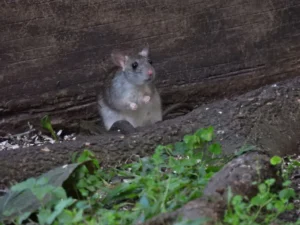
Death occurs within 3 to 24 hours after ingestion, making it one of the fastest rat poisons.
Zinc phosphide reacts with stomach acid to produce toxic phosphine gas. This gas damages the lungs, heart, liver, and kidneys.
Rats poisoned with zinc phosphide often die very quickly, sometimes before they can even leave the area where they ate the bait.
Because it acts so fast, zinc phosphide can cause bait shyness if some rats see others dying shortly after eating. This limits its usefulness for ongoing control programs.
To make everything easier, there is a table that summarizes how fast the symptoms show up in different types of rat poisons:
| Rat Poison Type | Active Ingredient | When Symptoms Appear | Typical Time to Death |
|---|---|---|---|
| First-Generation Anticoagulants | Warfarin, chlorophacinone, diphacinone | 3–5 days | 5–7 days |
| Second-Generation Anticoagulants | Bromadiolone, brodifacoum, difethialone | 1–3 days | 3–5 days |
| Bromethalin | Bromethalin | 12–36 hours | 1–3 days |
| Cholecalciferol | Vitamin D3 | 18–36 hours | 2–4 days |
| Zinc Phosphide | Zinc phosphide | 30 minutes–3 hours | 3–24 hours |
What Factors Affect How Fast Rat Poison Works?
The timeline from ingestion to death varies based on several factors beyond just the type of poison used.
Amount of Poison Consumed
A rat that eats a large amount of poison in one feeding will die faster than a rat that only nibbles a small amount.
With anticoagulants, eating more poison means higher levels accumulate faster, leading to quicker death.
With bromethalin and other neurotoxins, a larger dose causes more severe symptoms that progress faster.
Size and Age of the Rat
Large adult rats need more poison to reach a lethal dose than small rats or juveniles.
A small rat that eats the same amount of bait as a large rat will die faster because the poison concentration in its body is higher relative to its weight.
Young rats might be more susceptible to poison than older rats, though this varies by poison type.
Rat’s Overall Health
Healthy rats with strong immune systems and good nutrition might survive longer after poisoning than sick or weak rats.
Rats that are already stressed, injured, or diseased will succumb to poison more quickly because their bodies can’t handle the additional stress.
How Many Times the Rat Feeds
With first-generation anticoagulants, rats need to eat the poison multiple times to accumulate a lethal dose. A rat that feeds once might survive while one that feeds 3 or 4 times will die.
Second-generation anticoagulants and neurotoxins can kill with a single feeding, but multiple feedings still speed up the process.
Other Food Availability
If rats have access to lots of other food, they might only nibble at the poison bait and not consume a full lethal dose quickly.
When other food sources are scarce, rats eat more poison bait in each session, leading to faster results.
Environmental Factors
Temperature can affect how quickly poison works. Extreme cold might slow metabolism and delay symptoms.
Stress from predators, overcrowding, or lack of shelter can make rats more vulnerable to poison and speed up death.
Signs That Rat Poison is Starting to Work
You won’t always see dead rats, but several signs indicate that poison is taking effect.
Decreased Bait Consumption
If bait was disappearing rapidly for the first few days but consumption suddenly drops off, this often means the rats are dying.
Check bait stations every 2 to 3 days. If bait that was being eaten heavily suddenly sits untouched, it’s a good sign.
Fewer Droppings
Rat droppings decrease when the population is declining. Check areas where you regularly saw droppings and count them over several days.
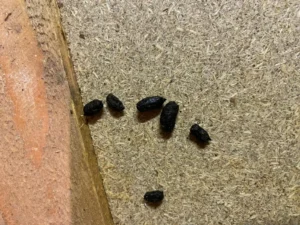
If you’re seeing 20 droppings per day in week one but only 5 per day in week two, the poison is working.
Less Noise and Activity
Rats make scratching, scurrying, and squeaking sounds, especially at night. When these sounds decrease or stop, rat numbers are dropping.
If you were hearing rats in walls or ceilings every night and the sounds become occasional or disappear, the poison is effective.
Reduced Damage
Active rats constantly gnaw on food packages, wires, wood, and other materials. New damage decreases when rats are dying.
If chew marks on food packages in your pantry stop appearing, it means fewer active rats.
Finding Dead Rats
The most obvious sign is finding dead rats. You might find them near bait stations, along walls, in hiding spots, or in random locations.
Not finding dead rats doesn’t mean the poison isn’t working. Many rats die in inaccessible locations like inside walls or under floors.
The Smell of Decomposition
Unfortunately, a common sign that poison is working is the smell of dead rats decomposing in hidden areas.
This smell typically appears 3 to 7 days after you first put out poison, matching the timeline for anticoagulant death.
Where Do Rats Go to Die After Eating Poison?
A common myth is that rat poison makes rats leave buildings to seek water and die outside. This isn’t really true.
Most poisoned rats die wherever they happen to be when the poison takes full effect. This could be in their nest, along a travel route, or in a random location.
Rats don’t instinctively leave buildings when poisoned. They stay in familiar areas where they feel safe.
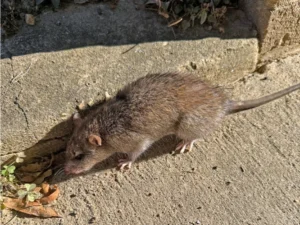
Some rats die in walls, attics, crawl spaces, or other hidden areas inside buildings. This is why the smell of decomposition is sometimes the first sign that poison is working.
Outdoor rats might die in burrows, under debris piles, in landscaping, or along fence lines. They don’t typically die in open areas because they avoid exposure even when sick.
The idea that rats seek sunlight or open air when dying is a myth. Poisoned rats still behave like rats, which means hiding in protected areas.
What to Do During the Waiting Period
The days between putting out poison and seeing results can be frustrating. Here’s what to do during this time.
Keep Bait Stations Full
Continue refilling bait as it’s consumed. Rats need continuous access to fresh bait, especially with first-generation anticoagulants.
If bait runs out before rats have eaten enough, they might survive.
Don’t Move Bait Stations
Leave stations in the same locations for at least 2 weeks. Moving them disrupts feeding patterns and confuses rats.
Rats are cautious and need time to become comfortable with bait station locations.
Monitor for Signs of Activity
Check for droppings, gnaw marks, sounds, and other signs of rat activity. Keep notes on what you observe so you can track changes.
Be Patient
Resist the urge to switch strategies too quickly. Give the poison at least 7 to 10 days to work before deciding it’s ineffective.
Many people give up too soon and switch methods right when the poison is starting to take effect.
Check for Dead Rats
Look in areas where rats might die: along walls, under furniture, in storage areas, in attics, and in garages.
If you smell decomposition, try to locate and remove the dead rat to prevent prolonged odor.
Maintain Sanitation
Continue keeping food sealed, garbage secured, and clutter minimized. Good sanitation makes your poison bait more attractive by reducing competing food sources.
How Long Should You Keep Poison Out?
Don’t remove bait stations as soon as you stop seeing signs of rats. You need to make sure the entire population is eliminated.
Keep bait stations active for at least 2 weeks after you stop finding evidence of rats (no droppings, no sounds, no bait consumption).
This ensures that any pregnant females, juveniles that were too small to take bait initially, or rats that were slow to find the bait all have chances to consume poison.
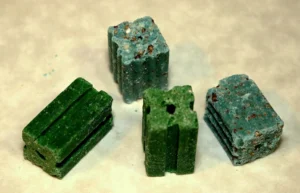
If you remove bait too soon, surviving rats will breed and repopulate quickly.
Some professionals recommend keeping bait available for 4 to 6 weeks total, even if activity seems to stop earlier.
When you finally remove bait stations, monitor for signs that rats are returning. If you see new droppings or hear sounds within a few weeks, put stations back out immediately.
When Poison Doesn’t Seem to Be Working
If you’ve had poison out for 2+ weeks and see no decrease in rat activity, several things might be wrong.
Rats Aren’t Finding the Bait
Your bait stations might be in the wrong locations. Move them to areas where you’ve seen droppings or heard sounds.
Rats travel along walls and in hidden pathways. Stations in the middle of open areas won’t get used.
Rats Are Avoiding the Bait
Bait shyness can develop if rats ate poison before and got sick but didn’t die. They’ll avoid that specific flavor or type of bait.
Try switching to a different brand or formulation of poison with a different flavor profile.
The Poison is Old or Degraded
Rat poison loses potency over time, especially if exposed to heat, moisture, or sunlight.
Check expiration dates and replace old poison with fresh product.
Competing Food Sources
If rats have easy access to other food (garbage, pet food, bird seed), they won’t eat enough poison to die.
Remove competing food sources to force rats to rely on poison bait.
Resistant Rat Population
Some rat populations have developed genetic resistance to anticoagulant poisons.
If you suspect resistance, switch to a different class of poison like bromethalin or cholecalciferol.
You Have More Rats Than You Thought
A very large infestation takes longer to control than a small one.
You might be killing rats, but new ones are moving in from outside or breeding faster than you’re eliminating them.
Consider professional pest control help for large or persistent infestations.
Safety Reminders During the Waiting Period
While waiting for poison to work, maintain safety precautions.
- Keep bait stations secure and tamper-resistant. Check them regularly to ensure pets and children can’t access the poison.
- Don’t touch dead rats with bare hands. Use gloves or a plastic bag to pick them up and dispose of them in sealed bags.
- Wash hands after checking bait stations even if you didn’t touch the poison directly.
- Watch pets for signs of poisoning (weakness, bleeding, difficulty breathing). If a pet eats a poisoned rat or accesses bait, contact a vet immediately.
- Keep the poison packaging so you know the active ingredient in case of accidental exposure.
Conclusion
Most rat poisons take 3 to 7 days to kill rats after they eat a lethal dose. Anticoagulant poisons (the most common type) typically work within 4 to 6 days, while bromethalin acts faster at 1 to 3 days.
Cholecalciferol takes 2 to 4 days, and zinc phosphide works within 3 to 24 hours.
You’ll know poison is working when bait consumption decreases, you see fewer droppings and less damage, hear less activity, and occasionally find dead rats. Don’t expect immediate results, and keep bait stations active for at least 2 weeks after signs of rat activity stop.
If you don’t see results after 2 weeks, evaluate whether rats are finding the bait, whether competing food sources exist, and whether you might be dealing with a poison-resistant population. Patience and proper bait placement are critical for success with rat poison.

Hi, my name is Ezra Mushala, i have been interested animals all my life. I am the main author and editor here at snakeinformer.com.