
Glue traps are a popular way to catch mice indoors since they’re cheap, quiet, and don’t use poison. But if your dog sniffs everything on the floor, you might be wondering: are glue traps dangerous to dogs?
Glue traps can be dangerous to dogs, though not because they’re poisonous. The glue isn’t toxic, but a dog that gets stuck can panic, lose fur or skin, or swallow part of the trap. The bigger worry is a mouse stuck on the board, since it may have eaten rat poison.
So the glue itself isn’t the main problem. The trouble starts when a curious dog meets a sticky board, or a mouse that’s stuck on one.
A paw stuck to a trap, or a little glue on the muzzle, is something you can often fix at home. Still, a few situations need a vet, and it helps to know which ones before it happens.
The Glue on a Mouse Trap Isn’t Poisonous
Glue boards don’t contain poison, and the sticky part is usually made from industrial materials like polybutene (a thick, rubbery substance that stays tacky and doesn’t dry out).
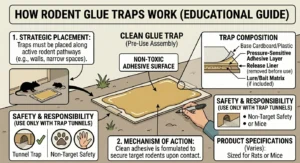
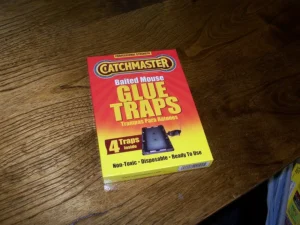
That’s why brands like Tomcat and Catchmaster call their boards non-toxic and free of pesticides.
So if your dog licks a bit of glue, poisoning isn’t the thing to worry about. The danger comes from how the glue works.
It grabs on and doesn’t let go, so the more your dog pulls and twists, the more fur and skin get caught in it.
Glue boards are also a different thing from rat poison. People mix the two up all the time, but they work in completely different ways.
Poison baits are made to be eaten, and that’s where most of the real danger to dogs comes from. A glue board is made to hold on to whatever touches it.
Why a Glue Trap Is So Hard To Escape
The glue on these boards is a pressure-sensitive adhesive (which just means it sticks the moment something presses on it). It doesn’t need to dry, heat up, or be switched on.
Unlike super glue, trap glue doesn’t harden, so it stays tacky and keeps its grip for weeks or even months.
Dust, cold, and damp can weaken the glue. Still, a dusty board can hold a paw just fine, so don’t count on that to save your dog.
Fur makes things worse, because each hair is a tiny handle for the glue, and a dog has thousands of them on every paw and leg.
Pulling back doesn’t pull the glue off. It just drags more hair into the sticky surface and spreads the mess around.
That’s why slow, gentle removal works better than a hard yank, since oil loosens the glue and force doesn’t.
What Happens When a Dog Gets Stuck to a Glue Trap?
It usually starts with a paw. Your dog steps on the board while sniffing along a wall, and the glue grabs the pads and the fur between the toes.
Then the panic kicks in, and your dog shakes his paw and drags the board around.
A dog that keeps fighting can end up with the board stuck to its chest or side, and the glue grabs more fur with every twist.
The face is where it gets serious. A board stuck over the nose and mouth can make breathing hard, and that’s an emergency.
Even in a mild case, getting free isn’t painless. A dog that pulls the trap off by itself will often leave fur behind, and sometimes skin too.
Some dogs also get spooked afterward, and a scared dog may snap, even at someone he loves, so be careful when you reach for him.
It isn’t a quick fix when your dog is wriggling, either. If you can, ask someone to help hold him while you work.
Why Dogs Walk Right Into Glue Traps
Dogs explore with their noses and paws, so a flat board on the floor is exactly the kind of thing they’ll sniff, paw at, or step on.
Many glue boards are scented on purpose to attract mice, and that smell can pull in a curious dog too.
Placement is part of it. People set traps along walls, behind couches, and near the kitchen, and those are the same spots a dog likes to check.
Dogs also can’t read warning labels. The box may say to keep the trap away from pets, but your dog has no idea.
And boards don’t always stay put, since a dog can nudge one out from behind a cabinet or drag it across the room before you notice.
That’s how a trap that seemed well hidden ends up in the middle of the living room floor.
Which Dogs Are Most at Risk of Getting Stuck?
Small dogs and puppies are at the highest risk, since they’re curious, they chew on everything, and one board can cover a good part of a tiny dog’s body.

Dogs with long or thick coats have a harder time too. There’s more fur for the glue to grab, and more tangles to deal with afterward.
Dogs bred to go after small animals are another group. Terriers and dachshunds, for example, were bred to hunt rodents, so a mouse on a board is hard for them to ignore.
Dogs that like to chew can bite right into the board, getting glue in the mouth and cardboard in the stomach.
Older dogs may not see or smell as well, so they can walk right into a board.
If your dog fits any of these, it’s best to skip glue traps in your home altogether.
Does the Size of the Board Make a Difference?
Yes, it does. Glue boards come in mouse and rat sizes, and the bigger ones are a bigger problem for a dog.
A mouse board is about 4.5 inches long and 3.25 inches wide. A rat board runs about 9.75 inches long and 4.75 wide (more than twice as long).
A mouse board can wrap around a paw or a snout, but a rat board can cover a small dog’s whole front leg or chest.
The bigger board also holds more glue, which means a longer cleanup, and that’s a tough job with a stressed dog.
So if you ever use glue traps, pick the smaller size and place it carefully. Rat boards are the worst choice around dogs.
Can a Dog Get Sick From Licking or Eating the Glue?
Usually not from poison, since a dog would have to swallow a huge amount of the glue to get poisoned. A lick or two isn’t a big worry.
Still, glue isn’t food. A dog that chews on a board can swallow cardboard or plastic, and that can cause a blockage (a spot in the gut that food can’t get past).
Watch for vomiting, not eating, belly pain, or not pooping, and call your vet if you see any.
Glue on the fur is also a problem if your dog licks it, since he’ll swallow more glue and it can end up all over his face and mouth.
Don’t mix up trap glue with expanding glues. Products like Gorilla Glue swell up in the stomach and can block it, and that often means surgery.
Trap glue isn’t that kind of glue. Still, if you’re not sure what your dog swallowed, call your vet or a poison hotline and ask.
The Bigger Danger Might Be the Mouse on the Trap
Here’s the part many people miss: a mouse stuck on a glue board is still a mouse, and your dog may go after it.
A live mouse can bite. It’s scared and stuck, and it’ll use its teeth on whatever gets close, including your dog’s nose.
Dead or alive, a mouse can also carry parasites, like roundworms and coccidia (tiny gut parasites). Your dog can pick these up if he eats it.
Then there’s rat poison. If the mouse ate bait before it got stuck, the poison is still in its body.
Your dog can get poisoned just by eating that mouse, and vets call this secondary poisoning (when poison passes from one animal to another).
How risky it is depends on the poison and how much the mouse ate. Some of the stronger rat poisons stay in the body, so the risk is real.
Even if you’ve never used rat poison, a neighbor might have, and mice travel, so you can’t always tell where one has been eating.
Most rat poisons stop blood from clotting, so the signs involve bleeding. Watch for weakness, tiredness, nosebleeds, bleeding gums, bloody stool, coughing up blood, or trouble breathing.
These signs can take three to five days to show up, which is why you shouldn’t wait for symptoms if you think your dog ate a poisoned mouse.
Call your vet right away. You can also call the ASPCA Animal Poison Control Center at (888) 426-4435 or Pet Poison Helpline at (855) 764-7661 (both may charge a fee).
Vets can treat this with vitamin K and other care, and the sooner it starts, the better.
How to Get a Glue Trap Off Your Dog Safely
Start by staying calm, since your dog will pick up on your mood and a calm dog is much easier to help.
Keep him from licking the glue or pulling at the board. If someone can hold him, that helps a lot.
Sprinkle torn paper towel or shredded paper over any glue that’s still exposed, so nothing else sticks while you work.
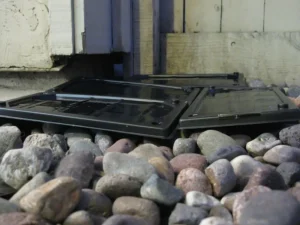
Next, pour a little cooking oil on the glue (vegetable, canola, olive, mineral, or baby oil all work). Oil breaks down the glue, the same way it loosens a sticker.
Massage the oil into the spot where the glue meets the fur and skin. Give it a few minutes to soak in.
Then peel the board away slowly, adding more oil as you go, and hold the skin flat with your other hand so the fur doesn’t pull.
Once he’s free, wash the area with dish soap and warm water to get the oil out. Rinse well, because oily fur is slippery and he’ll want to lick it.
Skip harsh stuff like nail polish remover, rubbing alcohol, or paint thinner, because they can burn his skin and aren’t safe if he licks them.
Don’t grab scissors for a quick cut either. If the glue is tangled deep in thick fur, a vet or groomer can clip it safely.
When You Should Skip Home Removal and Call a Vet
Home removal works for small spots on a paw or leg, but some situations are too risky to handle yourself.
If the board is on your dog’s face, or glue is near his eyes, nose, or mouth, go to a vet right away. Don’t try to fix it at home.
The same goes if your dog is panicking or snapping, since you could get hurt and he could hurt himself.
Call a vet if the glue covers a large part of his body, because a big stuck patch is hard to get out without pulling skin.
Skin that looks red, raw, or torn also needs a vet, and so does any bleeding.
And if your dog swallowed glue, a piece of the board, or the mouse, call your vet even if he seems fine. Some problems take hours or days to show.
If it’s after hours, look for an emergency vet, since face injuries and possible poisoning aren’t things to leave until morning.
What Should You Watch for After Your Dog Gets Free?
Check the spot over the next few days, and look for redness, raw patches, or hair loss where the glue was.
Look between his toes too, since leftover glue picks up dirt and fluff and can irritate the skin there.
Watch how he walks, because limping, licking one paw nonstop, or hiding can mean the spot still hurts.
Also keep an eye on his stomach. If he licked a lot of oil or glue, he may have a soft stool or throw up once.
Call your vet if the vomiting keeps going, he stops eating, or he seems tired and off. Those aren’t signs to wait out.
If he ate a mouse, keep watching for bleeding for at least five days. Treat any bleeding as an emergency.
Where Can You Put Glue Traps If You Have a Dog?
The honest answer is somewhere your dog can’t reach at all, and every label says to keep the board away from pets.
That could mean behind a heavy appliance with no gap, or inside a room that stays closed. A door that’s mostly shut doesn’t count.
Some people put the board in a box or tube with a small opening. Dogs are clever, though, and a determined one can still knock it over or get a snout in.
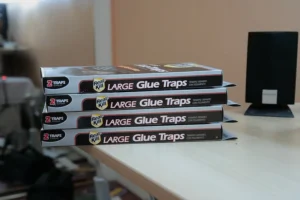
Check any trap often, since a mouse stuck on a board is suffering and a dog that finds it first can get hurt too.
Keep unused boards stored up high in a sealed container. A dog that finds a pack can chew right through the box.
Some places also limit or ban glue traps, so check your local rules before you buy.
Honestly, if your dog is curious, the safest move is to skip glue traps completely.
Are Glue Traps Safer Outside for Dogs?
No, and in some ways they’re worse. Most boards are made for indoor use, and rain, dirt, and leaves ruin the glue fast.
Outside, boards also catch things you never meant to trap, and birds, lizards, snakes, and other wildlife can all end up stuck on one.
Then your dog finds it. A scared wild animal can bite, and a dog that eats a trapped animal can pick up the same parasites and poison risks we covered earlier.
A yard is also harder to watch than a kitchen. Your dog can wander off to a corner you forgot about and find a board you set days ago.
If you find a wild animal stuck on a board, keep your dog away. Call a wildlife rehabilitator or a vet for help, and don’t try to pull the animal off yourself.
Safer Ways to Deal With Mice When You Have a Dog
Start by sealing the holes mice use to get in. They can squeeze through a gap about as wide as a pencil, so check around pipes, vents, and the bottom of doors.
Mice chew through foam and plastic, so steel wool or metal mesh, held in place with caulk, works much better.
Then cut off their food by storing pantry food, birdseed, and dog food in tight containers, since kibble is a favorite of mice.
Sweep up crumbs and don’t leave dog bowls out overnight, because less food means fewer mice moving in.
Snap traps work fast and are one of the safest, cheapest ways to catch mice. They can pinch a dog’s nose or paw, though, so put them inside a covered trap box that only a mouse can fit into.
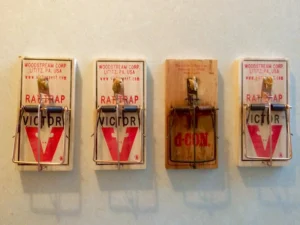
Enclosed electronic traps are another option, since the mouse goes in through a small opening and your dog can’t reach it.
Stay away from rat poison. Poison baits are among the most dangerous things for dogs, and a poisoned mouse can hurt your dog too.
If the problem is bigger than a mouse or two, call a pest control company and tell them you have a dog so they can pick the right tools.
What to Tell Your Vet After a Glue Trap Accident
Your vet will ask a few questions, and quick answers help them decide what to do. Take a photo of the trap and its box if you can.
Tell them the brand and where the glue touched your dog, and mention how much glue there was and whether he licked or swallowed any.
Say if he ate the board or the mouse. Also tell them about any rat poison in your home, garage, or yard, and bring the package if you have it.
Share your dog’s weight and age too, since those help your vet figure out how serious things are.
If you’re not sure what your dog got into, say so, because a rough guess is better than leaving something out.
Conclusion
Glue traps aren’t poisonous, but they can still be dangerous to dogs. The glue grabs fur and skin, and a scared dog can hurt itself while it tries to get free.
The other risks come from what’s around the trap. A dog can swallow pieces of the board, get bitten by a live mouse, or pick up parasites or rat poison from eating the mouse.
If your dog gets stuck, stay calm, use cooking oil to loosen the glue, and wash it off with dish soap. Call a vet if the board is near his face or if he swallowed anything.
The best fix is to keep traps out of your dog’s reach. Better yet, seal up your home, store food tightly, and try safer options like covered snap traps.
You can deal with mice without putting your dog at risk. A little planning now can save you a stressful trip to the vet later.

Hi, my name is Ezra Mushala, i have been interested animals all my life. I am the main author and editor here at snakeinformer.com.