
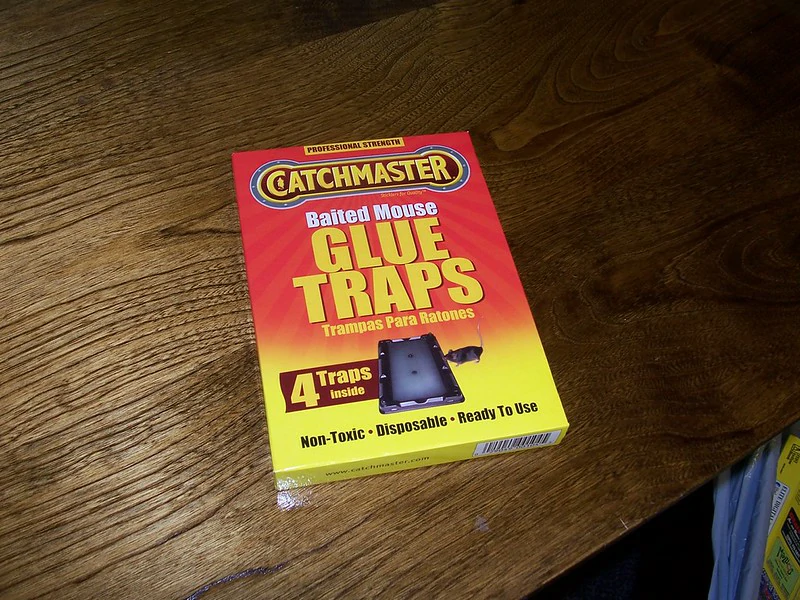
You bought a pack of Catchmaster traps last spring, used two, and shoved the rest in the garage. Now a roach just ran across your kitchen floor, and you’re wondering if those spare traps still work.
That’s a smart thing to wonder, because glue doesn’t last forever, and a trap can lose its grip on the shelf or on the floor. So, how long do Catchmaster glue traps last?
Unopened Catchmaster glue traps last about a year if you store them somewhere cool and dry. Once you set one out, it usually works for about two to three months, or less if it gets dusty, damp, or full.
Those numbers come from Catchmaster, and they’re a good starting point rather than a promise. How long a trap really lasts depends on where you keep it and where you put it.
In this post, you’ll learn how long traps last on the shelf and on the floor, what shortens their life, and how to tell when it’s time to swap one out.
How Long Do Unopened Catchmaster Traps Last On The Shelf?
Catchmaster says its glue traps keep their quality for up to a year when they’re stored the right way and left in the sealed pack. That’s the number to plan around, and it’s the one the company gives for most of its products.
Some sellers give longer answers for specific items. For example, a seller of Catchmaster replacement glue boards says unopened boards can last a very long time if they’re kept away from extreme heat, cold, and direct sun.
On the other hand, the seller of the 150RI roach trap says there’s no exact shelf life for that one. So the honest answer is that a year is safe and longer might work, but you can’t count on it.
The glue itself is what ages. Heat and cold are the biggest things that wear it down, and a trap that’s lost its tackiness (the sticky feel of the glue) won’t hold a roach.
Catchmaster also says its moisture resistant backing and sealed packaging help protect the glue while it sits in storage. That’s one more reason to leave traps in the pack until you need them.
If your spare pack is a couple of years old, try a simple test. Peel back the cover on one trap and touch a corner with the tip of a pencil, and if it grabs and holds, the glue is probably still good.
If it feels dry, stiff, or only a little tacky, toss it and open a fresh pack. A few dollars is a small price for a trap that actually works.
Store Spare Traps Somewhere Cool And Dry So The Glue Stays Strong
How you store traps matters almost as much as how long you keep them, and Catchmaster’s storage advice is simple and easy to follow.
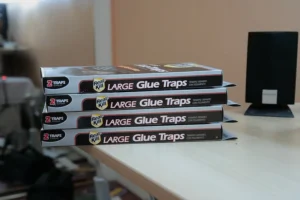
Keep traps in their original packaging until you’re ready to use them, since the pack protects the glue from dust, moisture, and curious little fingers.
Store them somewhere climate controlled, between about 40 and 75°F (4 to 24°C). A closet, a pantry shelf, or a drawer inside the house works well.
Pick a dry spot with low humidity, and keep it out of direct sunlight and away from heat sources like radiators, vents, and the top of the fridge.
Catchmaster also says never to store traps in garages, attics, or outdoor sheds, where the temperature swings a lot. That’s the mistake most people make, because the garage seems like the natural place for pest supplies.
Here’s why it matters. High heat can soften the glue and weaken its grip, while freezing weather can make it stiff and brittle, and either one can ruin a trap before you ever use it.
If you live somewhere with hot summers or cold winters, a garage shelf can swing from freezing to sweltering in a single year. That’s true in the southern US, Australia, and most of Canada, and an indoor closet is the safer bet.
Lay the packs flat, and don’t stack heavy things on top of them, since squished traps can bend or crack. Then write the date you bought the pack on the box with a marker, so a year from now you’ll know it’s time to test or replace them.
How Long Do Catchmaster Traps Work Once You Set Them Out?
Once you peel off the cover and set a trap down, the clock starts ticking faster. Catchmaster says a trap stays effective for around two to three months in ideal conditions.
Those ideal conditions are pretty specific: temperatures between about 50 and 95°F (10 to 35°C), low humidity, a clean surface, and a spot that gets little foot traffic.
Most homes don’t hit all of those, so many traps wear out sooner. A trap in a clean, dry bedroom closet might last the full three months, while one behind a greasy stove might be useless in two weeks.
Pest control pros give a simpler rule for monitoring traps: check them often, and replace them when they’re full or dusty. That matters more than any date on a calendar.
In practice, four things decide how long your trap lasts. They’re how much dust and grease land on it, how many bugs it catches, how hot or cold the spot gets, and how damp the air is.
Think of two to three months as the best case, not the promise. A trap that’s still clean and sticky at week ten is a bonus.
On the other side, a trap that’s covered in dust after three days is done, no matter what the box says. So the real answer is that a trap lasts until it gets dusty, full, or less sticky, and you can’t tell that without checking.
Dust, Grease, And Damp Can Ruin A Trap Much Faster
If you want your traps to last, keep them away from the three things that wreck glue the fastest: dust, grease, and water.
Dust is the sneakiest one. It settles on the glue a little at a time, and a trap that looks fine from across the room may already be covered with a thin film that roaches walk right over.
That’s common in garages, basements, and behind furniture that hasn’t moved in a while. Catchmaster says to keep traps away from dusty areas, since dust can reduce stickiness.
Grease is next, especially in kitchens. Cooking sends tiny droplets of oil into the air, and over a few weeks they can coat the glue, so a trap near the stove may fade faster than one in a hallway closet.
Damp is the third problem. Catchmaster says even small amounts of water can weaken the glue, so keep traps off bathroom floors and away from spots that get splashed.
Humid places like basements, laundry rooms, and under the sink can be tough on a trap too, even though roaches love those spots. If you have to place a trap in a damp spot, plan on replacing it more often.
Foot traffic matters as well. A trap in a busy walkway gets kicked, scuffed, and covered with grit, so tuck it along a wall or behind an appliance instead.
A covered trap can also help. Catchmaster’s directions say a folded, covered trap protects the glue in dusty areas, so fold yours into a tunnel if dust is a problem.
And wear gloves when you handle new traps, since oils and dirt from your fingers can dull the glue before you even set it down.
Cold And Heat Can Change How Long Catchmaster Traps Work
Temperature changes both the glue and the roaches, so it’s one of the biggest things that decides how long a trap does its job.
Catchmaster says its regular traps work best between about 50 and 95°F (10 to 35°C). Go much colder and the glue can get stiff and less sticky, and go much hotter and it can soften and lose its grip.
That matters for spots like unheated basements, garages, cabins, and attics. In a Canadian winter or a Texas summer, those places can swing well past that range.
For cold places, Catchmaster makes cold weather glue trays that it says work down to 0°F (about -18°C). They’re worth a look if you’re trapping in a garage, shed, or vacation home.
Heat from vents, radiators, and sunny windows can wear a trap down too, which is why Catchmaster says to keep traps away from them.
Temperature also changes how many roaches you’ll catch. Roaches like it warm, and German cockroaches are happiest around 70 to 75°F (21 to 24°C), so they’re less active in a cold basement.
That means a trap in a chilly spot can catch very little even when the glue is fine. Don’t read that as a sign that you’ve got no roaches.
If your home runs cold in winter, put traps near the warm spots roaches love, like behind the fridge, under the dishwasher, and near the water heater.
When Should You Throw Away A Catchmaster Trap?
Catchmaster gives a short list of times to replace a trap, and it’s a good one to follow. The trap goes in the trash when any of these things happen.
First, you can see dust or debris on the glue. Even a light film is enough to weaken the grip, so don’t wait for a thick layer.
Second, the glue feels less tacky, so test it with a pencil tip, not your finger, and if it doesn’t grab, the trap is done.
Third, the trap has been out for two to three months, even if it still looks okay. Old glue can lose strength in ways you can’t always see.
Fourth, the trap is full or has caught something. A crowded board has less sticky surface left, and a roach can walk across the gaps.
Pest control pros follow the same idea, replacing monitoring traps when they’re full, clogged, or dirty and writing down the catch count each time.
When you toss a trap, seal it in a plastic bag first and then put it in the trash. Wear gloves or use a paper towel, and wash your hands afterward, since roaches can carry germs.
If glue gets on your skin or a surface, rub a little vegetable oil on it. Catchmaster says vegetable oil dissolves its glue, and then you can wash the spot with soap and warm water.
Can You Reuse Or Clean A Catchmaster Glue Trap?
The short answer is no. Catchmaster says its glue traps are made for single use, and they should be replaced once they’ve caught something or gotten dirty.
It’s tempting to scrape off the dead roaches and reuse the board, but it doesn’t work. The glue is already covered with bits of bug and dust, and what’s left is too weak to hold the next roach.
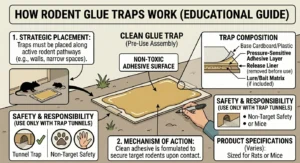
Wiping with a cloth or paper towel won’t help either. It smears the glue, pushes dirt in deeper, and leaves you with a sticky mess on your hands.
Adding fresh glue or tape isn’t a good idea. Homemade fixes can be harder to remove later, and they don’t have the glue formula that was made for roaches.
There’s one exception: a trap that hasn’t caught anything and isn’t dusty yet. If it’s still clean and sticky, you can usually slide it to a better spot with a gloved hand, but check that it’s still gripping afterward.
Traps are cheap, so don’t try to stretch them. A fresh trap gives you a clearer picture of what’s going on, and that’s what you’re paying for.
How Often Should You Check Your Traps?
A trap you never look at is just a piece of cardboard, and checking it is what turns it into useful information.
For the first few days, check your traps every morning. Many homes catch roaches within the first 24 hours, so you’ll start learning right away.
After that, once a week is usually enough, since Catchmaster suggests weekly checks for its traps and that’s a good habit for roaches too.
Pest control pros often check monitoring traps on a set schedule, like once a month, and keep notes on what they find each time. At home, weekly is easier and gives you faster answers.
Each time you check, look at three things: how many roaches are on the trap, how dusty or full it is, and how sticky the glue still feels.
Brush away any dust or crumbs that fell around the trap, without touching the glue. Catchmaster suggests cleaning up fallen debris around traps, since it can build up and block them.
Write your numbers down, since a quick note like “fridge trap, 8 roaches, week two” helps you see if your plan is working.
If a trap is empty week after week in a good spot, that’s useful too. It might mean roaches aren’t using that route, so try a new spot.
Date Your Traps And Keep A Few Fresh Ones On Hand
A marker is the best tool you’ll use with glue traps. Write the date you set each trap on the back, and you’ll never wonder how old it is.
Add a trap number and a note about where it sits, like “under sink” or “behind stove.” A quick sketch of your kitchen with the trap spots marked works even better.
Pest pros do the same thing, and it makes it much easier to see which spots are busy and which are quiet.
Keep a few fresh traps on hand, stored the right way, so you can swap quickly. The sooner you replace a full or dusty trap, the less time roaches have to slip past.
Even after the roaches are gone, leave a few traps out as an early warning. Swap them every couple of months, and you’ll spot a comeback quickly.
If roaches come in from outside, keep a couple of fresh traps near the doors and the basement entrance. Check them after heavy rain or a cold snap, when roaches tend to move indoors.
Signs Your Trap Has Stopped Working Even If It Still Looks Fine
A trap can fail without looking any different, so these quiet warning signs are worth knowing.
The first sign is a clean, empty trap in a spot where you know roaches walk. If you saw a roach there last night and the trap is still empty after a week, the glue may have lost its grip.
The second sign is a dull surface. Fresh glue tends to look glossy, so glue that looks dry or dull may be past its best.
Third, check for a film of dust. Tilt the trap toward a light, and you may see a thin, gray coat that’s hard to notice when you look straight at it.
Fourth, check whether the trap has been kicked, shifted, or folded. A bent trap can leave gaps, and a roach can slip around the sticky part.
Finally, think about how old it is. If you can’t remember when you set it, it’s old enough to swap.
When in doubt, replace it, because a fresh trap costs about a dollar in a typical 10 pack and that’s better than trusting a worn out one.
Conclusion
So, how long do Catchmaster glue traps last? Unopened traps last about a year when you store them somewhere cool and dry, and set traps usually work for around two to three months.
Dust, grease, damp, and temperature swings can cut that short, so keep spare traps indoors and away from garages and attics.
Check your traps every day at first, then once a week. Replace them when you see dust, when the glue feels less sticky, or when the trap is full.
Don’t try to reuse or clean a used trap, since the glue won’t hold a second time. Write the date on every trap so you always know how old it is.
And remember that a glue trap only finds roaches. Use what it shows you to put bait or boric acid in the right spots, and call a licensed pro if the problem keeps coming back.

Hi, my name is Ezra Mushala, i have been interested animals all my life. I am the main author and editor here at snakeinformer.com.