
Finding mouse droppings in your kitchen cabinet is never a fun surprise. Most people want the problem gone fast, and the two options you’ll see on every store shelf are traps and poison.
Both promise to get rid of your mice, but they work in very different ways, and each carries its own risks. So, are mouse traps better than poison?
Yes, mouse traps are better than poison for most homes. Traps work fast, show you exactly how many mice you’ve caught, and don’t put your pets or wildlife at risk. Poison is slower and can leave dead mice inside your walls.
That’s the short version, but there’s more to it. Poison does have a place, just a smaller one than most people think.
Below, you’ll see how each option works, what the real risks are, and how the two compare side by side, plus how to set traps so they actually catch mice.
How Mouse Traps And Poison Actually Work
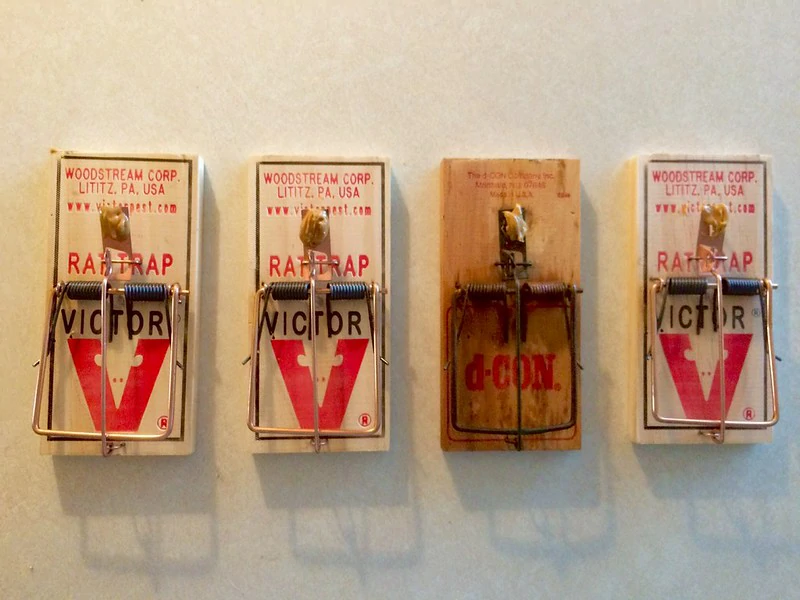
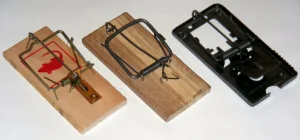
A snap trap is simple: a spring-loaded bar snaps shut when a mouse steps on the trigger to get at the bait.

When it’s set right, the trap usually kills the mouse quickly, right where it was caught, so all you do is check it and throw it away.
Electronic traps work in a similar way, except the mouse walks into a small box and a short burst of electricity kills it.
Poison works from the inside instead. A mouse eats the bait, the poison builds up in its body, and it dies hours or days later.
The science word for mouse and rat poison is rodenticide (a chemical made to kill rodents), and you’ll see it on almost every package.
Here’s the big difference: a trap kills the mouse where you can see it, while poison kills it somewhere you probably can’t.
How Can You Tell If You Have Mice Or Rats?
Before you buy anything, make sure you’re dealing with mice. A mouse trap is too small for a rat, and a rat trap is a poor fit for a mouse.
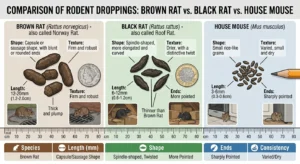
An adult house mouse is only about 5 to 7 inches long (tail included). It has a gray coat, big ears, and a tail with almost no fur.
Mouse droppings are about the size of a grain of rice and have pointed ends, while rat droppings are roughly twice as big.
You might also find gnaw marks, nests made of shredded paper or fabric, and a musky smell. You may even hear scratching in the walls at night.
Then there’s the deer mouse, which has a white belly and a furry tail and often shows up in garages, sheds, and cabins.
This one matters because deer mice can carry hantavirus (a rare but serious illness you can catch from dust with mouse droppings in it). You’ll see safe cleanup steps later.
Do Mouse Traps Work Faster Than Poison?
In most homes, yes, because a well-placed trap can catch a mouse on the very first night.
Mice are also usually less wary of new objects than rats are, so you can often set traps right away without any extra steps.
Poison takes much longer. With the stronger products, a mouse usually dies about 5 to 7 days after it eats a lethal dose.
During that time the mouse keeps eating, running around, and leaving droppings, and worse, it can keep breeding.
That matters because a female house mouse can have 5 to 10 litters a year, with about 5 or 6 pups each. So every extra day gives the problem more time to grow.
Think about it from your side: you put out poison, and a week later you’re still seeing droppings in the pantry, so you assume it didn’t work.
Traps don’t leave you guessing, because each catch is proof that you’re making progress.
However, poison can reach mice you never see, like the ones living deep in an attic or crawl space, and that’s one of the few real advantages it has.
Why Poison Can Leave Dead Mice Inside Your Walls
Here’s what usually happens: a mouse eats the bait, goes back to its nest, and then gets weak and dies there.
House mice nest in hidden spots like wall gaps, under floors, and behind appliances, so that’s often where the body ends up.
You’ll know it’s there by the smell, because dead mouse odor is strong and awful and can hang around for a week or longer.
Finding the source is the hard part. Some people end up cutting holes in drywall or pulling out appliances just to find one small body.
Poisoned mice can also act strange before they die, and they may get slow and wander into the open, where a cat or dog can grab them.
If you do use bait outdoors, seal up the holes into your house first. Otherwise, mice may come inside to die.
With traps, there’s no mystery, since the mouse is right there and you can remove it the same day.
What Are The Main Types Of Mouse Poison?
Not all mouse poison works the same way, and knowing the difference matters, especially if a pet ever gets into it.
There are four main kinds, so let’s go through each one.
Anticoagulants stop the blood from clotting, so the mouse slowly bleeds inside its body. This is the oldest and most common kind.
The older, weaker ones (called first generation) include warfarin and diphacinone, and they usually need several feedings to kill a mouse.
The stronger ones (called second generation) include brodifacoum and bromadiolone. They can kill after a single night of eating, and they stay in the body much longer.
Bromethalin attacks the nervous system and causes swelling in the brain, and there’s no antidote for it, which makes it very scary for pet owners.
Cholecalciferol is just the science name for vitamin D3. In small doses it’s a vitamin, but in poison doses it makes calcium shoot up and can damage the kidneys.
Zinc phosphide releases a toxic gas in the stomach, and farmers and pest control companies use it more than homeowners do.
Here’s the tricky part: products that look alike and have similar names can hold very different poisons, so always check the active ingredient on the label.
Is Mouse Poison Dangerous To Pets And Kids?
Yes, it can be. Rodenticide poisoning is one of the most common cases that Pet Poison Helpline handles.
Many baits are made to smell and taste good to mice, which can make them tempting to dogs too, and a curious dog can chew open a plastic bait station.
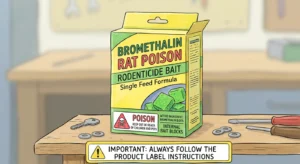
The bait also comes in bright colors like green, blue, and red, and to a toddler those can look like candy.
In the US, the EPA now says consumer poisons must come in bait stations (small boxes that hold the bait). Where kids or pets are around, the stations must be tamper resistant, which just means hard to open.
Still, a bait station isn’t a guarantee, since a determined dog can carry one off and mice can drag bait out into the open.
Then there’s secondary poisoning (when an animal gets poisoned by eating a poisoned mouse), and your cat or dog can get sick this way without ever touching the bait.
The risk from secondary poisoning is lower than eating the bait itself. However, it’s real, especially with the stronger poisons that stay in a mouse’s body longer.
Signs depend on the type of poison, but pets may bleed, act tired and weak, throw up, drink a lot of water, or stumble around.
Here’s what makes it tricky. With some poisons, signs don’t show up for several days, so a pet that looks fine today may not be safe.
To be fair, traps can hurt a curious pet too. A snap trap can pinch a nose or paw, so keep them behind furniture or inside covered trap boxes.
Mouse Poison Can Also Harm Owls, Hawks, And Other Wildlife
Poison doesn’t just affect the mice that eat it, because a poisoned mouse is slow and easy prey and often gets eaten by something else.
When an owl, hawk, or fox eats that mouse, it gets a dose of poison too. The stronger products are especially bad because they last longer in the mouse’s body.
Studies have found these poisons in many wild animals, including bald eagles, mountain lions, and endangered kit foxes. That’s a big reason the strongest poisons were pulled from store shelves for homeowners.
But those poisons haven’t vanished, since pest control companies and farm supply stores can still buy them.
Here’s something most people never think about: owls and hawks are natural mouse hunters, and they cost you nothing. Poison can wipe out the help you already have in your backyard.
Traps aren’t perfect outdoors either, because birds and other small wildlife can get caught in open snap traps, so use covered trap boxes if you set them outside.
How Much Do Mouse Traps And Poison Cost?
Snap traps are cheap, and wooden or plastic ones often cost a few dollars each (or less in a multi-pack).
You’ll need a dozen or so, but that still adds up to very little. Electronic traps cost more (often $20 to $60), but they last for years.
Poison looks cheap at first, since a bait station doesn’t cost much, but you have to keep refilling it until the mice are gone.
The real costs show up later. Think of the smell, the hole you cut in the drywall, or a vet bill after your dog gets into the bait.
Treating a pet for rodenticide poisoning can run into the hundreds or even thousands of dollars, and vitamin D poisoning is especially costly to treat.
A pest control company costs more up front, but it can be worth it for a big problem. Ask for a quote, and ask which products they plan to use.
Mouse Traps vs Poison Compared Side By Side
Sometimes a quick comparison makes things clearer, so here’s how the two stack up on what matters most.
| What You Care About | Mouse Traps | Mouse Poison |
|---|---|---|
| How fast it works | Often the first night or two | Usually 3 to 7 days or more |
| Cost up front | A few dollars per trap | Low, but refills add up |
| Risk to pets and kids | Low if placed well | Higher (bait and secondary poisoning) |
| Risk to wildlife | Low (higher outdoors if uncovered) | High (owls, hawks, foxes) |
| Dead mouse smell | Low, since you find the mouse | High, since mice die in walls |
| Proof it worked | You see every catch | None until the signs stop |
| Work needed | You check, empty, and reset | Set it and forget it |
| Possible vet bills | Rare | Can be very high |
| Best for | Small to medium problems at home | Big infestations handled by a pro |
As you can see, traps win on almost every row that matters to a family with pets, and poison only wins on how little work it takes.
That “set it and forget it” feel is exactly what makes poison tempting, and it’s also what makes it risky.
Which Kinds Of Mouse Traps Work Best?
Not all traps are the same, and the right one depends on your home, so here are the main types.
The classic wooden snap trap is cheap and it works, and it’s the least expensive option, which matters when you need a dozen.
Plastic snap traps cost a little more, but they’re easier to set, easier to clean, and often reusable.
Covered snap traps hide the spring inside a small box. That keeps little fingers and curious paws out, so they’re a good pick if you have kids or pets.
Electronic traps use a battery and a quick burst of electricity. You never have to touch the mouse, which many people like.
Some multi-catch traps kill the mice inside the box, and then you throw away the whole trap (these are made for mice only, not rats).
Glue boards are cheap, but they’re also cruel. A stuck mouse can struggle for hours, so many people steer clear of them.
Then there’s what doesn’t work: plug-in ultrasonic devices (the ones that give off a high-pitched sound) haven’t been shown to get rid of mice.
Cats won’t fix it either, since pest control agencies in Australia say pet cats don’t have much effect on how many mice are around.
How To Set Mouse Traps So They Actually Work
Most trap failures come from bad placement, not bad traps, and a few simple habits make a big difference.
Use more traps than you think you need. A dozen isn’t too many, because mice breed fast and travel along different paths.
Space them out by putting a trap every 6 to 10 feet along the walls where you’ve seen signs of mice.
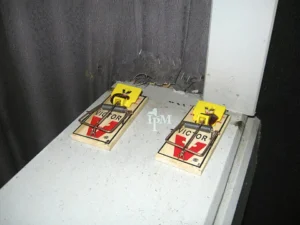
Place them against the wall, because mice run along edges and rarely cross open floors, so the trigger end should face the wall.
You can also try a double set, which means two traps side by side along the wall with the triggers facing outward, so a mouse coming from either direction hits one.
Look for droppings, gnaw marks, and greasy rub marks. Mice stay close to home (usually within 10 to 30 feet of the nest), so traps near those spots work best.
Good spots include behind the fridge, under sinks, in dark corners, and inside cabinets, which is basically anywhere a mouse can hide while it moves.
Go easy on the bait, because a pea-sized dab of peanut butter pressed onto the trigger works great since the mouse has to work at it.
Check your traps every day, wear gloves (you shouldn’t touch mice with your bare hands), and wash up afterward.
If a trap catches nothing after two or three days, move it closer to the droppings or try a different bait, like a bit of chocolate or a nut.
And keep traps out of reach of kids and pets, which is easy with covered trap boxes or spots behind big furniture.
When Is Poison The Better Choice?
To be fair, poison isn’t always the wrong answer, and there are a few situations where it makes sense.
A huge infestation is one of them. In barns, warehouses, or big outbuildings, mice can multiply into the hundreds and traps alone may not keep up.
Hard to reach spaces are another, because if mice are living in a large attic or between walls you can’t open, bait can reach them where traps can’t.
Even then, poison should go in tamper resistant bait stations, out of reach of kids, pets, and wildlife. Loose pellets scattered around are never okay.
If you’re dealing with a serious problem, call a licensed pest control company. They know where to put bait, which products are legal, and how to keep your pets safe.
Rules also differ from place to place. In Canada, the UK, and Australia the strongest products are restricted too, so check what’s allowed where you live.
For a normal home with a few mice, though, traps are the better first move, and you can always call a pro if they don’t do the job.
What To Do If Your Dog Or Cat Eats Mouse Poison
Don’t wait for signs to show up, and call your vet or a 24 hour animal poison line right away.
In the US and Canada, you can call Pet Poison Helpline at 855-764-7661 or the ASPCA Animal Poison Control Center at 888-426-4435. A fee usually applies, but it can save your pet’s life.
Grab the package before you call, because the active ingredient and the EPA registration number on the box tell the vet exactly what they’re dealing with.
Don’t make your pet throw up unless a vet tells you to. And don’t give vitamin K at home, since store-bought vitamins and foods aren’t a substitute for real treatment.
For anticoagulant poison, vets use prescription vitamin K1, often for weeks, but for bromethalin there’s no antidote, so early treatment is the best chance.
Vitamin D poison can damage the kidneys, and treatment can be long and costly, which is why a quick call matters so much.
If a child gets into mouse poison, call your local poison center right away. In the US, that’s 1-800-222-1222, in the UK it’s NHS 111, and in Australia it’s 13 11 26.
In Canada, call your provincial poison centre, and keep that number somewhere easy to find, just in case.
Why Mice Keep Coming Back Even After You Trap Them
Here’s a hard truth: neither traps nor poison will stop new mice from moving in.
They only remove the mice that are already inside, so if you don’t close the entry points, more will take their place.
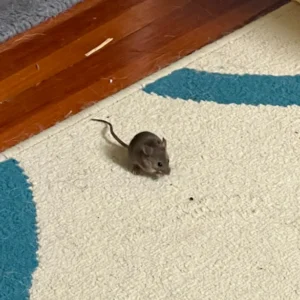
Mice can squeeze through a gap about 1/4 inch wide (roughly the width of a pencil), so even a tiny crack is an open door.
Walk around your home and look for gaps near pipes, vents, garage doors, and the foundation. Then seal them with coarse steel wool or wire mesh, since mice can’t chew through those.
Foam and plastic won’t hold up because mice chew right through them, so metal is the safer choice.
Food matters too. Keep pantry foods in tight containers, wipe up crumbs, and only put out as much pet food as your pet eats in one meal.
Outside, trim plants that climb your walls, since house mice are great climbers, and keep woodpiles and clutter away from your foundation.
Remember how fast they breed, since a female can start having pups at about 6 weeks old and can have 5 to 10 litters a year.
That’s why sealing entry points is the most lasting fix, because even a spotless home won’t keep mice out if they can walk right in.
How Do You Clean Up Safely After Catching Mice?
Mouse droppings and urine can carry germs, so don’t just grab a broom. The CDC warns that deer mice can carry hantavirus, a serious illness you can breathe in from dust.
Don’t sweep or vacuum droppings, because that kicks tiny particles into the air and you could breathe them in.
Put on rubber gloves first. Then spray the droppings and any nesting material with a disinfectant or a mix of 1 part bleach to 9 parts water.
Let it soak for about 5 minutes, then wipe it up with paper towels, put them in a sealed bag, and throw it away.
For a dead mouse, wear gloves or turn a plastic bag inside out over your hand, then seal the bag and put it in the trash.
Clean the area where the mouse was caught, and wash your hands with soap and water when you’re done.
Mouse urine is also a major cause of allergies, so don’t skip this step.
Conclusion
So, are mouse traps better than poison? For most homes, yes.
Traps work fast, show you proof, and don’t put pets, kids, or wildlife at risk, and they cost very little too.
Poison is slower, and it can leave dead mice in your walls. It can also hurt your dog, your cat, and the owls and hawks that help control mice outside.
Poison does have a place in big infestations, where a pest control pro can use it safely. For everyone else, traps are the smarter first step.
Whatever you choose, don’t forget the real fix: sealing the gaps and cleaning up food, which will make it much easier to keep mice out for good.

Hi, my name is Ezra Mushala, i have been interested animals all my life. I am the main author and editor here at snakeinformer.com.