
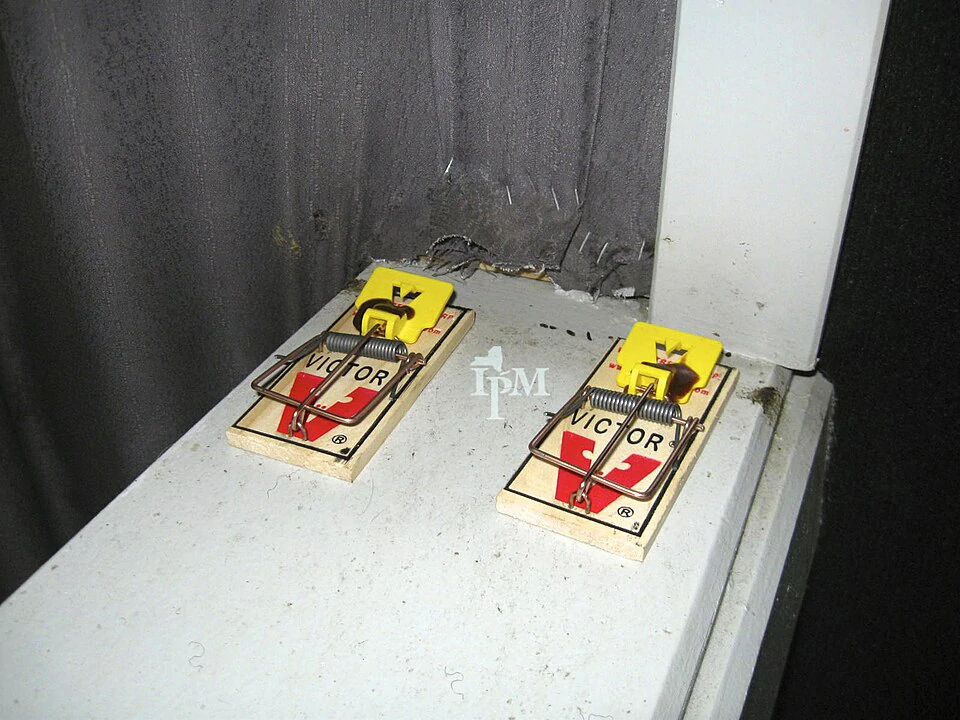
Most of us don’t enjoy the thought of hurting an animal, even a mouse that’s chewing through the pantry. But when mice move in, you have to do something, and how you do it matters to a lot of people.
Traps and poison are the two most common choices, and they end a mouse’s life in very different ways. So, are mouse traps more humane than poison?
Yes, mouse traps are usually more humane than poison. A good snap trap or electronic trap kills in seconds, while most poisons cause days of illness and pain. However, cheap or badly set traps can fail, so quality and placement matter.
In short, speed is what makes the difference, because a slow death almost always means more suffering. Poison is slow, and a good trap is fast.
Below, you’ll see how each method works, what mice actually go through, and how you can pick the kindest option for your home.
What Does “Humane” Really Mean For Mice?
When people say a pest control method is humane, they mean it ends the animal’s life quickly, with as little pain and fear as possible. It doesn’t mean the method is gentle or that the mouse gets a say.
Scientists judge this in a few ways. They look at how fast the method works, how the animal acts while it happens, what happens to the ones that survive, and whether pets and wildlife can get hurt.
One well-known review of rat and mouse control in the UK and US used exactly those tests. It’s a handy way to think about your own choice, too.
Mice are small, but they’re sentient, which just means they can feel pain, fear, and stress. Animal welfare experts say the same about rats, and mice share a lot of the same biology.
So the real question comes down to two things: how long does a mouse suffer, and how bad does it get?
How Mouse Poison Kills, And Why It Takes Days
The most common mouse poisons are anticoagulants (chemicals that stop blood from clotting). They don’t kill right away, and that’s the whole problem.
About one or two days after a mouse eats the bait, bleeding starts inside its body, including in the muscles and joints. Death usually comes 4 to 7 days after the poison goes in.
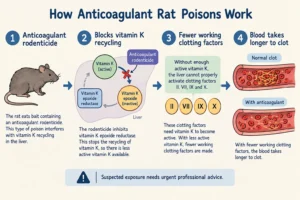
During those days, the mouse often keeps eating more bait, which makes the dose bigger and the illness worse. A mouse that eats less than a lethal dose may even survive, but it can still be bleeding inside.
Other poisons aren’t any kinder. Cholecalciferol (the science name for vitamin D3) causes illness and pain over several days, and zinc phosphide causes severe pain for several hours.
Researchers who reviewed these methods called anticoagulants the most common way to control rodents. They also said these poisons cause days of distress, disability, and pain.
What Do Mice Go Through After Eating Poison?
A poisoned mouse often looks normal for the first day or two. Then it slowly gets weak, tired, and sluggish.
Inside its body, the poison keeps working. The mouse may bleed internally, feel sick, and have trouble moving around.
Most poisoned mice go off to hide, which is why you rarely see one die. It’s also why people end up smelling a dead mouse in the wall a week later.
A team led by the University of Oxford ranked several rat control methods by how much they hurt the animal. Poison and glue boards landed among the worst.
Death from poison was rated as extreme to severe for several days, which is a very long time to suffer.
Now picture feeling sick and weak for days with nowhere to go. That’s about the closest you can get to what a poisoned mouse feels.
Poison Can Cause Suffering For Pets And Wildlife Too
Poison doesn’t stop with the mouse. A poisoned mouse is slow and easy to catch, so an owl, hawk, fox, or cat can grab it and get a dose of poison too.
Scientists call this secondary poisoning (when an animal gets poisoned by eating a poisoned animal). It’s one reason the strongest poisons are no longer sold to homeowners in the US.
For pets, the picture isn’t pretty either. Dogs and cats can bleed inside their bodies or suffer kidney damage, and treatment can take weeks and cost a lot of money.
Kids can get hurt too, since bait comes in bright colors and a toddler may mistake it for candy.
So when you ask which method is more humane, think beyond the mouse. Poison can harm every animal that comes after it, and that includes the ones you love.
Why Do People Still Use Poison If It’s Less Humane?
Mostly because it’s easy. You put out a box, you walk away, and you don’t have to see anything.
That “out of sight, out of mind” part is exactly what hides the suffering. You never watch a mouse struggle for days, so it’s easy to believe nothing bad is happening.
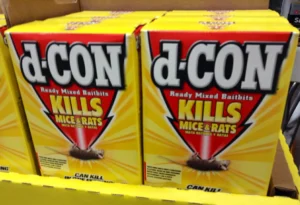
Poison also feels like the safe choice for people who don’t want to touch a dead mouse. Traps mean you have to check them and empty them, and that’s a chore many people would rather skip.
There’s one more reason. In big buildings like barns or warehouses, poison can seem like the only way to reach a huge number of mice at once.
However, easy isn’t the same as kind. If you’re willing to do a little extra work, traps give the mouse a much quicker end, and you also avoid the smell and the risk to your pets.
Are Snap Traps Really Quick And Painless?
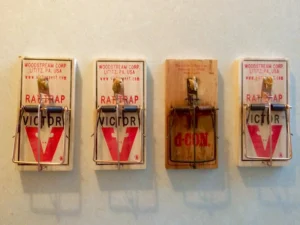
When they work, yes. A snap trap uses a strong spring to hit the mouse in a split second, and the animal usually passes out right away.
The Oxford-led study rated a working snap trap as having no welfare impact at the moment of death. The older UK and US review agrees, saying well-designed snap traps usually kill swiftly with little distress.
The RSPCA in Australia says much the same in plain words. A well-designed snap trap, used properly, is a faster and more humane choice than live trapping followed by killing.
But there’s a big catch. The Oxford-led study also found that snap traps often don’t work the way they should, and when they fail, they can cause more suffering than any other method it looked at.
That’s why the results ranged from perfect to quite bad. A snap trap isn’t automatically humane, because it all comes down to the trap you buy and how you use it.
Why Some Snap Traps Fail, And How To Avoid That
Most failures come from a few simple problems. The spring may be weak, the trap may be old or cheap, or the mouse may get hit on a leg or tail instead of the neck.
Size matters too. A trap built for rats can behave oddly with a mouse, and a tiny mouse trap can’t handle a big rat.
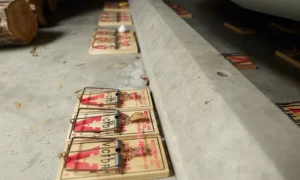
You can avoid most of this. Buy a good quality trap made for mice, and replace it if it ever fails to kill cleanly.
The RSPCA says to place traps parallel to a wall and touching it, in a spot where mice already run. That way, the mouse approaches the trigger the right way and the bar lands where it should.
Bait placement helps as well. A pea-sized dab of peanut butter on the trigger makes the mouse put its head right where the bar will land.
Then check your traps every day. If a trap does fail and the mouse is still alive, every extra hour is more suffering.
How Can You Tell If A Snap Trap Is Good Quality?
It isn’t always easy to spot a good trap on the shelf, and UFAW says some snap traps are much more efficient than others. Still, there are a few things you can check before you buy.
Pick the trap up and feel the spring. A strong, snappy spring gives the bar enough force to kill right away, and a loose or weak one is a red flag.
Look at the trigger too. A good one has a small pedal or cup for the bait and sets off with a light touch, so the mouse can’t just steal the bait and walk away.
Also make sure the trap is made for mice, because a trap built for rats can be awkward with something so small.
If a trap ever misses or leaves a mouse hurt, stop using it and switch to a different brand, as the RSPCA suggests.
Don’t judge by looks or price alone, and read reviews that talk about how reliably the trap kills.
Are Electronic Mouse Traps More Humane?
Electronic traps are a strong choice. They kill with a high-voltage shock in seconds, and the review of rodent control methods listed electrocution traps as relatively humane.
The mouse walks into a small box and steps on metal plates, and it’s over very fast. There’s no spring to miss, so the problem of a bad hit mostly goes away.
Most models are enclosed, which means you never have to see or touch the mouse. A small light usually tells you when the trap has caught something.
There are a few downsides. These traps often cost $20 to $60, and they run on batteries, so a weak battery can mean a slower kill and you should keep fresh ones in.
Still, if you want a method that’s both clean and quick, an electronic trap is hard to beat. It’s also a good pick if you have kids or pets, since the box keeps them away from the metal plates.
Live Traps Can Be Kind, But Only If You Do It Right
Live traps (also called catch and release traps) let you catch a mouse without hurting it. That sounds like the kindest choice, but there’s more to it.
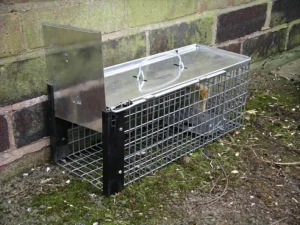
A trapped mouse gets stressed very fast, and it can also get thirsty and hungry. Makers of these traps say to check them at least every 6 hours, and some experts say every hour or two.
Then there’s the release. Mice are great at finding their way home, and there are reports of them traveling about two miles to get back to a property with food and shelter.
So you’d need to drive at least that far. At the new spot, the mouse has no nest, no food stash, and plenty of predators, so its chances of surviving can be low.
Check your local rules before you release any wildlife, and don’t drop it on someone else’s land. In some places, moving wildlife isn’t allowed.
Here’s the honest bottom line. Live traps can be humane if you can’t stand killing and you check them often, but they only work well if you stick to a strict routine.
Are Ultrasonic Repellers A Kinder Option?
Plug-in ultrasonic devices give off a high-pitched sound that people can’t hear, and they’re sold as a no-kill way to scare mice away. They sound like the perfect answer if you care about animals.
Sadly, they don’t deliver. The University of California’s pest program says high frequency electronic devices aren’t effective for mice.
Mice may get used to the sound, so even if they leave for a day or two, they can come right back. And in the meantime, you’ve spent money and still have a problem.
That’s where things can go wrong, because when the gadget fails, a lot of people get frustrated and reach for poison. That’s the opposite of what they wanted.
If you want a kind way to deal with mice, sealing the gaps and using a good trap will do far more for you than any plug-in gadget.
Why Glue Traps Are The Worst Choice Of All
Glue boards might look harmless, but they cause some of the worst suffering of any method. A mouse sticks by its feet and fur, and it can’t get away.
It struggles, and that can tear its skin or break its limbs. Many mice die slowly from stress, thirst, exhaustion, or blood loss, and it can take hours or even days.
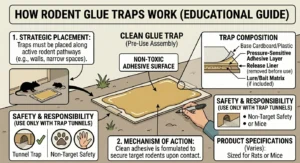
The Oxford-led study gave glue traps 7 out of 8 for how bad the capture is for the animal. The RSPCA also says it’s opposed to glue boards because they cause severe suffering.
That’s why the rules are changing, and glue traps are now banned or restricted in places like New Zealand, Ireland, and India.
In England, the public can’t use them anymore, since the Glue Traps (Offences) Act 2022 came fully into effect in July 2024.
They also catch animals you never meant to catch, like lizards and small birds. If you’re thinking about a glue board, skip it.
Mouse Traps vs Poison Compared On Humaneness
Here’s a side-by-side look at how each method compares, using what researchers and welfare groups have found.
| Method | How Long It Takes | What The Mouse Likely Goes Through | Humane Rating |
|---|---|---|---|
| Good snap trap | Seconds, if it works | Little to none (a bad hit can mean pain) | High when used well |
| Electronic trap | Seconds | Little distress | High |
| Anticoagulant poison | 4 to 7 days | Weakness, bleeding inside the body, pain | Very low |
| Vitamin D poison | Several days | Illness and pain, kidney damage | Very low |
| Zinc phosphide poison | Several hours | Severe pain | Very low |
| Live trap | No kill | Stress, thirst, risky release | Depends on how you use it |
| Glue board | Hours to days | Struggling, injury, thirst, fear | Lowest |
The pattern is easy to see. Fast methods land at the top, and slow methods land at the bottom.
Poison and glue boards cause the most suffering, while a good snap trap or electronic trap causes the least.
Which Option Is Most Humane For Your Home?
For most homes, the best answer is a good snap trap or an electronic trap, set the right way and checked every day. They’re quick, they’re cheap or reusable, and they keep your pets and wildlife safe.
If you can’t bring yourself to kill a mouse, a live trap can work. You’ll need to check it every few hours and drive the mouse a couple of miles away, so it’s best if you’re home a lot.
Skip poison and glue boards at home. They cause the most pain, and they put pets, kids, and wildlife at risk.
If you have a big problem and call a pest control company, ask what methods they use. UFAW (a UK animal welfare group) suggests asking them to try more humane methods before they reach for poison or glue.
Also think about who’s around. If you have curious pets or small kids, choose covered snap traps or an electronic trap, since they keep little paws and fingers away from the mechanism.
How To Use A Snap Trap As Humanely As Possible
A few small habits make a snap trap far kinder. Here’s what works.
Start with a quality trap made for mice. Cheap, flimsy ones are more likely to miss, so spending a little more is worth it.
Place traps against walls, with the trigger end touching the wall. Set several of them about 6 to 10 feet apart, near droppings and in dark corners where mice already run.
Use a tiny bit of bait, such as a pea-sized dab of peanut butter. Too much bait lets the mouse lick it off without setting off the trap.
Check every trap each morning. Wear gloves, dispose of the mouse, and wash your hands afterward.
Replace any trap that fails or gets weak or rusty. And don’t set traps right before a trip, since a hurt mouse would have no one to check on it.
What To Do If A Snap Trap Doesn’t Kill Right Away
This is rare with good traps, but it can happen. If you find a mouse that’s still alive and hurt, don’t leave it there.
Call a vet, a local animal control office, or a pest control company right away and ask what they suggest. The right method can depend on where you live.

Don’t try to pull it out by hand. A frightened, hurt mouse may bite, and you could get hurt trying to reset the trap.
After that, replace the trap that failed. A trap that didn’t kill cleanly once is likely to do it again.
Is Prevention The Most Humane Option Of All?
Yes, it is. If mice never get in, no mouse has to die, and researchers call rodent-proofing an essential part of humane control.
Mice can squeeze through a gap about 1/4 inch wide (roughly the width of a pencil). Walk around your home and look for gaps near pipes, vents, and garage doors.
Seal them with coarse steel wool or wire mesh, since mice can’t chew through those. Foam and plastic won’t hold up.
Food matters just as much. Keep pantry foods in tight containers, wipe up crumbs, and don’t leave pet food out overnight.
Outside, trim plants that climb your walls and keep woodpiles away from your foundation. These small steps take away the food and shelter that bring mice in.
Prevention does take some work up front. Still, it’s the only method where nothing suffers at all.
Conclusion
So, are mouse traps more humane than poison? Yes, in almost every case.
A good snap trap or electronic trap kills in seconds. Poison can take days, and a mouse that eats it may bleed, weaken, and suffer the whole time.
Poison also puts your pets, your kids, and wildlife at risk, and glue boards are worse than both. Live traps can work, but only if you check them often and release the mouse far away.
Whatever you choose, pick a quality trap, set it right, and check it every day. And remember that sealing up the gaps is the kindest fix of all.

Hi, my name is Ezra Mushala, i have been interested animals all my life. I am the main author and editor here at snakeinformer.com.