
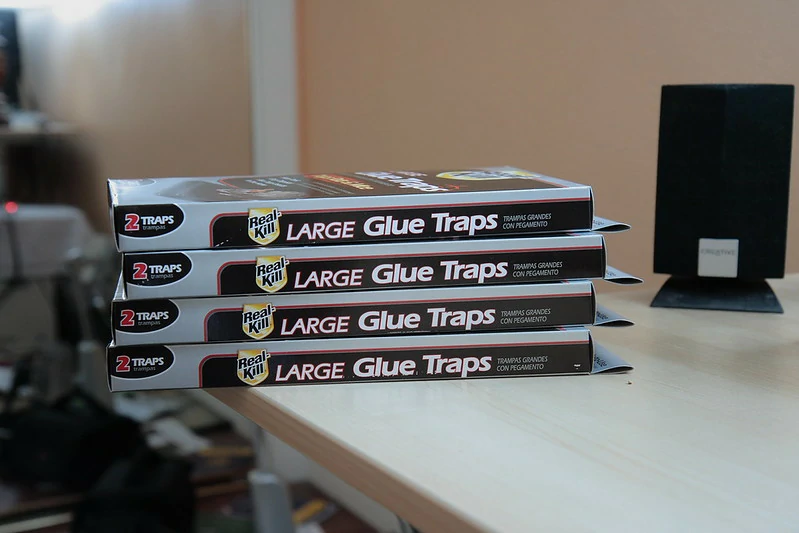
Glue traps tend to end up in warm, tucked-away spots, like behind a stove, under a sink, or along a garage wall, so it’s smart to wonder about fire risk.
You’ve got a sticky board, some glue, and maybe a space heater nearby. So are glue traps flammable?
Glue traps aren’t very flammable. The glue has a high flash point (it needs a lot of heat before it can ignite), and major brands rate its fire risk as minimal. However, the cardboard or plastic base can still burn, and the glue can melt in a hot spot.
That’s good news, but it isn’t the same as fireproof. A glue trap is basically a sticky coating on a board, and anything made of glue and paper can burn once it gets hot enough.
What Does Flammable Actually Mean?
People use the word flammable for almost anything that can burn, but fire safety experts use it a bit differently.
A flammable material catches fire easily at normal room temperatures, the way gasoline does.
A combustible material can burn too, but it needs a lot more heat first, like a piece of paper or a wooden spoon.
The number that separates the two is called the flash point (the lowest temperature at which something gives off enough vapor to catch fire if a spark or flame is nearby).
A low flash point means a fire risk at everyday temperatures. A high flash point means the material has to get quite hot before it’s a problem.
So when you ask whether a glue trap is flammable, the real question is how hot it has to get before it becomes a danger.
The Glue On A Glue Trap Has A High Flash Point
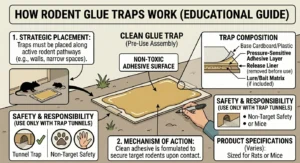
The glue on most rodent and insect traps is a thick, rubbery adhesive that stays sticky all the time.
One major brand lists the flash point of its glue as higher than 200°F, and another sheet for the same brand puts it at 421°F (216°C).
A rat glue board sold in the UK lists a flash point above 100°C (212°F). The glue only counts as flammable above that.
For comparison, the air in your house is nowhere near that hot. Even a sunny windowsill or a warm attic usually stays well below 200°F.
Gasoline, on the other hand, gives off fumes that can ignite well below freezing.
That gap is why glue boards don’t carry fire warnings the way a can of lighter fluid does.
How Do The Big Brands Rate Glue Traps For Fire Risk?
Every pest product that gets sold has a safety data sheet (a standard document that lists the hazards of a product, including fire).
The sheets for the big glue trap brands rate fire danger as 0, which means minimal, on a scale that runs from 0 to 4.
That includes Catchmaster and Tomcat, two well-known brands sold in the US.
One sheet describes the glue tray as combustible in the same way paper is.
In plain words, that means it can burn, but it’s not the kind of thing that’s likely to burst into flames on its own.
Your exact product might be a bit different, so check the label or look up the safety data sheet online if you’re unsure.
Look for the words flash point and flammability, and you’ll usually find them in the first few pages.
The Board Itself Can Burn Like Paper
Most glue traps are built on cardboard, and some use hard plastic trays.
Cardboard burns just like any other paper, and a glue trap can add fuel to a fire that’s already going.
Plastic trays can melt, drip, and burn too, depending on the type of plastic.
So even though the glue is hard to ignite, the whole trap can still go up in a house fire.
This is true for almost anything made of paper, like cereal boxes, books, and stacks of mail.
The takeaway is simple. Glue traps aren’t a fire hazard on their own, but you shouldn’t treat them like they’re fireproof.
Different Kinds Of Glue Traps Burn In Different Ways
Glue traps come in more shapes than most people realize, from mouse boards and rat trays to fly strips and window stickers.
Thick cardboard boards and hard plastic trays usually take longer to catch fire than thin paper strips, which burn fast once a flame touches them.
Hanging fly strips are the thinnest of the bunch. They’re often hung near windows, which can put them close to curtains and hot glass.
Trays with raised plastic edges hold the glue in place, so they’re less likely to drip, but they’ll still soften in strong heat.
No matter which kind you pick, the same rules apply. Keep it away from heat, flame, and anything that can burn.
Can A Glue Trap Catch Fire On Its Own?
That’s very unlikely. A glue trap needs a heat source, like a flame, a spark, or a very hot surface, to catch fire.
Glue sitting at room temperature doesn’t start a fire by itself.
Problems come from the things around the trap, like a candle, a space heater, a hot pipe, or a stovetop burner.
A trap that sits right against one of those can melt first, and if it gets hot enough, it can catch fire.
That’s the same rule you’d follow for newspapers, curtains, or a pile of boxes: keep them away from heat.
So the real risk comes down to where you put the trap.
Is It Safe To Use Glue Traps Near A Stove, Heater, Or Candle?
It’s best to keep them well away from all of those, since a glue trap is just another thing that can melt or burn.
A good rule is to keep anything that can burn at least 3 feet from a space heater, fireplace, or stove.
That includes glue boards, bait stations, and the cardboard boxes people sometimes slide traps into.
Behind a stove is a popular spot for pests, but it can get hot back there. If you’ve got a glue board there, check that it’s not touching a hot surface or a warm vent.
Pilot lights, oven vents, and toaster ovens put out more heat than you might think.
If a spot feels hot to your hand after a few minutes, it’s too hot for a glue trap.
Heat Can Melt The Glue Long Before It Burns
Heat can ruin a glue trap long before it ever causes a fire.
The glue on many boards starts to soften at around 120 to 160°F, and one brand lists its melting point at about 171°F (77°C).
That’s not very hot. A closed car, a sunny garage, or an attic in July can get close.
When glue softens, it slumps and spreads, and the board can lose most of its grip.
A melted trap can also leak onto shelves, floors, and cardboard, and it’s really hard to clean up.
If you’re setting boards in a hot spot, check them often and swap them out if the glue looks shiny or runny.
Where Can You Safely Place A Glue Trap At Home?
The best spots are the same places pests like to travel, which are along walls, behind furniture, and in dark corners.
Under the kitchen sink works well too, as long as nothing’s dripping.
Pantry floors, basement walls, and garage baseboards are good choices as well, as long as they’re away from a water heater or furnace.
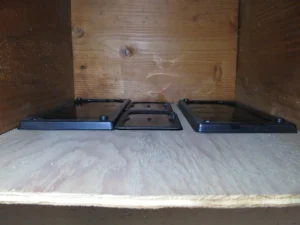
Skip anywhere that gets hot, like the back of a fridge, the top of a stove, or the space around a dryer vent.
Keep boards out of reach of kids and pets, like behind a heavy appliance.
Place the board flat against the wall, and check it every day so a trapped animal doesn’t suffer.
If you smell something hot or see the glue getting soft, move the board right away.
Glue Traps Are Fine In A Kitchen If You Keep Them Away From Heat
Yes, as long as you keep them away from the stove, the oven, and any other hot spot.
Kitchens are tricky because they’re warm, greasy, and full of crumbs.
Grease and dust can coat the glue and make it less sticky, so a board near the stove may stop working fast.
Put boards along walls behind the fridge, under the sink, and beside the pantry, where it’s cooler and out of the way.
Keep food, pet bowls, and cooking oil away from the traps too, since a spill can soak the board.
If you cook with an open flame or a gas range, give the board extra space, and check it more often.
A pest control company can help you pick safe spots if your kitchen is small or crowded.
Do Glue Traps Give Off Fumes Or Smoke When They Heat Up?
At normal temperatures, not much. A new glue trap might have a faint smell, especially the scented kinds, but the safety sheets rate the health risk as minimal.
That changes if the glue gets very hot or catches fire.
Burning glue, cardboard, and plastic put out smoke that can irritate your eyes, nose, and lungs.
So if you ever notice a burning smell near a glue trap, don’t ignore it.
Open a window, turn off any heat source nearby, and look for where the smell is coming from.
Are Glue Traps Poisonous If A Pet Or Child Touches Them?
The glue on most traps isn’t poison, and the big brands rate its health risk as minimal.
But that doesn’t mean it’s safe to eat or lick, and it’s really hard to get out of fur and hair.
If a pet or child gets glue on skin or fur, rub in a little cooking oil. Then wash with soap and warm water.
If your pet licked or swallowed any glue, or you’re worried about a child, call your vet or your local poison control right away.
In the US, the Poison Help line at 1-800-222-1222 is free and open 24 hours a day.
Never use harsh chemicals on skin or fur, and don’t try to make a child or pet throw up unless a professional tells you to.
Keeping traps out of reach is the best way to avoid all of this.
What Happens If A Glue Trap Is Exposed To Fire?
If a fire reaches a glue trap, the board will burn much like paper, and the glue will soften, smoke, and burn along with it.
Burning glue and plastic can put out thick smoke that’s harmful to breathe, so don’t stay around to find out.
The smoke from burning household items is dangerous even when the fire itself looks small.
If you ever see flames near a glue trap, treat it like any other fire. Get everyone out first, then call 911 (or your local emergency number).
Your safety comes first. A cheap trap is never worth a risk.
Oil Used To Free Animals Can Be A Fire Risk Too
If you’ve ever had to free a lizard, a mouse, or a pet from a glue trap, you may have used cooking oil or baby oil.
That works well, but there’s a fire safety catch most people don’t know about.
Rags and paper towels soaked in vegetable or cooking oil can slowly heat up as the oil reacts with the air.
If they’re piled up in a closed space, the heat can build until they burst into flames.
Fire departments have traced house fires to oily rags tossed into a box or trash can.
Small amounts of cooking oil on a paper towel are less risky than a big pile of oily rags, but it’s smart to be careful.
Lay the towel flat outside on concrete until it dries, or put it in a metal container with a tight lid and some water.
Don’t leave it wadded up in a pocket, a plastic bag, or a cardboard box.
Are Mineral Spirits And Other Glue Removers Flammable?
Yes, many of them are, and they’re a lot more flammable than the glue itself.
Some glue trap makers suggest mineral spirits (a thin, oily solvent used to thin paint) for cleaning glue off skin or a spill.
Mineral spirits give off fumes that can catch fire, so keep them away from flames, pilot lights, and hot appliances.
Please don’t use them, or nail polish remover or gasoline, on a living animal. They can burn its skin and be harmful if they get in the eyes or are swallowed.
For people, soap, warm water, and a little cooking oil usually get glue off skin without any fire worries.
If you do use a solvent, work outdoors or by an open window, and let the fumes clear before you turn on anything that makes a spark.
Store Glue Traps In A Cool, Dry Spot So They Stay Safe And Sticky
Keep unused traps in a cool, dry spot, away from sun, heat, and anything that can start a fire.
A hot garage, a car trunk, or a sunny shed can soften the glue before you ever use it.
Leave traps in their wrappers or boxes until you need them, since dust and dirt make glue less sticky.
Store them flat, so the glue doesn’t slide, and keep them well out of reach of kids and pets.
Don’t pile them up next to a water heater, furnace, or dryer, where it can get warm all year long.
And keep them separate from paint, solvents, and other flammable stuff in the garage, so a spill or fire has less to feed on.
Check the date or the glue before you use an old trap. If it looks dry, dusty, or cracked, replace it.
How Should You Throw Away Used Glue Traps?
Seal the trap in a plastic bag, then put that bag in the trash. Wear gloves, and wash your hands afterward.
If there’s a dead animal on it, use two bags, and spray the trap with a disinfectant first.
Please don’t burn used glue traps to get rid of them. Burning glue, cardboard, and plastic makes smoke you don’t want to breathe, and burning trash is against the rules in a lot of places.
Don’t toss them in a fireplace or wood stove either, since melting glue can drip and make a mess.
Some areas have special rules for things like animal waste or pest products, so call your local waste service if you’re not sure.
And treat any oily towels the safe way, which we covered above.
Fire Is Rarely The Biggest Risk With Glue Traps
Glue traps have a low fire risk, but that doesn’t mean they come with no risk.
The bigger issues usually have nothing to do with fire. Animals can suffer for hours, pets and wildlife can get stuck, and laws on glue traps keep changing.
Some bug bombs, for example, use flammable propellants, and they carry warnings about pilot lights and open flames.
Glue boards don’t come with sprays or propellants, so there’s no cloud of fumes to ignite.
Even so, the best approach is simple: use common sense about heat and pick the right tool.
For most pest problems, sealing gaps and cleaning up food will do more than any glue board.
When Should You Call The Fire Department Or A Pest Control Professional?
If you smell something burning, see smoke, or notice a trap that’s melted onto a hot surface, turn off the heat source and call for help.
Call 911 (or your local emergency number) for any real fire, and don’t go back in for a trap or anything else.
For pest problems, a professional can help you pick safer spots and better tools than a glue board.
Ask them to skip glue boards near anything hot, like kitchens with gas stoves, boiler rooms, or furnace closets.
If a melted glue trap ends up stuck to the floor or a shelf, cooking oil can help loosen the glue before you scrape it off.
Just remember to handle the oily towels the safe way afterward.
Conclusion
So, are glue traps flammable? Not very.
The glue has a high flash point, and the big brands rate its fire risk as minimal.
However, the cardboard or plastic board can still burn, and the glue can melt in a hot car, an attic, or next to a heater.
Keep traps at least 3 feet from stoves, heaters, and candles, and store spare ones in a cool, dry place.
If you use oil to free an animal, don’t leave the oily towels wadded up. Lay them flat outside or soak them in water first.
Skip the burning too, and throw used traps away in sealed bags.
Follow those simple rules, and a glue trap shouldn’t be a fire worry at all.

Hi, my name is Ezra Mushala, i have been interested animals all my life. I am the main author and editor here at snakeinformer.com.