
Glue traps look like a simple answer to a mouse problem: you set down a sticky board, and the mouse gets stuck. But what happens to the mouse after that is something most people never see.
Animal welfare groups and scientists have studied these traps closely, and what they found isn’t pretty. So, are glue traps painful for mice?
Yes, glue traps are very painful for mice. A stuck mouse can struggle for hours or even days, and it often dies slowly from exhaustion, thirst, or injuries. Animal welfare groups call them one of the cruelest ways to catch a mouse.
Here’s the part many people don’t realize: a glue trap doesn’t kill a mouse. It only holds the mouse in place, which means the pain, fear, and stress can go on for a long time.
Below, you’ll see what a stuck mouse goes through, what scientists say, where these traps are banned, and what you can do instead.
What Is A Glue Trap And How Does It Work?
A glue trap (also called a glue board or sticky trap) is a flat tray coated with a very strong glue that never dries.
It’s sold as a quiet, no-poison way to catch mice, and you’ve probably seen them on the shelves at hardware stores.
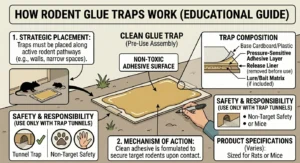
A mouse runs across the board, usually along a wall, and its feet stick right away. The more it struggles, the more of its body touches the glue, and the more stuck it gets.
The trap doesn’t kill anything by itself. It just holds the mouse until someone finds it, or until the mouse dies.
That’s the main reason people buy them. They’re cheap, they’re quiet, and there’s no spring or poison to worry about, and some pest control guides still list them as an easy, non-toxic option.
However, cheap and easy don’t make something kind. Once you look at what the glue does to a small animal, the picture changes fast.
Yes, Glue Traps Are Very Painful For Mice
Animal welfare groups around the world say the same thing. The RSPCA in Australia opposes glue boards because of the pain and suffering they cause, and Humane Society International calls them one of the cruelest tools out there.
The pain comes from several directions at once. A mouse that’s stuck pulls and twists to get free, and that can tear its skin, bruise its body, and even break its bones.
One review of glue boards used on rats found that the harm lasted for hours and was extreme. Mice and rats have very similar bodies and nervous systems, so there’s little reason to think mice feel it any less.
There’s also the fear. A mouse is a prey animal, which means its whole body is built to run and hide, and a glue trap takes away its one defense.
So when people ask whether glue traps hurt, the honest answer is yes, and not just a little. They hurt in the body, and they terrify the animal on top of it.
What Happens To A Mouse Stuck On A Glue Trap?
It usually starts with the feet. The mouse steps on the board, feels the grip, and pulls hard to get away.
As it fights, other parts of its body touch the glue, like its legs, belly, tail, and fur. Soon the mouse is held down in several places, and it can’t move much at all.
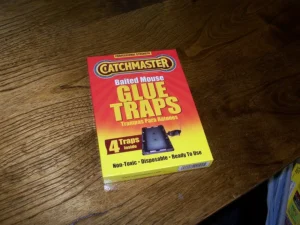
Some mice end up with their faces stuck in the glue. When that happens, glue can clog the mouth and nose, and the mouse can suffocate.
Others try to chew their way out. Welfare groups report that some rodents bite through their own limbs in a desperate effort to escape.
If none of that kills the mouse, it slowly wears itself out. It gets tired, thirsty, hungry, and cold, and eventually it dies from exhaustion or dehydration.
The worst part is that the mouse is often still alive when you find it. That’s what makes glue traps so hard on the people who discover them, too.
Mice Can Hurt Themselves Trying To Escape
A stuck mouse doesn’t know the trap is holding it, so it keeps fighting with everything it has. That fight is what causes most of the injuries.
Skin can tear as the mouse pulls away from the glue. Fur gets ripped out, and legs can break when the mouse twists against the board.
People who have rescued animals from glue boards say the results are rough. The animals often have raw skin, bald patches, and sore limbs, and some don’t recover even after they’re freed.
The RSPCA says it’s very difficult and painful to pull an animal off a glue board, and injuries are likely. Even a careful person can make things worse without meaning to.
That’s the cruel twist of a glue trap. The harder the mouse tries to save itself, the worse it hurts itself.
How Long Does A Mouse Suffer On A Glue Trap?
It depends on how soon someone finds it, but it’s usually hours and can stretch into days. Humane Society International says death comes from a mix of exhaustion and dehydration, and that can take a long time.
The RSPCA also points out that glue traps are often set and then not checked for at least 24 hours, and sometimes much longer. That’s a lot of time for a tiny animal to suffer.
Think about it like this. If you set a glue trap on a Friday and head out for the weekend, a mouse caught that night could be stuck for two full days.
A mouse is also very small, so it loses water fast. Thirst alone can become a terrible way to die.
Compare that to other methods. A good snap trap kills in seconds, poison takes days, and a glue trap falls somewhere in between, except the animal is awake and aware the whole time.
Checking a glue trap more often doesn’t fix the problem either. The pain starts the second the mouse sticks, so checking only shortens how long it lasts.
Fear And Stress Make The Pain Even Worse
Mice live in constant alert mode, since so many animals want to eat them. When a mouse senses danger, its heart races and its body floods with stress chemicals.
A mouse stuck on a glue trap can’t run, hide, or fight back, which is the worst situation a prey animal can be in. It can see and hear you coming, and that adds to the terror.
Stress also makes a trapped mouse lose control of its bladder and bowels.
That matters for you, because rodents can carry germs in their urine and droppings, and Humane Society International warns that people handling a stuck mouse can be exposed to them.
So if you ever have to deal with one, wear gloves. And keep kids and pets well away from the board.
Many people say the squeaking and thrashing is hard to forget. Kids who come across a stuck mouse can be upset for a long time afterward.
What Do Scientists And Animal Welfare Groups Say?
This isn’t just a feeling shared by animal lovers. Scientists have measured it.
A study led by the University of Oxford ranked several rodent control methods by how much they hurt rats.
Glue boards and anticoagulant poisons were among the worst, and glue trapping scored 7 out of 8 for how bad the capture is for the animal.
UFAW, the UK animal welfare group that backed the work, says glue traps and poisons should be treated as last resorts.
An older review of rodent control in the UK and US also said that sticky boards raise very serious welfare concerns.
Welfare groups agree. The RSPCA, the Scottish SPCA, and Humane Society International have all spoken out against them, and the Scottish SPCA called them unnecessarily cruel.
So you’ve got scientists, vets, and welfare experts all pointing in the same direction. That’s not a small group, and it’s hard to ignore.
Glue Traps Catch Birds, Lizards, And Pets Too
A glue trap can’t tell what’s stepping on it. Birds, lizards, and small snakes can get stuck, and so can pets and even wildlife that wandered in by accident.
If you live somewhere warm, think about the house geckos and anoles that run along your walls. A glue board near a door or window can catch one just as easily as a mouse.
Humane Society International also reports that animals like birds and even cats have ended up on glue traps. Getting them off is hard and painful, and the animal can lose fur or skin in the process.
People trying to help can get hurt too. A scared animal may bite, and a careless rescuer can end up stuck to the board as well.
It’s one more reason why many welfare groups say glue boards should never be used outdoors or anywhere pets and wildlife can reach them.
Do Glue Traps Even Work Well?
They can catch mice, but they’re not a great fix. Dust, cold, and moisture can weaken the glue, and a board that’s covered in dirt may stop working.
The bigger problem is that a glue trap doesn’t stop more mice from coming in. The RSPCA points out that glue boards don’t keep mice away from food or from getting into the building.
Mice breed fast, with a female having 5 to 10 litters a year. So if you only catch the ones that happen to walk across a board, new mice can take their place quickly.
That’s why sealing up your home matters more than whatever trap you pick. If mice can still walk in, the problem keeps coming back.
Compared with a good snap trap, a glue board also doesn’t give you any extra benefit. It just adds suffering to the process.
Why Do Some Pest Control Guides Still List Glue Boards?
If you’ve read up on mouse control, you may have seen glue boards listed as a safe, low-cost choice. In fact, the University of California’s pest program calls snap traps and glue boards the safest and most economical traps.
Here’s the key to understanding that. In those guides, “safe” means safe from chemicals, because there’s no poison for you, your kids, or your pets to swallow.
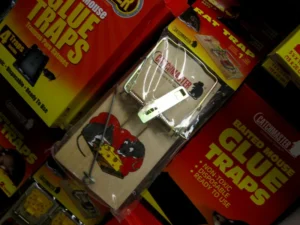
It doesn’t mean safe for the mouse. Those guides focus on toxins and cost, and they don’t measure how much pain the animal feels.
Welfare experts look at the same trap and ask a different question. They want to know how the animal suffers, and by that measure glue boards score very badly.
So you can see why the advice seems to clash, but both sides can be right because they’re answering two different questions.
If you care about both safety and kindness, snap traps and electronic traps check both boxes. Glue boards only check one.
Where Are Glue Traps Banned Or Restricted?
More places are turning against them every year. England banned the public from using glue traps with the Glue Traps (Offences) Act 2022, which came fully into effect in July 2024.
Only licensed pest control workers can use them there, and only under strict conditions. New Zealand, Ireland, and India have also banned or restricted glue traps.
In the US and Canada, glue boards are still legal to buy in most places, but that may change as more people speak out. Rules also differ elsewhere, so check what applies where you live.
Even where they’re legal, you don’t have to use them. A growing number of people and pest control companies are choosing to skip them for good.
Glue Traps vs Other Methods Side By Side
Here’s a quick look at how glue traps stack up against the other common options, so you can see the whole picture at once.
| Method | How Long It Takes | How Much Pain | Risk To Pets And Wildlife |
|---|---|---|---|
| Glue trap | Hours to days | Very high | High (catches birds, lizards, pets) |
| Good snap trap | Seconds | Very low if it works | Low to medium (use covered boxes) |
| Electronic trap | Seconds | Very low | Low |
| Poison | 4 to 7 days | High | High |
| Live trap | No kill | Stress, if not checked often | Low |
The pattern is clear. Glue traps sit near the bottom on pain, and they don’t give you anything that a faster, kinder trap can’t.
You also get peace of mind. You won’t have to walk into the kitchen and find a living mouse stuck and suffering.
What To Do If You Find A Mouse Stuck On A Glue Trap
First, don’t panic, and don’t yank the mouse off the board. Pulling it free can tear its skin and break its legs.
Put on thick gloves before you touch anything. A frightened mouse can bite, and its urine and droppings can carry germs.
Many people use cooking oil to loosen the glue. They drip a little around the feet and body, work slowly, and give the oil time to soak in, but it isn’t easy and it can still hurt the mouse.
Don’t throw a live mouse in the trash, since it can take days to die there.
If the mouse is badly hurt or you can’t free it safely, call a vet, a wildlife rescue group, or your local animal control office.
They can end its suffering quickly, or help free it the right way. The same goes for a bird, a lizard, or a pet, because untrained people often cause more injuries by trying to remove them alone.
Better Ways To Get Rid Of Mice Without Glue
You have several better choices. A good quality snap trap, set the right way, usually kills a mouse in seconds.
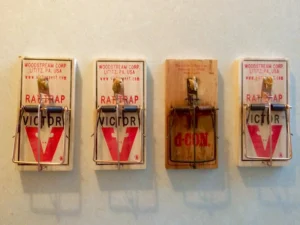
Electronic traps also work fast, and they’re enclosed, so you never have to touch the mouse. Live traps can work too, as long as you check them every few hours and release the mouse far from your home.
Whatever you pick, place traps along walls where mice run, and check them every day. Use a pea-sized dab of peanut butter as bait.
Skip poison as well. It takes days to kill, and it can harm pets, kids, and wildlife.
Are Snap Traps And Electronic Traps Really Kinder?
Yes, when they work properly.
The Oxford-led study found that a working snap trap kills with no welfare impact at the moment of death. The older review said electrocution traps and well-designed snap traps usually kill swiftly with little distress.
There’s a catch, though. Cheap or badly set snap traps can fail, and a mouse that’s hurt but still alive can suffer.
That’s why quality and placement matter. Buy a trap made for mice, set it against a wall, and check it every morning.
Even with the risk of a bad hit, the gap is huge. A snap trap or electronic trap takes seconds, while a glue trap can take hours or days.
How To Keep Mice Out So You Never Need Traps
The kindest fix is to stop mice from coming in at all. Mice can squeeze through a gap about 1/4 inch wide (roughly the width of a pencil), so walk around your home and look for cracks.
Seal gaps near pipes, vents, and garage doors with coarse steel wool or wire mesh, since mice can’t chew through those. Foam and plastic won’t hold up.
Next, take away the food. Keep pantry foods in tight containers, wipe up crumbs, and don’t leave pet food out overnight.
Outside, trim plants that climb your walls, and keep woodpiles and clutter away from your foundation. These small steps take away the food and shelter that attract mice.
It takes some effort at the start. But once the gaps are sealed, you won’t need any trap at all.
Conclusion
So, are glue traps painful for mice? Yes, very.
A stuck mouse can tear its skin, break its bones, and struggle for hours or days before it dies from exhaustion or thirst. Scientists and welfare groups agree that glue traps are among the cruelest ways to deal with mice.
They also catch birds, lizards, and pets, and they don’t even solve the real problem. That’s why more places are banning them.
If you have mice, choose a good snap trap or an electronic trap, check it daily, and seal up the gaps. It’s quicker for the mouse and easier on your conscience.

Hi, my name is Ezra Mushala, i have been interested animals all my life. I am the main author and editor here at snakeinformer.com.