
Cats are curious, quick, and always ready to bat at anything that moves, which is exactly why a sticky mouse trap on your floor can turn into a problem.
If you share your home with a cat, it’s smart to know the risks before you set one down.
You might already be wondering what happens if your cat steps in one, licks it, or even eats the mouse stuck on it. So, are glue traps poisonous to cats?
No, most glue traps aren’t poisonous to cats, because the glue is usually non-toxic. However, cats can still get hurt. They can get stuck, swallow glue while grooming, or eat a trapped mouse, so glue traps aren’t safe around them.
Still, “non-toxic” doesn’t mean “harmless,” and cats face some risks that other pets don’t. The way cats groom themselves is a big reason why.
Below, you’ll see what’s in these traps, why cats are at special risk, what to do if your cat gets stuck, and how to handle mice without putting your cat in danger.
Are Glue Traps Really Poisonous To Cats?
For the most part, no. Makers describe the glue on mouse traps as non-toxic, and it’s meant to work by sticking, not by poisoning.
That’s very different from mouse bait, which is designed to kill. A glue board has no poison inside it to harm your cat, as long as it’s a standard mouse glue trap.
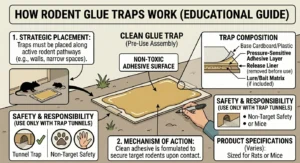
Product safety sheets for common glue traps back this up. They say skin contact has no known effect, and that you should call a poison center if someone swallows some and feels unwell.
Products do differ, though, and not every board is made the same way. So read the label, and if you can’t tell what’s in the one you bought, call the maker or a poison helpline and ask.
Even when the glue itself isn’t poison, the trap can still put your cat through a very bad day. That’s what the rest of this post is about.
Most Glue Traps Aren’t Toxic, But Cats Can Still Get Hurt
It’s easy to hear “non-toxic” and think “safe,” but those words mean different things. Non-toxic only means the glue doesn’t contain a chemical that poisons the body.
It doesn’t mean your cat can walk across it, lick it, or chew on it without trouble.
Think of a strip of strong tape or a wad of gum, which isn’t poison but still makes a mess when it’s stuck in fur.
The real dangers are physical and stressful. A cat can get glued to the board, rip out fur, panic, scratch or bite you, and swallow glue or cardboard along the way.
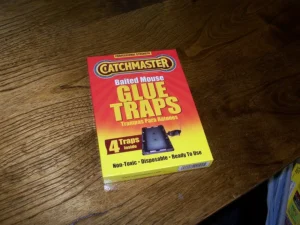
Some boards also come with a scent, like peanut butter, to attract mice. That smell can attract your cat as well, and it’s one reason cats end up in trouble.
So the honest answer is split. The glue usually isn’t poisonous, but a glue trap can still hurt your cat in several ways.
Why Are Cats More At Risk Than You’d Think?
Cats are natural hunters, and a trapped, squeaking mouse is hard for them to ignore. Your cat may paw at it, pounce on it, or try to pull it off the board.
Cats also explore with their paws and noses. That’s how they test things, and it’s exactly how they end up with glue on their toes and whiskers.
They’re also quiet and quick. You may not notice your cat has found a trap until you hear a thump or find a stuck, frightened cat under the couch.
Many cats live in places where traps are often set, such as garages, basements, and sheds. An outdoor cat can also find a trap that a neighbor put down without telling anyone.
Finally, cats panic in tight spots. A cat that’s stuck may twist, claw, and bite, which can lead to cuts on both of you.
Cats Groom Themselves, And That Changes Everything
Here’s the biggest difference between cats and most other pets. A cat cleans itself all day, and a cat with glue on its fur will almost always try to lick it off.
That means the glue ends up on the cat’s tongue and in its mouth. The tongue can even stick to the fur, which is scary for the cat and can be painful.
It also means the cat may swallow glue and fur together. A little may pass without trouble, but a lot of glue and fur can upset the stomach.
Cats with matted, glue-covered fur may also stop grooming the rest of their body or start overgrooming one spot. That can lead to sore skin if the glue stays on too long.
So if your cat gets glue on its coat, don’t wait. The faster you get the glue off, the less your cat will lick and swallow.
How Can A Cat Get Stuck On A Glue Trap?
It usually happens in one of three ways. The first is a paw: your cat steps on the board, feels the grip, and yanks its leg back, which pulls the whole board along.
The second is a swat. Cats love to bat at things, and a board stuck to a paw can quickly end up stuck to the belly, the chest, or the face.
The third is sniffing. If your cat puts its nose down to check out the mouse, the glue can grab its muzzle and whiskers.
Kittens and small cats are at the highest risk. They have less strength to pull free, and a board can cover far more of their body.
Once your cat is stuck, it tends to make things worse. The more it struggles, the more fur and skin touch the glue, so the first thing to do is to calm things down.
What Happens If A Cat Licks Or Swallows Glue?
If your cat licks a little glue off its fur, it will most likely be fine. At worst, you may see drooling, a lost appetite, or an upset stomach.
If your cat swallows more than that, watch it closely. Look for vomiting, loose stool, belly pain, tiredness, or a cat that stops eating.
The bigger worry is a blockage, especially if a piece of the board went down too. Cardboard and plastic don’t break down, and they can get stuck in a cat’s stomach or intestines.
Signs of a blockage include repeated vomiting, a hard or sore belly, and no poop for a day or two. If you see any of those, call your vet right away.
Even when you’re not sure how much your cat swallowed, it’s worth a phone call. Give your vet the brand, how much is missing, and when it happened.
Cats That Eat A Trapped Mouse Can Get Sick Too
A mouse stuck on a glue trap is basically a free snack to a cat. And eating it brings risks that have nothing to do with the glue.
Mice can carry worms like roundworms and tapeworms (parasites that live in the gut), and they can carry germs like salmonella. A cat that eats one may end up with an upset stomach or a parasite infection.
Poison is another worry. If you also use bait, or if a neighbor does, the mouse may have eaten some before it got stuck.
When a cat eats a poisoned mouse, it can get a dose too. A vet source says most cats will probably be fine, since the mouse usually carries only a small amount, but it’s still worth a call.
Tell your vet about any poison used in your home or yard. That one detail can change the advice you get.
Glue Can Damage A Cat’s Paw Pads, Skin, And Whiskers
A cat’s paw pads (the soft skin on the bottom of its toes) are very sensitive. Glue on them can be painful, and your cat may limp or refuse to walk on that foot.
Pulling a trap off a pad can also tear the skin. That’s why oil and patience work so much better than force.
Whiskers matter more than you might think, since cats use them to feel their way around. Glue on the whiskers can stress your cat out, and a cat that can’t sense its surroundings may panic.
Fur is the easiest part to fix, but it still takes some work. Glue that sits close to the skin can pull on it every time your cat moves, and matted fur can tug at the skin as it dries.
If the adhesive is only on the coat, trimming it out is often the simplest fix. A vet can also help if the glue is close to the skin or on a sensitive spot like the nose or paw pad.
Most mild cases heal within days, and trimmed fur grows back over time. Still, a cat that’s limping, licking one spot, or hiding for a long time should see a vet.
Won’t My Cat Just Solve The Mouse Problem?
Many people hope a cat will take care of their mice, but it often doesn’t work that way. Pest control agencies in Australia say that pet cats don’t have much effect on how many mice are around.
A well-fed house cat may chase a mouse or two, but it won’t stop a whole family of mice from breeding. Mice can have 5 to 10 litters a year, so new ones show up fast.
Cats can also get hurt chasing mice. They can pick up parasites, step on a trap, or get into a box of bait.
That’s why you still need a plan, even with a cat in the house. Sealing gaps and using safe traps will do far more than counting on your cat to do the job.
And please don’t use glue traps to “help” your cat out. They put the one animal you want to protect right in the danger zone.
What To Do If Your Cat Gets Stuck On A Glue Trap
First, stay calm and speak softly. A scared cat may scratch or bite, so wrap it in a towel if you need to, and wear gloves if you have them.
Don’t just pull the trap off. That can rip out fur and skin, and it hurts.
Instead, reach for cooking oil. Vets and pest control groups say vegetable oil, olive oil, or mineral oil can loosen the glue, so dab a little on the stuck spot and work it in slowly.
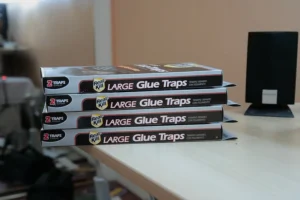
Give the oil a few minutes to soak in. If some fur is stuck far from the skin, you can trim just that fur with scissors, but be very careful not to cut the skin.
Go light on the oil, because too much will just make a bigger mess. Once the glue is off, a little cat shampoo can remove the oil.
If the trap is twisted into your cat’s fur, or your cat is very upset, don’t take chances. Call your vet and ask for help instead.
What Should You Never Use To Get Glue Off A Cat?
When you’re panicking, it’s tempting to grab whatever’s under the sink. But some of those things can be far worse for a cat than the glue.
Don’t use paint thinner, nail polish remover, acetone, gasoline, or other strong solvents. They can burn the skin, and your cat may lick them off and get sick.
Skip essential oils too, including tea tree oil. Many essential oils are dangerous for cats, even in small amounts.
Be careful with dish soap as well. It cuts grease, but it can dry out a cat’s skin, so a cat-safe shampoo is a better choice if you have one.
Also avoid heat and rough pulling. A hair dryer can scare your cat, and yanking can hurt it.
Stick with plain cooking oil, then a gentle rinse. If you have any doubt, a quick call to the vet is always the safest move.
When Does A Stuck Cat Need A Vet Right Away?
Some cases are too tricky to handle at home. If the glue is on your cat’s face, eyes, nose, or mouth, go to a vet right away.
Do the same if the glue covers a large part of the body, if your cat is panicking, or if the skin looks red or raw.
In bad cases, a vet may need to sedate the cat to get it off safely.
Call your vet too if your cat swallowed any part of the trap, even if it seems fine. Problems can take a day or two to show up.
If you think your cat ate a poisoned mouse, call a poison helpline as well.
In the US and Canada, you can reach Pet Poison Helpline at 855-764-7661 or the ASPCA Animal Poison Control Center at 888-426-4435, and a fee usually applies.
If a child gets into a glue trap or swallows some, call your local poison center. In the US, that’s 1-800-222-1222.
What Should You Watch For After The Glue Is Off?
Once your cat is free, keep an eye on it for the next day or two. Stress can linger even after the glue is gone.
Check the skin for redness, sores, or bald patches. Those can show up where fur was pulled out.
Watch your cat’s eating and bathroom habits too. A cat that stops eating, vomits, or stops pooping needs a vet.
Notice how your cat acts. If it hides, hisses, or avoids you, give it some quiet time and a safe spot to calm down.
If anything looks off after a day or two, call your vet. It’s much easier to treat a small problem early than a big one later.
Safer Ways To Handle Mice When You Own A Cat
The easiest way to protect your cat is to skip glue boards entirely. There are better options that work just as well.
A good snap trap inside a covered trap box keeps your cat’s paws and nose away from the spring. These boxes have a small hole that only a mouse can fit through.
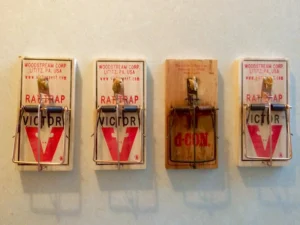
Electronic traps are enclosed too, and they kill a mouse in seconds. You never have to touch the mouse, and the box keeps your cat out.
Live traps can work if you can check them every few hours. Release the mouse far from your home, since mice can find their way back.
Skip poison if you can, because it can hurt cats directly or through a poisoned mouse. It also puts wildlife like owls and hawks at risk.
Then fix the cause. Seal gaps with steel wool or wire mesh, keep food in tight containers, and your mouse problem will often shrink on its own.
How To Keep Traps Out Of Your Cat’s Reach
Where you put a trap matters as much as which one you pick. Cats can climb, squeeze, and jump, so you need to think like one.
Place traps behind big furniture, inside closed cabinets, or in rooms your cat can’t enter. Mice run along walls, so those spots work well.
Push trap boxes tight against the wall so your cat can’t drag them out. A determined cat can move a loose box across the room.
Check traps every day, and remove dead mice right away in a sealed bag. Cats can sniff out a dead mouse from across the house.
Don’t forget garages, sheds, and basements, where many cats like to roam. Also keep a count of every trap you set, so none gets lost.
And if you have an outdoor cat, talk to your neighbors. A glue trap in a shed next door can still catch your cat.
Conclusion
So, are glue traps poisonous to cats? Usually not, since the glue is typically non-toxic.
But cats can still get stuck, swallow glue while grooming, or eat a trapped mouse that carries parasites or poison. That makes glue traps a bad choice in any home with a cat.
If your cat gets stuck, use cooking oil, not solvents, and call your vet if the glue is near the face or your cat is in distress.
If your cat swallows part of a trap, call your vet or a poison helpline right away.
The best plan is to skip glue boards. Use a covered snap trap or an electronic trap, seal up the gaps, and keep your cat safe and your home mouse-proof.

Hi, my name is Ezra Mushala, i have been interested animals all my life. I am the main author and editor here at snakeinformer.com.