
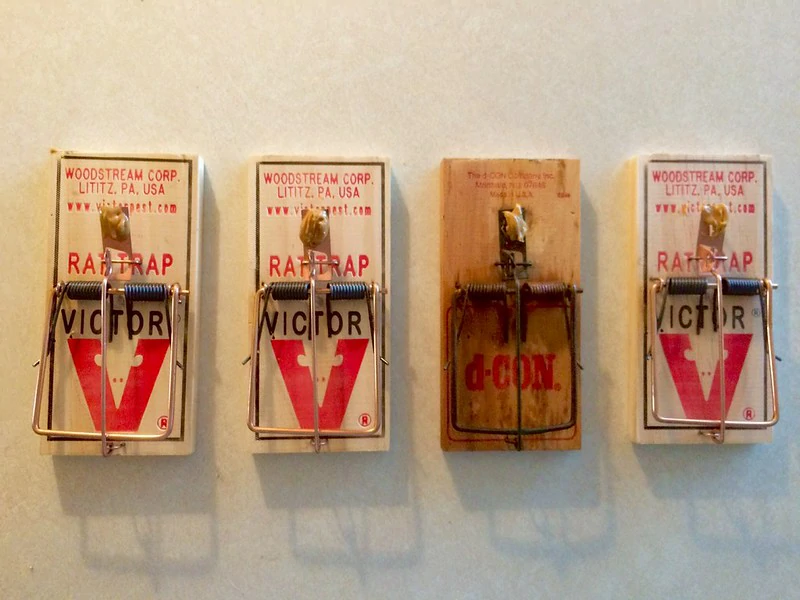
You hear something scratching in the wall at night, you find droppings behind the fridge, and you’ve got a box of mouse traps left over from last winter. It’s tempting to grab those and get to work right away.
But are mouse traps big enough for rats, or will you just waste your time and your peanut butter?
No, mouse traps aren’t big enough for rats. A rat is far heavier and stronger than a mouse, so a mouse trap usually won’t kill it and may just get dragged away. You need a trap made for rats.
That’s the short answer, but the reasons matter, because using the wrong trap can do more than fail. It can teach a rat to avoid traps, which makes your problem a lot harder to fix.
So let’s go through how big rats really are, what happens when one meets a mouse trap, and which traps actually work in a real home.
Rats Are Much Bigger Than Mice
The size gap is bigger than most people picture. A house mouse weighs about an ounce and measures roughly 2.5 to 4 inches from nose to rump, with a tail about the same length.
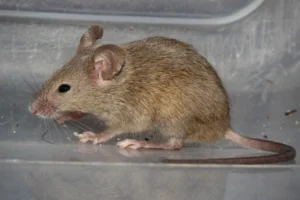
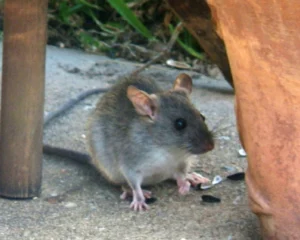
A Norway rat (also called a brown rat, and the most common rat in North America) is a totally different animal. Its body measures about 7 to 10 inches, its tail adds another 6 to 8 inches, and it can weigh anywhere from 8 to 16 ounces.

Here’s how that looks side by side. A mouse weighs about one ounce, while a big brown rat can weigh up to 18 ounces, so the rat can be well over ten times as heavy.
Roof rats (also called black rats or ship rats) are a bit smaller and sleeker than Norway rats. Their tails are longer than their head and body put together, but a roof rat is still far bigger than any mouse.
Picture a hamster next to a full-grown guinea pig, and you’re close to the real difference. A trap built for one just isn’t going to handle the other.
What Happens When a Rat Meets a Mouse Trap?
A mouse trap is built for a one-ounce animal. It has a small trigger, a light spring, and a bar that only needs to be strong enough for a mouse, so you can see why a rat would shrug it off.
A rat will rarely be killed by a mouse snap trap. Since the trap is so lightweight, the rat can simply drag it off to who knows where.
The rat may die later from injuries or exhaustion, but you won’t know where it went. That’s a real problem if it crawls into a wall or an attic, because you’ll find out about it later by the smell in your home.
Put simply, you won’t catch a rat with a mouse trap, and you won’t catch a mouse with a rat trap.
There’s another risk that people don’t think about. If a rat gets bumped or startled by a weak trap and walks away, it can learn to stay away from that trap for good.
Rats are neophobic, which just means they tend to avoid anything new in their environment. It’s common for a rat to wait two weeks before it goes near a new trap.
And if a rat sets off a trap without getting caught, catching that rat later gets very hard. This fear of new things is thought to be even stronger in roof rats than in Norway rats.
So one bad experience with a mouse trap can make a rat trap-shy before you even start.
Why Rat Traps Are Built Differently
A real rat trap isn’t just a bigger mouse trap. Several parts change so it can handle a much larger, stronger animal.
The first change is a bigger trigger plate. A rat trap has a wider platform than a mouse trap, so a rat’s nose or paw is more likely to land on it.

The second is a stronger spring. A rat’s neck and body take a lot more force, and a trap needs enough snap to kill quickly. It may seem backwards, but the harder the snap, the more humane the trap, since a soft one can hurt an animal without killing it.
The third is a wider jaw. A good rule is to skip any trap with a jaw span under about four inches, or one labeled “mouse,” when you know you have rats.
The fourth is a heavier body that stays put. You should also secure a rat trap, so the rat can’t drag it away and you can find it later.
Here’s how those differences add up:
| Feature | Mouse Trap | Rat Trap |
|---|---|---|
| Typical size | About 4 inches long | About 6 inches long or more |
| Trigger plate | Small | Wide and larger |
| Spring strength | Light | Strong |
| Weight | Very light | Heavier and sturdier |
| Best for | House mice | Norway rats and roof rats |
| If used on a rat | Won’t kill it, may get dragged off | Works as designed |
| If used on a mouse | Works as designed | Too stiff, may not trigger |
That last row surprises people. A rat trap can be too stiff for a mouse, so the mouse may steal the bait and walk away without setting it off.
What Trap Sizes Actually Work for Rats?
Most rat snap traps run about 6 inches long or more. One well-known rat trap measures 6 inches long, 4.25 inches wide, and 2 inches high, which is big enough for larger rodents.
Cage traps are bigger still. A live trap for rats is usually about 10 to 12 inches long, and a 12-inch cage is the size that fits an adult Norway rat.
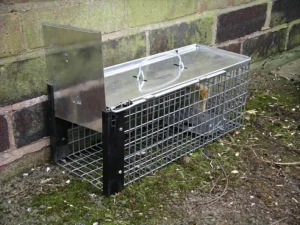
For a snap trap, the rule is simple. Pick one labeled for rats, make sure the trigger plate is wide, and skip anything marked “mouse.”
If you aren’t sure whether you have rats or mice, look at what they leave behind. Mouse droppings are small and pointed at the ends, while the droppings you find from rats are larger.
The gnaw marks tell the story too. Rats leave tooth marks about 1/6 inch wide, while a mouse leaves scratchy marks of only about 1/12 inch.
Size matters for the gaps in your home too. A rat can squeeze through an opening the size of a quarter, while a mouse can fit through a hole as small as a quarter of an inch.
The Main Types of Rat Traps
There are a few types of traps that can work on rats. Each has its own pros and cons, and the best pick for you depends on where you’re trapping and how you feel about handling a dead or live rat.
Snap traps are the classic. They’re the safest, most effective, and most affordable way to trap rats, and they kill quickly when they’re the right size.
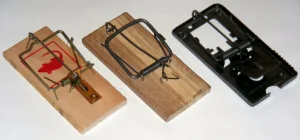
You’ll find several styles, including simple wooden snap traps, expanded trigger snap traps (the ones with a bigger pedal), and clamshell traps.
Electronic traps use batteries to give a quick, high-voltage shock. They cost more than other traps, but many people like them because you never have to touch the rat, and a light tells you when one’s been caught.
Live cage traps catch rats alive so you can release them. They’re the gentlest option, but live trapping of rats isn’t usually recommended, and moving wildlife is against the rules in some places.
Glue traps are also an option, but they’re the least popular with wildlife groups. They don’t kill on their own, and a large rat can struggle for a long time.
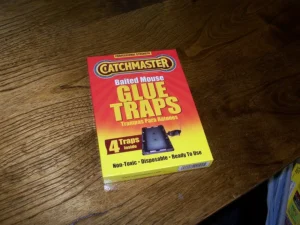
Here’s a side-by-side look at the different traps:
| Trap Type | Kills? | Rat-Sized? | Reusable? | Best For | Main Downside |
|---|---|---|---|---|---|
| Mouse snap trap | Rarely on a rat | No | Yes | Mice only | Too weak, gets dragged off |
| Rat snap trap | Yes, quickly | Yes | Yes | Most indoor jobs | Can hurt fingers and pets |
| Covered snap trap | Yes, quickly | Yes | Yes | Homes with kids or pets | Costs more |
| Electronic trap | Yes, quickly | Yes | Yes | Clean, hands-off kills | Needs batteries, higher price |
| Live cage trap | No, catches alive | Yes | Yes | Release where it’s legal | You still have to deal with a live rat |
| Glue board | Not on its own | Needs a large rat board | No | Hard-to-reach runways | Slow, catches other animals |
If you’re in the US or Canada, snap traps and electronic traps are the ones most pest pros point people toward.
How Should You Set a Rat Trap?
A good trap in a bad spot will still fail, so placement matters as much as size. Rats stick to edges, and they walk the same paths again and again, so you want your trap right on that path.
For Norway rats, place traps close to walls, behind objects, in dark corners, and near droppings. For roof rats, put traps in higher spots like ledges, shelves, pipes, fences, or overhead beams, since roof rats love to climb.
Set a snap trap against a wall with the bait end touching the wall, so the trap forms a “T” with the wall. That way a rat running along the wall runs right into the trigger.
Bait matters too. Peanut butter, nutmeat, marshmallow, hot dog, bacon, and pepperoni are all good picks.
Tie the bait to the trigger with string or a dab of glue, so the rat has to work at it. Keep it small, since a big glob of peanut butter is easy to lick off without setting the trap.
You’ll also want more than one trap, and many traps work better than a few. A pair set side by side gives you two chances if a rat jumps the first one.
Why Prebaiting Helps So Much With Rats
Here’s a trick that pros use and most homeowners skip. Prebaiting means you put bait on the traps but don’t set them, so the rats get used to them first.
Rats tend to fear anything new, and prebaiting helps them feel comfortable with a new object. Leave the traps unset until the bait has been taken at least once.
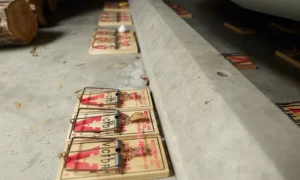
Leaving baited traps unset for three or more days usually isn’t needed for mice, but it is for rats.
There’s a neat bit of science behind it. Rats feeding safely at an unset trap leave behind urine and scent. That reassures other rats, so the new object seems safe to approach.
So once the bait keeps disappearing, you set the trap. Now the rats walk right up to it, and you’ve got a much better chance of catching them.
Are Rat Traps Dangerous for Kids and Pets?
Yes, they can be. A rat trap has real snapping power, and it can break a finger or injure a paw.
If you have pets or small children, keep the traps out of reach. Good spots include attics, crawl spaces, and behind appliances, where curious paws can’t get to them.
You can also use a covered trap or a tamper-resistant bait station (a locked plastic box that only a rat can get into). These keep the trigger away from kids and pets.
Birds, and even larger wildlife like raccoons, can also fall victim to snap traps. Keep that in mind if you set traps outdoors.
Electronic traps are a good choice for homes with curious pets, since the kill chamber is enclosed when you use the trap as directed.
What About Rat-Sized Glue Boards?
Some people wonder if a glue board can handle a rat. Rat glue boards do exist, and they’re larger with more glue than mouse boards.
Rat-sized glue boards are effective at catching young and unhealthy rats. But you need a good understanding of rat behavior and where the runways are, or they won’t work well.
There’s a bigger problem too. A trapped rat may not die quickly, and it can struggle for some time.
Don’t use glue boards outdoors either, since birds, lizards, and other wildlife can get stuck.
For most homes, a snap trap or an electronic trap does the job better and faster.
What Should You Do After Catching a Rat?
Catching the rat is only half the job. How you handle it matters just as much, because rats can carry germs that you don’t want on your hands.
Hantavirus (a serious lung illness) can spread when people breathe in dust from rodent urine and droppings, so never touch a dead rodent with bare hands. Wear gloves, and if you can, use a plastic bag over your hand to pick up the trap.
Double-bag the rat and put it in your outside trash. Then wash your hands well with soap and water.
Clean up the area too. Don’t sweep or vacuum dry droppings, since that can stir up dust. Air out the room, spray with a bleach and water mix, and wipe it clean.
And keep in mind that one caught rat usually isn’t the end. Rats live in groups, so keep the traps set for a few more nights.
If a trap does catch a rat, reset it in the same place, since that spot is clearly on a rat’s route.
How Do You Keep Rats From Coming Back?
Traps deal with the rats you have. To stop new ones, you need to close the doors on them, and that starts with the outside walls of your home.
The plan is simple: “seal up” and “trap up.” Patch holes with steel wool, metal mesh, or cement, and check around pipes, vents, and the foundation, since rats only need a gap about the size of a quarter.
Take away their food too. Store your pet food and bird seed in sealed containers, pick up fallen fruit, keep garbage lids tight, and don’t leave your compost open.
If you feed them, they’ll stay, so put bird feeders on poles with trays that rats can’t reach.
Trim back branches and vines that touch your roof, since roof rats use them like bridges. And clear clutter and woodpiles from around your house.
If the problem is bigger than a rat or two, call a pest control company. A pro can find the entry points and treat the whole property.
Conclusion
Mouse traps aren’t big enough for rats. A rat can weigh more than ten times as much as a mouse, so a mouse trap is too small and too weak.
It may even get dragged away with the rat still alive, and then you’ve got a bigger problem to find.
Use a trap made for rats instead. A rat snap trap, a covered trap, or an electronic trap are the best bets, and you should place them along walls, near droppings, and secure them so they can’t be moved.
Prebait them first so the rats get used to them, keep them away from kids and pets, and check them daily. Wear gloves when you clean up, and then seal the gaps and remove food so the rats don’t come back.
Get the right trap the first time, and you’ll save yourself a lot of headaches.

Hi, my name is Ezra Mushala, i have been interested animals all my life. I am the main author and editor here at snakeinformer.com.