
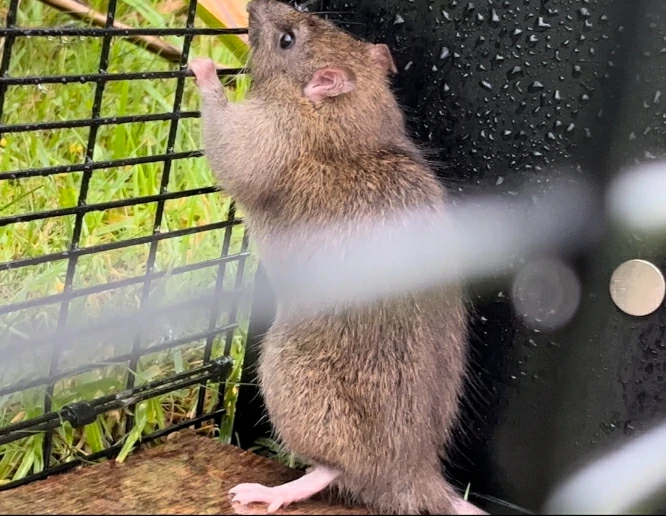
Rats are a serious problem when they invade your home or property. They chew through wires, contaminate food, spread diseases, and multiply incredibly fast. When you’re dealing with a rat infestation, you need a solution that actually works. Tomcat is one of the most popular rat poison brands on the market, but how effective is Tomcat rat poison?
Tomcat rat poison is highly effective at killing rats when used correctly. Most Tomcat products use second-generation anticoagulants like bromadiolone or bromethalin, which can kill rats with a single feeding. Rats typically die within 1 to 6 days after eating the poison, with most dying within 4 to 5 days.
The effectiveness of Tomcat rat poison comes down to its active ingredients and how attractive the bait is to rats.
Tomcat uses food-grade ingredients that rats actually want to eat, combined with powerful toxins that disrupt their blood clotting ability or attack their nervous system.
What Makes Tomcat Rat Poison Different From Other Brands
Tomcat stands out from other rat poisons because of its formula and bait design. The company uses ingredients that rats find irresistible, which means they’ll actually eat the poison instead of ignoring it.
Most Tomcat products contain bromadiolone, a second-generation anticoagulant that’s much stronger than older rat poisons. This ingredient stops the rat’s blood from clotting, causing internal bleeding that kills the rat over several days.
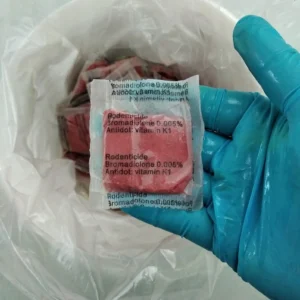
Some Tomcat products use bromethalin instead, which works completely differently. Bromethalin attacks the rat’s nervous system and brain, causing swelling that leads to paralysis and death. This ingredient works faster than anticoagulants, often killing rats within 24 to 48 hours.
The bait itself is designed to appeal to rats’ natural feeding habits. Tomcat uses grains, seeds, and other food-grade ingredients that rats recognize as safe food sources. The poison is mixed throughout the bait, so rats can’t just nibble around it.
How Fast Does Tomcat Rat Poison Actually Work
The speed at which Tomcat kills rats depends on which product you’re using and how much poison the rat eats. Products with bromadiolone typically take 4 to 5 days to kill a rat after it eats a lethal dose.
Rats don’t always die after just one feeding, though. Some rats might eat a small amount, feel fine, and come back for more. This is actually good because it means they’re less likely to develop bait shyness (when rats learn to avoid poison that made them sick).
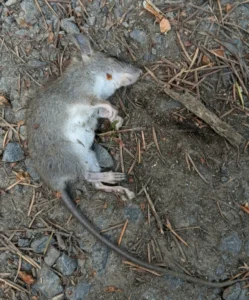
Tomcat products with bromethalin work much faster. Rats that eat a lethal dose can die within 1 to 2 days. Some might die even faster if they eat a lot of the bait in one sitting.
You won’t see dead rats immediately after putting out Tomcat poison. It takes time for the poison to build up in their system and cause fatal damage.
This delayed effect is actually part of what makes the poison so effective, because rats don’t associate the bait with feeling sick.
Why Some Rats Die Faster Than Others
Not all rats die at the same speed after eating Tomcat poison. Several factors affect how quickly the poison works on individual rats.
The size of the rat matters a lot. A small rat needs less poison to reach a lethal dose than a large rat. If a small rat eats the same amount of bait as a large rat, the small one will die faster.
How much the rat eats in one sitting also affects the timeline. A rat that gorges on the bait will get a bigger dose and die faster than a rat that just nibbles a little bit each night.
The rat’s overall health plays a role too. Sick, old, or weak rats will die faster than young, healthy rats because their bodies can’t handle the stress of the poison as well.
What the rat has been eating before it finds your poison can change things too. A well-fed rat might eat less poison because it’s not as hungry. A starving rat will eat more, which means it’ll die faster.
Do Rats Really Die After Just One Feeding?
Tomcat advertises that many of their products can kill rats with a single feeding. This is technically true, but it needs some context to really understand what that means.
“Single feeding” means the rat eats enough poison in one session to get a lethal dose. It doesn’t mean the rat will die immediately after eating once. The rat still needs several days for the poison to do its job.
In reality, most rats will come back and eat the poison multiple times. Rats are cautious eaters by nature, and they usually take small amounts of new food to test if it’s safe. When they don’t get sick right away, they come back for more.
This repeated feeding actually increases the success rate. Even if the first feeding wasn’t quite enough to kill the rat, the second or third feeding will push them over the edge. You’ll end up with a dead rat either way.
The single-feeding claim is most accurate with bromethalin-based Tomcat products. These products are extremely toxic, and rats really can eat enough in one session to guarantee death.
How Tomcat Compares to First-Generation Rat Poisons
Older rat poisons (called first-generation anticoagulants) are much weaker than Tomcat’s second-generation formulas. These older poisons include warfarin and chlorophacinone.
First-generation poisons require rats to eat the bait over multiple days to build up a lethal dose. If the rat stops eating before it gets enough, it might survive. This makes them less reliable, especially with large rat populations.
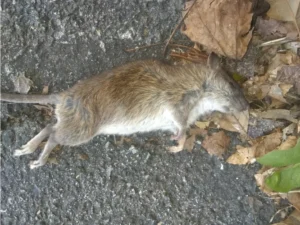
Tomcat’s second-generation anticoagulants are about 100 times more potent. A rat only needs to eat a small amount to get a lethal dose, and the poison stays in the rat’s body much longer.
This increased potency means you’ll kill more rats with less bait. You won’t need to constantly refill your bait stations or worry about whether the rats are eating enough to die.
The downside is that second-generation poisons are also more dangerous to pets and wildlife. If your dog eats a rat that died from Tomcat poison, your dog could get poisoned too. This is called secondary poisoning, and it’s a real risk you need to be aware of.
What Percentage of Rats Actually Die From Tomcat Poison
When used correctly, Tomcat rat poison has a very high kill rate. Studies on second-generation anticoagulants show effectiveness rates of 90% to 100% when rats have continuous access to the bait.
The key phrase here is “when used correctly.” If you don’t put out enough bait stations, or if you place them in spots where rats don’t go, your success rate will drop dramatically.
You also need to leave the bait out long enough for all the rats to find it and eat a lethal dose. If you pull the bait stations after just a few days, you might only kill some of the rats. The survivors will breed and repopulate quickly.
Environmental factors affect success rates too. If rats have lots of other food sources available, they might not eat enough poison to die. You’ll get better results if you remove competing food sources like pet food, garbage, and bird seed.
In real-world conditions with proper use, you can expect Tomcat to kill about 80% to 95% of the rats on your property. The remaining rats might be bait-shy, living in areas where they can’t access your bait stations, or just lucky enough to avoid the poison.
Why Some Rats Seem Immune to Tomcat Poison
You might put out Tomcat poison and find that some rats just won’t die. This doesn’t necessarily mean the poison isn’t working, but it could indicate a few different problems.
Some rat populations have developed genetic resistance to anticoagulant poisons. This is more common in areas where rat poison has been used heavily for many years. The resistant rats survive, breed, and pass on their resistance genes.
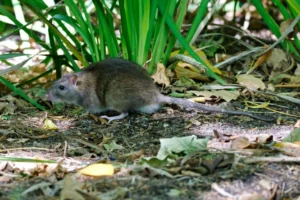
If you’re dealing with resistant rats, switching to a bromethalin-based Tomcat product might work better. Bromethalin kills rats through a completely different mechanism, so genetic resistance to anticoagulants doesn’t protect them.
Bait shyness is another issue that can look like resistance. If rats eat a small amount of poison and feel sick (but not sick enough to die), they might learn to avoid that specific bait. Switching to a different Tomcat product with a different flavor can solve this problem.
Sometimes the issue isn’t resistance at all. You might just have new rats moving into your property from neighboring areas. You kill the original rats, but new ones take their place, making it seem like the poison isn’t working.
Does Weather Affect How Well Tomcat Poison Works
Temperature and moisture can definitely impact Tomcat’s effectiveness. Extreme heat can break down the active ingredients in the poison, making it less potent over time.
Cold weather usually doesn’t damage the poison itself, but it can change rat behavior. Rats might eat less during very cold periods, which means they’ll take longer to consume a lethal dose.
Moisture is the biggest environmental threat to Tomcat bait. If the bait gets wet, it can become moldy and unappealing to rats. Some Tomcat products are marketed as “all-weather,” which means they hold up better in damp conditions.
Even all-weather baits have limits, though. If you’re using Tomcat outdoors, you need to place it in bait stations that protect it from rain and snow. Exposed bait will break down quickly and become ineffective.
High humidity can also make grain-based baits go stale faster. Stale bait doesn’t smell as attractive to rats, so they’re less likely to eat it. You’ll need to check your bait stations regularly and replace old bait to maintain effectiveness.
How to Know if Tomcat Poison is Actually Working
You won’t see immediate results with Tomcat poison, which can make you wonder if it’s working at all. There are several signs that tell you the poison is doing its job.
The most obvious sign is finding dead rats. You might find them near the bait stations, in their hiding spots, or in random areas around your property. The location depends on where the rat was when the poison finally killed it.
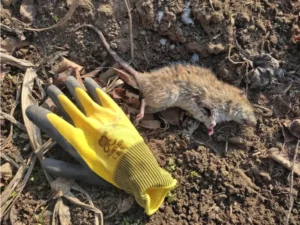
You’ll also notice that the bait in your stations starts disappearing. If rats are eating the poison, you’ll need to refill the stations regularly. Check them every few days to see how much bait is being consumed.
A decrease in rat activity is another good indicator. You’ll see fewer droppings, hear less scratching in your walls, and notice less damage to food and materials. This means your rat population is shrinking.
The smell of dead rats can actually be a sign that the poison is working, even though it’s unpleasant. If you start smelling a strong, musky odor in certain areas, there’s probably a dead rat nearby that you haven’t found yet.
Keep in mind that you might see an increase in rat activity right before things get better. When rats are dying, they often become more active and visible as the poison affects their behavior. This is temporary and means the poison is actually working.
Common Mistakes That Make Tomcat Less Effective
Even though Tomcat is a powerful rat poison, you can mess up the results by making common mistakes. Not using enough bait stations is probably the biggest error people make.
Rats are cautious animals, and they won’t travel far from their nests to find food. If you only put out one or two bait stations for a large property, most of your rats will never find the poison.
Placing bait stations in the wrong spots is another major problem. Rats travel along walls and in hidden areas, not out in the open. Your bait stations need to be where rats actually go, not just where it’s convenient for you to put them.
Giving up too soon kills your success rate. You need to leave Tomcat poison out for at least 2 to 3 weeks to make sure all the rats have a chance to eat it. Pulling the bait after just a few days means you’ll only kill the rats that found it quickly.
Not securing the bait properly is dangerous and wasteful. If pets or wildlife can access your bait stations, they might eat the poison or scatter it around. This puts non-target animals at risk and reduces how much poison is available for rats.
Mixing different rat poison brands or types can actually work against you. Stick with one Tomcat product and use it consistently. Switching products confuses rats and can lead to bait shyness.
Is Tomcat Safe to Use Around Your Home
Tomcat is effective at killing rats, but it’s also toxic to other animals including pets and humans. You need to take proper safety precautions when using it around your home.
Always use tamper-resistant bait stations when putting out Tomcat poison. These stations are designed so that only rats and mice can get inside to eat the bait. Dogs, cats, and children can’t access the poison if it’s properly secured.
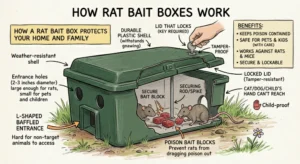
Place your bait stations in areas where pets and children don’t go. Good spots include behind appliances, in attics, in crawl spaces, and along the exterior foundation of your house. Avoid putting them in living areas or anywhere pets spend time.
Read and follow all the label instructions carefully. The label tells you exactly how to use the product safely and legally. Ignoring the label instructions can put your family and pets at risk.
Keep the original packaging so you know exactly what active ingredient is in your poison. If someone accidentally eats it, the doctor or veterinarian will need to know the specific toxin to provide proper treatment.
Store unused Tomcat poison in a locked cabinet or shed where kids and pets absolutely can’t reach it. The colorful packaging can look appealing to children, and some products have a peanut butter scent that attracts dogs.
What to Do if Tomcat Isn’t Killing Your Rats
If you’ve been using Tomcat for several weeks and still have a rat problem, you need to change your approach. First, make sure you’re using enough bait stations and placing them correctly.
Try switching to a different Tomcat product with a different active ingredient. If you’ve been using bromadiolone, switch to bromethalin or vice versa. This can overcome both genetic resistance and bait shyness.
Combine the poison with other rat control methods. Use snap traps alongside the bait stations to catch rats that might be avoiding the poison. Seal up entry points so new rats can’t move in while you’re killing the current population.
Consider calling a professional pest control company if DIY methods aren’t working. They have access to stronger poisons and professional-grade equipment that aren’t available to regular consumers.
Look for signs that you’re dealing with mice instead of rats. Tomcat makes both rat and mouse poison, but they’re not interchangeable. Mouse poison has lower doses that won’t reliably kill rats, and rat poison might not be attractive to mice.
Make sure competing food sources are eliminated. If rats have easy access to garbage, pet food, or other food, they won’t be hungry enough to eat lethal amounts of poison.
Conclusion
Tomcat rat poison is one of the most effective products available for killing rats when you use it correctly. The second-generation anticoagulants and bromethalin formulas are powerful enough to kill rats with minimal feeding, and the bait is designed to be highly attractive to rats.
Your success depends on proper placement, using enough bait stations, and leaving the poison out long enough for all rats to consume a lethal dose. Most rats will die within 4 to 5 days of eating Tomcat poison, though some products work faster.
While Tomcat is highly effective, it’s also dangerous to pets and wildlife, so you need to use it responsibly with proper bait stations and safety precautions.
If you follow the label instructions and use the product strategically, you can expect to eliminate 80% to 95% of your rat population.

Hi, my name is Ezra Mushala, i have been interested animals all my life. I am the main author and editor here at snakeinformer.com.