
Sticky traps for flies, roaches, and other bugs seem harmless next to the big glue boards used on mice and rats, and most people never think twice about them. But are glue traps inhumane for insects?
It might be. Scientists still debate whether insects feel pain, but a major review found strong evidence of it in flies and cockroaches, and a stuck insect can struggle for hours.
So the honest answer isn’t a simple yes or no. Here’s what we know about the science, what happens to a bug on a glue trap, and when a kinder option makes sense.
How Insect Glue Traps Work
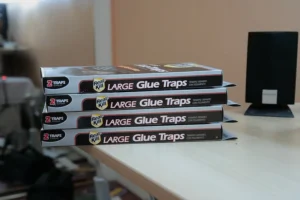
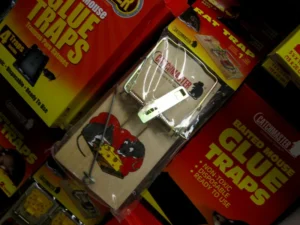
Insect glue traps come in a lot of shapes, from fly strips that hang from the ceiling to little cardboard boxes made for roaches. They all work the same way, with a layer of sticky glue that grabs whatever lands or walks on it.
Some use color to pull insects in, like the bright yellow cards people hang in gardens and greenhouses. Others use a scent, such as a food smell or a roach scent, to draw bugs toward the glue.
The trap doesn’t kill the insect. It just holds it in place, and the insect dies later from being stuck.
That can happen fairly fast with a tiny gnat, but with a bigger bug such as a cockroach, it can take much longer.
Because the traps are cheap, quiet, and don’t use poison, a lot of people think of them as the gentle option. Whether that’s fair is exactly what we’re about to look at.
What Happens to an Insect Stuck on a Glue Trap?
An insect that touches the glue usually starts to struggle right away. Its legs, wings, and antennae stick, and the more it pulls, the more of its body ends up stuck.
Insects breathe through spiracles (tiny breathing holes along the sides of their bodies), and glue can cover them. That can make it hard to breathe, though how much depends on the insect and the glue.
Tiny insects, such as fruit flies and gnats, probably die sooner. Bigger and tougher bugs, such as roaches, can fight for much longer.
Insects can also die from running out of energy or drying out while they’re stuck. Either way, the death isn’t quick, and that’s the part that bothers many people.
Can Insects Feel Pain?
This is the big question, and scientists don’t fully agree on the answer. Insects clearly sense harm (the science word is nociception, which is the ability to detect things like a sharp poke or high heat), but that isn’t the same as feeling pain.
Pain is the part where an animal actually suffers, and that’s much harder to measure. You can’t ask a fly how it feels.
However, the evidence has been growing. A major review of more than 300 scientific studies, published in 2022, looked for signs of pain in insects.
It used eight criteria that scientists also use for animals such as crabs and octopuses. That same framework led the UK government to recognize pain in those animals in its Animal Welfare (Sentience) Act 2022.
It found strong evidence of pain in adult flies, mosquitoes, cockroaches, and termites, since they met six of the eight criteria. Many other insects, such as adult butterflies and moths, met three or four, which the researchers called substantial evidence.
The researchers didn’t find a single insect that clearly failed a criterion. They did say there are big gaps in the research, especially for baby insects.
What the New York Declaration Says About Insects
In 2024, a group of scientists and philosophers announced the New York Declaration on Animal Consciousness. It says there’s a “realistic possibility” that insects have conscious experiences, which means they might really feel things.
The declaration doesn’t carry any legal weight, and it doesn’t say insects definitely feel pain. Still, hundreds of experts have signed it since, and that shows how much the conversation has changed.
Not long ago, many scientists treated insects like tiny machines that only react to things. Newer research points to more complex behavior, such as bumblebees playing with objects and bees learning from each other.
What Scientists Still Don’t Know
No one has proven that insects feel pain the way you or a dog does, and no one has proven that they don’t. That’s why the debate is still going.
Insects have tiny brains compared with ours, but they can learn, remember, and make flexible choices. That’s more than a simple machine would do, and it makes the question hard to wave away.
Because of those gaps, some researchers argue we should play it safe. If there’s even a decent chance that insects suffer, it makes sense to avoid methods that leave them stuck for hours.
Others say the evidence isn’t strong enough to change how we treat pests. Both sides agree, though, that more research is needed.
Do Insects Have the Brain Power to Feel Pain?
It’s easy to assume a tiny brain can’t do much, but insects keep surprising scientists. A honeybee brain has about a million nerve cells (a human brain has around 86 billion), yet bees can learn patterns.
Fruit flies are even smaller, and they can still learn to avoid a smell that was paired with a bad experience. They remember it for a while, too.
Cockroaches can learn as well. They can find their way back to a favorite hiding spot, and they remember where they found food.
None of that proves insects feel pain. But it does suggest their small brains do more than simple on-and-off reactions.
Size isn’t the whole story either. Many researchers think what matters more is how the nerve cells are wired and what they can do together.
Which Insects Get Stuck on Glue Traps?
Almost anything small enough to get stuck will, and that includes house flies, fruit flies, gnats, mosquitoes, moths, ants, and cockroaches. Silverfish, earwigs, and crickets get caught too, and so do spiders (which aren’t insects, but they walk right onto the glue).
Many of these are real pests, and plenty of people don’t feel bad about catching them. The trouble is that a glue trap can’t tell a pest from a harmless or helpful bug.
That matters more than you might think, since a trap that’s meant for one kind of bug will catch whatever else comes along.
Glue Traps Also Catch Insects You Want to Keep
Sticky traps catch whatever flies or crawls onto them, which means they’re not picky. That includes pollinators such as bees and natural enemies of pests such as ladybugs and lacewings.
UC pest experts point out that many insects stuck on traps may be beneficial or harmless. They tell people to identify what they’ve caught before taking any action.
That’s why garden suppliers advise against hanging yellow sticky traps outdoors where bees are active. A trap that’s meant to help your garden can end up hurting it.
If you use traps in a yard or greenhouse, think about what else lives there. You could end up removing the good bugs along with the bad ones.
Indoor use is usually a better fit, since fewer helpful insects wander into your kitchen or pantry.
Insect Glue Traps Can Catch Lizards and Other Small Animals
Glue traps for bugs can catch a lot more than bugs. Lizards such as geckos and anoles hunt insects, so a trap with a few flies stuck on it can look like an easy meal.
Small snakes, frogs, bats, and birds can get stuck too. Humane groups have reported all of these on glue traps of different sizes.
That’s one reason some places have changed their rules. Victoria, Tasmania, and the ACT in Australia now require insect glue traps to be safe for wildlife.
Ojai in California went even further. City officials there said glue traps of every size, even ones for ants and flies, raise the same animal welfare concerns.
If you share your home with geckos, or you live somewhere they wander in, that’s a good reason to be careful about where you put sticky traps.
Are Fly Strips and Sticky Cards as Bad as Rodent Glue Boards?
Not exactly, but they have more in common than most people think. Both trap an animal in glue and leave it to die slowly.
The big difference is size and what we know about the animals. With a mouse, we’re sure the animal can feel pain, while with an insect, the science is still being worked out.
Insects often die sooner than mice do, though a big roach can last a long time. The law treats them differently too, since most bans focus on rodent glue traps and many leave insect traps alone.
Still, the question isn’t settled just because the law hasn’t caught up. If insects can suffer, then a trap that holds one for hours matters, even if the animal is small.
That’s why the science is worth following, and why some people choose other tools for insects as well.
When Sticky Traps for Insects Make Sense
Sticky traps aren’t all bad, and pest experts use them for a good reason. They show you which pests you have and where they are, and they do it without any poison.
Pest pros call sticky traps the number one monitoring tool for cockroaches. Gardeners and greenhouse growers use yellow sticky cards the same way, to check for pests such as whiteflies and fungus gnats before they take over.
In those cases, the traps help you avoid spraying chemicals you don’t need. That’s a real benefit for people, pets, and wildlife.
So the best way to think about it is that sticky traps are great for finding bugs, but they’re not always the kindest way to get rid of them.
Pest Control Still Matters for Your Health
None of this means you should never deal with bugs. Some insects are a real health risk, and it’s fair to want them out of your home.
Cockroaches, for example, leave behind droppings and shed skins that can trigger asthma. German cockroaches make at least a dozen allergens that are strong triggers.
Mosquitoes can spread illnesses such as West Nile virus, and flies can carry germs from trash to your food.
So the real question isn’t whether to control pests. It’s how to do it in a way that works and doesn’t cause more suffering than it has to.
That’s where choosing the right tool matters, and it’s why we’d put glue traps near the bottom of the list for most situations.
How Glue Traps Compare to Other Ways of Handling Insects
Here’s a quick look at how common options compare when it comes to speed and side effects.
| Method | How It Works | How Fast | Catches Other Animals? | Good to Know |
|---|---|---|---|---|
| Glue trap or fly strip | Insect gets stuck on sticky glue | Slow | Yes, including lizards and helpful insects | Great for finding bugs, not the kindest way to kill them |
| Fly swatter | You hit the insect | Fast | No | Quick, but you have to be there |
| Gel bait or bait station (for roaches) | Roaches eat the bait and die later | Slow, but out of sight | Rarely, if the bait stays in a closed station | Works best with cleanup |
| Window screens and sealed gaps | Keeps insects out | Not a kill method | No | The kindest option, and it works all day |
| Bug zapper | An electric grid kills insects that fly in | Fast | Yes, many harmless insects | Often poor at stopping mosquitoes |
Prevention wins on both kindness and results. Sealing and screens stop bugs before they ever reach a trap, and you never have to deal with a stuck insect.
If you do need to kill a bug, the faster methods leave less time for suffering, even if you aren’t sure how much a bug can feel.
Kinder Ways to Deal With Insects in Your Home
The kindest approach is to stop bugs from getting in and from wanting to stay. That means fixing leaks, sealing cracks, covering food, and taking out the trash often.
Screens on windows and doors keep out flies and mosquitoes. Door sweeps and sealed gaps help with ants and roaches.
For roaches, gel baits work out of sight, so you don’t have to watch a bug struggle. Add cleanup and sealing, and you’ll solve the problem at its source.
For a single bug in your house, you can use a cup and a piece of paper to carry it outside. It takes about ten seconds, and no one gets hurt.
If you need to kill a bug, a quick swat is faster than a glue trap. It isn’t pleasant, but it’s over right away.
Fruit flies often show up with ripe fruit, so keep fruit covered or in the fridge and take out food scraps. Without a food source, they usually go away on their own.
How to Use Insect Glue Traps More Responsibly
If you decide to use glue traps for insects, you can still cut down on harm. Put them only where you’ve seen the pests, and keep them away from windows, doors, and outdoor areas where bees and lizards roam.
Choose enclosed traps when you can. A box-style roach trap keeps pets, kids, and small animals from touching the glue.
Check traps often, and throw them away once they’re full or after a week or two. A full trap isn’t catching anything new, and stuck insects shouldn’t sit there for days.
Never use a glue trap as your only plan. Pair it with baits, cleaning, and sealing, so the traps are for finding problems and not for fighting them.
And skip fly strips over a kitchen table or food prep area. They’re messy, and they can drop dead flies and glue onto your food.
What Should You Do If a Lizard or Other Animal Gets Stuck?
Move quickly and stay calm, since a stuck gecko, bird, or small animal can hurt itself if it keeps struggling. Wear gloves, and don’t pull the animal off, because that can tear skin, scales, or feathers.
Humane Society International says warm cooking oil can help loosen the glue when you work it in a little at a time. It’s best to do this with advice from an expert.
Geckos are delicate, and their tails drop off easily, so call a vet or a wildlife rehabilitator (a person trained to care for hurt wild animals) as soon as you can.
Afterward, take the trap away and use a different method. Another animal can get stuck in the same spot.
Common Myths About Insect Glue Traps
One common myth is that bugs can’t feel anything. Nobody knows for sure, but a growing amount of evidence suggests some insects may feel pain.
Another is that glue traps get rid of an infestation. They don’t, since they only catch the few bugs that wander onto them, and they’re better at showing you where the problem is.
Some people believe glue traps are the safest choice around kids and pets. They have no poison, but the glue sticks to skin and fur, and a toddler or a cat can end up with a mess.
Others think yellow sticky cards only catch pests. They catch pollinators and helpful bugs too, which is why pest pros advise you to identify what’s on the card before you act.
And plenty of people assume insect traps are never banned. Most bans so far target rodent traps, but some city laws, such as Ojai’s, are written broadly, so it’s worth checking your local rules.
Do Other Countries Treat Insect Glue Traps Differently?
A few do, mostly in Australia. Victoria, Tasmania, and the ACT now require insect glue traps to be safe for wildlife, as a local council in New South Wales recently pointed out.
In the UK, the Animal Welfare (Sentience) Act 2022 covers vertebrates, crabs, lobsters, octopuses, and squid. Insects aren’t on the list yet, but researchers have suggested adding them.
In the US and Canada, there are no rules just for insect glue traps. Most bans so far target rodent glue traps.
That could change as the science gets stronger, so it’s worth keeping an eye on the news.
Conclusion
Are glue traps inhumane for insects? Nobody can say for sure, but the science points toward yes more than it used to.
A major review found strong evidence of pain in flies and cockroaches, and hundreds of experts now say insects may well have feelings.
Because a glue trap leaves an insect stuck and struggling, it makes sense to use them carefully and to choose other tools when you can.
Prevention, cleanup, baits, and a quick swat or a cup-and-paper release are all kinder options. And when you do use a sticky trap, use it for what it does best, which is finding out where the bugs are.

Hi, my name is Ezra Mushala, i have been interested animals all my life. I am the main author and editor here at snakeinformer.com.