
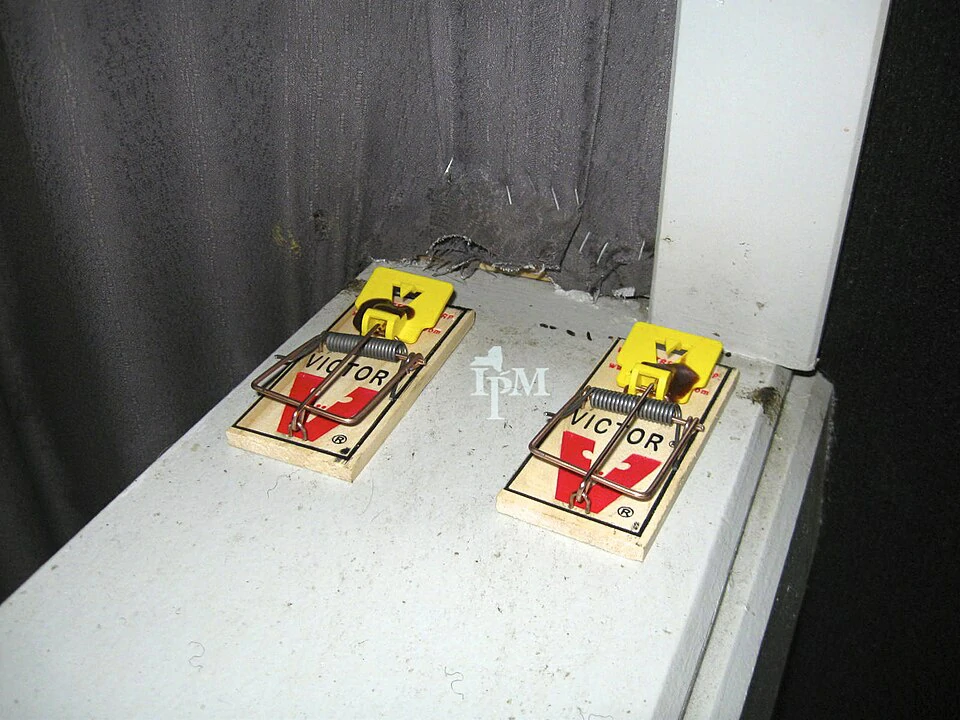
You set a rat trap in your basement or garage, and when you check it the next day, the whole trap is gone. So what happened to your rat snap trap, and where did it go?
When a rat snap trap disappears, the most likely cause is that a rat was caught but not held cleanly and dragged the trap away. Other causes include pets, other animals, a family member, or a trap that tipped over.
Start by checking dark, tight spots near where you set it, and be careful, since a hurt rat can bite. Below, you’ll find where to look, what to do when you find it, and how to stop it from happening again.
A Rat That Isn’t Caught Cleanly Can Drag the Trap Away
The most common reason a trap disappears is that a rat was caught, but not in a way that held it in place.
If the bar catches a leg, a tail, or part of the body, the rat can panic and run, trap and all. Even with a trap attached, rats are strong and determined, so they’ll drag it along as they go.
A rat will usually head for the nearest hiding spot, like under furniture, behind appliances, inside a wall gap, or in a crawl space. It’s looking for somewhere dark and protected.
The rat may still be alive somewhere with the trap attached, or it may have died. Either way, the trap is wherever the rat ended up.
This is more likely with a small or weak trap, or with a mouse trap used on a rat. A mouse trap can catch a rat without holding it cleanly, and the rat can then drag it away.
Where Should You Look for the Missing Trap?
Before you start, put on thick gloves, and don’t reach into tight spaces with your bare hands. A hurt rat can bite hard, so look with a flashlight first.
Start with dark, tight spots near where you set the trap, like under furniture, behind appliances, inside cabinets, and in closets.
Use the flashlight to check corners, behind water heaters, under stairs, and in cluttered areas (rats can squeeze into surprisingly small gaps).
Check any gaps or holes in nearby walls, since the rat may have pulled the trap inside. You might hear scratching, or later smell something if the rat has died.
Also look in your attic, crawl space, and basement, even if you didn’t set the trap there, since a frightened rat can travel quite far.
If you hear movement inside a wall, or you can’t reach a spot safely, don’t try to dig it out yourself. Call a pest control company or animal control, and tell them a trap is missing and a rat may be attached.
What Signs Can Help You Find the Trap?
Even if you can’t see the trap, a few signs can point you in the right direction.
Listen for sounds. A rat with a trap attached may still be moving, and you may hear scraping, dragging, or thumping that’s louder than normal rat activity.
Look for disturbed areas, like objects that got knocked over, marks on the floor, or dust that was pushed in one direction. Those can show you which way the rat went.
Use your nose, too. If a rat has died with the trap attached, you’ll eventually notice a strong, unpleasant smell that gets worse over a few days.
If you find fur or drag marks along a wall, follow them slowly, and keep your flashlight on the gap ahead of you.
Could a Pet or Another Animal Have Moved the Trap?
If you have a dog or cat, your pet may have found the trap and moved it. Pets are curious, especially about new objects in their territory.
Dogs may pick a trap up and carry it off. If your dog likes to hide things, check its favorite spots, and look in your yard if it goes outside.

Cats are less likely to carry a heavy rat trap, but they may knock it over or push it while they investigate.
Other animals can move traps too, since bait attracts more than rats. Outdoors, you may have raccoons, opossums, or other rats pulling a trap around, and a covered box helps.
If a pet gets caught in a trap, free it carefully and take it to a vet right away.
Did Someone in Your Household Move It?
Another possibility is that someone in your home found the trap and removed it. This happens more often than you’d think.
A family member or roommate may have seen the trap and thought it was dangerous (especially if kids or pets are around), so they threw it out or put it somewhere “safe.”
Or someone may have found a rat in it and taken care of it without telling you, thinking they were helping.
If you live with other people, ask them if they’ve seen the trap. It’s often just a simple mix-up, and a quick question can save you a long search.
Traps Can Roll, Tip, or Fall
If you set the trap on an uneven or sloped surface, it may have simply tipped over or slid away.
This can happen on shelves, on top of appliances, or on floors that aren’t level. A rat that bumps a loose trap without being caught can knock it a few feet.
Check the floor directly below where you set it, and look behind and under nearby objects. The trap may have slid into a corner or under something.
Set traps on flat, steady surfaces, and anchor them (more on that below).
Sometimes a Rat Gets Away From the Trap
Sometimes a rat gets caught by just the tip of the tail or a small part of its body, and it pulls loose.
When that happens, the trap usually stays close to where you set it, but the rat’s struggle can knock it a few feet away. It may end up behind furniture or in a corner, and you may find fur on it.
If this happened, the rat is probably still alive and may be hurt. It’s also likely to be more wary of traps after the experience (rats are naturally cautious about new objects, which is called neophobia).
You’ll want to keep trapping, or try a different approach. A pest control pro can help if you’re not sure how.
What to Do If You Find the Trap With a Live Rat
If you find your missing trap and the rat is still alive, stay calm and keep yourself safe. The best choice is to get professional help right away.
Put on thick gloves, keep kids and pets away, and gently cover the trap with a towel. Then call a pest control company, animal control, or a vet, and say right away that it’s a live animal.
Don’t try to open the trap or free the rat yourself. It’s hurt and frightened, and a bite can spread germs like hantavirus (a virus that can cause a serious lung illness) and rat-bite fever (a bacterial infection).

When you’re stressed and the rat is frightened, it’s easy to reach for a quick fix you saw online. Most of those ideas make things worse, so here’s what to avoid.
- Don’t drown it. It’s cruel, and it can also be illegal.
In England, people have been prosecuted under the Animal Welfare Act 2006 for drowning trapped wild animals, such as squirrels.
In the US, the rules vary from state to state, so don’t assume it’s allowed where you live.
- Don’t freeze it, either. The cold is slow and stressful, and it isn’t the gentle end some people think it is.
- Don’t use blunt force, like hitting the rat with a heavy object. Doing it wrong can be inhumane, because a miss leaves the rat hurt and in more pain.
- Don’t use gas, dry ice, fumes, or chemicals. They can cause pain and distress, and they can seriously hurt you too.
- Don’t leave the rat to die in the trap, and don’t throw the trap away with the rat still alive. Either way, it suffers slowly where nobody can help.
- Don’t touch it with your bare hands, and don’t poke, shake, or squeeze it. A scared rat can bite hard, and its urine and droppings can carry diseases.
- Don’t release it outside. A hurt rat may not survive, it can find its way back into your home, and in some places release is against the law.
What to Do If You Find the Trap With a Dead Rat
If you find the trap with a rat that has died, you still need to handle it carefully, since germs can stay behind.
Put on thick rubber gloves, then spray the trap and the area with disinfectant and let it soak for about five minutes. That kills germs before you move anything.
Place the trap and the rat in a plastic bag and tie it shut. Then put that bag inside a second bag and tie it too.
Put the double bag in an outdoor trash bin with a tight lid, and check your local rules in case your area has special rules for dead animals.
Wash your gloves with soap and water or disinfectant before you take them off. Then wash your hands well, even if you wore gloves the whole time.
Clean the spot with disinfectant, or mix 1½ cups of bleach in 1 gallon of cold water (that’s about 1 part bleach to 9 parts water). Never mix bleach with ammonia or other cleaners, because that can make dangerous fumes.
Don’t sweep or vacuum droppings, since that can kick up dust you may breathe in. Wet them with disinfectant first, then wipe them up.
If you want to reuse the trap, clean it well while wearing gloves, let it dry fully, and replace it if it looks rusty or damaged.
How to Keep Traps From Disappearing Again
The best fix is to anchor your trap, so a rat can’t drag it into a wall or a crawl space. That also helps you find a trap fast if something goes wrong.
You can fix the trap to the floor or a baseboard with a small screw or nail through the hole in the base.
You can also wire it to something heavy and stable, like a pipe or a post (zip ties can snap, so wire is stronger).
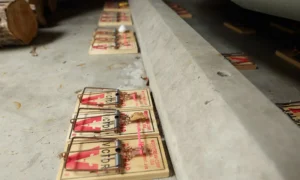
Use a trap made for rats, ideally one with a larger plastic trigger (called an expanded trigger). Mouse traps are too small to hold a rat.
Put the trap inside a covered box or bait station that only lets a rat get in. That keeps the trap in place, and it keeps pets and other animals away too.
Set it on a flat, steady surface, with the long side at a right angle to the wall and the trigger end against the wall.
Check your traps at least once a day, and twice if you can. The sooner you find a trap, the less time there is for it to go missing.
What If You Never Find the Trap?
Sometimes you search every spot you can reach and still come up empty. That’s frustrating, but you have good options.
Keep your ears open for a few days, especially at night, when rats are most active. If you hear dragging or scratching in one spot, tell a pest control pro exactly where.
Pay attention to smells, too. A strong odor in one room can point you to the spot, and a pro can help you reach it without tearing into your walls.
Don’t cut into drywall or ceilings yourself, since you could hurt yourself or damage wiring and pipes. Some pest pros use small inspection cameras and other tools to look inside walls.
In the meantime, keep pets and kids away from the area where you think the trap went. A hurt rat in a hiding spot can bite if it feels cornered.
Once you find the trap, or the problem passes, make a note of what went wrong so you can set your next trap up better (anchoring it is the biggest fix).
Are There Traps That Can’t Be Dragged Away?
If you’re tired of losing traps, a few designs are much harder to move.
Electronic traps are heavy, enclosed boxes that sit on the floor. A rat can’t drag one away, and they’re hard for pets to move.
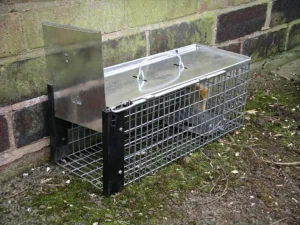
Live cage traps are large boxes that stay put. A rat can get in but can’t get out, but you’ll have to deal with a live animal afterward, which many people find hard.
Glue traps are usually a poor choice. They can hold a rat in place, but many animal welfare groups and pros say they can leave an animal stuck and frightened for a long time, and some places have banned them.
These options usually cost more than a simple snap trap. If you keep losing traps, though, the extra cost can be worth it.
When Should You Call a Professional?
If you keep losing traps, or you’ve found a live rat and don’t want to handle it, call a pest control pro.
Pros have the experience to find missing traps, set them so they can’t be dragged away, and handle a live or dead rat safely.
They can also tell you why your traps aren’t working cleanly, and they can find where rats are getting in. Prices vary, so ask a few companies for quotes.
For a bigger problem, a pro can set up a plan that includes sealing entry points, so you aren’t buying trap after trap.
How to Stop Rats From Coming Back
Traps only deal with the rats that are already inside. To keep new ones out, you need to find out how they’re getting in and why they came.
Seal gaps with steel wool or metal mesh, since rats can squeeze through holes about the size of a quarter. Store food and pet food in tight containers, and keep trash in bins with tight lids.
Trim back bushes near your house, and clear clutter, since rats love hiding spots close to walls.
If you also set traps outdoors, anchor the box as well as the trap, since larger animals can drag a loose box away.
Check outdoor traps just as often as the ones inside, and keep a note of where each one sits so none gets lost.
Conclusion
When a rat snap trap disappears, it’s usually because a rat was caught but not held cleanly and dragged the trap away. Pets, other animals, a family member, or a trap that tipped over can also be the cause.
Look in dark, tight spots near where you set it, wear thick gloves, and don’t reach into tight spaces. If you find a live rat, call a pest control company, animal control, or a vet, and don’t try to handle it yourself.
To stop it from happening again, use a trap made for rats, anchor it to something stable, and put it in a covered box. Check your traps often, and call a pro if you keep having trouble.

Hi, my name is Ezra Mushala, i have been interested animals all my life. I am the main author and editor here at snakeinformer.com.