

Electric mouse traps are popular because they’re quick and clean, but if you’re dealing with rats instead of mice, you might wonder if these traps will actually work.
Rats are bigger and tougher than mice, so it makes sense to question whether a trap designed for mice can handle a larger rodent. Can an electric mouse trap kill a rat?
Most electric mouse traps can’t reliably kill rats because rats are too large for these traps. Mouse traps typically deliver 6,000 to 8,000 volts, which works for mice but isn’t always enough to kill a rat instantly. Rats are usually 5 to 10 times larger than mice, so they need more powerful traps designed specifically for them.
While some smaller rats might fit into a mouse trap and get killed, you can’t count on it working consistently. The trap just isn’t built for an animal that size.
You’ll end up wasting time and money trying to catch rats with the wrong equipment.
The Size Difference Between Mice and Rats
Mice are really small animals. An adult house mouse usually weighs about half an ounce to one ounce, and they’re only about 3 to 4 inches long (not counting the tail).
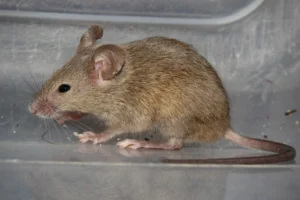
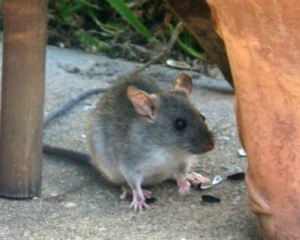
Rats are much bigger. A typical Norway rat can weigh between 7 to 18 ounces, and they can be 9 to 11 inches long. That’s a huge difference.

When you compare a mouse to a rat, it’s like comparing a hamster to a guinea pig. They’re in completely different weight classes.
This size difference is why mouse traps don’t work well on rats. The trap opening is too small, and the electrical charge isn’t strong enough.
How Electric Mouse Traps Work
Electric mouse traps are simple devices. When a mouse walks into the trap to get the bait, it steps on metal plates inside.
These plates complete an electrical circuit, and the trap delivers a high-voltage shock. The shock is supposed to kill the mouse instantly.
Most electric mouse traps use between 6,000 to 8,000 volts of electricity. This is enough to kill a small mouse in just a few seconds.
The trap runs on batteries (usually four AA batteries), and it can kill multiple mice before the batteries run out. It’s a hands-off way to deal with mice.
Why Rats Are Harder to Kill
Rats have bigger bodies, more muscle mass, and tougher skin than mice. This means they can handle more punishment before they die.
The electrical shock that kills a mouse instantly might just stun or injure a rat. The rat might feel the shock and back out of the trap before it dies.
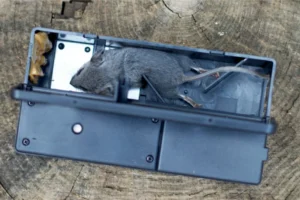
Or worse, the rat might get partially shocked but survive. This creates a suffering animal and doesn’t solve your rat problem.
Rats also have stronger hearts and more robust nervous systems. They’re just built to survive better than mice are.
The Trap Opening Problem
Most electric mouse traps have small openings designed for mice. The entrance might be 1.5 to 2 inches wide.
Adult rats often can’t even fit through these openings. Their heads and bodies are too big to squeeze inside the trap.
Even if a young or small rat manages to get partway in, it might not make full contact with the metal plates. This means it won’t complete the circuit and won’t get shocked.
You might end up with a rat that eats your bait without getting caught or killed. That’s just feeding the rat and teaching it that your traps aren’t dangerous.
What Happens If a Rat Does Enter the Trap?
Let’s say you get lucky and a smaller rat squeezes into an electric mouse trap. What happens next?
If the rat makes good contact with the metal plates, it’ll get shocked. But the voltage might not be enough to kill it right away.

The rat might thrash around inside the trap, get partially shocked, and then escape. Or it might die slowly instead of instantly, which is inhumane.
You could also end up with a stunned rat that’s injured but alive. This creates a mess and a problem, because you’ll need to deal with a hurt, scared rat.
The Voltage Difference Between Mouse and Rat Traps
Electric rat traps are specifically designed to handle larger rodents. They typically deliver 8,000 to 10,000 volts of electricity.
That might not sound like a huge jump from the 6,000 to 8,000 volts in mouse traps, but it makes a real difference. The higher voltage ensures a quick kill.
Rat traps also have larger chambers and metal plates. This means the rat makes better contact and receives the full shock.
The extra voltage and better design make rat traps much more effective and humane for killing rats.
Can Young Rats Be Killed by Mouse Traps?
Young rats (sometimes called rat pups) are smaller than adults. They might be close to the size of a large mouse when they’re very young.

In theory, a mouse trap could kill a very young rat. But this isn’t reliable, and you shouldn’t count on it.
By the time rats are old enough to leave the nest and look for food, they’re usually too big for mouse traps. They grow quickly.
If you’re seeing rats in your home, they’re probably adults or near-adults. Mouse traps won’t work on them.
The Risk of Injuring Without Killing
One of the worst outcomes is when a trap injures a rat without killing it. This can happen with electric mouse traps that aren’t powerful enough.
The rat gets shocked and hurt but doesn’t die. It might escape and suffer from burns, pain, or other injuries.
This isn’t just inhumane. It also makes the rat more cautious around traps in the future, making them harder to catch.
An injured rat might also become more aggressive or desperate, which can create other problems in your home.
Why Using the Wrong Trap Wastes Time
If you’re trying to catch rats with mouse traps, you’re basically wasting time. The rats will keep breeding and spreading while your traps sit there ineffectively.
Rats reproduce really quickly. A female rat can have up to 12 babies per litter, and she can have several litters per year.

Every day you spend using the wrong traps is another day the rat population in your home can grow. This makes your problem worse, not better.
You’re better off investing in proper rat traps from the start. It’ll save you time, money, and frustration.
The Cost Comparison: Mouse Traps vs. Rat Traps
Electric mouse traps usually cost between 20 to 40 dollars. Electric rat traps cost a bit more, usually 40 to 60 dollars.
That price difference might make you want to try the cheaper mouse trap first. But this is a false economy.
If the mouse trap doesn’t work, you’ve wasted 20 to 40 dollars plus the time you spent waiting for results. Then you still have to buy a rat trap anyway.
You end up spending more money overall, and you’ve given the rats more time to multiply. Just buy the right trap from the beginning.
How to Tell If You Have Mice or Rats
Before you buy any trap, you need to figure out what kind of rodent you’re dealing with. The signs are different for mice and rats.
Mouse droppings are small, about the size of a rice grain. They’re dark and pointed at the ends. You’ll usually find them in clusters.
Rat droppings are much bigger, about three-quarters of an inch long. They’re shaped like capsules with blunt ends.
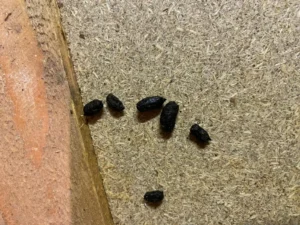
If you see the rodent itself, mice are small and have thin tails. Rats are much larger with thick, scaly tails.
What Kind of Damage Each Rodent Causes
Mice and rats both cause damage, but rats do more because they’re bigger and stronger. Rats can chew through wood, plastic, and even soft metals.
They leave bigger gnaw marks than mice do. You might see holes in your walls that are 2 to 3 inches wide if you have rats.
Rats also make more noise. You might hear thumping or scratching sounds at night, especially in your walls or attic.
If you’re seeing serious structural damage or hearing loud noises, you probably have rats, not mice.
Electric Rat Traps: What Makes Them Different
Electric rat traps are built differently from mouse traps. They have larger chambers that can fit a full-grown rat comfortably.
The entrance is wider (usually 3 to 4 inches), so rats can enter easily. The metal plates inside are positioned to make sure the rat makes full contact.
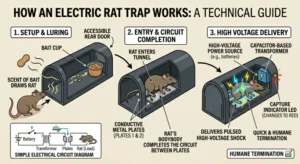
Rat traps also use more batteries (often 4 C batteries instead of AA batteries) to deliver more power. This ensures a quick, humane kill.
Some rat traps also have indicator lights that tell you when a rat has been caught. This is handy because you don’t have to check the trap constantly.
How Many Rats Can One Trap Kill?
Most electric rat traps can kill multiple rats before you need to change the batteries or clean the trap. The exact number depends on the trap model and battery quality.
Some traps can kill up to 50 rats on one set of batteries. Others might handle 20 to 30 rats.
You’ll need to empty the trap after each kill and clean it periodically. Dead rats decompose quickly, and you don’t want that smell in your home.
The trap usually has a removable chamber that makes disposal easier. You can tip the dead rat into a bag without touching it.
Placement: Where to Put Rat Traps
Rats travel along walls and in hidden areas. They don’t like being out in the open where predators can see them.
Place your rat traps along walls, behind appliances, in attics, basements, or anywhere you’ve seen rat droppings or gnaw marks.

Make sure the entrance of the trap faces the wall, so the rat naturally enters it while traveling along its usual path.
Don’t put traps in the middle of a room. Rats will avoid them because they feel too exposed.
Best Bait for Electric Rat Traps
Rats aren’t picky eaters, but they do have preferences. Peanut butter is one of the best baits because it’s sticky and smells strong.
Other good options include chocolate, dried fruit, nuts, or bacon. The key is using something with a strong smell that will attract the rat from a distance.
Put a small amount of bait at the back of the trap. This forces the rat to walk all the way inside and step on the metal plates.
Don’t overload the trap with bait. A pea-sized amount of peanut butter is enough.
Safety Concerns with Electric Traps
Electric traps are generally safe if you use them properly. The shock chamber is enclosed, so you can’t accidentally touch the metal plates.
But you still need to keep them away from children and pets. A curious child or pet could get shocked if they stick their hand or paw inside.
Place traps in areas where kids and pets can’t reach them. Under sinks, in attics, or behind appliances are good spots.
Always turn off or remove the batteries before cleaning or disposing of a dead rat. This prevents accidental shocks.
How Long Does It Take to Kill a Rat?
Electric rat traps kill rats almost instantly when they work properly. The shock should kill the rat in 3 to 10 seconds.
This is much faster and more humane than poison, which can take days to kill a rat. The rat suffers less with an electric trap.
Snap traps can also kill quickly, but they don’t always work perfectly. Sometimes a snap trap injures the rat without killing it.
Electric traps are more consistent. If the rat enters the trap and makes contact with the plates, it dies quickly.
Alternatives to Electric Traps
If you don’t want to use electric traps, there are other options. Snap traps are the traditional choice and work well if placed correctly.
Live traps catch rats without killing them. You can then release the rat far from your home. But keep in mind that rats are territorial and might come back.
Glue traps are another option, but many people consider them inhumane. Rats can suffer for hours or days stuck to the glue.
Poison is effective but dangerous if you have pets or children. Dead rats can also die inside your walls and create a terrible smell.
Why Proper Equipment Matters
Using the right equipment for the job makes everything easier and more effective. This is true for pest control just like anything else.
A mouse trap is designed for mice. A rat trap is designed for rats. Using the wrong one wastes your time and money.
Rats are smart animals. If they encounter a trap that doesn’t work, they learn to avoid similar traps in the future.
This makes your rat problem harder to solve. You might need to try different methods or call a professional exterminator.
When to Call a Professional
If you’ve tried rat traps and you’re still seeing rats, it might be time to call an exterminator. Professional pest control experts have experience and better tools.
They can identify where rats are getting into your home and seal those entry points. This prevents new rats from coming in.
Professionals can also use commercial-grade traps and treatments that aren’t available to regular consumers. These are often more effective.
If you have a serious rat infestation (seeing multiple rats, lots of droppings, extensive damage), don’t try to handle it alone. Get professional help.
Conclusion
Electric mouse traps aren’t designed to kill rats and won’t work reliably. Rats are much larger than mice and need more powerful traps with bigger chambers and higher voltage.
Using a mouse trap for rats wastes your time and money. The rats will likely avoid or escape the traps, and your infestation will continue to grow.
If you have rats, invest in proper electric rat traps or other rat-specific control methods. These are designed for the size and strength of rats and will give you much better results.
Don’t try to save money by using the wrong equipment. Buy rat traps from the start, and you’ll solve your problem faster and more humanely.

Hi, my name is Ezra Mushala, i have been interested animals all my life. I am the main author and editor here at snakeinformer.com.