
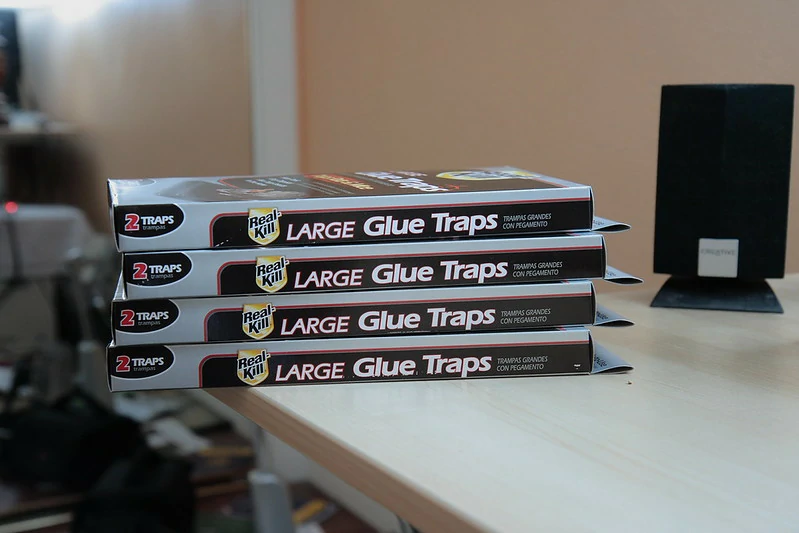
Walk down the pest control aisle of any hardware store and you’ll see flat trays and cards covered in something sticky. They’re sold as glue traps, glue boards, and sticky traps, and people use them for everything from mice to fruit flies.
But what are glue traps actually used for, and are they the right tool for your problem?
Glue traps (also called glue boards or sticky traps) are used to catch mice, rats, and crawling insects like cockroaches and spiders. Pest control pros also use them to check which pests are living in a building. They don’t kill quickly, so they aren’t the best pick for rodents.
That last part surprises a lot of people, since a glue board looks like the easy, no-mess answer. It does catch things, but what happens next depends on what got stuck and who has to deal with it.
So let’s look at what these traps are really used for, where they fall short, and what you can use when a glue board isn’t the right fit for you.
Glue Traps, Glue Boards, and Sticky Traps Are Basically the Same Thing
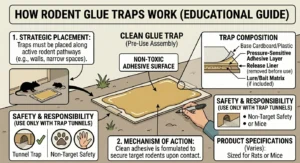
All three names mean a surface coated in non-drying glue. Once a pest steps on it, it can’t pull itself free, and that’s the whole idea behind the trap.
The names do tend to match the job, though. “Glue trap” usually means the heavy-duty kind made for mice and rats.
“Sticky trap” usually means the lighter cards and strips made for insects, and “glue board” is the term you’ll hear most from pest control companies.
It’s a flat board with a plastic or cardboard base, coated with glue.
You’ll also see the same product sold as sticky cards, glue trays, adhesive traps, and fly paper. The shapes change, but the sticky surface stays the same.
What Are Glue Traps Used For Around the Home?
Glue traps do two main jobs, since they catch pests and they also help you track them. You probably think about the first job, but the second one is a big part of how professionals use them every day.
You’d normally set one on the floor along a wall, or inside a cabinet where you’ve seen droppings. The thin cards get hung up or stuck in a plant pot to catch flying bugs.
Here’s a quick look at the most common uses:
| Use | What It Catches | Where People Set It | Notes |
|---|---|---|---|
| Catching mice | House mice, deer mice | Kitchens, garages, basements, sheds | Works less often than snap traps |
| Catching rats | Norway rats, roof rats | Attics, garages, along walls | Needs a large, extra-strong rat board |
| Catching roaches | American, German, and Oriental cockroaches | Under sinks, behind fridges, in cabinets | Works best flat against a wall |
| Catching spiders | House spiders, wolf spiders | Basements, corners, window sills | Good for seeing how many are around |
| Catching pantry pests | Pantry beetles, some moths | Pantries, cupboards, warehouses | Often used to monitor, not to fix |
| Catching flying insects | Fruit flies, fungus gnats, whiteflies | Kitchens, greenhouses, houseplants | Usually yellow or blue sticky cards |
| Monitoring for pests | Any crawling or flying insect | Homes, restaurants, food plants | Shows what’s there and how many |
That list explains why you’ll see glue boards everywhere, from a home kitchen to a food warehouse.
Are Glue Traps Any Good for Mice and Rats?
This is the use most people think of first. A mouse glue board is a flat tray with a thick layer of glue, so when a mouse runs along a wall and steps on it, it gets stuck.
Rats need a bigger, stronger board with more glue, since a full-grown rat weighs a lot more than a mouse.
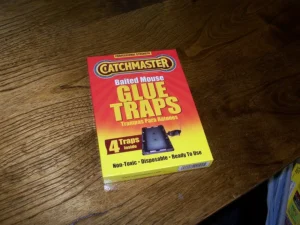
Here’s the catch, though. Glue traps catch rodents less often than snap traps do, which is why most pest experts point you to the plain wooden snap trap instead. It’s cheap, it works, and it’s quick.
There’s a health reason too. A stuck rodent stays alive for a while, so it can keep going to the bathroom on the board and spread germs around your home.
That matters to you, because wild rodents can carry disease. Certain North American mice and rats (like the deer mouse and the white-footed mouse) can spread hantavirus, which is a rare but serious lung illness.
You can catch it by breathing in dust from rodent urine and droppings. So if you use a glue board for mice, treat the board and the area around it with real care.
Glue Boards and Sticky Traps for Cockroaches, Spiders, and Other Crawling Bugs
Sticky traps really shine on crawling insects. The pests they catch most easily include cockroaches, spiders, pantry beetles, mites, and even scorpions, which is why they show up in so many homes.
The trick is to put the trap where the bugs already walk. Roaches and spiders like to run along edges, so the best spots are flat against a wall, in a corner, under a sink, or behind the fridge.
A sticky trap also shows you where your problem is. Say you set out four traps, and one catches a dozen roaches while the rest catch nothing. Now you know exactly where to look.
There’s one thing to watch for, though. The thick base and tall lip on a heavy glue board can make bugs walk around the glue instead of over it.
So for bugs, the flat, light sticky cards work better than the big rodent boards.
Can You Use Sticky Traps for Fruit Flies and Other Flying Insects?
Yes, and sticky cards are one of the most common ways to do it. You’ll see yellow and blue cards pushed into houseplant pots to catch fungus gnats and whiteflies, and growers also hang them in greenhouses to spot pests early.
Fruit flies are another popular target. A sticky strip near your fruit bowl will grab a few, but it won’t fix why they showed up in the first place.
You still need to toss the overripe fruit and clean out your drains.
Sticky traps also work less well on flying insects and bed bugs than they do on crawlers. So think of a sticky card as a helper for flying pests, not a full solution.
How Pest Control Pros Use Sticky Traps to Monitor
This is the part you’d never see as a homeowner. Before a pro treats a building, they often set out sticky traps just to learn what’s living there.
Sticky traps can watch an area for crawling insects around the clock, which is why inspectors love them. They catch the pests that a person would easily miss during a quick walk-through of your home or business.
Here’s how it goes in real life. A technician puts a handful of traps around a restaurant or warehouse, then comes back a few days later to see what’s stuck.
The catch shows them what kind of pest it is, how many there are, and which spots are busiest. That tells them exactly where to treat, so they aren’t spraying blindly.
Sticky boards are also sometimes tucked inside professional rodent bait stations, which makes cleanup easier and helps contain hair and droppings.
Why Some People Choose Glue Traps in the First Place
Glue traps have real selling points, and that’s a big reason they stay so popular with homeowners. It helps to know what those are before we get to the problems.
They’re easy to use. You pull them out of the package, peel the two halves apart, and set them down, with no springs to set and no fingers to pinch.
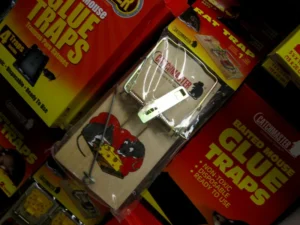
They don’t use poison, which matters a lot if you have small kids or pets running around the house. That’s why glue traps fit best in places where poison isn’t allowed, like kitchens and hospitals.
They’re also cheap and disposable, since you just toss the whole trap when you’re done. And they slide into tight spots, like under a fridge or behind a stove, where a bulky snap trap won’t fit.
What Are the Downsides of Glue Traps?
Glue traps aren’t a perfect fix, and it’s better to know the problems before you buy one. There are four big ones.
The first is that they don’t kill quickly. A snap trap ends things fast, but a glue trap doesn’t kill on its own.
A stuck animal can struggle for hours or even days before it dies from injuries, exhaustion, or thirst. You may find that too cruel, and plenty of people do.
It’s a big reason some places have banned them, including Ojai, California in 2024, and New York City lawmakers have pushed for a ban too.
The second problem is that they catch the wrong animals. A glue board can’t tell a mouse from a songbird.
Hanging glue traps and sticky paper often trap songbirds, bats, and flying squirrels. They fly in after the insects that are already stuck to the glue.
Lizards, snakes, small mammals, and even pets can end up stuck too, and that’s the part that upsets people the most.
Third, they aren’t very good for rodents, as we covered above. Snap traps do a better job.
Fourth, you may still have a live animal on your hands. If a mouse is stuck but alive, you’re the one who has to deal with it, and plenty of people dread that.
Here’s how the main trap types stack up:
| Trap Type | How It Works | Kills Quickly? | Catches Non-Target Animals? | Best For |
|---|---|---|---|---|
| Glue board or glue trap | Sticky surface holds the pest | No | Often | Insects and monitoring |
| Snap trap | Spring bar strikes the pest | Yes | Rarely | Mice and rats |
| Live cage trap | Door closes behind the pest | No (caught alive) | Sometimes | People who want to release |
| Electronic trap | Delivers a quick shock | Yes | Rarely | Mice and rats indoors |
| Light sticky card | Sticky card for small bugs | No | Sometimes | Flying insects and monitoring |
For rodents, most experts point to snap traps. For bugs, a light sticky card does the job well.
What Should You Do If an Animal Gets Stuck on a Glue Trap?
Say a bird, lizard, or other animal you never meant to catch ends up on your glue board. What you do in the next few minutes really matters, so it helps to know the steps ahead of time.
The best move is to call a wildlife rehabilitator (a person trained and licensed to care for injured wild animals) or a vet right away. Animal Help Now (ahnow.org) can connect you with wildlife experts near you, and it’s also a free phone app.
If you can’t reach help right away, wildlife groups suggest a few steps. First, lay paper towels or thin cardboard over the exposed glue so the animal doesn’t get more tangled.
Next, put on thick gloves, since you should never handle a wild animal with bare hands. Then place the animal and the trap in a cardboard box with air holes, and keep it somewhere warm, dark, and quiet.
Don’t give the animal food or water, because that can hurt it if it’s in shock.
Only use cooking oil if you truly can’t get help. Warm oil can slowly loosen the glue if you work gently and never pull.
Just don’t pour lots of it on the animal, since you could drown it or coat its lungs.
Even after it’s free, the animal still needs care. Oil can stop an animal from staying warm, so it should see a rehabilitator or vet for a proper wash and checkup.
Sadly, not every animal makes it. One study of so-called “non-lethal” glue boards found that nearly half of the lizards caught in them died.
What Can You Use Instead of Glue Traps?
If you’re dealing with mice or rats, you have better tools than a glue board. The CDC’s advice comes down to two ideas: seal up, then trap up.
Sealing up means closing the gaps where rodents get in and removing what draws them, like pet food, bird seed, and open garbage. That matters more than any trap, since traps alone won’t stop new rodents from moving in.
Snap traps are the top pick for most homes. You bait them with something like peanut butter and set them along walls, where rodents travel.
Rats and mice need different trap sizes, so match the trap to the pest.
Live traps can work if you want to release the animal. Just check them often, and look up your local rules first, since some places don’t let you move wildlife to a new spot once it’s caught.
For a big problem, a pest control company can find exactly where the rodents are getting in. That’s often worth the cost when you’re seeing lots of droppings or hearing scratching noises in the walls at night.
For bugs, light sticky cards are fine for monitoring, but fix the cause too. Clean up crumbs, repair leaky pipes, and seal cracks, since that’s what really cuts down the numbers.
How Can You Use Glue Traps More Safely?
If you decide a glue board is right for your job, a few habits lower the chance of catching something you didn’t mean to. None of them is hard.
Keep the traps indoors when you can, because outdoor ones catch birds, lizards, and small wildlife. Set them flat against a wall, since rodents and bugs run along edges.
Keep them away from your kids and pets too, since a sticky board can grab a curious paw or hand.
Check your traps often, at least once a day, so a trapped animal doesn’t suffer longer than it has to.
When it’s time to throw one out, wear gloves, especially if a rodent was caught. Double-bag it and put it in the trash, and never touch a dead rodent with bare hands.
Also, don’t sweep or vacuum dry droppings. That can kick up dust carrying hantavirus, so air out the room first and wipe things down with a bleach and water mix instead.
If you find a rodent nest or a lot of droppings, take that as your sign to call a professional.
Are Glue Traps Legal Where You Live?
The rules on glue traps are changing fast. In the US, more cities and states are looking at bans, and some big retailers have already stopped selling them altogether.
Ojai, California banned rodent glue traps in 2024, and New York City lawmakers have pushed to do the same. Rules also vary a lot around the world.
If you’re in the US or Canada, check your state, provincial, or city rules before you buy one. A quick call to your local government office can tell you exactly what’s allowed where you live.
If you’re in the UK or Australia, check your local laws as well, since they differ from place to place.
Conclusion
Glue traps, glue boards, and sticky traps catch mice, rats, cockroaches, spiders, and flying pests like fruit flies, and pros also use them to check what’s living in a building. They’re easy, cheap, and free of poison, but they come with real downsides.
They don’t kill quickly, they often catch birds and other animals by accident, and they don’t work as well on rodents as snap traps do. That’s why health experts point you toward snap traps and sealing up your home instead.
For bugs, a light sticky card works well as a monitor. And if a non-target animal ever gets stuck, cover the glue, put on gloves, and call a wildlife rehabilitator or vet right away.
So know the job, pick the right trap, and check it often. That’s how you get the results you want with the least harm to everything else.

Hi, my name is Ezra Mushala, i have been interested animals all my life. I am the main author and editor here at snakeinformer.com.