
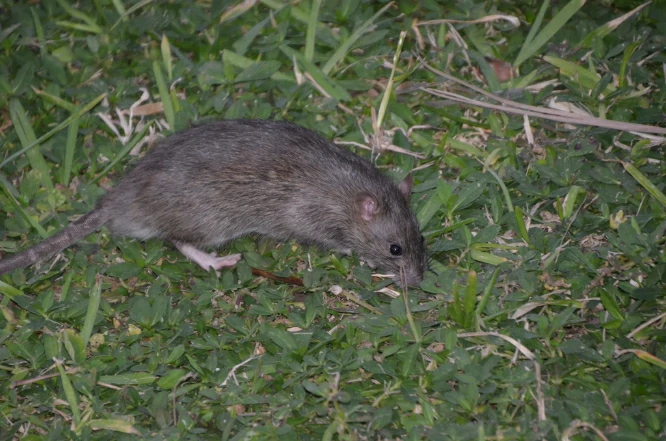
Finding a rat stuck to a glue trap can be one of the most stressful parts of dealing with a rodent problem.
Unlike snap traps that kill quickly, glue traps leave the animal alive and stuck, which means you have to decide what to do next. What to do with a rat caught in a glue trap?
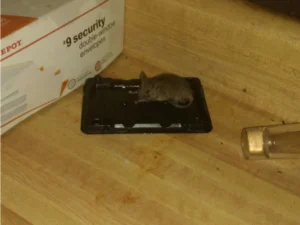
When you catch a rat in a glue trap, you have two main options: you can kill it humanely to end its suffering, or you can try to free it and release it outside. The most humane choice is usually to kill it quickly with a method like a blow to the head, then dispose of the body properly.
This is honestly one of the hardest parts of using glue traps. The rat is alive, scared, and stuck, and you need to make a decision that takes care of the problem while being as humane as possible.
Why You Need to Act Quickly When You Find a Rat in a Glue Trap
When a rat gets stuck to a glue trap, it’s going through a lot of stress. The animal is terrified, struggling to get free, and can’t understand what’s happening. The longer it stays stuck, the worse things get.
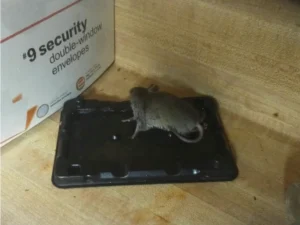
Rats caught in glue traps can seriously hurt themselves trying to escape. They might tear off their own skin, break bones, or pull out fur. Some rats will chew off their own feet to try to get free. This isn’t just gross to think about, it’s incredibly cruel to the animal.
The rat also can’t eat or drink while it’s stuck. Depending on how long it’s been there, it might already be getting dehydrated or weak from hunger. Small animals like rats can’t go very long without water, maybe a day or two at most.
On top of all that, the rat is completely exposed and vulnerable. It can’t run away if a predator shows up, and it can’t defend itself. This adds even more stress to an already terrible situation.
That’s why you need to deal with the situation as soon as you find it. Don’t leave the rat stuck there for hours while you figure out what to do. Make a decision and act on it quickly.
The Most Humane Way to Kill a Rat Stuck in a Glue Trap
If you decide that killing the rat is the right choice (and for most people dealing with a pest problem, it is), you want to do it as quickly and painlessly as possible.
The fastest method is a sharp blow to the head. This might sound brutal, but it’s actually the most humane option because it causes instant death.
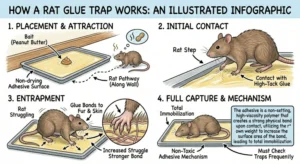
You can use a heavy object like a hammer or a thick stick. Put the glue trap in a plastic bag first so you don’t have to see it as clearly, then deliver one strong, quick hit to the head area.
Make sure you hit hard enough to kill instantly. A weak hit will just injure the rat and make it suffer more. If you’re not confident you can do this effectively, it might not be the right method for you.
Another option is to put the entire glue trap (with the rat still on it) into a container and fill it with water. This will drown the rat, which takes several minutes and isn’t as quick as a blow to the head, but some people find it easier to handle emotionally.
Some people try using carbon dioxide from dry ice to kill the rat, but this takes longer and you need to have dry ice on hand. It’s not really practical for most people.
Whatever method you choose, wear thick gloves to protect yourself. Rats can carry diseases, and a scared, stuck rat might still be able to bite you if you get too close.
How to Free a Rat From a Glue Trap if You Want to Release It
Some people can’t bring themselves to kill the rat, even if it’s a pest. If you want to free the rat and release it outside, you can do that, but you need to know it probably won’t end well for the animal.
To free a rat from a glue trap, you’ll need cooking oil or vegetable oil. Pour the oil over the areas where the rat is stuck.
The oil breaks down the adhesive in the glue, which will let the rat pull free. You might need to gently work the rat loose, but be really careful because it will try to bite you.

Use thick leather gloves for this, and work slowly. It can take several minutes for the oil to work through the glue. You might need to add more oil as you go.
Once the rat is free, put it in a box or bucket and take it far away from your house to release it. At least a mile or two away is better, because rats have a good sense of direction and can find their way back if you don’t take them far enough.
Here’s the hard truth though: a rat that’s been stuck to a glue trap for any length of time has probably injured itself.
Even if you free it, it might die from its injuries, from stress, or from being unable to find food and shelter while it’s hurt. And you’ve just released a pest that might become someone else’s problem.
What to Do With the Body After You’ve Killed the Rat
Once the rat is dead, you need to dispose of it properly. Don’t just throw it in the trash can without taking precautions, because dead rats can still spread disease.
Keep the rat on the glue trap (or put it back on if you removed it). Then put the whole thing into a plastic bag. Tie that bag closed, then put it inside a second plastic bag and tie that one closed too. This double-bagging keeps smells contained and prevents any fluids from leaking out.
You can throw this in your regular outdoor trash. Some people prefer to bury dead rats in their yard, but check your local rules first because some areas don’t allow this. If you do bury it, make sure it’s at least two feet deep so other animals won’t dig it up.
Don’t leave the dead rat sitting around in your house or garage. The smell will get bad quickly, especially in warm weather. Get it outside and into the trash as soon as possible.
After you’ve disposed of the body, clean the area where the trap was. Use a disinfectant spray or a bleach solution to wipe down surfaces. This kills any bacteria or viruses that the rat might have left behind.
Why Some People Say You Shouldn’t Use Glue Traps at All
A lot of animal welfare organizations and pest control experts think glue traps shouldn’t be used because they cause unnecessary suffering. When you compare them to snap traps or electronic traps that kill quickly, glue traps are definitely the most cruel option.
The main problem with glue traps is that they don’t kill. They just hold the animal in place until you do something about it. This means every time you use a glue trap, you’re forcing yourself (or someone else) to make the decision about how to kill the animal.
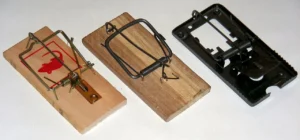
In some countries and states, glue traps are actually illegal or restricted because they’re considered inhumane. Even pest control companies are starting to move away from using them.
If you’re dealing with rats, snap traps or electronic traps are better choices. They kill instantly, which means the rat doesn’t suffer, and you don’t have to deal with the emotional burden of finishing the job yourself.
Still, a lot of people already have glue traps, or they’ve used them because they didn’t know about the problems. If that’s you, now you know what to do when you catch something.
What if the Rat is Still Alive but Seems Weak or Injured?
Sometimes you’ll find a rat that’s been stuck for a while and is barely moving. It might be breathing slowly, not struggling anymore, or showing signs of injury from trying to escape.
In this situation, the kindest thing to do is still to kill it quickly rather than trying to save it. A rat that’s this far gone probably won’t survive even if you manage to free it. It’s already going through massive stress, possible dehydration, and injuries.
Trying to nurse an injured wild rat back to health isn’t realistic for most people. Even if you wanted to try, you’d need specialized knowledge, equipment, and a lot of time. And at the end of all that, you’d still have a wild rat that you’d need to release somewhere.
It’s better to end its suffering quickly and humanely. Use one of the methods mentioned earlier (a quick blow to the head is still the fastest), and then dispose of the body properly.
How to Protect Yourself When Handling a Trapped Rat
Safety needs to be your top priority when dealing with a rat caught in a glue trap. These animals can carry serious diseases that you don’t want to catch.
Always wear thick gloves. Leather work gloves are best because they’re thick enough that a rat can’t bite through them. Disposable latex or nitrile gloves aren’t thick enough and a scared rat can definitely bite through them.
Don’t get your face close to the rat. They can scratch and bite, and you don’t want rat saliva or blood anywhere near your eyes, nose, or mouth. Keep your distance as much as possible.
If you’re going to kill the rat with a blow to the head, protect yourself from blood splatter. You can put the whole trap inside a heavy-duty plastic bag before you strike it. This contains everything and makes cleanup easier.
After you’re done handling the situation, throw away your gloves, wash your hands really well with soap and hot water, and disinfect any tools you used. Don’t touch your face until you’ve washed up completely.
What to Do if You Can’t Handle Dealing With the Trapped Rat
Not everyone can handle killing an animal or even dealing with a trapped rat. If you’re in this situation, you have a few options.
You can call a pest control company. They deal with this kind of thing all the time and they’ll come out and take care of it for you. There will be a service fee, but it’s worth it if you can’t do it yourself. Most companies will come pretty quickly because they understand the situation is urgent.
If you have a friend or neighbor who’s more comfortable with this kind of thing, you could ask them for help. Some people are just more able to handle it than others, and there’s no shame in asking.
Local animal control might help, but it depends on your area. Some will deal with pest animals, others won’t. It’s worth calling to ask.
Whatever you do, don’t just leave the rat stuck there. That’s the worst option for everyone involved. Even if it’s hard, you need to either take action yourself or get someone else to do it as soon as possible.
Why Glue Traps Might Catch Things You Didn’t Want to Catch
One of the problems with glue traps is that they’re not selective. They’ll catch anything that walks across them, which means you might end up with something other than a rat.
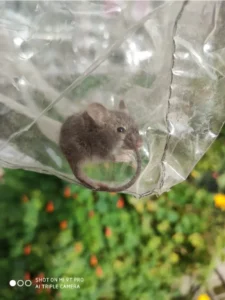
People have caught mice, birds, lizards, snakes, squirrels, and even their own pets on glue traps.
If you find something other than a rat stuck to your trap, the advice for freeing it is the same (use oil to break down the glue), but you’ll probably want to release it rather than kill it.
This is another reason why snap traps are often a better choice. They’re more selective because they’re sized for specific animals, and they usually only catch what you’re targeting.
If you do use glue traps, put them in places where only rats will find them. Don’t put them outside where birds might land on them, and keep them away from areas where pets or kids might touch them.
How Long Will a Rat Survive on a Glue Trap?
This is a question people ask when they’re trying to figure out how urgent the situation is. The answer is that it varies, but not in a good way.
A healthy rat might survive for a couple of days on a glue trap, but it will be suffering the entire time. Stress alone can kill a rat within 24 hours, even if it doesn’t die from dehydration or injuries.
Smaller, younger, or weaker rats might only last a few hours. Rats that injure themselves badly trying to escape could die even faster from blood loss or shock.
The point is, there’s no situation where leaving a rat on a glue trap longer is better. Whether it dies in a few hours or hangs on for a couple of days, it’s going through terrible suffering the whole time.
This is why timing matters so much. Check your glue traps at least twice a day if you have them set. Morning and evening checks are best. The sooner you find a caught rat, the sooner you can end its suffering.
Conclusion
Dealing with a rat caught in a glue trap is never pleasant, but it’s important to handle it quickly and humanely. The best option is to kill the rat as quickly as possible using a method like a swift blow to the head, then dispose of the body properly by double-bagging it and putting it in the trash.
If you can’t handle doing this yourself, call a pest control company or get help from someone who can. Don’t leave the rat stuck there to suffer. Whatever you decide, wear protective gloves, work quickly, and clean up thoroughly afterward.
For future pest control, consider using snap traps or electronic traps instead of glue traps. They’re more humane because they kill instantly, and you won’t have to deal with the difficult situation of deciding what to do with a live, stuck animal.

Hi, my name is Ezra Mushala, i have been interested animals all my life. I am the main author and editor here at snakeinformer.com.