
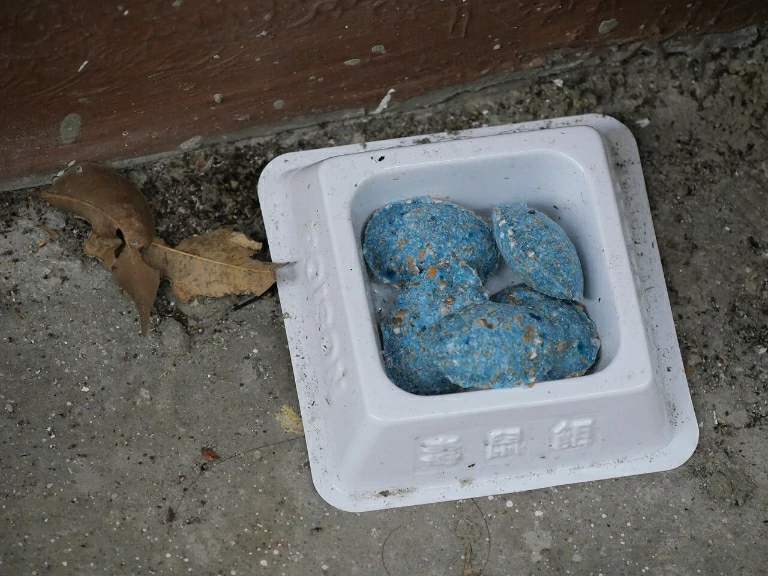
If you’ve got Tomcat rat poison in your garage, shed, or around your home, you might be wondering exactly how much active poison is packed into each block. This matters most if you have kids or pets around the house.
So how much bromethalin is actually in a block of Tomcat rat poison?
Most Tomcat bromethalin products contain 0.01% bromethalin by weight. This works out to about 2.84 mg of bromethalin per ounce of bait, on average. A 1 oz block contains roughly 2.84 mg, while a 4 oz block contains around 11.3 mg total.
That might sound like a small number, and in absolute terms, it is. But bromethalin is a genuinely potent poison, ounce for ounce.
Even small amounts can matter, especially for a small dog or cat. Let’s break down exactly what this means and why it’s worth understanding.
What Bromethalin Actually Is
Bromethalin is a non-anticoagulant rat poison. That means it doesn’t work by causing internal bleeding like older rat poisons do.
Instead, it messes with a rodent’s ability to produce energy at the cellular level. This leads to fluid buildup around the brain and spinal cord, a condition called cerebral edema.
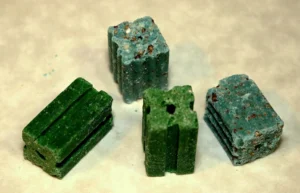
That term just means swelling caused by extra fluid pressing on brain tissue. This swelling is what ultimately kills the rodent.
Bromethalin has been used in rat poison since 1985. It was developed as an option for rats already resistant to older anticoagulant poisons like warfarin, which had become a growing problem for pest control by that point.
The Standard Concentration in Tomcat Products
Based on EPA registered product labels, most Tomcat bromethalin products use a 0.01% concentration of the active ingredient. This shows up consistently across their bait station blocks, place packs, and most bar bait formats.
A small number of Tomcat products use a higher 0.03% concentration instead. It’s always worth double checking the specific product label you have.
The percentage tells you what portion of the total bait weight is actual bromethalin. The rest is inactive ingredients, flavoring, and a bittering agent added to discourage human tasting.
Breaking Down the Actual Milligrams
Here’s where the math becomes genuinely useful. At a 0.01% concentration, one ounce of bait contains about 2.84 mg of bromethalin.
This figure comes directly from veterinary toxicology references. It matches what’s listed on EPA product labels too.
Using that figure, here’s what different common Tomcat block sizes work out to.
| Block Size | Approximate Bromethalin Content |
|---|---|
| 0.5 oz block | About 1.4 mg |
| 1 oz block | About 2.84 mg |
| 4 oz block | About 11.3 mg |
| 30 gram block | About 3.0 mg |
These numbers are estimates based on the standard 0.01% concentration. Always check your specific product’s label.
Tomcat sells several different product lines, and a few use the stronger 0.03% formulation instead.
Why This Number Actually Matters
Knowing the exact milligram content becomes genuinely important in one specific situation. Figuring out whether a pet has eaten a dangerous amount depends on it.
Veterinary toxicologists calculate risk based on milligrams of bromethalin per kilogram of body weight, not just how many blocks were eaten. This is exactly why a vet or poison control specialist will always ask how much bait is missing.
They won’t just ask whether your pet got into it. The actual dose matters far more than the fact of exposure alone.
How Much Is Dangerous for Dogs?
For dogs, published research gives a range of toxicity figures. The oral LD50, the dose that’s lethal to half of test subjects, has been reported anywhere between roughly 2.38 and 5.6 mg per kilogram of body weight.
The exact figure depends on the specific study. However, real world veterinary case records tell a more cautious story.
The ASPCA Animal Poison Control Center has documented deaths in dogs that ingested as little as 0.95 to 1.05 mg/kg. That’s well below the lab reported minimum lethal dose of 2.5 mg/kg.
Because of this gap between lab data and real cases, most vets take a conservative approach. ASPCA Poison Control generally recommends starting decontamination in dogs at doses as low as 0.1 mg/kg.
That’s far below what’s considered a guaranteed lethal amount. To put this in perspective, a small 10 pound dog could theoretically reach a concerning dose from eating just a handful of small bait cubes.
This is exactly why even a partially eaten block gets treated seriously by vets. It’s never brushed off just because the total dose seems small on paper.
How Much Is Dangerous for Cats?
Cats are notably more sensitive to bromethalin than dogs. The reported minimum lethal dose in cats sits at around 0.45 mg/kg.
That’s roughly half of what’s considered dangerous for dogs on a per kilogram basis. ASPCA case records have documented cats showing signs of toxicity after ingesting doses as low as 0.24 mg/kg.
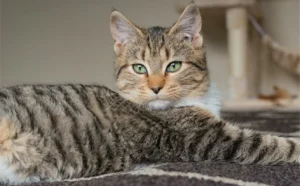
Given how small most cats are, this means a genuinely tiny amount of bait could be enough to cause a real problem. Sometimes just a small bite is all it takes.
Because of this heightened sensitivity, any known or suspected bromethalin exposure in a cat should be treated as an emergency, even if the amount seems tiny or the cat seems perfectly normal at first. Don’t wait to see if symptoms show up before calling your vet.
Why There’s No Simple Antidote
Unlike anticoagulant rat poisons, which can be treated with vitamin K1, bromethalin has no specific antidote. This is a major reason vets take a cautious, proactive approach whenever exposure is suspected.
Treatment instead focuses on limiting how much bromethalin gets absorbed. This often means inducing vomiting if caught early enough.
Activated charcoal usually follows, to help bind the remaining toxin in the gut. In more serious cases, hospitalization with IV fluids and monitoring for brain swelling becomes necessary.
There’s no way to reverse the poisoning once significant absorption has happened. This is exactly why catching exposure early makes such a massive difference in outcome.
Knowing the actual bromethalin content of your specific product matters here. It helps your vet estimate risk quickly, rather than guessing.
What Symptoms Look Like
Bromethalin poisoning symptoms can vary depending on how much was eaten. Higher doses tend to cause what’s called the convulsant syndrome.
This shows up faster and includes tremors, seizures, hyperactivity, and severe muscle rigidity. Lower doses often lead to a slower developing paralytic syndrome instead.
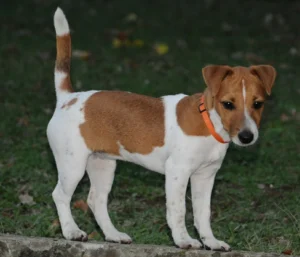
This can include hind leg weakness, wobbliness, and general depression. Sometimes it doesn’t show up for a day or two after exposure.
Cats tend to develop the paralytic form regardless of how much they’ve eaten. Dogs, on the other hand, can show either pattern depending on the dose.
Because of this delay in symptoms, it’s never safe to assume your pet is fine. That’s especially true with the paralytic form. A pet can seem okay in the first few hours and still be in real trouble.
What to Do If Your Pet Gets Into Tomcat Bait
If you know or suspect your pet has eaten any amount of Tomcat bromethalin bait, don’t wait for symptoms to show up. Call your vet, an emergency animal hospital, or an animal poison control hotline right away.
Try to figure out roughly how much bait is missing from the package or bait station. This genuinely helps guide treatment decisions, so it’s worth taking the extra minute to check carefully.
If possible, bring the packaging with you. It will have the exact active ingredient percentage listed on it.
Since bromethalin has no antidote, time matters more here than with many other types of poisoning. Quick action gives your vet the best chance of preventing serious absorption.
Ideally, that means acting within the first hour or two.
Keeping Bait Safely Out of Reach
Given how potent bromethalin is relative to its small physical size, proper placement matters a lot. Always use tamper resistant bait stations.
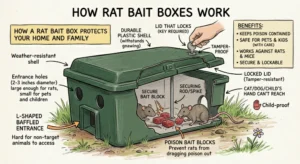
Place them somewhere pets and kids genuinely can’t access, not just somewhere that seems out of the way. Check bait stations regularly and consistently to track how much has been eaten.
This helps with pest control, and it also means you’d notice quickly if something seems off. If you ever find a bait station knocked open or damaged, treat it as a potential exposure.
The same goes for missing bait you can’t otherwise explain.
How Tomcat Compares to Other Bromethalin Brands
Tomcat isn’t the only brand using bromethalin, and it’s worth knowing what else is out there. Other common bromethalin based products include Talpirid mole bait, certain Motomco products, and various generic or store brand rat and mouse killers.
Most of these stick to the same standard 0.01% concentration, since this has become something of an industry norm for bromethalin baits. However, formulations and bait forms can vary quite a bit between brands, from soft bait and pellets to wax blocks and pastes.
The safest approach is always to check the specific label of whatever product is actually in your home. Don’t assume it matches another brand’s concentration.
Even products from the same manufacturer can vary between their different product lines.
How Fast Does a Rat Actually Dies From This Dose?
It’s worth understanding what happens on the rodent side of things too, since this explains why bromethalin is designed the way it is.
Unlike anticoagulant poisons, which usually take several days of repeated feeding, bromethalin is built so a rat picks up a lethal dose in a single feeding in most cases.
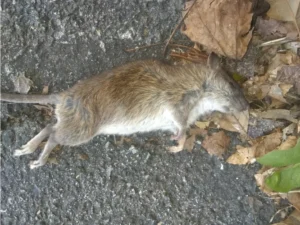
Once a rat eats a lethal dose, it typically stops eating within a day. This is a helpful side effect, since it means less bait gets eaten overall.
Death generally follows within 2 to 4 days, depending on the dose and the individual animal.
This delay is intentional. Rodents don’t associate their sickness with the bait they ate hours or days earlier, which helps prevent the bait shyness problem that affects some other rodenticide types.
Why Tomcat Uses This Specific Concentration
The 0.01% concentration isn’t random. It points to a careful balance that manufacturers and regulators have worked out over decades of use.
A higher concentration would kill rodents faster. But it would also increase the risk to non-target animals.
This includes pets and wildlife that might eat bait directly or scavenge a poisoned rodent. A lower concentration might be safer in isolated exposure cases, but it could reduce how reliably the bait kills the intended pest.
The EPA reviews and approves specific concentrations as part of the product registration process. This is exactly why you’ll see the same 0.01% figure show up again and again across different bromethalin products, not just from Tomcat but from competing brands too.
How to Read the Label on Your Specific Product
Since concentration can vary between Tomcat’s different product lines, knowing exactly where to look on the packaging can save you real time in an emergency. The active ingredient section is always listed near the front or side panel of the box, usually near the top.
Look for the word “Bromethalin” followed by a percentage, such as 0.01% or 0.03%. This percentage is the number you need for any dose calculation, whether you’re doing it yourself or relaying it to a vet.
The label will also list the net weight of the bait, either in ounces or grams, and sometimes both. Combining these two numbers, the percentage and the weight, is exactly what lets you or a vet calculate the actual milligram amount involved in an exposure.
Keep the box or a photo of the label somewhere accessible, ideally the same place you store the bait itself. In an emergency, being able to read off the exact numbers saves valuable time. That’s a real advantage compared to trying to remember or guess at the details under stress, when every minute genuinely counts.
Conclusion
A standard Tomcat bromethalin block at the common 0.01% concentration contains roughly 2.84 mg of bromethalin per ounce of bait. That works out to about 2.84 mg in a 1 oz block and around 11.3 mg in a full 4 oz block.
While that might sound like a small amount, bromethalin is potent enough that it matters a great deal for smaller animals. Dogs face real risk starting somewhere in the range of 1 to 2.5 mg per kilogram of body weight.
Cats are even more sensitive, with real world cases showing symptoms below 0.5 mg/kg. Since there’s no antidote for bromethalin poisoning, prevention and quick action are everything.
Keep bait in tamper resistant stations, and always check the actual label for your product’s specific concentration. Call your vet immediately if you ever suspect your pet has gotten into any of it, and keep the packaging on hand so you can give an accurate answer when it matters most.

Hi, my name is Ezra Mushala, i have been interested animals all my life. I am the main author and editor here at snakeinformer.com.