
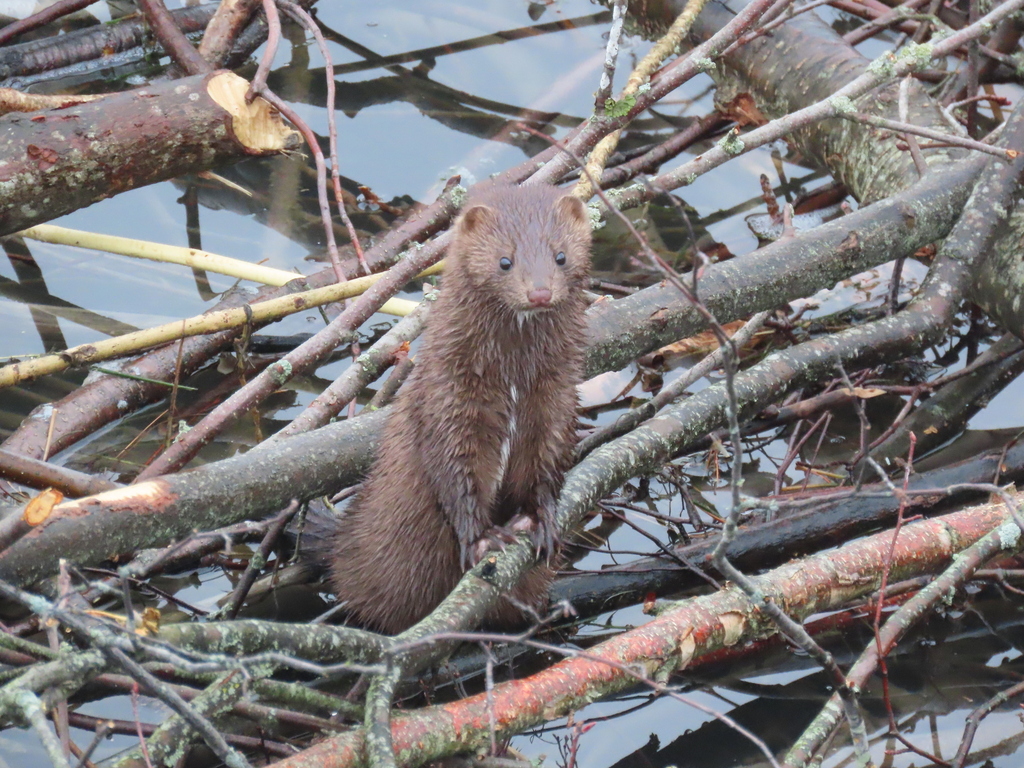
If you live near water or in rural areas, you might have minks around your property. These sleek, curious predators sometimes wander into areas where people have set rat traps.
Minks are bigger than rats but still small enough that you might worry about them triggering your traps. Will a rat trap kill a mink?
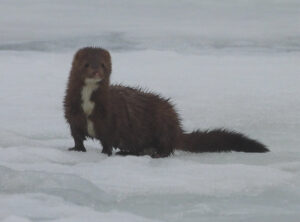
A standard rat trap won’t kill a mink. Minks are too large and sturdy for a rat trap to cause fatal injuries. A trap might hurt a mink’s paw or nose if triggered, causing pain and possibly minor injuries, but it won’t kill the animal. However, larger body-grip traps designed for minks and similar animals can definitely kill them.
Rat traps just don’t have enough force to kill an animal the size of a mink. The worst you’re looking at is an injured, angry mink, which brings its own set of problems.
But you still need to be careful about where you place traps if minks are in your area.
Size Difference Between Rats and Minks
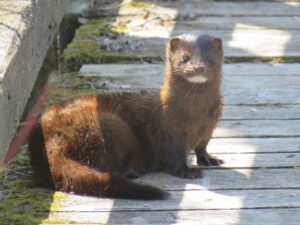
An adult rat weighs about 5 to 10 ounces. A mink, on the other hand, weighs anywhere from 1.5 to 3.5 pounds.
That’s a huge difference. A mink is roughly 5 to 10 times heavier than a rat, sometimes more.
Rat traps are designed to deliver enough force to break a rat’s neck or skull. That force is calibrated for a small rodent, not a medium-sized carnivore.
When something much larger triggers a rat trap, the force just isn’t sufficient to cause fatal damage.
How Much Force Do Rat Traps Produce?
A typical wooden or plastic snap trap produces about 5 to 8 pounds of force when it snaps shut.
Heavy-duty rat traps (the kind designed for large Norway rats) might produce up to 10 to 12 pounds of force.
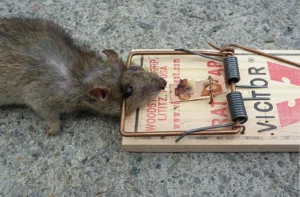
This is enough to instantly kill a rat by breaking its neck or crushing its skull. But minks have much thicker bones and tougher bodies.
To kill a mink, you’d need at least 40 to 60 pounds of force, maybe more. Rat traps don’t come close to that.
What Actually Happens If a Mink Triggers a Rat Trap
If a mink steps on a rat trap or puts its nose near the bait, the trap will spring just like it’s supposed to.
The metal bar will swing down and hit whatever part of the mink is in the way. Most likely, this will be a paw or the nose.
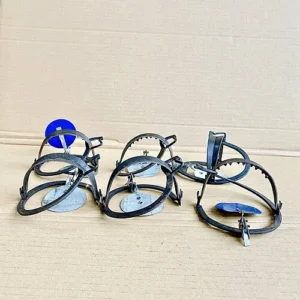
The mink will definitely feel pain. Getting hit by a metal bar hurts, even if you’re too big for it to cause serious damage.
The mink will probably jump back, make some distressed sounds, and then run away. It might have a bruise or a small cut, but nothing life-threatening.
Minks Are Tough Animals
Minks are predators. They hunt and kill prey that fights back. They’re built to take some punishment.
Their bones are dense and strong. Their skulls are thick enough to protect their brains from the kind of impacts they experience while hunting.
A rat trap hitting a mink’s paw is uncomfortable but not devastating. Think about hitting your hand with a ruler. It stings, but it doesn’t break anything.
The mink’s fur and tough skin also provide some protection. The impact is cushioned slightly compared to a bare-skinned animal.
Could a Rat Trap Injure a Mink?
Yes, but we’re talking minor injuries, not fatal ones. A rat trap could bruise a mink’s paw or cause a small cut on the nose.
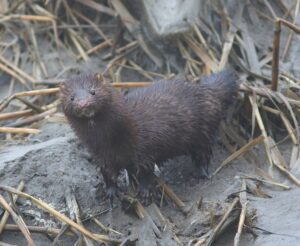
If the trap catches a mink’s toe at exactly the wrong angle, it might break the toe. This is painful and would affect the mink’s ability to hunt for a while, but it’s not fatal.
The most likely scenario is that the mink gets startled and scared, with maybe a small bruise or scrape. The mink will avoid that area in the future but will otherwise be fine.
What About Baby Minks?
Baby minks (called kits) are much smaller than adults. A newborn kit might only weigh 2 to 3 ounces.
At that size, a rat trap could potentially kill a kit. But it’s extremely unlikely for several reasons.
First, baby minks don’t leave the den until they’re about 6 to 8 weeks old. By that time, they weigh at least half a pound, which is still too big for a rat trap to kill.
Second, baby minks travel with their mother. If you see a small mink, there’s probably an adult nearby. And you definitely don’t want to hurt a baby mink with its protective mother around.
Third, minks are usually very cautious with their young. The mother teaches them to be wary of unfamiliar objects, which includes traps.
Traps That Can Kill Minks
While rat traps won’t kill minks, there are traps specifically designed for mink-sized animals.
Body-grip traps (also called Conibear traps) come in different sizes. The larger sizes (like the 110 or 120 models) are designed for minks, muskrats, and similar animals.
These traps use much more force than rat traps. They’re designed to catch the animal’s body and kill by crushing the chest or neck.
Leg-hold traps can catch minks but don’t usually kill them. The mink stays alive but trapped until someone checks the trap.
If you’re seeing signs of minks and you’re also using rat traps, make sure you’re using actual rat traps and not accidentally using mink-sized body-grip traps.
Why Would a Mink Go Near a Rat Trap?
Minks are carnivores. They eat fish, frogs, mice, rats, birds, and pretty much any small animal they can catch.
If you’ve baited your rat trap with something that smells good (meat, fish, peanut butter), a mink might be attracted to it.
Minks are also very curious. They investigate new objects in their territory, including traps.
Unlike rats, which are cautious and suspicious, minks are bold. They’ll approach a trap without the same level of wariness.
The Real Problem: An Angry Mink
The biggest issue isn’t whether the trap will kill the mink (it won’t). It’s what happens when you’ve got a hurt, angry mink on your property.
Minks are fierce for their size. They have sharp teeth and strong jaws. An injured mink that’s scared and in pain might be aggressive.

If the trap is still attached to the mink (which can happen if the bar catches on fur or claws), you’ve got a dangerous situation.
The mink might thrash around, potentially hurting itself more. It might also bite if you try to help.
What to Do If a Mink Gets Caught
First, keep your distance. Don’t approach an injured or trapped mink closely.
If the trap is on the mink but the mink has run off with it, call animal control. Don’t try to chase it down yourself.
If the mink is stuck near the trap, contact a wildlife rehabilitation center or animal control. They have the tools and experience to safely release the mink.
Don’t try to free the mink yourself unless you absolutely have to. Even small wounds from a mink bite can become infected, and minks can carry diseases.
Minks and Disease
Like many wild animals, minks can carry rabies, though it’s relatively rare in mink populations.
They can also carry other diseases and parasites that can affect humans and pets.
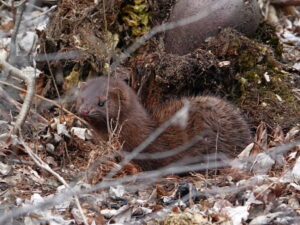
An injured mink is more likely to bite in self-defense, which increases your risk of exposure to whatever diseases it might carry.
This is another reason to call professionals rather than handling the situation yourself.
How to Prevent Minks From Triggering Your Rat Traps
Place traps in locations too small for minks to access. Minks can squeeze through surprisingly small spaces, but they’re still bigger than rats.
Use protective covers over your traps. Build a box with a small entrance (2 to 3 inches) that only rats can fit through.
Avoid using fish or meat-based baits if minks are in the area. Stick to peanut butter or other foods that attract rats but might be less interesting to minks.
Set traps inside buildings rather than outside. Minks are more likely to be encountered outdoors, especially near water.
Are Minks Actually a Problem?
Minks can occasionally be pests if they’re raiding chicken coops or eating ornamental fish from ponds.
But in general, minks are beneficial. They eat rats and mice, which is probably why you’re setting traps in the first place.
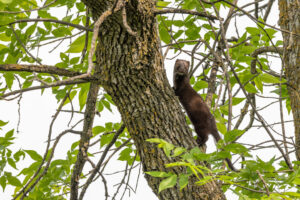
A mink passing through your property is actually helping control your rodent population naturally.
If you’ve got both rats and minks, the minks might solve your rat problem for you without any trapping needed.
Mink Behavior Around Traps
Minks are semi-aquatic and spend a lot of time near water. If your traps are far from streams, ponds, or wetlands, minks are less likely to encounter them.
They’re also mostly nocturnal, like rats. They’re most active at dawn and dusk.
Minks have territories that they patrol regularly. If one mink triggers a trap and gets hurt, it’ll probably avoid that area in the future.
But other minks passing through won’t know about the trap and might trigger it too.
Legal Considerations
In most places, it’s illegal to trap or harm minks without a proper trapping license and during the appropriate season.
Even if a mink accidentally triggers your rat trap, you could potentially face legal issues if someone reports it.

Wildlife officers take protection of fur-bearing animals seriously, especially species like minks that are trapped commercially.
If you’re in an area with minks, take precautions to avoid catching them in your rat traps, even accidentally.
Comparing Minks to Other Animals
Minks are similar in size to ferrets or small cats. None of these animals would be killed by a rat trap.
A rat trap might kill a mouse or chipmunk, but anything much bigger than a large rat is safe from fatal injury.
If you’re worried about cats, dogs, or other pets triggering rat traps, the same principle applies. They’ll get hurt but not killed.
The threshold for fatal force from a rat trap is roughly 1 pound. Animals heavier than that will survive, though they’ll be in pain.
Why Trap Design Matters
Cheap rat traps sometimes use less force than quality traps. These definitely won’t harm a mink beyond a minor sting.
Heavy-duty rat traps use more force but still nowhere near enough to kill a mink.
The design of the trap (wire bar, plastic bar, etc.) doesn’t change the outcome much. It’s all about the force, and no rat trap has enough.
Better Solutions for Both Rats and Minks
If you’ve got rats and minks in the same area, there are ways to target rats without risking minks.
Use enclosed bait stations that only small rodents can enter. These keep larger animals out entirely.
Electronic traps with small entrance holes work well. Minks can’t fit into the entrance tunnel.
Glue traps are terrible in general and even worse in areas with wildlife. A mink stuck to a glue trap is a nightmare situation for everyone.
What Trappers Use for Minks
Commercial fur trappers use body-grip traps specifically sized for minks. These are usually 110 or 120 Conibear traps.
They’re set in very specific locations where minks travel (near water, in culverts, along stream banks).
The traps are placed and baited in ways that target minks while avoiding other animals.
If you see a trap that looks like it could kill a mink, it’s probably not a rat trap. It’s a completely different type of trap set by a licensed trapper.
Conclusion
A standard rat trap won’t kill a mink. The animal is just too big and tough for a rat trap’s force to cause fatal damage.
At worst, a mink might get a bruised paw or a small cut from triggering a rat trap. It’ll be painful and the mink will avoid that spot in the future, but it’ll survive just fine.
If you’re setting rat traps in areas where minks live, take some precautions to keep them away from your traps. Use protective covers or place traps in locations minks can’t access.
And if you do accidentally catch or injure a mink, call professionals to handle it. These animals are protected by law in most places, and they can be dangerous when cornered or hurt.

Hi, my name is Ezra Mushala, i have been interested animals all my life. I am the main author and editor here at snakeinformer.com.