
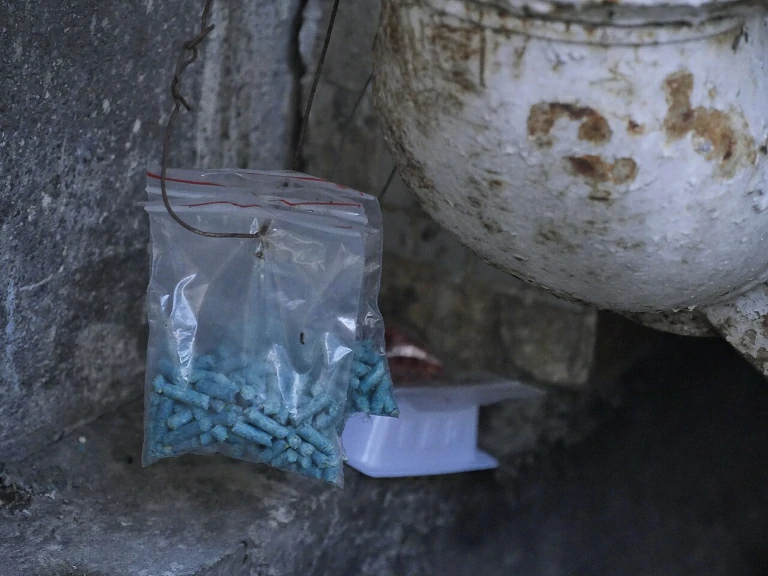
If you’ve looked at rat poison labels, you’ve probably seen brodifacoum and bromadiolone listed as the active ingredient. Both are common, both are strong, and both show up in products used by pest control companies across the US and Canada.
But they’re not identical. So what’s the real difference between brodifacoum and bromadiolone, and which one actually works better?
Brodifacoum and bromadiolone both kill rats by stopping blood from clotting, but brodifacoum is stronger and stays in the body longer. Bromadiolone still works well and clears out of the body a bit faster, which some people see as a safety advantage for pets and wildlife.
Neither poison is “weak,” and both are used heavily in real pest control work.
The difference comes down to potency, how long each one lingers in an animal’s system, and how that affects the risk to pets that might get into it.
Both Are Second-Generation Anticoagulants, Just at Different Strengths
Brodifacoum and bromadiolone belong to the same broad category of rat poison, called second-generation anticoagulants. This group also includes difenacoum and difethialone.
Second-generation simply means these poisons were developed after older ones, like warfarin, stopped working as well. Rats in some areas developed resistance to warfarin over time, so stronger compounds were created to get around that.
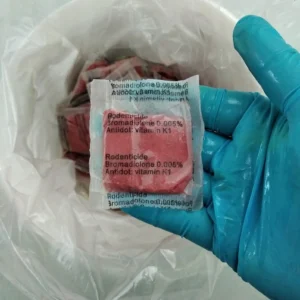
Both brodifacoum and bromadiolone work by blocking an enzyme called vitamin K epoxide reductase. This enzyme normally recycles vitamin K so the body can keep using it to make clotting factors.
Once that enzyme is blocked, the body runs out of usable vitamin K. Without it, blood can’t clot properly, and the animal eventually dies from internal bleeding.
This is the same basic mechanism as warfarin, just far more powerful. That’s why both of these poisons are sometimes called “superwarfarins.”
Brodifacoum Is the More Potent of the Two
If you’re comparing raw strength, brodifacoum wins. Research consistently shows it’s roughly 100 times more potent than warfarin, and it edges out bromadiolone in most comparisons too.
This matters because potency affects how much bait a rat needs to eat before the dose becomes lethal. A more potent poison needs a smaller amount to do the job.
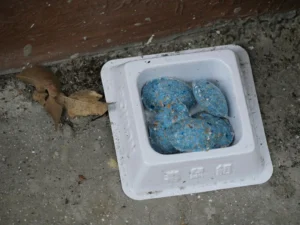
Brodifacoum’s higher potency also means it tends to work well against rodent populations that have started developing resistance to older poisons. That includes some populations that show partial resistance to bromadiolone itself.
Bromadiolone is still highly effective, though. It’s not a weak poison by any measure, and it remains one of the most widely used rodenticides in pest control work today.
The practical difference mostly shows up in tougher infestations or in areas where rodents have built up some resistance over time.
Bromadiolone Doesn’t Stick Around in the Body Quite as Long
This is where the two poisons really start to separate from each other, and it’s arguably the more important difference for anyone with pets.
Brodifacoum is known for staying in an animal’s liver and other tissues for a long time, often for several months after exposure.
Bromadiolone also persists in the body, but generally clears out somewhat faster than brodifacoum does. It’s still classified as persistent compared to first-generation anticoagulants, just less extreme than brodifacoum on that specific point.
This difference matters most when it comes to secondary poisoning, which happens when a predator or pet eats a rodent that has already eaten the bait.
Because brodifacoum sticks around longer, a hawk, owl, or cat that eats several poisoned rodents over time has a higher chance of building up a lethal dose.
Bromadiolone carries some of that same risk, just to a somewhat lesser degree.
How These Differences Compare Side by Side
Seeing the two poisons laid out next to each other makes the practical differences much easier to understand.
| Feature | Brodifacoum | Bromadiolone |
|---|---|---|
| Type | Second-generation anticoagulant | Second-generation anticoagulant |
| Relative potency | Higher | Slightly lower, still very potent |
| How it works | Blocks vitamin K epoxide reductase | Blocks vitamin K epoxide reductase |
| Time to death in rats | Around 4 to 7 days | Around 4 to 7 days |
| Persistence in body tissue | Very long, often months | Long, but generally shorter than brodifacoum |
| Secondary poisoning risk | Higher | Present, but somewhat lower |
| US consumer availability | Restricted to professionals since 2011 | Restricted to professionals since 2011 |
| Antidote | Vitamin K1 | Vitamin K1 |
Both poisons share the same treatment approach if a pet is exposed. That’s a helpful thing to know even if you’re not sure which one was actually used.
Symptoms Look the Same in Pets, Regardless of Which One Caused Them
Both poisons work through the same basic mechanism. Because of that, the warning signs in a poisoned dog or cat look almost identical no matter which one is involved.
According to the Merck Veterinary Manual, signs of anticoagulant rodenticide poisoning can include weakness, pale gums, coughing, labored breathing, and bleeding from the gums or nose. Blood may also show up in urine or stool.

Symptoms typically don’t show up for several days after exposure, since both poisons work slowly by design. This delay is actually intentional in both compounds, since it prevents rats from associating the bait with feeling sick.
That delay is exactly why waiting for symptoms before contacting a vet is risky. By the time your pet looks sick, the internal damage has usually been building for days already.
If you know or suspect your dog or cat got into rat poison of either kind, don’t wait to see what happens. Call your veterinarian or a pet poison hotline right away.
Which One Is Actually Used More in the US and Canada?
Both products are common. They tend to show up in slightly different situations, though, depending on the size of the infestation and who’s doing the pest control work.
Bromadiolone is often the go-to choice for general pest control work, including many of the bait stations set up by licensed exterminators around homes and businesses.
Brodifacoum tends to get reserved for tougher jobs, like large infestations or situations where rodents have shown resistance to other products.
Since 2011, neither one has been sold directly to consumers in stores across the US.
Both are restricted to licensed pest control professionals, largely because of the same concerns: accidental exposure in children, poisoning in pets, and harm to wildlife through secondary poisoning.
In Canada, similar restrictions apply, with both products classified for use mainly by licensed applicators rather than sold over the counter for home use.
So Which One Actually Works Better?
This depends on what “better” means to you. If you’re only measuring raw killing power, brodifacoum comes out ahead due to its higher potency and effectiveness against resistant rodent populations.
If you’re weighing safety around pets and wildlife, bromadiolone has a slight edge, since it doesn’t linger in the body quite as long as brodifacoum does.

For most everyday pest control situations, either one gets the job done.
Pest control professionals often choose based on the specific infestation, any known resistance issues in the area, and local regulations, rather than picking one as a universal favorite.
Neither poison is something to use casually around a home with pets. Both require the same level of caution, and both need the exact same emergency response if a pet gets into them.
Why Rodent Resistance Changes Which Poison Gets Used
Resistance is a big part of why two different second-generation poisons even exist in the first place, so it helps to understand how that actually happens.
Rat and mouse populations can develop a genetic resistance to anticoagulant poisons over many generations. This isn’t the rats getting smarter or more cautious.
It’s a real biological change in how their bodies process the poison, sometimes involving mutations that make their version of the vitamin K epoxide reductase enzyme less sensitive to being blocked.
Warfarin resistance was actually the whole reason second-generation anticoagulants like brodifacoum and bromadiolone were developed in the first place, back in the 1970s.
Since then, some rodent populations have started showing partial resistance to bromadiolone too, especially in areas where it’s been used heavily for a long time without rotation.
This is part of why pest control professionals often switch between different active ingredients rather than using the same one indefinitely. Rotating poisons makes it harder for any single resistance trait to spread through a local rodent population.
Brodifacoum tends to remain effective even against rats that show some resistance to bromadiolone, which is one reason it gets reserved for tougher infestations instead of being used everywhere as a default.
The Regulatory History Behind Today’s Restrictions
Both of these poisons went through the same regulatory journey in the US, and knowing that history helps explain why you can’t just buy them off a store shelf anymore.
The EPA began looking closely at rodenticide safety back in the late 1990s, largely driven by reports of children accidentally getting into bait products left around homes.
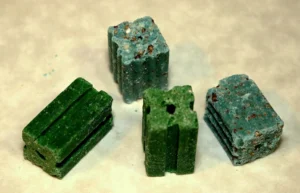
Over time, the agency’s focus expanded to include pet poisonings and the harm these products were causing to wildlife through secondary poisoning.
In 2008, the EPA issued a formal risk mitigation decision covering ten different rodenticide active ingredients, including both brodifacoum and bromadiolone.
That decision set new rules requiring tamper-resistant bait stations for any consumer product. It eventually led to second-generation anticoagulants being pulled from general retail shelves entirely by 2011.
Today, both brodifacoum and bromadiolone are still legal and still widely used, just through licensed pest control companies rather than direct sales to homeowners.
Canada has followed a broadly similar path, with health and pest control regulators there also limiting general consumer access to the strongest anticoagulant compounds while still allowing professional use.
What to Do If Your Pet Gets Into Either One
Since both poisons cause the same type of harm and respond to the same treatment, the steps you take are identical regardless of which active ingredient is on the label.
If you catch your pet in the act, or find chewed packaging or a damaged bait station, treat it as a real emergency. Don’t wait to see if symptoms develop first.
Call your vet or a pet poison hotline immediately and describe exactly what happened. If treated early enough, a vet can sometimes induce vomiting or use activated charcoal. This can stop much of the poison from ever being absorbed in the first place.
If some time has already passed and symptoms have started, your vet will likely begin vitamin K1 treatment, sometimes alongside a blood transfusion in more serious cases.
Vitamin K1 treatment for either poison usually needs to continue for several weeks, since both compounds stay active in the body long after the first dose.
Bloodwork is typically rechecked after treatment ends to make sure clotting has returned to normal before stopping the medication for good.
How to Tell Which One a Product Actually Contains
If you’ve got rat poison at home already, or a pest control company has set bait around your property, it’s worth actually checking which of the two you’re dealing with.
Every registered rodenticide product in the US carries an EPA registration number, along with a list of active ingredients printed directly on the label or the safety data sheet that came with it.
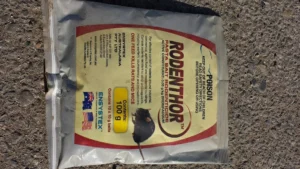
Look for the words “brodifacoum” or “bromadiolone” specifically. They’re usually listed near the top of the ingredients section along with a percentage, something like 0.005 percent, which shows how concentrated the active ingredient is in the bait.
If you’re not able to find the packaging, or a pest control company handled the placement, don’t hesitate to just ask them directly which active ingredient they used and where they placed it.
Having this information ahead of time matters more than it might seem. If your pet ever gets into the bait, being able to tell your vet exactly which poison was involved can speed up treatment and remove some guesswork from an already stressful situation.
It’s a small thing to check now, but it can genuinely make a difference later if there’s ever an emergency involving a pet you care about.
Conclusion
Brodifacoum and bromadiolone are both second-generation anticoagulant rodenticides. They kill rats the same basic way, by blocking the body’s ability to use vitamin K and causing fatal internal bleeding over several days.
Brodifacoum is the more potent of the two and stays active in the body longer. That makes it more effective against tougher infestations, but it also raises the risk of secondary poisoning in pets and wildlife.
Bromadiolone is still highly effective, just with a somewhat shorter window of persistence in the body.
For pest control purposes, both get real results, and the choice usually comes down to the specific infestation rather than one poison being clearly superior to the other.
For pet owners, the most important thing isn’t which one is more dangerous on paper. It’s knowing that both require the same fast response if your dog or cat ever gets into them, since delayed symptoms make early action the biggest factor in a good outcome.

Hi, my name is Ezra Mushala, i have been interested animals all my life. I am the main author and editor here at snakeinformer.com.