
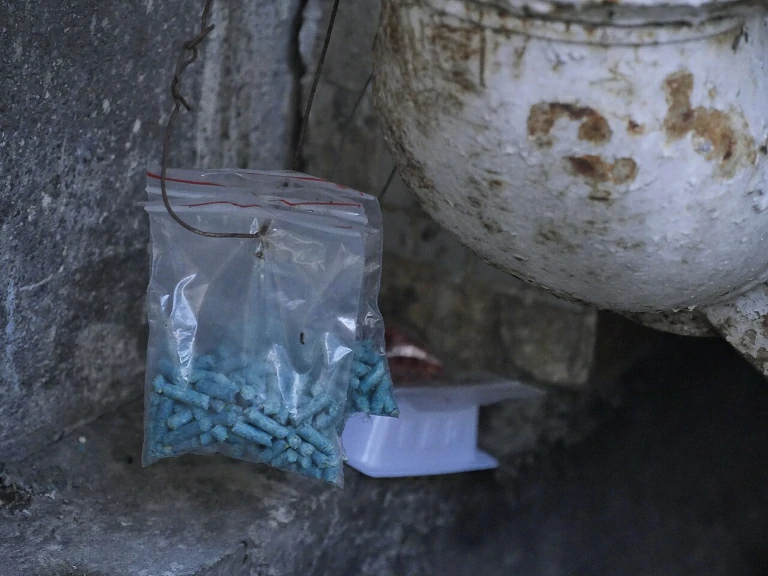
If you’ve been comparing rat poisons, you’ve probably run into these two names. Both are anticoagulant rodenticides, meaning they kill by stopping a rat’s blood from clotting properly.
But they’re not the same. The differences actually matter for how well they work.
So what’s the real difference between bromadiolone and diphacinone rat poison? And which one actually works better?
Bromadiolone is a second generation anticoagulant that can kill a rat with a single feeding, usually within 1 to 5 days. Diphacinone is an older, first generation anticoagulant that needs multiple feedings and typically takes 5 to 7 days to work.
In other words, bromadiolone tends to win on raw power. Diphacinone wins on being more widely available and a bit gentler on the environment overall.
Let’s get into exactly why that is.
What Makes Something First or Second Generation
Anticoagulant rat poisons get grouped into two generations. Understanding this grouping is the key to understanding everything else about these two products.
First generation anticoagulants, like diphacinone and warfarin, came first. These older poisons need to build up slowly in a rat’s system over several days of feeding before they become lethal.
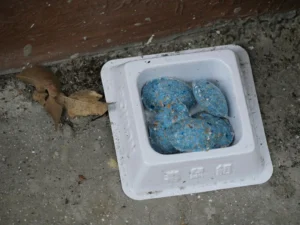
A rat has to keep coming back to the bait multiple times to build up a fatal dose. Second generation anticoagulants, like bromadiolone and brodifacoum, were developed later.
They came about specifically because rat populations started developing genetic resistance to the older first generation products. Second generation poisons are much stronger in almost every practical sense.
They bind more tightly to the enzyme system a rat’s body needs to make clotting agents. That means a single feeding is often enough to deliver a lethal dose.
How Bromadiolone Works
Bromadiolone is a second generation anticoagulant. It’s sometimes nicknamed a “super warfarin” because of how much stronger it is compared to the original anticoagulant poison.
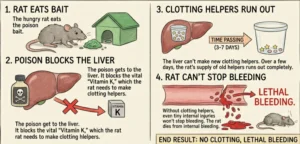
It blocks a rat’s ability to recycle vitamin K, which the body needs to produce blood clotting factors. Without that recycling process working, clotting factors slowly run out.
The rat eventually dies from internal bleeding as a result. What makes bromadiolone stand out is its potency.
In rat studies, its LD50 sits at roughly 0.56 to 1.31 mg per kilogram of body weight. The LD50 is just the dose that kills half of a test population, and this is an extremely small amount.
This is why bromadiolone is considered a single-feed poison. A rat that eats enough in just one visit to the bait can end up with a lethal dose.
Death typically follows somewhere between 1 and 5 days later. Bromadiolone also sticks around in the body a long time.
Studies have found its half-life during the slower elimination phase can stretch to around 170 days. That means it takes a long time for the body to fully clear it out.
How Diphacinone Works
Diphacinone works through the same basic mechanism. It blocks vitamin K recycling and stops blood from clotting.
However, it’s a first generation anticoagulant, which makes it noticeably weaker overall. Because of this, diphacinone usually needs a rat to feed on the bait multiple times over several days before a lethal dose builds up.
Death typically happens within 5 to 7 days of continued feeding. Diphacinone doesn’t stick around in the body nearly as long as bromadiolone does.
Its half-life is generally estimated at somewhere around 3 to 20 days, depending on the species and the study. This shorter half-life is actually one of diphacinone’s real advantages.
It breaks down in the environment more quickly. That lowers the risk of it building up in predators that might eat a poisoned rat.
Bromadiolone vs Diphacinone: Side by Side
| Feature | Bromadiolone | Diphacinone |
|---|---|---|
| Generation | Second generation | First generation |
| Feeding required | Single feeding often lethal | Multiple feedings usually needed |
| Time to death | 1 to 5 days | 5 to 7 days |
| Relative potency | Very high | Lower |
| Half-life in body | Up to around 170 days | Roughly 3 to 20 days |
| Secondary poisoning risk | Higher | Lower |
| Consumer availability in the US | Restricted, professional use only | Still available to homeowners |
| Best suited for | Fast knockdown, tougher infestations | General home use, lower risk situations |
Which One Is Actually Stronger?
If we’re just talking about raw toxicity and speed, bromadiolone wins clearly. Its potency and single-feed design make it far more likely to kill a rat quickly, even one that only takes a small taste of the bait.

Diphacinone, by comparison, is considered one of the milder anticoagulants. It’s still effective, but it takes longer and needs more consistent feeding to build up a lethal dose.
This is a big reason bromadiolone became popular for tougher infestations. It’s especially useful when rats had already built up resistance to older, weaker poisons like warfarin or diphacinone.
Which One You Can Actually Buy?
Here’s where things get practical for most people. In the United States, the EPA restricted the sale of second generation anticoagulants like bromadiolone to licensed pest control professionals back in 2008.
This means homeowners generally can’t walk into a hardware store and buy bromadiolone bait anymore. It’s still used heavily by professionals, just not sold directly to the public in most consumer products.
Diphacinone wasn’t included in that restriction. As a first generation anticoagulant, it’s still sold directly to consumers in the US and Canada, often under various store and hardware brand names.
So for most homeowners dealing with a rat problem on their own, diphacinone is actually the more realistic option. It’s simply the one you can legally buy off the shelf.
Which One Is Safer for Pets and Wildlife?
This is where diphacinone pulls ahead in a meaningful way. Because bromadiolone is so potent and stays in the body for so long, it carries a higher risk of secondary poisoning.
Secondary poisoning happens when a predator eats a rodent that’s already carrying the poison in its system. Owls, hawks, foxes, and family pets can all be at risk this way.

Since bromadiolone lingers in tissue for a long time, animals that eat poisoned rats can end up with a real buildup of the toxin themselves. Diphacinone’s shorter half-life means it breaks down and clears out faster.
This generally makes it a somewhat lower risk option for wildlife that might scavenge on a poisoned rat. That said, neither poison is completely risk free.
Both can cause serious harm to a dog or cat that eats bait directly. Both poisonings are treatable too, with the same antidote, vitamin K1, if caught in time.
Which One Should You Actually Use?
If you’re a homeowner dealing with a typical rat or mouse problem, diphacinone is likely your only legal option between the two. It works well for most situations, especially if your local rat population hasn’t developed resistance to first generation anticoagulants.
If you’re dealing with a severe infestation, or rats that don’t seem to respond to standard bait, that’s usually a sign it’s time to call a licensed pest control professional. They have access to bromadiolone and other second generation products that can handle tougher cases.
Trying to track down bromadiolone through unofficial channels isn’t a good idea at all. Beyond likely being illegal for personal use in your area, its strength makes it genuinely riskier to use. Without proper training and placement, that risk climbs even higher.
How Rat Resistance Changes the Picture
One more thing worth knowing is that rat resistance varies a lot by region. In some parts of the US, local rat populations have built up real resistance to first generation anticoagulants like diphacinone, simply from decades of exposure.

In these areas, diphacinone may perform poorly even when used correctly, since some rats can survive doses that would easily kill a non-resistant rat. If you’ve tried diphacinone bait consistently and aren’t seeing results, resistance could be part of the reason.
This is exactly the kind of situation where calling in a professional with access to bromadiolone makes a real difference. A pest control company can also test for resistance in your area and recommend the right approach.
What About Cost and Ease of Use?
Diphacinone products tend to be cheaper and easier to find. They’re sold in most hardware stores, garden centers, and online retailers across the US and Canada.
Bromadiolone, being restricted to professionals, usually comes bundled into the cost of a pest control service rather than sold as a standalone product.
For a small, early stage rat problem, the lower cost and easy access of diphacinone makes it the sensible first step. For anything beyond that, a professional visit is often worth the cost.
It pays off both in effectiveness and in proper, safe handling of a stronger poison.
How Canadian Rules Compare to the US
Canada has taken a similar approach to the US, though the details differ a bit. Health Canada’s Pest Management Regulatory Agency has also moved to restrict second generation anticoagulants, including bromadiolone, from general consumer use in many product formats.

Like in the US, this mainly affects outdoor, agricultural, and certain bulk uses. It pushes the strongest products toward licensed applicators instead of regular shoppers. First generation anticoagulants like diphacinone remain more widely available to Canadian consumers, similar to the pattern south of the border.
If you’re in Canada and shopping for rat poison, you’ll likely find the same general split as in the US.
You’ll typically see diphacinone and other first generation options sitting on store shelves, with bromadiolone reserved mostly for pest control professionals to use on your behalf.
Conclusion
Bromadiolone and diphacinone are both anticoagulant rat poisons, but they sit on opposite ends of the anticoagulant spectrum. Bromadiolone is a powerful second generation poison that can kill with a single feeding, usually within 1 to 5 days.
However, it’s restricted to professional use in the US due to its strength and higher risk to wildlife. Diphacinone is an older, first generation poison that takes longer and needs multiple feedings.
Still, it’s legally available to homeowners and carries a somewhat lower risk of secondary poisoning. For most everyday rat problems, diphacinone is the practical choice simply because it’s the one you can buy.
For serious or resistant infestations, bringing in a licensed professional who can use bromadiolone is usually the better path. Whichever one you’re dealing with, always keep bait in a tamper resistant station.
Keep it well away from kids and pets, and contact a vet right away if you ever suspect a pet has gotten into either product.

Hi, my name is Ezra Mushala, i have been interested animals all my life. I am the main author and editor here at snakeinformer.com.