
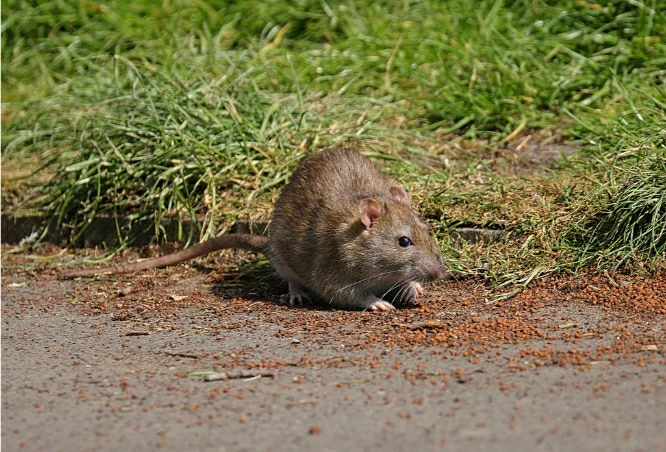
If you’re dealing with a rat problem, you might want a solution that gets the job done without causing needless suffering. Poison isn’t a clean or instant fix, and different types cause very different experiences for the animal that eats them.
So which rat poison, if any, could actually be called humane?
No rat poison is truly painless or instant. Among common options, cholecalciferol and zinc phosphide are generally less prolonged than anticoagulants. Many veterinary and welfare groups argue no poison is fully humane, and recommend non-lethal methods instead.
That second point matters as much as the first. Before you settle on “the most humane poison,” it’s worth understanding why so many experts push back on the question itself.
Why “Humane” Is a Hard Word to Use Here
Humane generally means causing the least possible pain, fear, and distress. For a method to qualify, death needs to be fast, and the animal needs to lose consciousness quickly.
Almost no rat poison meets that bar cleanly. Even the fastest acting types still take hours, not seconds, and most take days.
The American Veterinary Medical Association has acknowledged in its own guidelines that poison baits raise real welfare concerns.
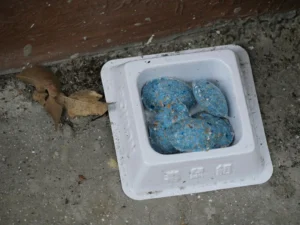
Their concerns include the severity and duration of symptoms an animal experiences before death, and the psychological toll on anyone who witnesses a poisoned animal suffering.
A widely cited peer-reviewed study on rodent pest control, published in the journal Animal Welfare, reached a similar conclusion.
It found that anticoagulant poisons, the most commonly used type, can cause distress, disability, or pain for several days before death actually occurs.
This is why groups like the Animal Welfare Institute argue that poisoning is never truly humane, no matter which active ingredient you choose.
Their position is that prevention and exclusion are the only methods that avoid animal suffering entirely, since they stop the problem before it starts.
With that context in mind, it’s still useful to compare how different poison types affect an animal.
Some genuinely cause a shorter and less severe process than others, even if none of them are painless.
Comparing Rat Poison Types by Welfare Impact
| Poison Type | Time to Death | What the Animal Experiences | Welfare Concerns |
|---|---|---|---|
| First generation anticoagulants | 4 to 7 days | Weakness, internal bleeding, gradual decline | Long, drawn out process |
| Second generation anticoagulants | 4 to 7 days | Same as above, higher bait consumption before death | Long process, plus high secondary poisoning risk |
| Zinc phosphide | Hours | Respiratory distress, vomiting, organ failure | Fast, but distressing symptoms while it acts |
| Cholecalciferol | 2 to 4 days | Lethargy progressing to kidney failure | Shorter than anticoagulants, but not painless |
| Bromethalin | 1 to 2 days | Weakness, tremors, paralysis | Relatively fast, but visibly distressing symptoms |
| Strychnine | Under 1 hour | Violent muscle convulsions | Extremely fast, but ranked among the worst deaths |
As this table shows, faster isn’t automatically more humane.
Strychnine kills the quickest of any option here, but the convulsions it causes are considered severe enough that most researchers rank it among the worst choices, not the best.
Why Anticoagulants Are Often Seen as Less Humane
Anticoagulants are the most widely used rat poison today, but they’re also the type most criticized on welfare grounds.
The core issue is time. Death from internal bleeding typically takes four to seven days.
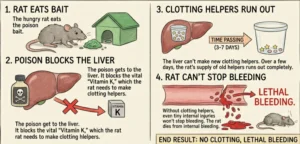
During that stretch, the animal experiences progressive weakness and discomfort as its body slowly loses the ability to clot blood.
Because the process is gradual, the rodent doesn’t lose its appetite or become suspicious of the bait.
That’s actually why anticoagulants work so well as a pest control tool in the first place.
But this same trait means an animal can keep functioning, and suffering, for almost a week before death finally occurs.
Second generation anticoagulants make this worse in one specific way. They’re potent enough to kill after a single feeding, but death still takes days to actually happen.
Because of that delay, a rodent often keeps eating the bait during that window, well past what was needed to kill it.
This leads to a buildup of poison in its body far beyond a lethal dose, which some researchers argue may extend or intensify the animal’s decline.
Why Zinc Phosphide and Cholecalciferol Are Often Ranked Higher
Zinc phosphide works differently than anticoagulants. It releases toxic phosphine gas inside the animal’s stomach, leading to organ failure within hours rather than days.
The shorter timeline is generally seen as a welfare improvement over anticoagulants, since it reduces the number of days an animal spends in decline.
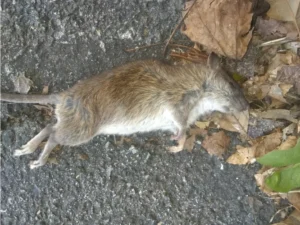
That said, the symptoms during those hours, including respiratory distress and vomiting, are still unpleasant.
Zinc phosphide also has no antidote, which matters if a pet gets into it by accident.
Cholecalciferol sits somewhere in between. It typically causes death within two to four days as calcium levels build to toxic levels in the blood.
This is shorter than the anticoagulant timeline, though the process still involves several days of illness before death.
Why Bromethalin Is a Mixed Case
Bromethalin acts on the nervous system rather than the blood, and death usually occurs within one to two days.
That timeline is faster than anticoagulants, which some view as a welfare advantage.
However, the visible symptoms, including tremors, weakness, and paralysis, are distressing to witness, and very likely to the animal experiencing them too.
Like zinc phosphide and cholecalciferol, there’s no antidote for bromethalin. That adds risk if your pet or another animal gets into it by mistake.
Why Strychnine Is Widely Considered the Least Humane
Strychnine kills faster than any other rodenticide discussed here, sometimes in under an hour. But speed alone doesn’t make something humane.
Strychnine blocks a chemical in the spinal cord that normally calms nerve signals.
Without it, muscles contract uncontrollably, leading to severe, repeated convulsions until the animal dies from exhaustion or an inability to breathe.
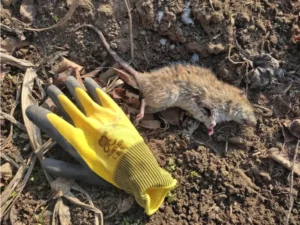
Researchers and veterinary groups widely regard this as one of the more distressing ways an animal can die from poisoning, despite how quickly it happens.
Because of this, and because it’s dangerous to nearly everything that might eat it, strychnine is tightly restricted today.
You’re unlikely to find it available to regular consumers in the U.S. for this reason.
What Animal Welfare Groups Actually Recommend
Given how limited the “humane” options really are, many welfare organizations steer away from ranking poisons altogether.
Instead, they point you toward methods that avoid killing rodents through prolonged suffering in the first place.
Exclusion tops nearly every list. Sealing entry points, repairing gaps in your foundation, and using wire mesh on vents keeps rodents from getting inside to begin with.
- Snap traps, when used correctly, are generally considered more humane than poison.
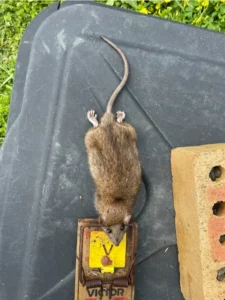
They cause an immediate death rather than a delayed one, as long as the trap is properly placed and triggers correctly.
- Removing food and water sources reduces the reason rodents show up in the first place.
Sealed containers, cleaned up spills, and secured garbage all make your space less appealing to them.
- Habitat modification, like clearing brush piles and woodpiles away from your house, removes shelter that rodents rely on to nest and hide from predators.
These methods don’t just avoid the ethical concerns tied to poison.
They also sidestep the risk of secondary poisoning to pets, wildlife, and predators that a rodenticide would otherwise create.
If You Do Choose to Use Poison
If exclusion and trapping haven’t solved the problem, or you’re facing a larger infestation, using poison responsibly can at least reduce unnecessary suffering and risk to other animals.
Choosing a product with a known antidote, like a first generation anticoagulant, matters here.
It means a vet can treat an accidental pet exposure more effectively than with a poison that has no antidote at all.
Using a locked, tamper resistant bait station reduces the odds of a pet, child, or non-target wildlife species getting into the poison directly.
Checking regularly for and removing dead rodents lowers the risk of secondary poisoning to predators and scavengers that might otherwise eat them.
Following label instructions exactly, including where and how much bait to place, helps you avoid using more poison than necessary to solve the problem.
What About Live Trapping and Relocation?
Some people assume live trapping and releasing a rat elsewhere is automatically the most humane option, but this isn’t quite as simple as it sounds.
Rats are territorial animals, and releasing one into unfamiliar territory often means it struggles to find food, water, and shelter quickly enough to survive.
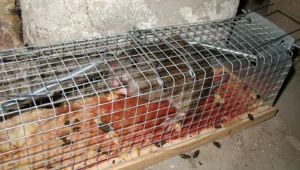
Studies on relocated rodents have generally found high mortality rates after release, since the animal has to compete with an existing, established population in whatever area it lands in.
In many states, it’s also illegal to relocate wildlife, including rats, to a new area, since this can spread disease or throw off local ecosystems.
If you’re set on a non-lethal approach, prevention and exclusion remain far more reliable than live trapping and release.
That’s true both for effectiveness and for the animal’s actual chances of survival once it’s let go somewhere new.
How This Compares Across Different Countries
If you’re reading this from Canada, the UK, or Australia, the general welfare picture is similar, even though specific product availability differs.
Regulators in all of these countries have moved to restrict the most potent anticoagulants.
Both secondary poisoning risk and welfare concerns have driven this shift, following research much like the studies cited above.
Animal welfare organizations in each country, including the RSPCA in the UK and Australia, have taken public positions similar to their American counterparts.
They favor prevention and exclusion over poison whenever it’s practical to do so.
Getting Trapping Right Actually Matters
Since snap traps come up as the more humane lethal alternative, it’s worth knowing what separates a trap that works well from one that causes unnecessary suffering.
- Using the correct trap size for the animal matters more than people expect.
A mouse-sized trap used on a rat often just injures it rather than killing it outright, which defeats the entire purpose of choosing a trap over poison.
- Placement along walls and travel paths, rather than out in open floor space, makes a real difference.
Rats naturally travel along edges rather than through open areas, so a trap set against a wall is far more likely to trigger the way it’s designed to.
- Checking traps daily is important too, both to reset ones that have been triggered and to avoid leaving an injured animal in distress for longer than necessary.
Glue traps are worth mentioning here as an option to avoid.
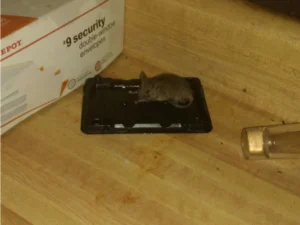
Unlike snap traps, they don’t kill the animal at all, and instead leave it stuck and struggling, sometimes for days.
Nearly every welfare organization considers this one of the least humane methods available, arguably worse than most poisons on this list.
If you do go the trapping route, stick with a well placed, correctly sized snap trap.
Checked daily, it remains one of the more humane options for lethal rodent control that’s actually practical for most homeowners to use themselves.
What “No Antidote” Actually Means for You
You’ll notice zinc phosphide, cholecalciferol, and bromethalin all come up as having no antidote.
It’s worth understanding what that actually means in a real emergency, since it changes how urgently you need to act.
With anticoagulant poisoning, a vet can give vitamin K1, which directly reverses the effect and restores your pet’s ability to clot blood normally.
Treatment can take days to weeks, but the outcome is generally good if you catch it in time.
Without an antidote, treatment for the other poison types depends entirely on how quickly you catch the exposure.
If a vet sees your pet within an hour or two of ingestion, they may be able to induce vomiting and give activated charcoal to limit how much gets absorbed.
Past that window, treatment becomes purely supportive.
This means the vet manages symptoms like seizures, kidney failure, or breathing trouble as they appear, without a way to reverse the underlying cause.
This is exactly why speed matters so much if you suspect your pet got into rat poison of any kind.
Even with anticoagulants, faster treatment means less internal damage before the vitamin K1 has a chance to work.
Keep the number for the ASPCA Animal Poison Control Center or a similar hotline somewhere easy to find.
Save your regular vet’s number too, so you’re not searching for either during an actual emergency.
Cost Matters
Cost shouldn’t be the deciding factor in an ethical question like this one, but it’s realistic to mention since it does affect what people actually choose.
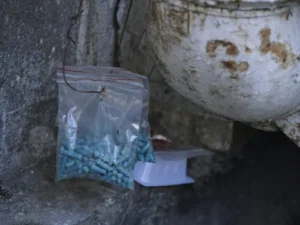
First generation anticoagulants and bromethalin products tend to be the cheapest and most widely available at any hardware store.
Snap traps are even cheaper up front, though they take more of your time to place and check regularly.
Professional pest control services cost more, but they bring real advantages.
Better bait placement, proper exclusion work, and ongoing monitoring are hard for a homeowner to easily replicate alone.
For a serious infestation, that added cost can mean a faster and more humane resolution than repeated do-it-yourself attempts that drag the problem out for weeks or months.
Conclusion
There isn’t a rat poison that qualifies as fully humane in the strict sense of causing quick, painless death.
Every option involves some period of suffering, whether that’s days of internal bleeding or a fast but violent reaction like strychnine.
Among the choices available, zinc phosphide and cholecalciferol tend to involve a shorter timeline than anticoagulants.
Strychnine, despite being the fastest, is widely viewed as the most distressing method of all, so speed alone shouldn’t be your deciding factor.
Given these limits, many veterinary and animal welfare organizations recommend avoiding poison altogether.
Exclusion, trapping, and removing the food and shelter that draw rodents in tend to work just as well without the same ethical weight.
If poison ends up being necessary in your situation, a few habits reduce unnecessary harm.
Choose a product with a known antidote, use a secure bait station, and remove dead rodents promptly, both for the animal’s sake and for everything else living around it.

Hi, my name is Ezra Mushala, i have been interested animals all my life. I am the main author and editor here at snakeinformer.com.