
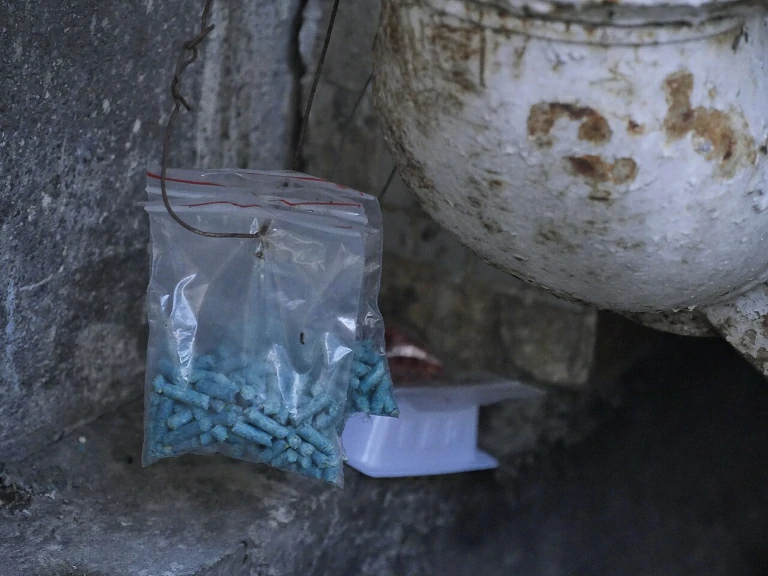
If you’re dealing with a serious rat problem, you’ve probably wondered which poison actually packs the biggest punch. Not all rat poison is created equal, and the difference in strength between products is bigger than most people realize.
So which rat poison is actually the most powerful, and does that even matter for your situation?
Brodifacoum is generally considered the most powerful and strongest rat poison in terms of raw toxicity. It’s a second generation anticoagulant, and by scientific measures, it’s roughly 200 times more potent than older poisons like warfarin.
That word “potent” matters here, and it’s a little different from “fast.”
Some of the most powerful poisons by dose still take days to actually kill.
Meanwhile, some weaker ones act almost immediately. Let’s break down what “powerful” really means before ranking anything.
How Scientists Actually Measure Poison Strength
Toxicologists measure poison strength using something called LD50, short for “lethal dose, 50 percent.”
It’s the amount of a substance, per kilogram of body weight, that kills half of the animals tested at that dose.
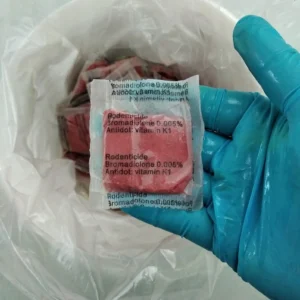
A lower LD50 means a poison is more powerful, since it takes less of it to be lethal.
A higher LD50 means you’d need a much larger amount to cause the same effect on a rat’s body.
This is the standard measure the EPA and researchers use to compare how strong different poisons actually are, and it’s what the table below is based on.
Comparing Rat Poison Strength by LD50
| Poison | Oral LD50 in Rats (mg per kg of body weight) | What This Means |
|---|---|---|
| Brodifacoum | 0.26 mg/kg | Most potent common rodenticide by dose |
| Bromethalin | 2 mg/kg | Very potent, single feeding can be lethal |
| Difethialone | Similar to brodifacoum | Among the most potent second generation anticoagulants |
| Strychnine | Roughly 1 to 16 mg/kg (varies by study) | Highly potent, though rarely sold to consumers |
| Zinc phosphide | 21 mg/kg (range 12 to 56) | Potent, but needs a larger dose than brodifacoum |
| Warfarin | 58 mg/kg | Far less potent per dose than newer poisons |
Lower numbers mean less poison is needed to be deadly.
As you can see, brodifacoum stands out by a wide margin here, needing barely a fraction of the dose that older poisons like warfarin require.
Why Brodifacoum Is the Benchmark for Potency
Brodifacoum belongs to a class called second generation anticoagulants, developed specifically to overcome rats that had become resistant to older poisons like warfarin.
Its oral LD50 in rats sits at around 0.26 mg/kg, according to EPA and peer-reviewed toxicology data.
Compare that to warfarin’s LD50 of 58 mg/kg, and brodifacoum turns out to be roughly 220 times more potent by weight.
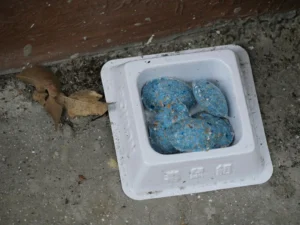
This extreme potency means a single feeding can deliver a lethal dose.
That’s exactly why brodifacoum became so widely used once older poisons started losing effectiveness against resistant rat populations.
Brand names like Havoc, and older formulations of d-Con before its 2018 reformulation, have used brodifacoum as their active ingredient.
EPA restrictions have since pushed many consumer products toward other options in recent years, which we’ll get to further down.
Why Powerful Doesn’t Always Mean Fast
Here’s where things get a little counterintuitive. Even though brodifacoum is extremely potent, it doesn’t kill quickly.
Like all anticoagulants, it works by blocking your target rat’s ability to use vitamin K to clot blood.
This process still takes several days to actually cause death, regardless of how small the lethal dose is.
Research comparing different second generation anticoagulants found that rats given brodifacoum or difethialone reached 100 percent mortality within about 7 days.
Rats given bromadiolone or difenacoum, by comparison, took 3 to 4 days longer to reach the same result.
So brodifacoum is both extremely potent by dose and somewhat faster acting than some of its second generation relatives. Still, it isn’t instant by any stretch.
The Poisons That Actually Kill the Fastest
If your real question is which poison causes death quickest, rather than which one requires the smallest dose, the answer changes.
Strychnine can cause death in under an hour, making it the fastest acting poison on this list by far, despite not having the single lowest LD50.

Zinc phosphide typically causes death within hours rather than days.
It releases toxic gas directly in the animal’s stomach rather than working through a slow biological process like blood clotting, which explains the faster timeline.
Bromethalin can cause death within one to two days, faster than anticoagulants but slower than strychnine or zinc phosphide.
Anticoagulants, including the highly potent brodifacoum, remain the slowest acting of all the major poison types.
They typically take four to seven days regardless of how little of the poison was actually needed to be lethal in the first place.
Why “Most Powerful” Isn’t Necessarily “Best”
It might seem like the strongest poison is automatically the best choice, but that’s not really how pest control professionals think about it.
Extreme potency actually creates its own set of problems for you as a homeowner.
Because brodifacoum is so much stronger than older poisons, it takes very little accidental exposure to seriously harm a pet, child, or non-target animal.
The delayed action also means a rodent can keep eating brodifacoum bait for days after consuming a lethal dose.
That means it builds up levels in its body many times higher than what was actually needed to kill it.
This creates a serious secondary poisoning risk. Predators like hawks, owls, and foxes that eat a poisoned rodent can accumulate dangerous levels of brodifacoum in their own bodies.
Sometimes this happens gradually, from eating several affected animals over time rather than just one.
Because of these risks, the EPA has restricted brodifacoum and other second generation anticoagulants to licensed pest control professionals and agricultural use in most cases.
Regular consumer products you’d find at a hardware store are largely limited to weaker first generation formulas instead.
How Potency Affects Real World Effectiveness
Interestingly, raw potency doesn’t always translate to better results in the field. A poison’s actual effectiveness depends on more than just its LD50 value.
Bait acceptance matters enormously.
If rats near you are wary of a particular bait, or have easy access to other food sources, even the most potent poison in the world won’t get eaten in a lethal amount.
Resistance is another factor worth knowing about.

Some rat populations, especially in areas with heavy historical rodenticide use, have developed genetic resistance to certain anticoagulants.
This means even a normally lethal dose might not work as expected against a resistant population.
This is actually part of why extremely potent poisons like brodifacoum were developed in the first place.
They needed to stay effective against rats that had already evolved resistance to older, weaker formulas.
What This Means for Choosing a Product
If you’re dealing with a typical home rodent problem, you generally don’t need the most potent poison available.
First generation anticoagulants, though far weaker on paper, are usually effective against non-resistant rat populations in most residential settings.
If you suspect resistant rats, based on a poison not working despite proper bait placement and enough time, that’s a sign to bring in a licensed professional.
They can access and safely apply stronger second generation products in a way that’s harder to get right on your own.
For most homeowners, choosing based on potency alone isn’t the smartest approach.
A moderately potent poison used correctly, with proper bait stations and placement, will usually outperform the strongest poison used carelessly.
The Safety Trade-Off You’re Actually Making
Every time you reach for a more potent poison, you’re also taking on more risk, not just more killing power.
Highly potent products require smaller amounts to work, which sounds efficient, but also means a smaller accidental exposure can cause serious harm to a pet or child in your home.
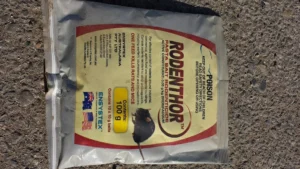
Products with no available antidote, which includes bromethalin, cholecalciferol, and zinc phosphide, add another layer of risk regardless of how potent or fast acting they are.
Weighing potency against these safety trade-offs is really the more useful way to think about “powerful” rat poison. It matters more than chasing the lowest possible LD50 number on a label.
Putting These Numbers in Perspective
LD50 numbers can feel abstract without something to compare them to, so it helps to put brodifacoum’s potency in everyday terms.
At 0.26 mg/kg, a lethal dose of brodifacoum for an average rat weighing about 300 grams works out to less than a single milligram of active ingredient.
That’s a genuinely tiny amount, smaller than a grain of table salt in terms of weight.
For comparison, caffeine has an LD50 in rats of roughly 200 mg/kg.
That means it would take a dose hundreds of times larger than brodifacoum’s to have a similar lethal effect on the same animal.
This is part of why bait manufacturers can use such low concentrations of brodifacoum in their products.
Even at around 0.005 percent by weight, it still works reliably against target rodents.
It’s also why such a small amount of exposure can be dangerous to a curious dog or cat. The concentration doesn’t need to be high for the total dose to matter.
How Rodenticide Potency Has Changed Over Time
The push toward more potent poisons didn’t happen by accident. It’s actually a direct response to how rats adapt.
Warfarin, the original anticoagulant rodenticide, was introduced commercially in the early 1950s and worked well for years.
Over time, though, rat populations in various regions developed genetic resistance to it, a trait that could be passed down to offspring.
By the 1970s, this resistance had become widespread enough in parts of Europe and the U.S. that warfarin alone was no longer reliable in many areas.
This drove the development of what became known as second generation anticoagulants.
Brodifacoum, bromadiolone, difenacoum, and difethialone were all designed to overcome that resistance through much higher potency.
The tradeoff, as covered earlier, is that this same potency created new problems around secondary poisoning that regulators are still working to manage decades later.
Understanding this history helps explain why today’s most potent poisons exist in the first place.
They weren’t designed to be more dangerous for the sake of it, but to keep working against rats that had already beaten the older formulas.
How Professionals Decide Which Potency to Use
Licensed pest control technicians don’t automatically reach for the most potent product available. Their choice usually comes down to a few practical factors specific to your situation.
The size and history of the infestation matters first.
A small, newly discovered rat problem often responds fine to a first generation anticoagulant, while a long-standing or large infestation may call for something stronger.
Location plays a role too.
A professional working near a home with pets, young children, or nearby wildlife habitat may deliberately choose a less potent option, even if the job takes a few more days, simply to reduce accidental exposure risk.
Evidence of resistance changes the calculation as well.
If bait stations show rats are eating the product but the population isn’t declining, that’s often a sign to step up to a more potent second generation formula.
Local regulations factor in too, since some states and municipalities add their own restrictions on top of federal EPA rules.
This is especially common in areas with sensitive wildlife populations like nesting raptors.
This is really the core difference between DIY pest control and hiring a professional.
It’s not just about having access to stronger poison, but knowing when that added potency is actually the right call, and when it just adds unnecessary risk.
Conclusion
By the standard scientific measure of potency, brodifacoum is the most powerful rat poison in common use today. It requires a far smaller dose than older poisons like warfarin to be lethal.
But power and speed aren’t the same thing.
Strychnine and zinc phosphide actually kill faster despite needing a larger dose, while brodifacoum still takes several days to cause death even though very little of it is actually needed to be effective.
Extreme potency also comes with real trade-offs worth weighing carefully. A higher risk to pets and wildlife, plus tighter legal restrictions in most places, come along with that added strength.
For most home rodent problems, a moderately potent product used correctly will do the job without the added risk that comes with the most powerful options on the shelf today.
If you’re facing a resistant or particularly stubborn infestation, that’s the situation where the strongest available poison, applied by a licensed professional, actually makes sense. For everything else, matching the right tool to the actual size of your problem will usually serve you better in the long run than reaching straight for the most powerful option on the shelf.

Hi, my name is Ezra Mushala, i have been interested animals all my life. I am the main author and editor here at snakeinformer.com.