
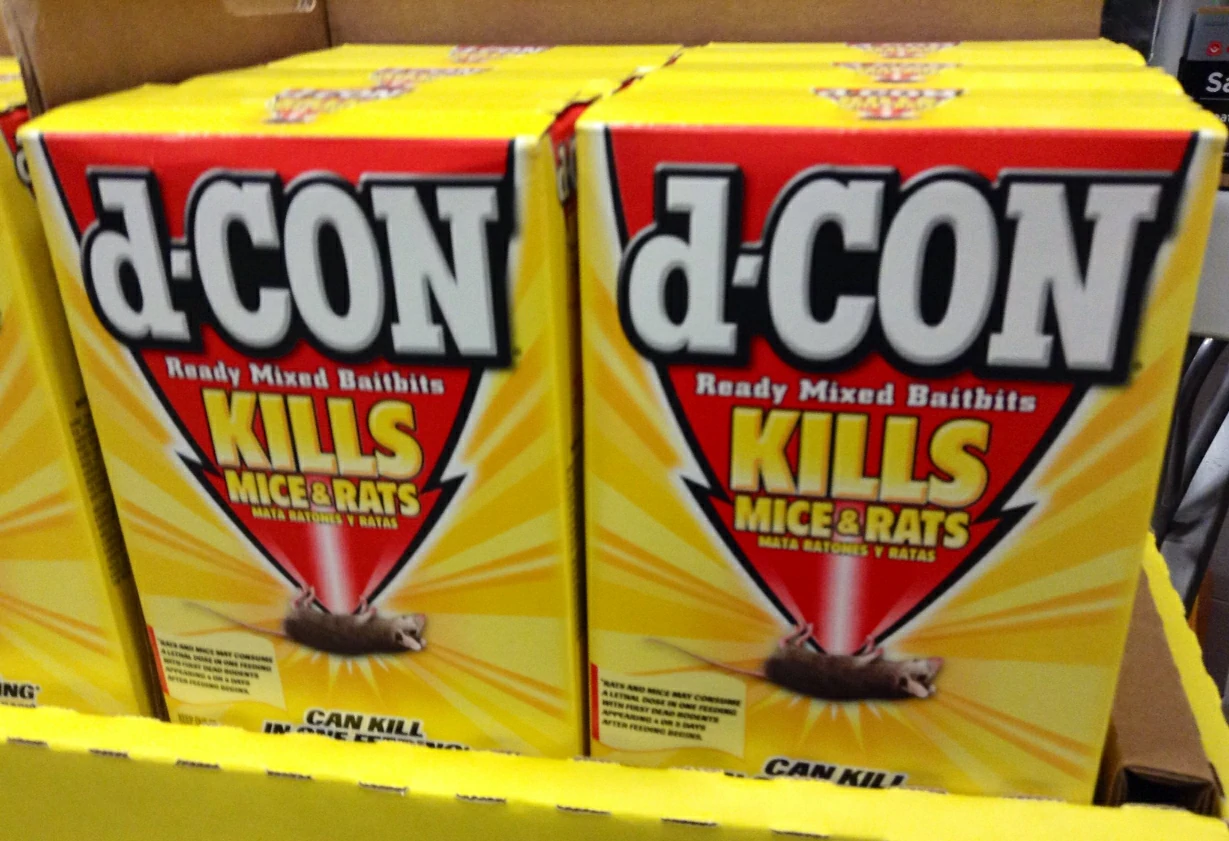
If you’re dealing with rats, you’ve probably noticed the pest control aisle is packed with options. None of them explain which one actually fits your situation.
Indoor rat problems, outdoor infestations, and garden pests all call for different approaches.
So what are actually the best rat poisons for each of these situations?
For most homes, first generation anticoagulants in a locked bait station work well indoors. Weather-resistant stations with second generation anticoagulants suit larger outdoor infestations, though gardens often do better with exclusion and trapping instead.
The “best” choice really depends on where you’re placing it, who else has access to that area, and how bad the infestation actually is. Let’s go through each situation separately.
Quick Comparison by Situation
| Situation | Best Poison Type | Station Type Needed | Why |
|---|---|---|---|
| Indoors, pets present | First generation anticoagulant | EPA Tier 2 or Tier 3 | Lower risk, has an antidote |
| Indoors, no pets | First or second generation | EPA Tier 3 | Faster option available if needed |
| Outdoors, near structure | Second generation anticoagulant or bromethalin | EPA Tier 1 | Weather resistant, tamper resistant |
| Garden or yard | Exclusion and trapping preferred | Tier 1 if poison is used | Reduces risk to wildlife and pollinators |
| Large infestation | Second generation anticoagulant | EPA Tier 1, professional grade | Overcomes possible resistance |
This table is a starting point, not the full picture. Each situation has details worth understanding before you buy anything.
Understanding EPA Bait Station Tiers First
Before picking a poison, it helps to understand bait station tiers. The EPA requires a specific tier depending on where and how you’re placing bait.
Tier 1 stations are tested to resist tampering by both children and dogs, and they’re weather resistant. These are the only stations approved for outdoor use.
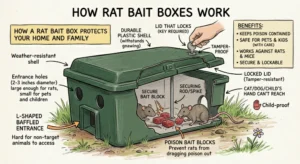
Tier 2 stations resist tampering by children and dogs but aren’t weather resistant. That limits them to indoor use only.
Tier 3 stations resist tampering by children only, and are meant for indoor areas pets can’t access.
Tier 4 stations haven’t been tested for tamper resistance. They’re typically small, disposable, one-time-use products for very limited indoor situations.
Knowing this upfront changes how you shop. The right poison paired with the wrong station type either won’t be legal to use outdoors, or won’t adequately protect pets and kids indoors.
Best Rat Poison for Indoor Use
Indoors, your priorities are usually different from outdoor use. You’re likely dealing with a smaller, more contained area, and pets or kids may have closer access.
First generation anticoagulants, like diphacinone or warfarin-based products, are generally the safer starting point indoors.
They require multiple feedings to be lethal, which sounds like a downside. But it also means a smaller accidental exposure is less likely to seriously harm a pet.
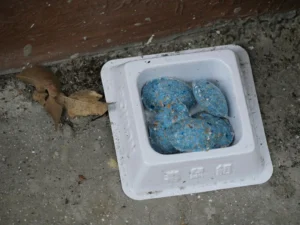
Just as importantly, first generation anticoagulant poisoning has a real antidote, vitamin K1.
That gives a vet a much clearer path to treatment if your dog or cat gets into it by mistake.
If you don’t have pets and want faster results, bromethalin-based bait can work well indoors too.
It typically kills within one to two days rather than the four to seven days anticoagulants need.
Keep in mind bromethalin has no antidote. This trade-off only makes sense if you’re confident pets and kids genuinely can’t access the area.
For station type, Tier 2 or Tier 3 stations are usually sufficient indoors, since you don’t need the weather resistance required outdoors, just solid tamper resistance.
Many pest control experts actually recommend snap traps over poison for indoor rat problems specifically.
Since you’re indoors, you’re more likely to notice and remove a trapped rat quickly.
This also avoids the risk of a poisoned rat dying somewhere inside your walls, which can cause a lingering smell for days.
Best Rat Poison for Outdoor Use
Outdoors, the calculation shifts. You’re dealing with weather exposure and a wider range of non-target wildlife.
You’re also often facing a larger or more persistent rat population coming from nearby structures, drainage areas, or neighboring properties.
Second generation anticoagulants, like brodifacoum or bromadiolone, are commonly used outdoors.
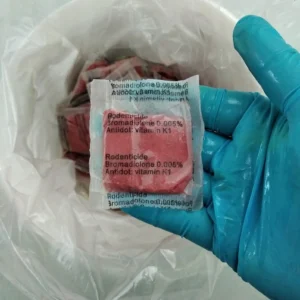
They’re effective even against rat populations that may have some resistance built up from years of pest control efforts in the area.
That said, the EPA has restricted many of the strongest second generation products to licensed professionals.
This is specifically because of outdoor secondary poisoning risks to hawks, owls, and other predators.
In California, both first and second generation anticoagulants are now banned for most uses entirely.
Check the state restrictions section further down before assuming any anticoagulant is an option where you live.
For homeowners, first generation anticoagulants or bromethalin-based bait, placed in a proper Tier 1 station, is often the more accessible and still effective option.
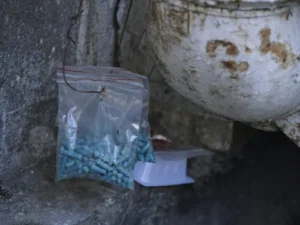
Tier 1 stations are required by law for any outdoor, above-ground bait placement accessible to children, pets, or wildlife.
These stations are built to handle rain, temperature swings, and direct sunlight without breaking down or letting bait leak out.
Placement matters as much as the product itself.
University extension research recommends positioning stations along walls, fences, and known rat travel paths, rather than out in open yard space.
Rats naturally travel along edges rather than crossing open areas, so edge placement gets far better results.
Federal rules also require outdoor bait placements to stay within 100 feet of a building.
Placements beyond 50 feet start increasing risk to non-target wildlife without much added benefit for rat control.
Best Approach for Gardens
Gardens are a different situation entirely, and this is really where poison starts to make less sense as the go-to solution.
Gardens tend to have more non-target wildlife activity, including birds, beneficial insects, and sometimes pets that spend unsupervised time outside.
Poison bait placed near vegetable beds or flower gardens also raises the odds of contact with soil-dwelling creatures that aren’t the problem you’re trying to solve.
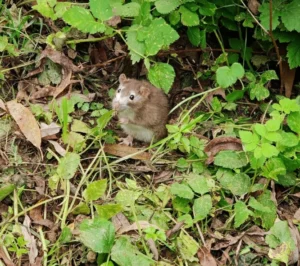
If you do need poison in a garden setting, a Tier 1 station is non-negotiable.
It should also be placed away from actively harvested vegetables or fruit to avoid any risk of contamination.
That said, most garden rat and rodent problems respond well to non-lethal methods.
Many gardeners find these approaches solve the problem for good, rather than just temporarily reducing numbers.
- Exclusion works especially well in garden settings.
Hardware cloth buried a few inches deep around raised beds keeps burrowing rodents from tunneling in from below.
- Removing easy food sources makes a big difference too.
Harvesting ripe produce promptly, securing compost bins, and cleaning up fallen fruit all reduce what’s drawing rodents into the garden in the first place.
- Habitat modification helps as well.
Clearing dense ground cover, brush piles, and stacked materials near garden beds removes the cover rodents rely on to move around safely.
- Trapping remains an effective option in gardens too.
It avoids any risk of a pet or beneficial wildlife species getting into poison meant for rats.
Best Rat Poison for Large or Persistent Infestations
If you’re dealing with a large rat population, the calculation changes again.
This applies whether that’s a farm property, a multi-unit building, or a yard with a long-standing problem.
Second generation anticoagulants generally perform best here. Their potency means fewer feedings are needed to reduce a large population effectively.

At this scale, it’s genuinely worth bringing in a licensed pest control professional.
They have access to stronger products than what’s sold to consumers.
Just as importantly, they know how to place bait strategically across a property to actually break the cycle of reinfestation.
Professionals also monitor and remove dead rodents regularly.
This meaningfully cuts down on the secondary poisoning risk to predators and scavengers that a larger, unmonitored bait program would otherwise create.
A Few Products Worth Knowing About
Certain product names come up often enough that it’s worth knowing what they actually contain. Brand names alone don’t tell you the active ingredient.
JT Eaton’s bait blocks commonly use diphacinone, a first generation anticoagulant well suited to indoor use around pets.
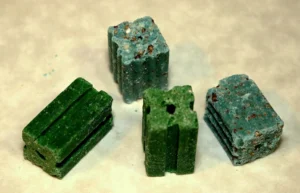
Tomcat’s bromethalin-based products are popular for faster indoor or outdoor results where pet access isn’t a concern.
Products marketed specifically as weather-resistant, often labeled for outdoor or agricultural use, typically use second generation anticoagulants.
These usually come in Tier 1 rated stations already built in.
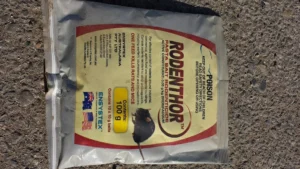
Always check the actual active ingredient on the packaging rather than assuming based on the brand or marketing claims. Formulas can and do change over time.
What About Natural or Non-Toxic Options?
You may have seen products marketed as natural, plant-based, or EPA-exempt rodenticides, and it’s worth knowing where these actually fit in.
These products typically use ingredients that cause rodents to stop eating and starve, or that irritate their digestive system enough to be lethal over time.
This is a different mechanism than the anticoagulant or nerve-based approaches covered above.
They’re generally marketed as safer around pets and children, since the ingredients are often derived from food-grade sources rather than synthetic chemicals.
That said, independent efficacy data on these products is limited compared to conventional rodenticides.
Pest control professionals often report mixed results with them, especially against larger or more established infestations.
If you’re considering one of these options, they tend to work best as a supplementary approach for smaller, early-stage problems.
Pair them with exclusion and cleanup, rather than relying on them as a standalone solution for a serious rat population.
State Restrictions You Should Know About
Rodenticide regulation in the U.S. has shifted quickly, and what’s legal in one state may be banned or restricted in another. This matters more than ever if you’re deciding what to buy.
As of January 1, 2025, California law (AB 2552) prohibits the use of both first and second generation anticoagulant rodenticides for most residential and commercial purposes.
That’s a step beyond just restricting second generation products.
Warfarin and chlorophacinone are now classified as restricted materials there too, and violations carry civil penalties of up to $25,000 per day.
This built on an earlier 2020 law (AB 1788) that first banned second generation anticoagulants like brodifacoum, bromadiolone, difenacoum, and difethialone.
That law followed documented poisoning in mountain lions, bobcats, and other wildlife across the state.
Several other states have restrictions in progress or already partially in place.
New York, Vermont, Washington, Connecticut, Massachusetts, New Hampshire, and Colorado have all introduced or passed legislation restricting anticoagulant rodenticides in recent years.
The details vary significantly by state, and some bills are still moving through their legislatures as of 2026.
South Carolina temporarily classified second generation anticoagulants as restricted use pesticides in 2025, meaning only certified applicators can purchase and use them there.
Federally, the picture is different from any single state.
The EPA doesn’t currently ban these products nationwide, but it registered second generation anticoagulants for commercial and structural pest control use only.
That generally means they aren’t sold directly to consumers in most states, even where state law doesn’t add further restriction.
Because this area of law is changing quickly, it’s worth checking your specific state’s department of pesticide regulation or agriculture department first.
Don’t assume a product available at a national retailer is automatically legal to use where you live.
Is Warfarin Actually Outdated?
You may have heard that warfarin, the original anticoagulant rodenticide, doesn’t work anymore because rats have become resistant to it.
This is partly true, but the full picture is more nuanced than a flat yes or no.
Genetic resistance to warfarin is real and well documented.
It was first identified in the UK in the late 1950s, and has since been confirmed through genetic testing in rat and mouse populations across Europe, Asia, and parts of the Americas.
The resistance comes from mutations in a gene called VKORC1, which controls how an animal’s body processes vitamin K.
These mutations can let a resistant rat survive doses of warfarin that would kill a non-resistant one.
That said, resistance isn’t evenly distributed everywhere.
It tends to cluster in specific regions with a long history of heavy warfarin use, rather than existing uniformly across every rat population in the country.
Some pest control trade sources have even argued that resistance is overstated as a general problem.
Testing on rats from various current locations has sometimes found much lower resistance than expected based on older reports.
The practical takeaway is that whether warfarin still works well depends heavily on your specific location and that area’s rodenticide history, not a simple nationwide answer.
If you’ve tried a warfarin-based product correctly and it isn’t working, resistance is a real possibility worth considering.
Switching to a different active ingredient, or calling a professional for testing, may be necessary at that point.
This resistance problem is actually the direct reason second generation anticoagulants like brodifacoum were developed in the first place.
They needed to remain effective against rats that had already evolved past older compounds like warfarin.
Putting It All Together
There’s no single “best” rat poison that fits every situation, and that’s really the main thing worth taking away here.
Indoors, favor first generation anticoagulants or traps, especially if pets are present.
The lower risk and available antidote matter more than raw speed in most home situations.
Outdoors, a Tier 1 weather-resistant station with either a first or second generation anticoagulant handles most residential situations.
Second generation products are worth reserving for tougher, more established populations that haven’t responded to gentler options.
In gardens, lean toward exclusion, trapping, and removing food sources first.
The wildlife exposure risk from poison tends to be higher in these settings than the payoff justifies.
For large or ongoing infestations, a licensed professional using stronger, properly monitored second generation products will generally outperform anything available over the counter.
Conclusion
The best rat poison isn’t a single product. It’s the right match between poison type, bait station tier, and your specific situation.
Indoor spaces with pets call for gentler first generation products in secure stations.
Outdoor and agricultural settings can often justify stronger second generation options in proper Tier 1 stations, though check your state’s rules first.
Gardens are the one place where poison often isn’t even the best answer.
Exclusion, trapping, and removing food sources tend to solve the problem with far less risk to the wildlife sharing that space with you.
Whatever situation you’re dealing with, matching the product to the location and checking the required bait station tier matters.
Following label instructions closely, and confirming your state’s current rules, will get you better results than simply grabbing the strongest option on the shelf.

Hi, my name is Ezra Mushala, i have been interested animals all my life. I am the main author and editor here at snakeinformer.com.