

Once you’ve confirmed rats are actually in your house or yard, the next decision is which trap to buy.
Walk into any hardware store and you’ll see snap traps, electronic traps, live cage traps, and glue boards all sitting on the same shelf, each one claiming to be the answer. So what should you actually consider when choosing a rat trap?
The most important things to consider are trap type (snap, electronic, or live catch), correct sizing for rats rather than mice, placement along walls and runways, and whether local laws allow the method you’re picking. The CDC specifically recommends traditional snap traps for home use and advises against glue traps.
That’s the short version, but each of those factors deserves a closer look, since picking the wrong trap type or the wrong spot to put it is the main reason people end up frustrated with trapping.
What Types of Rat Traps Actually Exist?
Before you can pick the right one, it helps to know what’s actually out there. There are four main categories, and they work in very different ways.
Snap traps are the classic option, a spring loaded bar mounted on a base that slams down when a rat disturbs the trigger. They’re cheap, reusable, and when set correctly, kill quickly.

Electronic traps use metal plates that deliver a lethal shock once a rat completes the circuit by touching both plates. Since the rat is enclosed inside a plastic housing, there’s no mess to look at and less risk to fingers or paws.
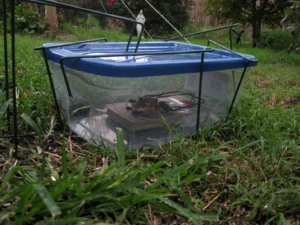
Live cage traps capture a rat without killing it, using a door that closes once the animal steps far enough inside to reach the bait. You then have to deal with releasing (or otherwise handling) a live, likely stressed rat.
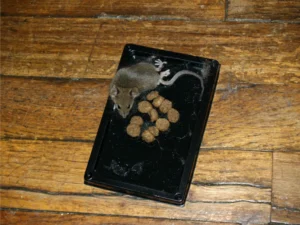
Glue boards use a sticky adhesive spread across a flat surface. A rat that walks across it gets stuck, and unlike the other three options, it doesn’t kill or capture the animal cleanly.
Why the CDC Recommends Snap Traps Specifically
This isn’t just a matter of personal preference. The CDC’s own guidance on rodent control names traditional snap traps as the recommended method for home use, and it specifically advises against both glue traps and live traps.
The reasoning behind avoiding live traps comes down to stress and disease risk.
A trapped, panicked rat is more likely to urinate, and rat urine is one of the ways diseases like hantavirus spread to humans.
Glue traps carry a similar concern, plus a welfare problem on top of it.
A rat can stay stuck and alive on a glue board for hours or even days, and during that time it’s producing waste and struggling, both of which raise your exposure risk if you have to handle the trap afterward.
Snap traps, by comparison, are designed to kill quickly with a single strike.
This limits both the animal’s distress and the amount of time you’re dealing with a live, stressed rodent.
Is Trap Size Actually That Important?
Yes, and it’s one of the most common mistakes people make. Mouse traps and rat traps aren’t interchangeable, even though they look similar.
A trap built for mice has a lighter spring and a smaller trigger pan, both sized for a much smaller animal.
Set that same trap for a full grown rat, and there’s a real chance it either fails to trigger properly or only partially catches the rat, leaving it injured rather than killed.
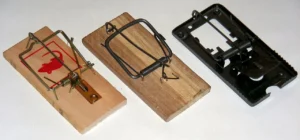
Rat sized snap traps have a stronger spring, a larger kill bar, and a bigger trigger pan.
They’re built to handle the weight and reach of an actual rat, which can grow considerably larger than a house mouse, sometimes reaching over a pound in weight for a mature Norway rat.
If you’re not sure which species you’re dealing with, look at the droppings.
Rat droppings are noticeably larger, usually around half an inch to three quarters of an inch long, compared to the much smaller, rice grain sized droppings mice leave behind.
Where You Place the Trap Matters as Much as Which One You Buy
You can buy the best trap on the market and still catch nothing if you put it in the wrong spot. Rat behavior actually makes this pretty predictable once you understand it.
Rats travel along walls, pipes, and other fixed surfaces rather than crossing open floor space.
This is a safety habit built into how they move, since staying close to a surface protects their side and back from predators.
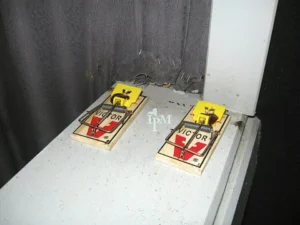
Because of this, the national park service guidance recommends placing traps directly against a wall, with the baited end pointing toward the wall so the whole setup forms a T shape.
A trap sitting in the middle of an open room, no matter how good it is, will likely be ignored entirely.
Look for the actual signs of rat activity before placing anything. Droppings, gnaw marks, greasy smudge marks along baseboards (from oil in their fur), and nesting material all point to the paths rats are actually using.
For an infestation, one or two traps usually isn’t enough. University pest management guidance suggests placing traps in groups, spaced at least 20 feet apart along different runways, rather than clustering several traps in one single spot.
Why Rats Often Avoid Brand New Traps
If you’ve ever set a trap and had it sit untouched for days, you’re not imagining a smarter-than-usual rat. This is an actual documented behavior called neophobia, meaning a built-in fear of new objects in their environment.
Rats are naturally cautious animals, and a trap that suddenly shows up in a familiar space gets treated with suspicion rather than curiosity.
House mice, by comparison, tend to investigate new objects readily, which is part of why mouse traps often work faster than rat traps right out of the gate.
To work around this, the CDC recommens pre-baiting. This means placing bait on the trap without setting the trigger for several days, letting the rat feed safely and get used to the trap’s presence.
Once you notice the bait is reliably being taken, you can arm the trap. This step alone dramatically improves the odds of an actual catch, especially with a persistent or established rat population that’s already cautious about anything unfamiliar.
Comparing the Main Rat Trap Types
| Trap Type | Kill Method | CDC Recommended | Main Risk | Best For |
|---|---|---|---|---|
| Snap trap | Spring loaded strike | Yes | Snap injury if mishandled | Most home situations |
| Electronic trap | Lethal electric shock | Not specifically named | Cost, battery dependency | Indoor use, wanting a clean kill |
| Live cage trap | Captures without killing | No, advised against | Stress, disease exposure, legal release issues | Situations where lethal control isn’t wanted |
| Glue board | Sticky adhesive, no kill | No, advised against | Prolonged suffering, non-target catches, disease risk | Not generally recommended |
What About the Bait You Use?
The trap matters, but so does what you put on it. Rats respond best to bait that’s high in protein or strongly scented, rather than anything bland.
Chunky peanut butter is a common, effective choice, since it’s sticky enough to stay on the trigger and strongly scented enough for a rat to notice from a distance. Bacon, dried fruit, and nuts also work well.
Use a small amount, worked into the trigger mechanism rather than piled on top. A rat that can lick bait off without applying pressure to the trigger just gets a free meal and learns nothing about the trap being dangerous.
Do Live Traps Actually Make Sense for Anyone?
Live traps appeal to people who don’t want to kill an animal, and that’s a completely understandable instinct. But there are a few practical problems worth knowing about before you go this route.
Once you’ve caught a rat, you’re now responsible for a live, likely stressed animal, and you need somewhere legal to release it.
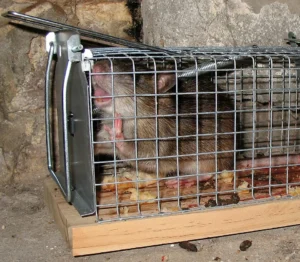
In many states and cities, relocating wildlife like this without a permit isn’t actually allowed, since it can spread disease or displace the problem onto someone else’s property.
Even where relocation is legal, a rat released far from its territory often struggles to survive in unfamiliar surroundings. It may also simply find its way back if released too close to your home.
Live traps also need to be checked frequently, ideally at least once or twice a day, since leaving a trapped animal without food or water for an extended period raises its own welfare concerns.
For a genuine infestation rather than a single stray rat, live trapping alone usually isn’t practical anyway.
It simply can’t keep pace with how quickly rat populations grow, especially since a single female can have several litters a year.
Are Glue Traps Actually Legal Where You Live?
This is worth checking before you buy one, since the rules around glue traps have shifted a lot in the last few years.
In the US, there’s no statewide ban on glue traps anywhere in the country as of this writing. A handful of individual cities have banned them locally, including West Hollywood, Ojai, and Culver City in California, with several other cities considering similar bans.
In the UK, the Glue Traps (Offences) Act made it illegal to use glue traps without a license as of 2022, with licenses generally reserved for pest control professionals in situations where no other method will work. Wales has gone further, banning them outright.
In Australia, the state of Victoria regulates both the sale and use of glue traps. Rules do vary by state, so it’s worth checking your specific location.
Given both the legal patchwork and the welfare concerns, glue traps are generally the option worth skipping in favor of a properly sized snap trap or an electronic trap.
How Many Traps Do You Actually Need?
This depends heavily on whether you’re dealing with a single stray rat or an established population.
It’s worth being honest with yourself about which one you’re actually facing before you buy a handful of traps and call it done.
For a single rat that wandered in, two or three traps placed along likely runways is often enough. For a genuine infestation, most pest control guidance suggests a dozen or more traps for an average home, spread across multiple confirmed pathways.
Rotating trap placement and bait type every week or two tends to outperform leaving the same traps in the same exact spots indefinitely.
A rat that’s had a near miss with a trap in one location will often avoid that specific spot from then on, so moving things around keeps your setup effective.
When Trapping Alone Won’t Solve the Problem
Traps deal with the rats that are already inside your home, but they don’t stop new ones from getting in. This is the part people skip most often, and it’s usually why a trapping effort that worked for a week suddenly stops catching anything.
Sealing entry points matters just as much as trapping, if not more. Rats can squeeze through gaps as small as a quarter of an inch, so check around utility lines, vents, foundation cracks, and gaps under doors.
Removing food sources, like pet food left out overnight, uncovered compost, or bird seed spills, makes your property far less attractive in the first place.
A trapping effort against an ongoing food supply is a losing battle, since new rats will keep finding reasons to move in.
Indoor Traps Versus Outdoor Traps
Where you’re trapping changes what you should look for, since indoor and outdoor environments come with different challenges.
Indoors, weather isn’t a factor, but discretion often is. A covered snap trap or an electronic trap tends to be the better pick for a kitchen, pantry, or garage, since it keeps the kill contained and out of sight until you’re ready to deal with it.

Outdoors, a trap needs to hold up against rain, temperature swings, and curious non-target animals like birds, squirrels, or a neighbor’s cat.
Weather resistant snap traps housed inside a covered station are usually the safer and more durable choice for a yard, shed, or garden edge.
Bait also behaves differently outside. Rain can wash scent away or make peanut butter less effective, so some outdoor trappers switch to waxed bait blocks or nut based baits that hold up better in damp conditions.
Handling a Trap Safely, Before and After a Catch
A few basic habits make trapping safer for you and more effective against the rat.
Wear disposable gloves whenever setting, checking, or emptying a trap. Rats can detect human scent, and bare hands leave enough of it behind to make a cautious rat avoid the trap entirely.
Set traps carefully, especially rat sized snap traps, since the spring tension strong enough to kill a rat is also strong enough to injure a finger if it triggers unexpectedly during setup.
After a catch, avoid sweeping up droppings or handling a trap without protection, since dried rodent waste can carry pathogens that become airborne when disturbed.
The CDC recommends spraying the area with disinfectant and letting it sit for several minutes before cleaning up.
Dispose of a caught rat in a sealed bag placed in an outdoor trash bin, rather than leaving it exposed. This also reduces the risk of a pet or wild predator getting into it afterward.
Conclusion
Choosing the right rat trap comes down to a handful of practical decisions: picking a properly sized snap trap over a mouse trap, avoiding glue traps for both welfare and legal reasons, placing traps along walls where rats actually travel, and being patient enough to pre-bait for a few days before setting the trigger.
The CDC’s own guidance backs up snap traps as the recommended home method, while steering people away from glue traps and live traps for good reason.
Electronic traps are a reasonable middle ground if you want a clean kill without handling a spring loaded mechanism yourself.
Whatever trap type you land on, remember that trapping alone won’t solve a rat problem permanently if the entry points and food sources that attracted them in the first place are still there.
Combine the right trap with some basic exclusion work, and you’ll get a lot further than relying on hardware alone.

Hi, my name is Ezra Mushala, i have been interested animals all my life. I am the main author and editor here at snakeinformer.com.