
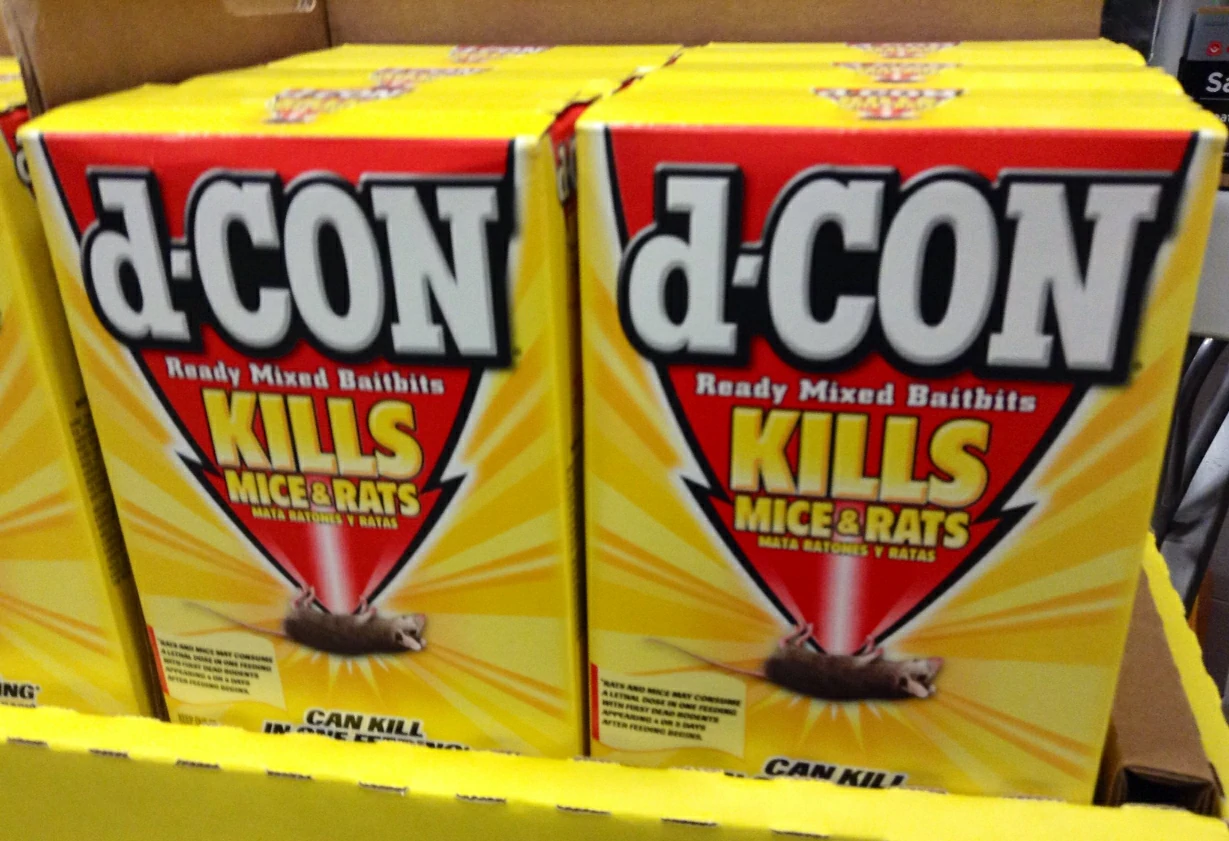
Rat poison isn’t just used for rats. Many people use the same products to control mice in their homes, sheds, and garages. But mice are much smaller than rats, and you might wonder if the poison works differently on them.
If you’re using rat poison for mice, you’re probably wondering how long until you stop seeing signs of mice in your house. How long before rat poison kills mice?
Rat poison typically kills mice in 1-6 days after they start eating the bait, faster than it kills rats because mice are smaller. Anticoagulant poisons take 2-6 days, bromethalin takes 1-3 days, cholecalciferol takes 2-4 days, and zinc phosphide takes 1-2 days. Mice need less poison than rats to reach a lethal dose because of their smaller body weight.
The exact timeline depends on which type of poison you’re using, how much the mice eat, and whether other food is available.
Mice often die faster than rats from the same poison because they’re smaller and reach toxic blood levels with less bait.
However, mice also have higher metabolisms and breed faster, which can complicate control efforts.
Why Mice Die Faster Than Rats From Poison
A mouse weighs about 0.5-1 ounce (14-28 grams), while a rat weighs 7-18 ounces (200-500 grams). This massive size difference means a mouse needs to eat much less poison to consume a lethal dose.
Toxic doses are calculated based on milligrams of poison per kilogram of body weight.
A mouse reaching 1 mg/kg of poison in its system has consumed the same relative dose as a rat at 1 mg/kg, but the mouse needed to eat 10-15 times less bait to get there.
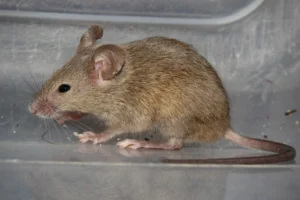
Mice also eat more frequently than rats relative to their body size. A mouse eats roughly 10-15% of its body weight per day, while rats eat about 10%.
This means mice visit bait more often and consume poison faster.
Mice have faster metabolisms than rats, which speeds up how quickly poison is distributed through their bodies and how fast it takes effect. However, this faster metabolism can also mean poison is eliminated slightly faster in surviving mice.
The combination of smaller size, more frequent feeding, and faster metabolism means mice typically die 1-2 days sooner than rats from the same type of poison.
Anticoagulant Poison Timeline for Mice
First-generation anticoagulants (warfarin, chlorophacinone, diphacinone) kill mice in 3-6 days after they start eating the bait. Mice need to consume the poison over multiple feeding sessions, just like rats.
Second-generation anticoagulants (brodifacoum, bromadiolone, difethialone) are more potent and can kill mice in 2-4 days.
Mice might only need to eat the bait once or twice to consume a lethal dose, though death still takes several days after that.
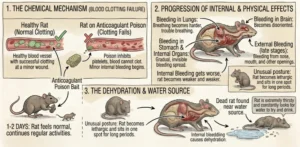
The mechanism is the same as in rats: the poison prevents blood clotting, causing internal bleeding that eventually kills the mouse. The delay between eating poison and dying prevents bait shyness in the mouse population.
A mouse that starts eating anticoagulant bait on day 1 will seem fine for the first 2-3 days. Symptoms appear around day 3-4, and death typically occurs day 4-6.
Smaller or weaker mice might die sooner, larger or healthier mice might last a day or two longer.
Keep fresh bait available for at least two weeks. Even though individual mice might die within a week, new mice continue finding and eating the bait throughout this period. You want to make sure all mice have access to poison for long enough to consume lethal doses.
Bromethalin Neurotoxin Timeline for Mice
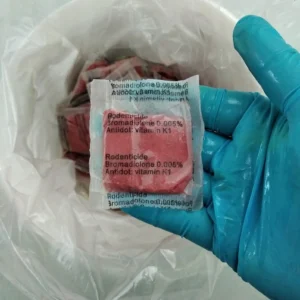
Bromethalin works faster than anticoagulants. It causes brain swelling and neurological symptoms that kill mice in 1-3 days after eating the poison.
High doses of bromethalin can kill mice in as little as 24 hours. Lower doses take 2-3 days. The speed depends on how much the mouse ate in its first feeding session.
Symptoms include loss of coordination, tremors, paralysis, and seizures. These appear within hours to 2 days after eating the poison. Death follows quickly once neurological symptoms start.
Bromethalin doesn’t require multiple feedings like anticoagulants do. A mouse can eat the poison once and consume enough to die. This makes bromethalin products effective when mice have access to other food sources and only nibble occasionally at bait.
However, bromethalin has no antidote, making it more dangerous if pets are exposed. Use it only in secure bait stations where non-target animals can’t access it.
Cholecalciferol (Vitamin D3) Timeline for Mice
Cholecalciferol poisons kill mice through kidney failure and calcium buildup. The timeline is 2-4 days, falling between anticoagulants and bromethalin.
After eating cholecalciferol bait, mice develop elevated calcium levels in their blood within 12-24 hours. This causes damage to kidneys, heart, and blood vessels.
Symptoms might not be obvious to observers, but the mouse becomes increasingly lethargic and stops eating. Death occurs 2-4 days after consuming the poison, usually from kidney failure or heart problems.
Cholecalciferol requires less accumulation than anticoagulants. Mice might only need to eat the bait once or twice to consume a lethal dose, similar to second-generation anticoagulants.
This poison is considered safer for the environment than anticoagulants because it doesn’t accumulate in the mouse’s body as much, reducing secondary poisoning risks to predators that eat poisoned mice.
Zinc Phosphide Timeline for Mice
Zinc phosphide is the fastest-acting rat poison for mice. It can kill in as little as 12-24 hours, with most deaths occurring within 1-2 days.
When the poison hits the mouse’s stomach acid, it releases phosphine gas. This gas is extremely toxic and affects the heart, lungs, liver, and kidneys. Death can occur very quickly, sometimes within hours.
The speed of zinc phosphide is both an advantage and disadvantage. It eliminates mice faster, but it can also create bait shyness. If some mice get sick without dying, they learn to avoid the bait and teach other mice to avoid it too.
Zinc phosphide works best when used strategically. Put out a lot of bait all at once (called “pulsed baiting”) rather than maintaining continuous bait over weeks.
The goal is to kill most or all mice in a single exposure before survivors can learn avoidance.
This poison is also more dangerous to pets because it works so quickly. If a dog eats zinc phosphide bait, symptoms appear within 15 minutes to 4 hours, leaving little time for treatment.
What Factors Speed Up or Slow Down Mouse Deaths?
Food availability is huge. If mice have no other food sources, they eat more poison bait and die faster. If they have access to garbage, pet food, or stored grains, they only nibble at bait and might take longer to consume a lethal dose.
Bait palatability affects consumption. Some mice prefer certain flavors or textures over others. If your bait isn’t appealing, mice eat less of it and take longer to die.
Trying different bait formulations (blocks vs. pellets vs. meal) sometimes helps.
Mouse population size matters. In a heavy infestation with dozens of mice, bait consumption is high and you’ll see deaths quickly. In a light infestation with just a few mice, it might take longer to see results.
Environmental conditions affect bait quality. Wet or moldy bait is unpalatable. Bait exposed to extreme temperatures might degrade. Fresh bait in protected bait stations works better than exposed bait that’s degraded.
Individual variation exists. Some mice are more sensitive to poison and die sooner. Others might be slightly resistant or healthier and last longer.
You’ll see deaths spread over several days rather than all mice dying at once.
How to Tell the Poison Is Working
The most obvious sign is decreased bait consumption. In the first few days, mice eat bait enthusiastically. As they start dying, consumption drops. By week two, you might see very little bait being eaten.
Mouse activity decreases. You’ll hear less scratching and scurrying in walls. You’ll see fewer droppings appearing. Gnaw marks on food packages stop showing up.

You might find dead mice, though often you won’t. Mice typically die in their nests, which might be inside walls, under cabinets, or in other hidden spots.
Unlike rats, mice are small enough that their bodies dry out quickly and don’t create as bad a smell.
The smell of dead mice (if they die in accessible areas) appears about 3-5 days after they start dying and lasts 1-2 weeks. It’s less intense than dead rat smell because mice are smaller.
If you’re still seeing heavy mouse activity after two weeks of continuous bait availability, something’s wrong.
The poison might not be effective against your particular mice, or new mice might be entering to replace dead ones.
Comparing Poison Speed to Traps
Snap traps kill mice instantly when they work. You set traps in the evening and check them the next morning. If a mouse was caught, it’s dead immediately. No waiting period.
Electronic traps are also instant. The mouse enters, steps on the plate, and dies from electrocution in seconds. You empty the chamber and reset.
Poison is slower but can kill multiple mice simultaneously. One bait station can poison dozens of mice over several days, while one trap catches one mouse at a time (or possibly two with multi-catch traps).
The trade-off is speed vs. scale. Traps are faster per mouse but require more labor (daily checking, resetting, disposing of bodies). Poison is slower but handles large infestations with less daily effort.
For small mouse problems (just a few mice), traps are often the better choice. For large infestations (dozens of mice), poison might be more practical despite the longer timeline.
Why Mice Might Not Die Despite Eating Poison
Some mouse populations have developed resistance to anticoagulant poisons, particularly first-generation ones like warfarin. These mice can eat the poison without dying, or they need much higher doses than normal.
If you’re using warfarin-based bait and mice keep eating it for weeks without dying, resistance might be the problem. Switch to a second-generation anticoagulant (brodifacoum, bromadiolone) or a non-anticoagulant poison (bromethalin, cholecalciferol).
Competing food sources can prevent mice from eating enough poison. If they’re only nibbling at bait while getting most nutrition elsewhere, they might not consume lethal doses. Remove other food sources to force mice to eat more poison.
Very small exposure might not be lethal. If mice just take tiny nibbles once or twice, they might not consume enough to die. Make sure bait is placed in high-traffic areas where mice will encounter it repeatedly.
The bait might be degraded or expired. Check the date on the package and make sure bait is being stored properly. Replace any bait that looks or smells off.
Dealing With Dead Mice After Poisoning
Mice often die in hidden locations. You’ll smell decomposition but might not be able to find the body. The smell typically lasts 1-2 weeks, much less than dead rat smell.
If you find dead mice in accessible areas, wear gloves and seal bodies in plastic bags before disposing of them in trash. Don’t handle dead mice with bare hands as they can carry diseases.
Mice dying in walls are usually less of a problem than dead rats because mice are smaller. Their bodies dry out faster and don’t create as intense a smell. The odor is still unpleasant but more tolerable.
If the smell is unbearable and you think you know where the dead mouse is, you might need to cut into drywall to remove it. This is rare with mice (more common with rats) but sometimes necessary.
Prevent future problems by sealing entry points after the poison has eliminated the current population. Dead mice can’t be un-killed, but you can prevent new mice from entering to replace them.
How Long Should You Keep Bait Available?
Continue providing fresh bait for at least two weeks, even if you think all the mice are dead. Mice reproduce quickly, and there might be young mice that weren’t old enough to eat bait when you started.
New mice might also be entering from outside to replace dead ones. Keeping bait available ensures these newcomers are also eliminated before they can establish a population.
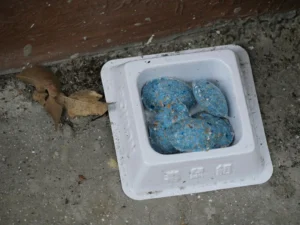
The sign that you’re done is when bait sits completely untouched for at least a week. If no bait is being consumed and you’re seeing no signs of mice, you’ve likely eliminated the population.
Some people leave bait stations in place permanently as monitoring stations. They check monthly and if bait starts being consumed again, they know mice have returned and can restart treatment immediately.
Don’t stop treatment too early. The most common mistake is removing bait as soon as you stop seeing mice, but there might still be a few that haven’t consumed enough poison yet.
Combining Poison With Other Methods
Using poison and traps together can speed up mouse elimination. Place snap traps or electronic traps along walls in high-traffic areas, and use bait stations in places where trapping is difficult (inside wall voids, tight crawl spaces).
Exclusion is critical for long-term success. Seal entry points with steel wool, caulk, and hardware cloth while poison is eliminating the current mice. This prevents new mice from entering to replace dead ones.
Sanitation helps poison work faster. Remove competing food sources, clean up crumbs and spills, store food in sealed containers, and keep garbage in sealed bins. Hungry mice eat more bait.
Some pest control professionals use a combination approach: poison for the initial knockdown of a large population, followed by traps to catch stragglers, followed by exclusion to prevent reinfestation.
Safety Concerns With Mouse Poison
Mouse poison is just as dangerous to pets as rat poison, sometimes more so. Small dogs and cats are closer in size to mice than to rats, so toxic doses are smaller.
A dog that eats mouse bait containing anticoagulant poison needs immediate veterinary care. Don’t wait for symptoms. Treatment started within hours is simple and cheap. Treatment after symptoms appear is complicated and expensive.
Cats that hunt and eat poisoned mice can be secondarily poisoned, especially with second-generation anticoagulants that accumulate in the mouse’s body. If your cat is an active mouser, reconsider using poison.
Children are at risk if poison isn’t secured properly. Always use tamper-resistant bait stations that children can’t open. Place stations in areas children don’t access.
Wildlife can also be harmed. Owls, hawks, and other predators that eat mice can be poisoned if the mice have consumed anticoagulants. This is less of a concern with bromethalin, cholecalciferol, or zinc phosphide.
Conclusion
Rat poison kills mice in 1-6 days depending on the type of poison. Anticoagulants take 2-6 days, bromethalin takes 1-3 days, cholecalciferol takes 2-4 days, and zinc phosphide takes 1-2 days.
Mice die faster than rats from the same poisons because they’re smaller and need less bait to reach toxic doses.
Keep fresh bait available for at least two weeks to ensure all mice in the population consume lethal doses. Watch for decreased bait consumption and reduced mouse activity as signs the poison is working.
Remember that poison alone doesn’t solve mouse problems permanently. Combine poison with exclusion (sealing entry points) and sanitation (removing food sources) for long-term control.
And consider whether traps might be a better option for small mouse problems, saving poison for heavy infestations where traps alone would be impractical.

Hi, my name is Ezra Mushala, i have been interested animals all my life. I am the main author and editor here at snakeinformer.com.