
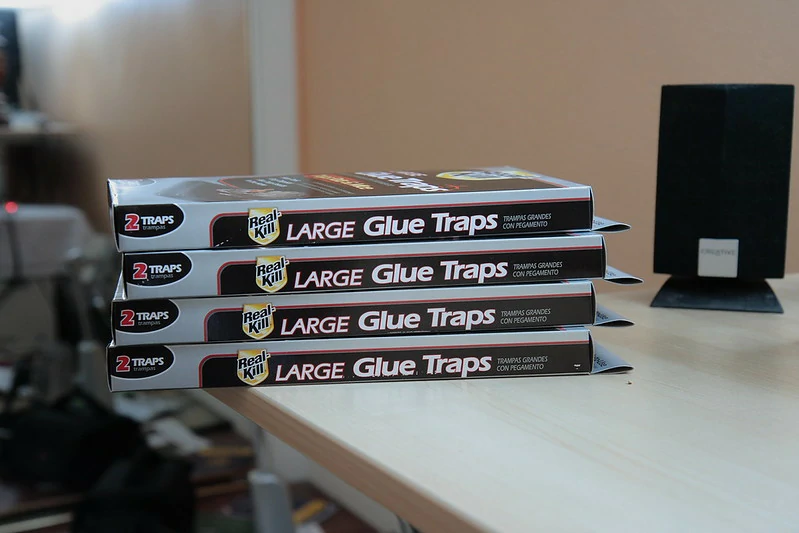
If you’ve gone shopping for a way to catch a mouse, you’ve probably noticed the same product gets called a few different things.
Glue trap, glue board, sticky trap, they all show up on packaging and store shelves seemingly at random.
So is there an actual difference between a glue trap and a glue board, or are they just two names for the same thing?
For catching mice and rats, glue traps and glue boards are the same product. Both terms describe a flat surface coated in a strong adhesive that traps an animal on contact. “Sticky trap” is a third name for the exact same thing.
The terms get used somewhat differently depending on who’s talking though.
There’s one genuinely meaningful distinction worth knowing: rodent glue traps and insect glue traps aren’t quite the same category, even though they work on the same basic idea.
Why These Three Names All Mean the Same Thing
When it comes to rodent control, glue trap, glue board, and sticky trap all describe one product. It’s a flat board or tray covered in a very strong, non-drying adhesive.
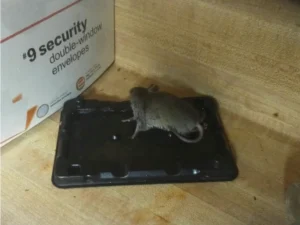
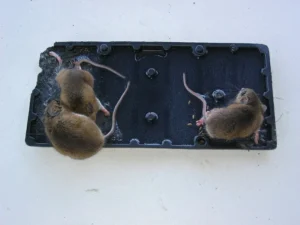
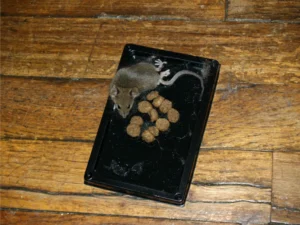
A mouse or rat that walks across it gets stuck, usually by the feet first.
Struggling only pulls more of its body into the glue.
Wikipedia’s own entry on the subject lists all three terms together as interchangeable names for the same device.
Pest control retailers use them the same way too, often within a single product description.
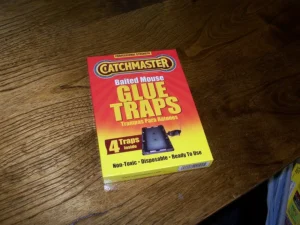
If you search for “glue board” at a pest supply store, you’ll get the exact same product line that shows up under “glue trap” or “sticky trap” elsewhere on the same site.
Where the Terminology Slightly Differs
While the terms describe the same product, there’s a mild pattern in who uses which word.
“Glue board” shows up more often in professional pest control and industry contexts. It’s the kind of language exterminators and commercial suppliers use with each other.
“Glue trap” and “sticky trap” tend to show up more in consumer-facing packaging and everyday conversation.
These are the words a regular homeowner is more likely to search for or say out loud.
Neither of these is a hard rule though. Plenty of consumer products are labeled “glue board” right on the box.
Plenty of professional suppliers use “glue trap” in their own catalogs too.
This is really more of a soft regional and industry habit than any kind of official distinction. If you search for one term, you’ll find the same product under all three names mixed together.
The One Real Distinction: Rodent Traps vs Insect Traps
Here’s where an actual meaningful difference does exist, even though it’s not the glue trap vs glue board question most people are asking.
Glue traps and glue boards made for mice and rats are physically different from glue traps made for insects.
Both use the same basic adhesive concept, but the shape and setup differ.
A rodent glue trap is usually a flat, open board or tray, placed on the floor along a wall. A mouse or rat can walk directly onto it as it moves through your home.
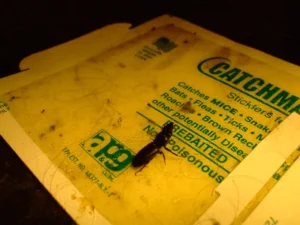
An insect glue trap, sometimes called a sticky card or an insect monitor, works differently.
It’s often a thin card meant to be hung vertically or placed where flying insects, like flies or moths, will land on it.
UK legislation on this topic, the Glue Traps Act, actually draws this distinction directly.
Rodent glue traps are described as boards placed on the floor for rats and mice, which are explicitly separated from most sticky insect traps targeting things like aphids and flies.
In Australia’s Victoria state, the law goes even further and treats them as legally distinct categories entirely.
Insect glue traps are still allowed for sale, but only if they’re built with a cage or cover that physically prevents any animal, not just insects, from making contact with the adhesive.
Do Glue Traps and Glue Boards Come in Different Sizes?
Regardless of which name is on the box, rodent glue traps and glue boards do come in genuinely different sizes.
This matters more than the naming question does.
Mouse-sized glue boards are smaller and typically have a lighter adhesive formula. Mice are lighter and less likely to tear through a thinner glue layer.
Rat-sized glue boards are larger and use a stronger adhesive, built to hold a heavier, more powerful animal that could otherwise pull free.
If you’re not sure which rodent you’re dealing with, most pest control suppliers recommend going with the rat-sized version.
It can hold either a mouse or a rat, while a mouse-sized board might not be strong enough for a rat.
Do They Come in Different Formats Too?
Beyond size, glue traps and glue boards also come in a few different physical formats.
This holds true again regardless of which of the three names is printed on the packaging.
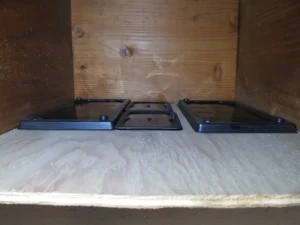
Flat trays are the most basic version, a simple board you place directly on the floor.
Folded tunnel versions turn the flat board into a tent-like shape, which gives rodents a feeling of cover while they investigate.
Mice generally prefer to travel along walls and through enclosed spaces rather than crossing open floor, so this design works with that instinct.
Covered or caged versions add a plastic housing around the adhesive.
This cuts down on dust getting into the glue and can also reduce the risk of a pet or child making accidental contact with the sticky surface.
Some versions come prebaited with a food scent already built in.
Others are sold plain, expecting you to add your own bait, like a small dab of peanut butter, to the center of the board.
A Side-by-Side Look at the Terms and Formats
Since the terminology and the product variations can get confusing together, here’s a clear breakdown of how everything actually lines up.
| Term or Feature | What It Actually Means |
|---|---|
| Glue trap | Same product as a glue board, more common in consumer language |
| Glue board | Same product as a glue trap, more common in professional/industry language |
| Sticky trap | A third name for the same rodent product |
| Rodent glue trap | Flat, open board placed on the floor for mice or rats |
| Insect glue trap | Often a vertical card or caged device for flying insects, legally distinct in some regions |
| Mouse-sized glue board | Lighter adhesive, sized for smaller rodents |
| Rat-sized glue board | Stronger adhesive, sized for larger rodents, works on mice too |
| Flat tray format | Basic open board placed directly on the floor |
| Folded tunnel format | Tent-shaped cover that gives rodents a sense of enclosure |
| Caged or covered format | Plastic housing that reduces dust exposure and accidental contact |
As this table shows, the naming confusion and the actual product differences are really two separate things.
Why This Naming Confusion Exists in the First Place
Part of the reason all three terms get used so loosely probably comes down to how the product itself has been marketed over time.
Glue traps have actually been used in some form for thousands of years, going back to ancient Rome, Greece, and Egypt.
That’s long before any single standardized name existed for them.
As the modern pest control industry grew, different manufacturers and retailers settled on slightly different branding for what was really the same idea.
None of those names ever became the single official term.
Search engines and shoppers ended up treating all three as synonyms because, functionally, that’s exactly what they are for rodent control purposes.
This is actually pretty common across a lot of pest control products, not just glue traps.
Snap traps, for example, get called mouse traps, spring traps, or kill traps depending on the retailer, without any of those names pointing to a genuinely different product either.
Does the Legal Debate Use One Term Over the Other?
Since glue traps have become a genuine animal welfare and legal debate in several countries, it’s worth knowing which term lawmakers actually use.
Lawmakers tend to default to “glue trap” as the formal legal term, even though “glue board” and “sticky trap” describe the identical product.
The UK’s Glue Traps Act, passed in 2022, uses “glue trap” throughout its actual legal text.
It does acknowledge, in its own explanatory notes, that the devices are also commonly called glue boards or sticky boards.
In the US, proposed legislation like Congressman Ted Lieu’s Glue Trap Prohibition Act follows the same pattern, using “glue trap” as the primary legal term.
This matters practically in one specific way. If a law bans “glue traps” in your area, that ban applies to the product regardless of whether the box in the store happens to say glue board or sticky trap instead.
The legal definition covers the device and how it works, not the specific word printed on the packaging.
Does It Matter Which Term You Search or Shop For?
For practical purposes, like buying one of these products or researching whether they’re legal where you live, it genuinely doesn’t matter which of the three terms you use.
Searching “glue board” versus “glue trap” versus “sticky trap” will pull up the same products, the same reviews, and the same regulations in almost every case.
The only situation where the wording actually matters is if you’re specifically looking for an insect-only version.
Those are a genuinely different product, built to keep other animals away from the adhesive entirely.
If you want a rodent-catching product, any of the three terms will get you there.
If you want something limited to insects like flies or spiders, it’s worth double-checking the product description regardless of which name is on the front of the box.
The Animal Welfare Concerns Apply Equally to All Three Names
No matter which of the three terms is on the packaging, the animal welfare concerns around rodent glue traps apply just as much to a “glue board” as they do to a “glue trap” or “sticky trap.”
Since the product itself doesn’t change based on the name, a mouse caught on any version faces the same outcome. It gets stuck, usually by the feet first, and struggling only pulls more of its body into the adhesive.
The RSPCA has reviewed this method directly and describes the suffering involved as extreme, noting it can go on for hours before the animal finally dies from exhaustion, dehydration, or starvation.
This matters if you’re researching whether to use one of these products.
A listing labeled “glue board” might read as somehow gentler or more professional than one labeled “glue trap,” when in reality nothing about the actual device or the welfare outcome changes based on that word choice.
The same goes for legal research.
If you’re checking whether glue traps are banned in your city or state, search using all three terms, since local laws, news coverage, and retailer listings don’t consistently pick one name over the others.
What This Means When You’re Comparing Products Online
If you’re comparing products across different websites or stores, keep in mind that reviews, ratings, and even product photos will often be shared across listings using different names for what’s genuinely the same item.
A five-star review left on a product labeled “glue board” might describe the exact same physical trap you’d find under a “sticky trap” listing somewhere else, sometimes even from the same manufacturer.
This is worth knowing if you’re trying to compare quality between brands, since the naming difference tells you nothing about which product is actually better built or more effective.
Look at the size, format, and adhesive strength described in the listing itself rather than which of the three terms the seller happened to choose.
Which Term Do People Actually Search For Most?
If you’re curious about the popularity of each term, search trends show a real pattern worth knowing, even though it doesn’t point to any product difference.
“Glue trap” tends to be the most commonly searched term overall in the US and Canada, likely because it’s the most straightforward, descriptive phrase for someone who doesn’t already know the product category well.
“Sticky trap” shows up as a common search too, often from people describing the product in their own words rather than using industry terminology they’ve seen on packaging.
“Glue board” gets searched less often by everyday consumers, but shows up more in professional and commercial contexts, like when a business owner is researching pest control options for a restaurant or warehouse.
None of this changes what you’ll find when you search though. All three terms lead to the same category of product, the same retailers, and largely the same reviews and pricing.
Placement Tips That Apply No Matter What You Call It
Since the product is the same regardless of the name on the box, the placement advice is identical too.
Place the trap flat against a wall, ideally in a spot where you’ve already noticed droppings, gnaw marks, or other signs of activity.
Mice tend to travel along walls rather than across open floor space, so a trap in the middle of a room rarely catches anything.
Avoid placing it anywhere near oily or greasy surfaces, like a kitchen stove or near cooking equipment, since oil residue can weaken the adhesive and let a mouse escape after getting only partially stuck.
Cold, damp areas can also reduce how well the glue performs, so a garage or basement in winter might need the trap checked and replaced more often than a warmer spot inside the house would.
Whether the box says glue trap, glue board, or sticky trap, these placement basics stay exactly the same, since you’re working with the same adhesive and the same rodent behavior either way.
Conclusion
Glue traps vs glue boards: is there a difference? Not really, at least not when it comes to catching mice or rats.
Glue trap, glue board, and sticky trap are three names for the exact same product, used somewhat differently depending on whether you’re talking to a pest control professional or shopping as a regular homeowner.
The one genuine distinction worth remembering is between rodent glue traps and insect glue traps, which are built differently and, in places like the UK and Australia, are even treated as legally separate categories.
Beyond that, the real differences you’ll run into while shopping come down to size (mouse versus rat) and format (flat tray, folded tunnel, or covered housing), not which of the three names happens to be printed on the box.
Whichever term you search for, you’ll end up looking at the same product, and the same set of animal welfare and legal questions that come along with it.
Understanding that upfront can save you time comparing products that were never actually different to begin with.

Hi, my name is Ezra Mushala, i have been interested animals all my life. I am the main author and editor here at snakeinformer.com.