
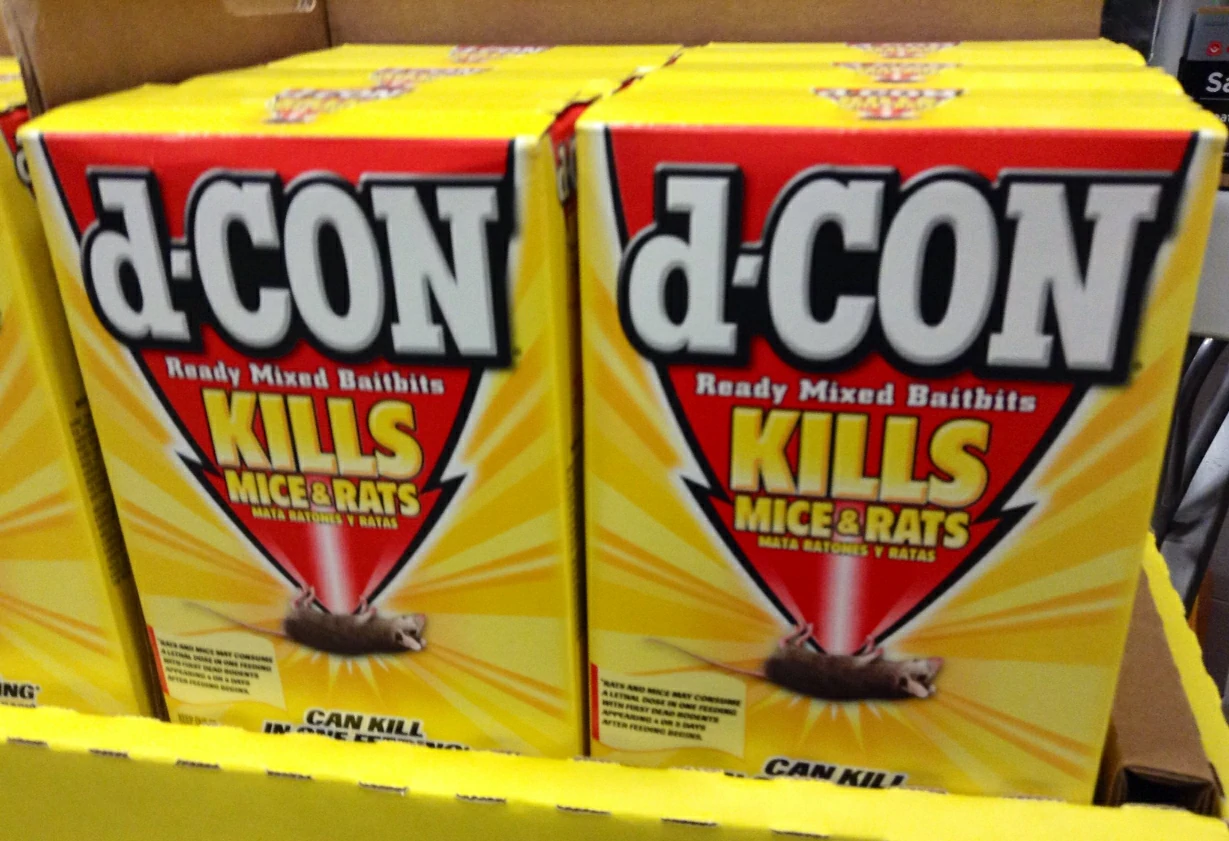
If you’ve ever set out mouse poison, you may have heard the old claim that it makes mice thirsty.
The idea is that it sends them outside to find water, so they don’t die and smell up your walls.
It’s a popular idea, and it sounds like it makes sense.
So is there any truth to it? Does mouse poison actually make mice thirsty?
No, mouse poison doesn’t make mice thirsty in any meaningful way. This is a long standing myth. Most rodenticides work by causing internal bleeding, not dehydration. There’s no solid evidence that poisoned mice go looking for water before they die.
The idea likely stuck around because it offers a tidy explanation for something people want to be true.
A poisoned mouse conveniently dying outside, away from your walls.
Unfortunately, that’s not how it usually works.
Where This Myth Came From
The thirst myth has been around for decades, and it’s easy to see why it caught on.
People wanted a reason to believe that poisoned mice wouldn’t die and rot inside their walls.
The story goes that the poison triggers intense thirst, sending the mouse outside in search of water.
It supposedly dies somewhere you’ll never smell it.
It’s a comforting idea, but it isn’t accurate.
Pest control companies have pushed back on this claim for years.
According to Orkin, one of the largest pest control companies in the US, anticoagulant poisons like brodifacoum and warfarin cause internal bleeding, not thirst.
DoMyOwn, a major pest control retailer, lists this directly as a myth on their site as well.
Their position is clear: no known rodenticide causes mice or rats to leave a structure in search of water after eating it.
How Rodenticide Actually Works
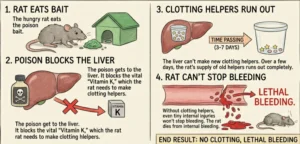
Most mouse poison sold today is an anticoagulant. This is a chemical that stops blood from clotting the way it normally would.
Once a mouse eats enough of it, even small, everyday injuries inside the body can turn into serious, ongoing bleeding.
This is what ultimately causes death, not dehydration or thirst.
There are two general types.
First generation anticoagulants, like warfarin, need to be eaten multiple times over several days to build up a lethal dose.
Second generation anticoagulants, like bromadiolone and brodifacoum, are stronger.
They can be lethal after just one feeding, though death still takes several days either way.
Neither type works by drying out the mouse’s body or triggering thirst. The mechanism is entirely about blood clotting, not hydration.
What Pet Poison Helpline Says About the Thirst Myth
Pet Poison Helpline is a well known animal poison control resource used by vets across North America.
They’ve directly addressed this exact myth in their published guidance for pet owners.
According to their veterinary staff, the most common rodenticides cause one of three things.
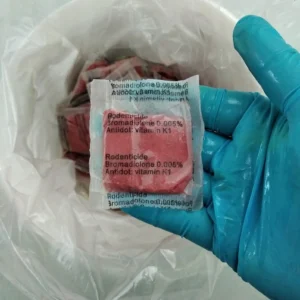
That’s internal bleeding, brain swelling, or a dangerous calcium buildup in the blood.
None of these work by causing dehydration.
They do note one nuance worth mentioning.
In pets with kidney damage from certain rodenticides, increased thirst can show up as a symptom.
But that thirst comes from the kidney damage itself, not from the poison directly drying the animal out.
This distinction matters.
Thirst can sometimes appear as a side effect of organ damage in the later stages of poisoning.
But it isn’t the mechanism causing the poisoning in the first place.
It’s not something that happens early on, and it doesn’t drive the animal to leave the building.
Why Mice Usually Die Wherever They Already Are
Since anticoagulant poison takes several days to work, a mouse typically keeps living its normal routine for a while after eating a lethal dose.
It doesn’t feel sick right away.
This means it usually stays close to its nest, its food source, and its usual hiding spots, the same places it always spends time in.
There’s no sudden urge pulling it toward water or the outdoors.
By the time symptoms do show up, like weakness and lethargy, the mouse is often too sick to travel far anyway.
Instead of heading outside, it tends to hide in the nearest safe, quiet spot it can find.
This is exactly why dead mice are so often found inside walls, under floorboards, or in other hard to reach places inside a structure.
It has nothing to do with searching for water and everything to do with the mouse simply staying where it feels safe.
Is There Any Truth to the Idea at All?
It’s worth checking the actual science here rather than just taking pest control marketing at its word.
Some lower quality sources repeat the thirst claim without any real backing.
The mechanism of anticoagulant rodenticides is well documented in veterinary toxicology literature.
According to Cornell’s Wildlife Health Lab, these poisons work by interfering with how the body activates vitamin K, which the liver needs to produce clotting factors.
That’s the entire mechanism. Nothing about it involves the body’s water balance or thirst signals in any direct way.
Veterinary case studies on anticoagulant poisoning do show increased thirst occasionally showing up as one symptom among many, in advanced, severe cases.
This shows up alongside things like rapid breathing, pale gums, and fluid buildup in the chest or abdomen.
However, this isn’t a specific or early symptom of anticoagulant poisoning. It isn’t caused by the poison directly making the animal thirsty.
It’s a downstream sign of a body in serious distress, not a distinct mechanism the poison targets.
This is an important distinction.
A late-stage symptom that shows up occasionally in severely ill animals is very different from a poison reliably causing thirst as a way of luring rodents outside.
No credible toxicology source describes thirst as part of how these poisons function.
None describe it as a reliable or early sign either. The core mechanism, confirmed across veterinary and toxicology literature, is entirely about blood clotting failure.
Why This Myth Matters for Pest Control Decisions
Believing this myth can actually lead to poor pest control choices.
Some people avoid using anticoagulant poison indoors because they assume it will cause a bad smell from a mouse dying inside a wall.
Dead rodent odor is a real and legitimate concern.
However, avoiding poison for the wrong reason, thinking it won’t happen if you just wait for the mouse to leave, isn’t a reliable strategy.
If odor control is your main concern, it’s worth thinking about where you place bait.
Consider trap based methods instead, since traps let you locate and remove the mouse immediately, rather than relying on chance.
Some people also mistakenly believe that leaving out extra water near bait stations will encourage the mouse to “go find that water” and die outside.
There’s no real evidence this changes anything about where a mouse ends up.
What Actually Determines Where a Poisoned Mouse Dies?
If thirst isn’t the deciding factor, what actually determines where a mouse ends up when it dies?
A few things matter more than people usually realize.
The location of the mouse’s nest plays the biggest role.
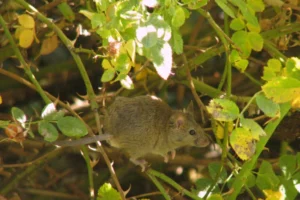
If the nest is inside your home, in a wall cavity or attic space, that’s likely where the mouse will die.
That’s simply where it naturally retreats once it starts feeling unwell.
The mouse’s normal territory matters too.
Mice tend to stay within a fairly small home range, often just 10 to 30 feet from their nest, so they rarely wander far even when sick.
Timing also plays a role.
Since it can take several days for anticoagulant poison to take effect, a mouse might travel through its usual routine many times before symptoms even begin.
The eventual location ends up being somewhat random within its normal territory.
None of these factors involve thirst or a search for water.
It really comes down to where the mouse was already living and moving around before it got sick.
How to Reduce the Chance of Odor Problems
Since the thirst myth doesn’t hold up, it’s worth focusing on strategies that actually work.
These can help you avoid a decaying mouse smell inside your home.
Placing bait stations in areas where you can more easily check for activity, like garages or basements, can help limit where a mouse might end up.
Sealing off wall voids and other hidden cavities beforehand can also reduce the number of hidden places a dying mouse could retreat to.
Using snap traps instead of poison is another option many pest control professionals recommend specifically because it removes the guesswork.
You know exactly where the mouse died and can dispose of it right away.
If you do use poison and are worried about odor, check known mouse pathways and likely nesting areas regularly.
Doing this during the week or so after placing bait can help you catch and remove a mouse before decomposition becomes a bigger problem.
Do Rats Behave the Same Way as Mice?
Rats and mice are both affected by anticoagulant poison in the same basic way, since the chemistry doesn’t change based on species.
However, their behavior does differ somewhat.
Rats generally need more daily water intake than mice do, since mice get a larger portion of their hydration from food alone.
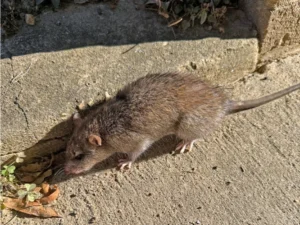
This means a poisoned rat might drink somewhat more than usual in its final days.
That’s simply a normal part of its regular routine, not the poison specifically driving it to seek water out.
Rats also tend to have a larger territory than mice, sometimes ranging over 100 feet from their nest.
This can mean more unpredictability in where a poisoned rat ends up compared to a mouse.
Either way, the same core fact applies to both.
Neither species is driven outside specifically by thirst.
Both are more likely to die within their normal living area than to travel somewhere new because of the poison itself.
Does Bait Placement Near Water Sources Make a Difference?
Some people wonder if placing bait near a water source, like under a sink or near a hose bib, might somehow interact with the poison.
Or maybe encourage a mouse toward water once it’s eaten it.
There’s no evidence this changes how the poison works at all.
Mice are drawn to bait based on smell and food value, not its distance from water. The poison itself doesn’t respond to nearby moisture in any way.
If anything, placing bait near a water source just means mice are likely already traveling through that area.
Mice do need occasional access to water, and will often nest or travel near a reliable source if one’s available.
This makes areas like under sinks or near washing machines common spots for mouse activity in general. Water or no water plays no real role in the poisoning itself.
What Actual Symptoms Look Like in a Poisoned Mouse
If you’re curious what a mouse dying from anticoagulant poisoning actually experiences, the signs line up with internal bleeding, not thirst.
In the early stages, a mouse might seem a bit more sluggish than usual, though this is often hard to notice unless you’re specifically watching for it.
Appetite may decrease as the mouse starts feeling generally unwell.
As the poisoning progresses, weakness becomes more obvious.
The mouse may struggle to move normally, and its typical energetic scurrying slows down considerably.
In the final stages, pale gums and difficulty breathing can appear.
Visible bruising or bleeding shows up too, all consistent with the body’s declining ability to clot blood.
None of these symptoms point to thirst as a driving factor.
This is also part of why anticoagulant poisoning, while effective, is considered a fairly slow and unpleasant way for an animal to die.
It’s a separate ethical consideration some people weigh when choosing between poison and trap based control.
How This Myth Compares to Other Rodent Control Myths
The thirst myth isn’t the only piece of rodent folklore floating around.
It helps to know a few of the other common ones, since they tend to circulate together.
One common myth claims that certain non-toxic baits can “dry up” a mouse’s body so it doesn’t smell after death, similar to the thirst idea in spirit.
According to DoMyOwn’s pest myths guide, there’s no product on the market that reliably prevents decomposition odor this way.
Another widespread myth involves peppermint oil as a natural mouse repellent.
While mice do have sensitive noses, most research shows peppermint oil is, at best, a mild and short lived deterrent.
It’s not something that reliably keeps mice away long term.
There’s also a persistent belief that a single mouse sighting means you only have one mouse.
In reality, mice breed quickly, and seeing even one usually means there are several more you haven’t spotted yet, often nesting somewhere out of sight.
Knowing which of these ideas hold up and which don’t can save you time and money.
A lot of pest control folklore sounds reasonable on the surface but doesn’t hold up once you look at how these animals actually behave.
Understanding the Real Mechanism Matters
Knowing that rodenticide works through internal bleeding rather than thirst isn’t just a fun fact.
It actually has practical value if you’re dealing with a rodent problem yourself.
For one, it helps set realistic expectations about timing.
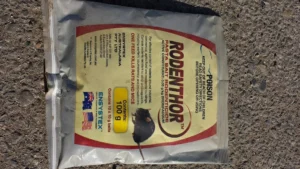
Since anticoagulants take days to work, you shouldn’t expect to see dead mice right away.
Don’t assume the poison isn’t working just because mice are still around a day or two after placing bait.
It also helps with pet safety.
Since thirst isn’t the mechanism, giving a pet extra water after suspected exposure won’t help “flush out” the poison.
It could waste valuable time before getting proper veterinary care, which typically involves vitamin K treatment.
Understanding the real mechanism also helps explain why professional pest control companies emphasize bait station placement and monitoring so heavily.
Since the poison doesn’t control where the mouse ends up, controlling where the bait sits becomes the more useful lever homeowners actually have.
Conclusion
The idea that rat and mouse poison makes rodents thirsty, sending them outside to conveniently die near water, is a myth.
Multiple pest control authorities, including Orkin and DoMyOwn, directly state there’s no evidence for it.
Anticoagulant rodenticides work by causing internal bleeding, not dehydration.
Increased thirst can occasionally appear as one symptom among many in severely ill animals.
But it isn’t part of how the poison works, and it isn’t what causes a rodent to leave a building.
What actually determines where a poisoned mouse or rat dies comes down to its nest location and normal territory, not thirst.
Since the poison takes days to act, the animal usually just continues its regular routine until it becomes too weak to move far.
If odor concerns are part of why you’re hesitant to use poison indoors, it’s worth looking into trap based alternatives.
Being strategic about where you place bait matters far more than relying on a myth that doesn’t hold up.

Hi, my name is Ezra Mushala, i have been interested animals all my life. I am the main author and editor here at snakeinformer.com.