
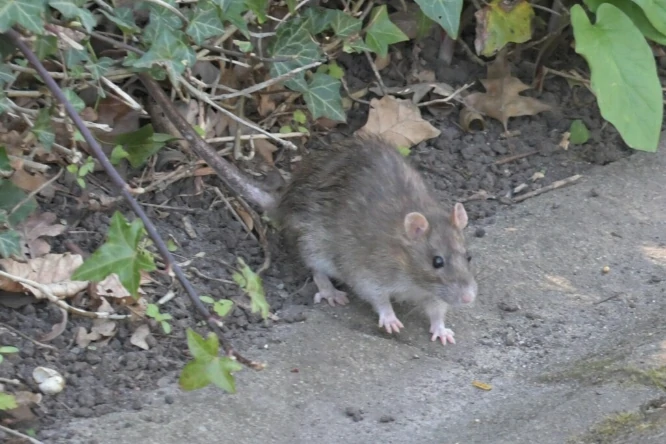
You might have heard that some rat poisons “mummify” rats or dry them out so they don’t smell when they die. This sounds appealing if you’re worried about dead rats decomposing in your walls and creating a horrible stench.
But is this claim real, or is it marketing hype designed to sell products? So what rat poison actually dries rats out?
No rat poison truly dries out or mummifies rats. This is a persistent myth used to market certain products. All dead rats decompose and smell regardless of what poison killed them. Some products claim to reduce odor, but they don’t prevent decomposition or drying. The “mummification” claim is scientifically false and used as a selling point for products that don’t work any differently than others.
Understanding why this myth exists and what actually happens when rats die helps you set realistic expectations and avoid wasting money on products making false promises.
The Mummification Myth Explained
The idea that certain rat poisons dry out rats comes from marketing claims made by some manufacturers, not from scientific reality.
These products claim they contain ingredients that reduce water retention in the rat’s body, causing it to “dry out” rather than decompose normally.
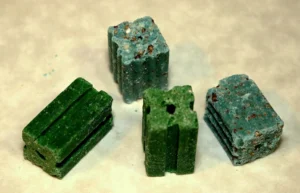
The theory sounds plausible: a dried-out rat (like beef jerky or a mummy) wouldn’t smell as bad as a decomposing one.
In reality, no poison works this way. Dead rats decompose through bacterial action and chemical breakdown, and this process happens regardless of what killed the rat.
The claim persists because people want to believe it. Nobody wants to deal with the smell of dead rats in walls, so a product promising to eliminate that problem is very appealing.
Some manufacturers continue using this marketing angle even though it’s been thoroughly debunked by scientists and pest control professionals.
How Rats Actually Decompose
Understanding the real decomposition process shows why “drying out” isn’t possible with poison.
When a rat dies, bacteria already present in its digestive system start breaking down tissues from the inside out.

These bacteria produce gases (hydrogen sulfide, methane, ammonia) that cause the characteristic smell of decomposition. This happens regardless of what killed the rat.
Moisture in the rat’s tissues provides the environment bacteria need to multiply and break down organic matter.
In enclosed spaces like wall voids, the lack of airflow and relatively stable temperature create ideal conditions for decomposition.
The smell typically starts 5 to 7 days after death and lasts 1 to 3 weeks depending on the rat’s size, temperature, and humidity levels.
After several weeks, the tissues do eventually dry out through natural dehydration, but this happens long after the smelliest phase of decomposition is over.
Products That Claim to Dry Out Rats
Despite the science, several products still market themselves using the mummification angle:
| Product Name | Active Ingredient | Claims | Reality |
|---|---|---|---|
| RatX | Corn gluten meal, salt | “Non-toxic,” dries out rats through dehydration | Not a true poison, relies on dehydration which rats can avoid by drinking water |
| Enforcer Rodent Rid | Mineral salts, grains | Reduces decomposition odor | No evidence it works differently than standard poison |
| d-Con Refillable Bait Station (older formulas) | Brodifacoum + “desiccants” | Mummifies rats | False claim, decomposition occurs normally |
| Just One Bite | Bromadiolone | Some versions claimed to reduce odor | Standard anticoagulant, no drying effect |
| Tomcat | Bromethalin or brodifacoum | Some marketing mentioned reduced smell | No special drying properties |
These products either make false claims or use vague language like “reduces odor” without specifying how.
Why the Claim Is Physically Impossible
From a biological standpoint, causing a rat to “mummify” through ingested poison isn’t feasible.
True mummification requires very specific conditions: extreme dryness, salt preservation, or chemical treatment that prevents bacterial growth.
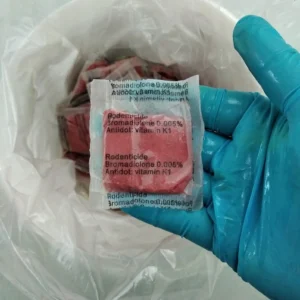
A dead rat in a wall void doesn’t have these conditions. There’s moisture in the air and in the rat’s tissues, and bacteria are already present.
For a poison to prevent decomposition, it would need to kill all bacteria in the rat’s body and somehow extract all moisture. No poison does this.
Even if a poison made a rat drink less water before death (which would cause suffering), the rat’s body would still contain enough moisture to decompose.
The only way to get a truly “dried out” rat is through natural desiccation over many weeks in very dry conditions, which happens after decomposition, not instead of it.
What Actually Causes Less Smell?
There are some factors that reduce the smell from dead rats, but they have nothing to do with special poison.
Smaller rats decompose faster and produce less total odor than larger rats. A small mouse creates minimal smell that might only last a few days.
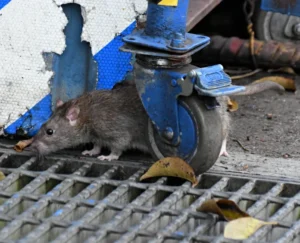
Very dry environments speed up natural desiccation. Rats that die in hot, dry attics might dry out faster than those in damp basements, but they still decompose first.
Good ventilation dilutes odors. Rats that die in areas with air movement smell less than those in completely enclosed wall voids.
Distance from living spaces makes the smell less noticeable. A rat that dies in an outer wall might not smell as strong inside your house as one that died in an interior wall.
Time eventually eliminates all smell as the rat fully decomposes and dries out naturally, but this takes weeks.
RatX: The “Natural” Alternative
RatX deserves special mention because it’s heavily marketed as a non-toxic product that dries rats out.
RatX contains corn gluten meal and salt. The theory is that rats eat it, become dehydrated from the salt, and die from dehydration rather than poison.
The marketing claims this dehydration causes the rat to dry out and not smell when it dies.
In reality, rats are smart enough to drink water when they’re thirsty. If RatX makes them dehydrated, they’ll just drink more, which neutralizes the effect.
For RatX to work, rats would need to eat a huge amount without access to any water, which is unrealistic in most environments.
Even if a rat did die from dehydration (which would be slow and cruel), it would still decompose normally. Dehydration doesn’t prevent bacterial decomposition.
Many pest control professionals and consumer reviews report that RatX simply doesn’t work effectively for killing rats.
What Do Manufacturers Actually Add to Products?
Some rat poisons do contain additives, but they don’t prevent decomposition.
Bittering agents like denatonium benzoate are added to make the poison taste horrible to humans and pets. This is a safety feature, not an odor-reduction feature.
Preservatives in the bait itself (like BHT or BHA) prevent the bait from spoiling before rats eat it. They don’t preserve the rat after death.
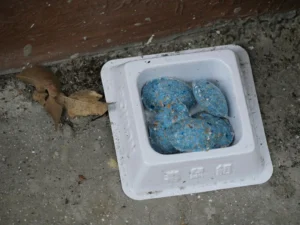
Dyes give the poison a distinctive color for identification. They have no effect on decomposition.
Wax or paraffin in blocks helps them hold together and resist moisture. This affects the bait, not the rat.
Some products might add scent masking agents to the bait, but these work on the living rat’s sense of smell, not on the dead rat’s odor.
The Truth About Anticoagulants and Decomposition
Anticoagulant poisons (the most common type) definitely don’t cause drying or mummification.
Rats that die from anticoagulant poisoning die from internal bleeding. Their bodies are full of blood pooled in tissues and organs.
If anything, anticoagulant-poisoned rats might decompose slightly faster because the extra blood provides more nutrients for bacteria.
The presence of blood doesn’t make them smell worse though. Decomposition smell comes from bacterial action, not from blood specifically.
There’s no evidence that the type of poison affects decomposition speed or odor intensity in any meaningful way.
Do Dead Rats Always Smell?
The unfortunate truth is that yes, dead rats almost always produce a smell during decomposition.
The intensity varies based on size, location, temperature, and humidity, but some smell is unavoidable.
Very small mice might produce a faint odor that only lasts 3 to 5 days and might not even be noticeable.
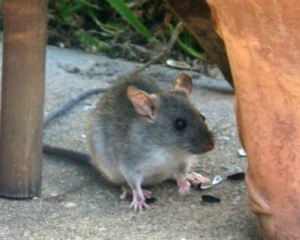
Medium rats produce a moderate smell lasting 1 to 2 weeks. It’s unpleasant but tolerable.
Large Norway rats create a strong, pervasive odor that can last 3 weeks or more and makes rooms unusable.
The worst-case scenario is a large rat dying inside a wall void directly behind a frequently used room. The smell will be strong and there’s no way to remove the carcass.
How to Actually Minimize Smell from Dead Rats
Since no poison prevents decomposition, you need other strategies to minimize odor.
- Use snap traps or electronic traps instead of poison when possible. This lets you remove dead rats immediately before they decompose.
- Place poison in accessible locations where you can retrieve dead rats. Use bait stations in garages, sheds, or attics where you can reach them, not inside walls.
- Seal entry points so rats can’t get into walls in the first place. If they can’t enter walls, they can’t die there.
- Use odor absorbers like activated charcoal, baking soda, or commercial products like Fresh Wave when dealing with decomposition smell.
- Improve ventilation in areas where rats might die. Fans and open windows dilute odors and speed up natural desiccation.
- Wait it out if a rat dies in an inaccessible location. The smell will fade in 1 to 3 weeks as decomposition completes.
Can You Speed Up Decomposition?
You can’t make rats decompose faster once they’re dead in your walls, but you can create conditions that minimize smell duration.
Increasing temperature speeds up bacterial activity, which makes decomposition faster but smell stronger initially. This isn’t really helpful.

Decreasing temperature slows decomposition and reduces smell intensity, but extends the duration. Also not ideal.
The natural process takes as long as it takes. There’s no shortcut that reduces both intensity and duration.
Focus instead on masking or absorbing odor while waiting for natural decomposition to finish.
What Pest Control Professionals Say
Professional exterminators are very clear about the mummification myth.
They’ll tell you outright that no poison prevents rats from smelling when they die. Anyone claiming otherwise is either misinformed or lying to make a sale.
Professionals deal with dead rat smell regularly. Their strategy is to remove carcasses when possible and wait for decomposition when it’s not.
Many pros have switched to using traps instead of poison for indoor rat control specifically because of the smell issue.
When they do use poison, they place it in areas where dead rats can be retrieved (like attic floors or crawl spaces) rather than inside walls.
Reputable pest control companies will set realistic expectations about smell rather than promising solutions that don’t exist.
Legal and Ethical Issues with False Claims
Marketing rat poison with false mummification claims raises both legal and ethical questions.
The EPA regulates rodenticide labeling. Making false or misleading claims about how a product works can violate federal law.
Some products have been forced to change their labels after complaints about unsubstantiated claims.
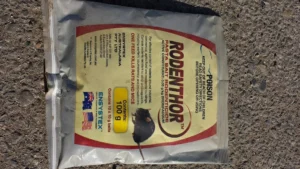
From an ethical standpoint, selling products based on false promises takes advantage of desperate homeowners dealing with rat problems.
Consumers who buy these products expecting no smell are disappointed and might waste time and money that could have been spent on effective solutions.
If you encounter products making mummification claims, report them to the EPA or your state’s consumer protection agency.
What Actually Works for Smell Control
Since prevention through poison isn’t possible, focus on reactive solutions.
- Odor neutralizers like Fresh Wave, Nature’s Miracle, or Biocide Systems use enzymes or oxidizers to break down smell molecules rather than just masking them.
- Activated charcoal absorbs odors effectively. Place bowls of it in the room where the smell is strongest.
- HEPA air purifiers with activated carbon filters remove odor particles from the air and make rooms more tolerable.
- Ozone generators can eliminate odors but require caution. They’re effective but you can’t be in the room while they’re running.
- Ventilation is the simplest solution. Open windows, run fans, and increase airflow to dilute and remove odors.
Time and patience are ultimately what solve the problem. The smell will go away once decomposition is complete.
Conclusion
No rat poison dries out or mummifies rats. This claim is a marketing myth used to sell products by promising something that’s scientifically impossible.
All dead rats decompose normally regardless of what poison killed them, and decomposition always produces smell. The intensity and duration vary based on the rat’s size, location, temperature, and humidity, but the smell is unavoidable.
Products like RatX that claim to work through dehydration are either ineffective (rats just drink more water) or rely on the same false mummification myth.
Anticoagulants, bromethalin, and all other rat poisons cause rats to decompose normally through bacterial action, and no additive or ingredient prevents this.
If you’re concerned about smell from dead rats, the real solutions are using traps instead of poison so you can remove dead rats immediately, placing poison only in accessible locations where carcasses can be retrieved, sealing entry points so rats can’t die in walls, and using odor neutralizers to manage smell while natural decomposition runs its course.
Don’t waste money on products making false promises about mummification or drying out rats.

Hi, my name is Ezra Mushala, i have been interested animals all my life. I am the main author and editor here at snakeinformer.com.