
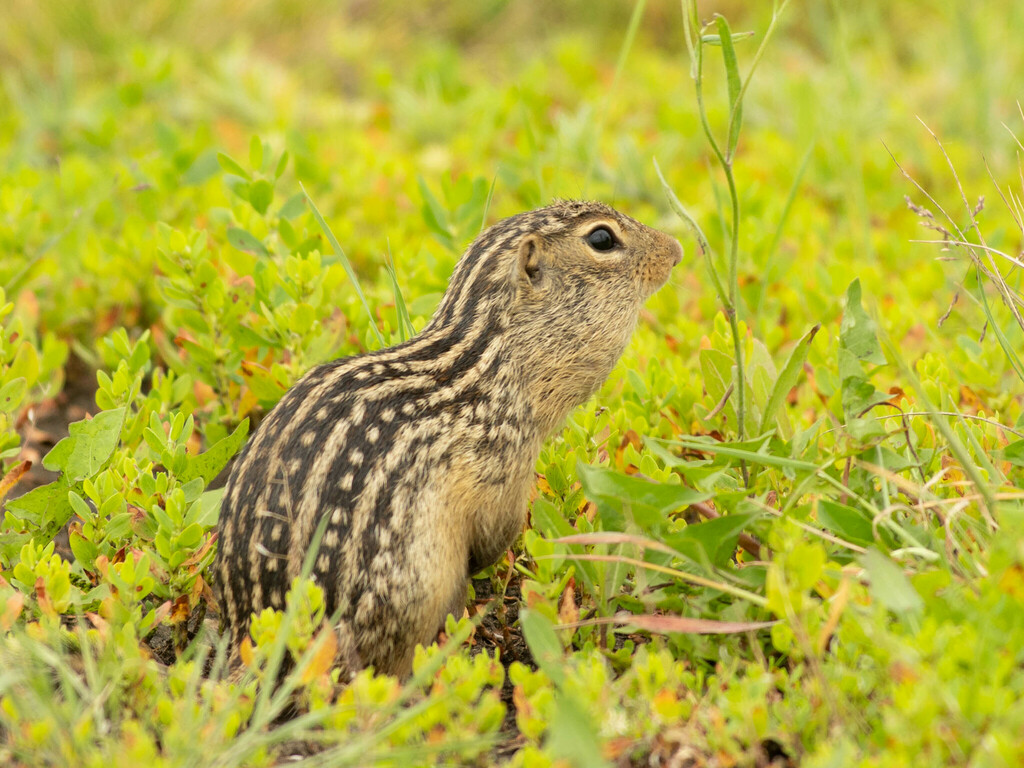
If you’ve got a rat problem but also enjoy watching squirrels in your yard, you’ve probably looked for a rat poison that won’t put them at risk.
It seems like a pretty reasonable thing to look for.
So is there actually such a thing as squirrel safe rat poison?
No conventional rat poison is truly safe for squirrels. Anticoagulants and other rodenticides work on rodents in general, not just rats. However, a small category of EPA registered “minimum risk” products, such as RatX, uses non-toxic, food based ingredients instead of traditional poison and is marketed as safe for wildlife. These products work differently, but the EPA doesn’t independently test them for their safety claims in the same way it does conventional pesticides.
That difference is important.
So before choosing a product, it’s worth looking at both categories and understanding what makes them different.
Why Most Rat Poison Isn’t Safe for Squirrels
Traditional rat poison works by targeting biological processes that rats, mice, and squirrels all share.
They’re all rodents, after all, and their bodies work in many of the same ways.
Anticoagulant poisons are the most common type on the market.
They work by interfering with the body’s ability to use vitamin K, which is needed for normal blood clotting.
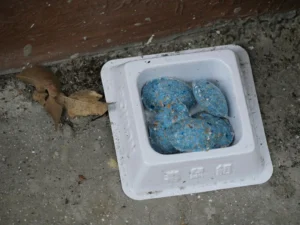
The important part is that this process doesn’t know the difference between a rat and a squirrel.
According to the University of New Hampshire Extension, there are no raptor safe or mammal safe conventional rodenticides currently available.
That’s a direct statement from a university wildlife extension program, rather than a claim made by a product manufacturer.
So if a squirrel eats enough conventional rat poison, it can face the same basic poisoning risk as a rat.
This applies to both first and second generation anticoagulants.
It also applies to non-anticoagulants such as bromethalin.
What Makes Second Generation Anticoagulants Especially Risky
Not every conventional rat poison carries exactly the same level of risk.
Understanding the difference helps explain why some products can be especially dangerous to squirrels.
Second generation anticoagulants, such as brodifacoum, bromadiolone, difenacoum, and difethialone, are designed to be lethal after a single feeding.
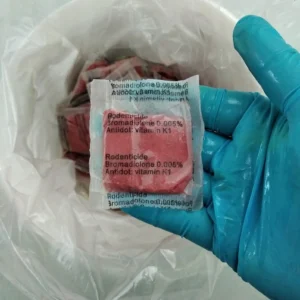
That’s different from older first generation products, which usually require multiple feedings over several days.
According to the EPA, rodents can consume a lethal dose of these stronger poisons in a single night.
But that doesn’t mean they stop eating the bait.
They can continue feeding on it over the following days.
Death usually doesn’t occur until five to seven days after the lethal dose has been reached.
That longer feeding period creates another problem.
A rodent, or a non-target animal such as a squirrel, can end up taking in much more poison than the minimum amount needed to cause death.
It can also increase the risk to predators that later eat the poisoned animal.
The One Category That’s Genuinely Different: Minimum Risk Pesticides
There is one particular category of product that’s worth looking at separately from conventional rat poison.
These products use a different chemical approach and are regulated differently too.
The EPA allows certain pesticide products to qualify as “minimum risk pesticides” under section 25(b) of federal pesticide law.
These products have to contain only certain ingredients from a specific list of pre-approved, low risk substances.
RatX is probably the best known product in this category that’s marketed for rodent control.
According to the manufacturer, it uses food based ingredients that cause dehydration after rodents eat the product instead of using a traditional poison.
Because it doesn’t use an anticoagulant or another conventional toxin, the manufacturer says there is no secondary poisoning risk.
The idea is that there’s no toxic chemical left behind in the same way there would be with a conventional rodenticide.
So there’s nothing to pass up the food chain to a predator that eats the rodent.
Why “EPA Minimum Risk” Doesn’t Mean “EPA Tested”
This is an important difference that’s easy to overlook.
Seeing the words “EPA minimum risk” can make a product sound like the EPA has tested it and officially approved its safety claims.
That’s not quite what it means.
According to the EPA’s own guidance on minimum risk pesticides, the agency generally doesn’t review or register products that qualify for this exemption.
It also doesn’t provide the same label review for these products.
So in practice, the specific safety and effectiveness claims made for a minimum risk product come from the manufacturer rather than independent EPA testing.
The product can still legally be sold under the exemption.
That doesn’t automatically mean the manufacturer’s claims are false.
The ingredients themselves are on an EPA approved list because they’re considered low risk.
The important distinction is that the finished product hasn’t gone through the same rigorous review process as a conventional registered pesticide.
Comparing Rat Poison Types and Their Risk to Squirrels
The differences become a little easier to understand when you put the main categories side by side.
| Poison Type | Examples | How It Works | Risk to Squirrels | Secondary Poisoning Risk |
|---|---|---|---|---|
| First generation anticoagulant | Warfarin, diphacinone, chlorophacinone | Blocks vitamin K, causing internal bleeding over several feedings | Real risk, but requires repeated feeding | Lower, but still present |
| Second generation anticoagulant | Brodifacoum, bromadiolone, difenacoum | Blocks vitamin K and can be lethal after one feeding | High risk from a single feeding | High, due to extended feeding before death |
| Non-anticoagulant (nervous system) | Bromethalin | Damages the nervous system | Real risk, varies by dose | Present, though the mechanism differs |
| Non-anticoagulant (vitamin D based) | Cholecalciferol | Causes dangerous calcium buildup | Real risk, varies by dose | Present |
| Minimum risk (25b) products | RatX and similar | Food based ingredients that cause dehydration | Manufacturer claims low risk | Manufacturer claims none, but not independently EPA tested |
This table is meant as a general comparison.
It isn’t a guarantee about how any particular product will perform in the real world.
The actual outcome can depend on the formulation, dose, and how the product is used.
What Wildlife Experts Actually Recommend Instead
Because both conventional and minimum risk poison products have limitations, wildlife and extension experts generally point toward prevention and exclusion.
They consider these approaches more reliable than relying on poison alone.
According to UNH Extension, a good long term strategy starts with controlling the things that attract rodents.
That means removing food sources such as bird feeders, pet food, and compost that can attract rodents in the first place.
Then there’s exclusion.
Sealing gaps and holes around your home, ideally keeping them no larger than a quarter inch, can stop rodents from getting inside without using poison at all.
Regular cleaning and sanitation are also part of the basic recommendations made by extension programs across North America.
Storing feed in metal containers instead of plastic ones matters too, since rodents can chew through plastic.
These methods don’t carry the same poisoning risks as conventional or minimum risk products.
More importantly, they deal with the source of the rodent problem instead of only dealing with the rodents after they’ve already arrived.
If You Still Want to Use Poison, What Should You Prioritize?
If prevention and exclusion aren’t completely solving your rat problem and you’re thinking about using poison as an additional tool, there are a few things to keep in mind.
They can help reduce the risk to squirrels specifically.
Choosing a first generation anticoagulant instead of a second generation product reduces the risk of a large accumulated dose.
First generation products require multiple feedings and don’t remain in an animal’s system as long as the stronger products do.
A secured, tamper resistant bait station can also reduce the chance of a squirrel finding the bait in the first place.
Keeping the station away from areas where squirrels regularly spend time, such as trees and bird feeders, can reduce the risk even further.
If you’re specifically interested in a minimum risk product such as RatX, it can be considered a lower risk option.
Just keep in mind that its safety claims come mainly from the manufacturer rather than independent government testing.
Whatever product you use, check it regularly and remove it once the rat problem has been resolved.
That limits the amount of time squirrels are exposed to any potential risk.
Are There Squirrel Specific Poison Products?
This is another point worth clearing up because some products are marketed as “squirrel poison.”
That wording can make it sound like they’re made specifically for squirrels.
Usually, they aren’t.
Products sold for squirrel control are typically the same anticoagulant or non-anticoagulant rodenticides used for rats.
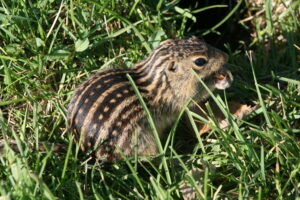
They’re often just labeled or marketed toward squirrel control instead of being a genuinely different squirrel specific formula.
In some cases, using a rat poison product against squirrels can also fall outside the product’s legal label instructions.
Most rodenticides are labeled for rats and mice, and sometimes ground squirrels, rather than tree squirrels.
There’s another issue too.
Squirrels are classified as game animals or otherwise protected wildlife in many US states and Canadian provinces.
That means additional legal restrictions can apply beyond what’s written on the rat poison label itself.
For that reason, it’s worth checking your local wildlife regulations before using any poison product to target squirrels.
Talking to a licensed pest control professional can also help, regardless of how a particular product is marketed.
What’s Actually in Minimum Risk Products Like RatX
Since minimum risk products aren’t independently tested by the EPA, it helps to understand what can actually go into their formulas.
That gives you a better idea of what these products can and can’t contain legally.
The EPA maintains a specific list of active ingredients that are allowed in minimum risk pesticides under the 25(b) exemption.
These ingredients are generally food grade or naturally derived substances that are already considered low risk in other situations.
According to product information from RatX, its formula uses food based ingredients that reportedly coat the digestive tract after a rodent eats the product.
This interferes with normal digestive signals and eventually causes dehydration instead of the internal bleeding caused by anticoagulants.
So the mechanism really is different from a conventional rodenticide.
There’s still an important point about the word “non-toxic.”
It means the product doesn’t rely on a traditional poison.
It doesn’t necessarily mean that eating large amounts of the product has absolutely no effect on an animal.
How to Read Rat Poison Labels for Yourself
Instead of relying entirely on marketing language, you can learn a lot by looking directly at the product label.
The label tells you what you’re actually using and how the product is classified.
Every registered pesticide sold in the US has an EPA registration number on its label.
It’s usually printed near the ingredients list.
Minimum risk products are different because they’re exempt from this registration requirement.
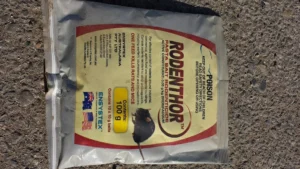
So if a product doesn’t have an EPA registration number, that can indicate that it’s being sold under the minimum risk exemption.
It’s still worth confirming this directly with the manufacturer if you want to be certain.
You can also check the active ingredient against the EPA’s published information on rodenticide types.
That can quickly tell you whether a conventional product is a first generation anticoagulant, second generation anticoagulant, or non-anticoagulant.
This kind of label check only takes a minute or two.
It also gives you a much clearer picture than marketing terms such as “pet safe” or “wildlife friendly.”
Those terms aren’t standardized or regulated in the same way.
Weighing Cost, Effectiveness, and Safety Together
Choosing between conventional rat poison and a minimum risk product isn’t only about safety.
Cost and effectiveness matter too if you’re actually trying to solve a rat problem.
Conventional anticoagulant rodenticides have a long history of being effective against rats and mice.
That’s supported by decades of use and extensive EPA safety and efficacy review as part of the standard pesticide registration process.
Minimum risk products are newer and generally haven’t gone through the same rigorous, standardized testing process.
That means real world effectiveness can vary more, and large scale independent efficacy data can be harder to find.
Price can be different too.
Minimum risk products such as RatX are often more expensive per unit than standard rat poison.
That’s something worth considering if cost is important for your particular situation.
Ultimately, different people may have different priorities.
Someone dealing with a severe infestation may put more weight on proven effectiveness.
Someone who’s mainly concerned about protecting squirrels visiting their backyard may be more interested in a minimum risk option, even if it costs more.
What to Do If You Suspect a Squirrel Has Already Been Exposed
If you’ve already used rat poison, whether it’s conventional or minimum risk, and you’re worried that a squirrel may have been exposed, there are some things you can do.
These steps apply regardless of which product was involved.
Watch for changes in behavior, including unusual lethargy or disorientation.

A squirrel that becomes unsteady on its feet or seems reluctant to move around normally is also worth taking seriously.
If you notice concerning symptoms, contact a local wildlife rehabilitator.
They’re equipped to assess and treat wildlife poisoning cases that are beyond what most homeowners can handle themselves.
If you know which product was used, give that information to the rehabilitator.
Knowing the product can help them understand what type of exposure they’re dealing with.
Anticoagulant exposure and other types of poisoning require different approaches to give the squirrel the best possible chance.
Conclusion
There’s no conventional rat poison that’s genuinely safe for squirrels.
Anticoagulants and other traditional rodenticides work on biological processes that rats and squirrels share.
They aren’t designed to target rats while leaving other rodents unharmed.
A university extension source puts it plainly: there are no raptor or mammal safe conventional rodenticides currently on the market.
Minimum risk products such as RatX are genuinely different.
They use food based ingredients instead of traditional poison and are legally sold under a separate EPA exemption.
But there’s an important catch.
The specific safety claims come from the manufacturer rather than independent EPA testing, so it’s worth understanding that distinction instead of assuming that “EPA minimum risk” means the EPA has tested and endorsed the product.
For most homeowners dealing with both rats and regular squirrel visitors, prevention and exclusion remain the most reliable and widely recommended approach.
If poison is still part of your plan, choosing carefully and placing it thoughtfully can go a long way toward keeping squirrels out of harm’s way.

Hi, my name is Ezra Mushala, i have been interested animals all my life. I am the main author and editor here at snakeinformer.com.