
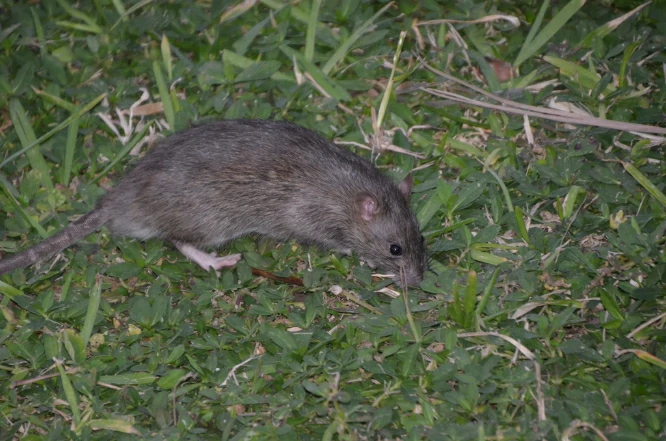
Tomcat is one of the most recognizable rat poison brands sold in the US and Canada. You’ll find it on shelves at pretty much every major hardware store and home improvement chain.
If you’ve grabbed a box without reading the fine print, you might not actually know what’s inside it.
So what is the active ingredient in Tomcat rat poison?
Tomcat rat poison doesn’t use just one active ingredient. Most of their popular bait blocks and pellets contain bromethalin, a fast-acting nerve toxin. Some of their other products, like the All-Weather Bait Chunx line, use diphacinone instead, an older type of blood-thinning poison.
This matters more than it might seem, since these two ingredients work in completely different ways and carry different risks, especially if you have pets in the house.
Knowing which one is actually in the box you bought changes what you should watch for.
Tomcat Doesn’t Make Just One Product
A lot of people assume “Tomcat” refers to a single formula, but it’s actually a full product line with several different baits, and not all of them use the same active ingredient.
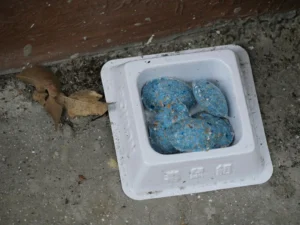
Motomco, the company behind the Tomcat brand, sells multiple product lines under that name. Some are built around bromethalin. Others use diphacinone.
This is worth checking carefully if you already have a box of Tomcat bait at home. The two active ingredients behave very differently once eaten, especially in terms of how fast they work and what treatment looks like if a pet gets into them.
The easiest way to know for sure is to check the active ingredient section on the packaging itself, which every registered pesticide product in the US is legally required to list.
Bromethalin Is the Active Ingredient in Most Tomcat Bait Blocks
If you’ve bought Tomcat bait chunx, pellets, or place pacs advertised for fast knockdown of rats and mice, there’s a strong chance bromethalin is the active ingredient sitting inside.
According to Motomco’s own product listings, Tomcat with Bromethalin products use a concentration of 0.01% bromethalin in the bait.
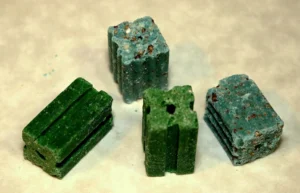
Bromethalin is classified as a non-anticoagulant rodenticide, meaning it doesn’t work by thinning the blood the way older rat poisons do. Instead, it targets the nervous system directly.
Once a rat eats it, bromethalin gets converted in the body into a more active compound. This compound messes with how nerve cells in the brain produce energy, which eventually leads to swelling in the brain and spinal cord.
Motomco markets this as an advantage, since bromethalin works faster than anticoagulant baits and remains effective even against rodents that have developed resistance to older poisons.
Diphacinone Is the Active Ingredient in Tomcat’s All-Weather Line
Not every Tomcat product uses bromethalin, though. Their All-Weather Bait Chunx line, along with a few other products in the lineup, uses diphacinone instead.
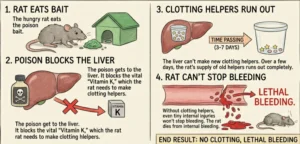
Diphacinone is a first-generation anticoagulant, the same broad category as older poisons like warfarin. It works by blocking the body’s ability to use vitamin K, which is needed to help blood clot.
Unlike bromethalin, diphacinone usually requires a rat to feed on the bait multiple times before a lethal dose builds up. According to product information from Motomco, this typically takes around four to six days to become fatal.
This slower, multi-feed process makes diphacinone products a more economical option for light to moderate infestations, since a single feeding usually isn’t enough to do the job on its own.
Why the Same Brand Uses Two Completely Different Poisons
It might seem strange for one brand to sell products built around such different active ingredients, but there’s a practical reason behind it.
Bromethalin and diphacinone work through entirely separate biological pathways. Bromethalin attacks the nervous system, while diphacinone messes with blood clotting instead.
Because they don’t share a mechanism, a rat that’s resistant to one won’t automatically be resistant to the other.
Offering both gives customers dealing with different situations a much better shot at actually solving their rodent problem for good.
If you’re dealing with a stubborn infestation where rats don’t seem to respond to typical bait anymore, a bromethalin-based Tomcat product may work better, since resistance to anticoagulants like diphacinone doesn’t carry over to it.
If you’re dealing with a lighter, more routine rodent problem, a diphacinone-based product can still do the job effectively over a slightly longer timeline.
Table: Tomcat’s Main Product Lines Compared
Seeing the two most common Tomcat formulations side by side makes the practical differences much easier to understand.
| Feature | Tomcat with Bromethalin | Tomcat All-Weather (Diphacinone) |
|---|---|---|
| Active ingredient | Bromethalin (0.01%) | Diphacinone (0.005%) |
| Category | Non-anticoagulant (neurotoxin) | First-generation anticoagulant |
| Feedings typically needed | Single feeding | Multiple feedings |
| Time to death | As fast as 2 days | Around 4 to 6 days |
| Antidote if a pet is exposed | None exists | Vitamin K1 |
| Best suited for | Tough or resistant infestations | Light to moderate infestations |
That “antidote” row is worth paying close attention to, especially if you’re a pet owner deciding which product to bring home.
Why This Matters If You Have Pets
Since bromethalin has no antidote, a pet that gets into a bromethalin-based Tomcat product faces a more urgent, harder-to-treat situation than one exposed to a diphacinone-based product.
With diphacinone, vitamin K1 is a well-established treatment that vets have used successfully for decades. It gives the body what it needs to start producing clotting factors again.
With bromethalin, treatment relies entirely on early decontamination, meaning inducing vomiting or giving activated charcoal as soon as possible after exposure.
Once symptoms start, treatment becomes supportive rather than curative.
This doesn’t mean one product is automatically the wrong choice. It just means you should know exactly which one you’re using, and keep the packaging somewhere easy to find in case you ever need it for a vet visit.
How to Check Which Tomcat Product You Have
If you already have Tomcat rat poison at home and aren’t sure which type it is, checking is simple.
Look at the front or back of the packaging for the active ingredient statement, which is required by law on every registered pesticide sold in the US. It will list either “bromethalin” or “diphacinone” by name, along with a percentage.
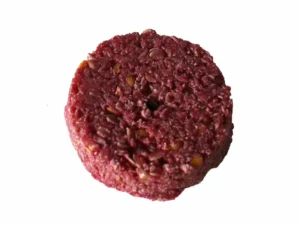
Product names can also give you a hint. Anything labeled “with Bromethalin” contains bromethalin.
Products labeled “All-Weather” or “Mouse Killer” often use diphacinone instead, though checking the actual label is always the safest way to know for certain what you’re actually dealing with.
If you’ve lost the original packaging, Motomco’s website lists the active ingredient for each product in their current lineup, which can help you identify what you’re dealing with even without the box in hand or any memory of the exact product name.
What Poisoning Looks Like If a Pet Gets Into Either One
Since Tomcat’s two main ingredients work so differently, the symptoms they cause in a pet look nothing alike either.
If a dog or cat gets into a bromethalin-based Tomcat product, symptoms can show up within just a few hours if the dose was high enough. Watch for tremors, muscle twitching, seizures, or an unusually wobbly or drunken-looking walk.
At lower doses, bromethalin symptoms can take longer to develop, sometimes up to a week, and tend to look more like weakness and hind leg trouble rather than sudden seizures.
If a dog or cat gets into a diphacinone-based Tomcat product, symptoms usually take several days to show up, since the poisoning process depends on existing clotting factors slowly running out.
Early signs tend to be subtle: general weakness, pale gums, and low energy. As it progresses, you might see bruising, nosebleeds, or blood in the urine or stool.
Regardless of which product is involved, don’t wait around to see if symptoms develop before calling your vet or a pet poison hotline. Early action gives your vet far more options than waiting does.
Why Tomcat Offers Both Types of Bait
It might seem odd that one company sells products built around such different chemistry, but there’s a genuine pest control reason behind the strategy.
Rat and mouse populations can develop a real, inherited resistance to anticoagulant poisons like diphacinone over time.
This happens through genetic mutations that make it harder for the poison to block the enzyme it needs to target.
When that resistance builds up in a local rodent population, diphacinone-based bait can stop working effectively, even when rats are clearly eating it.
Because bromethalin works through a completely different mechanism, it remains effective against those same resistant rodents. Offering both types under one brand gives homeowners options depending on what they’re actually dealing with.
This is also part of why pest control professionals sometimes recommend rotating between different active ingredients over time, even within the same brand, to help prevent resistance from building up in the first place. It’s a small habit that can make a real difference over months or years of ongoing rodent control.
Conclusion
Tomcat rat poison isn’t built around a single active ingredient. Most of their popular fast-acting products use bromethalin, a nerve toxin with no antidote.
Their All-Weather line uses diphacinone instead, an older anticoagulant that responds well to vitamin K1 treatment.
Knowing which one you have matters, especially if you have pets at home. Bromethalin works faster and handles resistant rodents better, but it comes with real risk if a pet gets into it by accident.
Diphacinone takes longer to work but offers a much more predictable path to treatment if something goes wrong down the line.
Before using any Tomcat product, take a moment to check the active ingredient on the label. It only takes a second, and it puts you in a much better position if you ever need to explain exactly what your pet was exposed to.
Whichever version ends up in your home, the same basic advice applies. Keep it well out of reach of pets and children, and store the original packaging somewhere you can find it later.
Act quickly and calmly if you ever suspect an accidental exposure has happened.

Hi, my name is Ezra Mushala, i have been interested animals all my life. I am the main author and editor here at snakeinformer.com.