
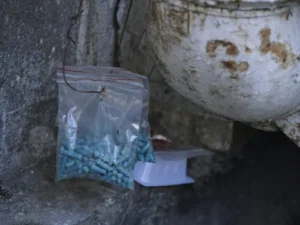
Rat poison pellets are one of the most common forms of rodenticide out there.
You’ll find them in bait stations in garages, sheds, and around the outside of homes everywhere.
If you’ve got squirrels nearby, it’s natural to wonder if those little green or blue pellets are putting them at risk too.
So do squirrels actually eat rat poison pellets, and how likely is it to happen?
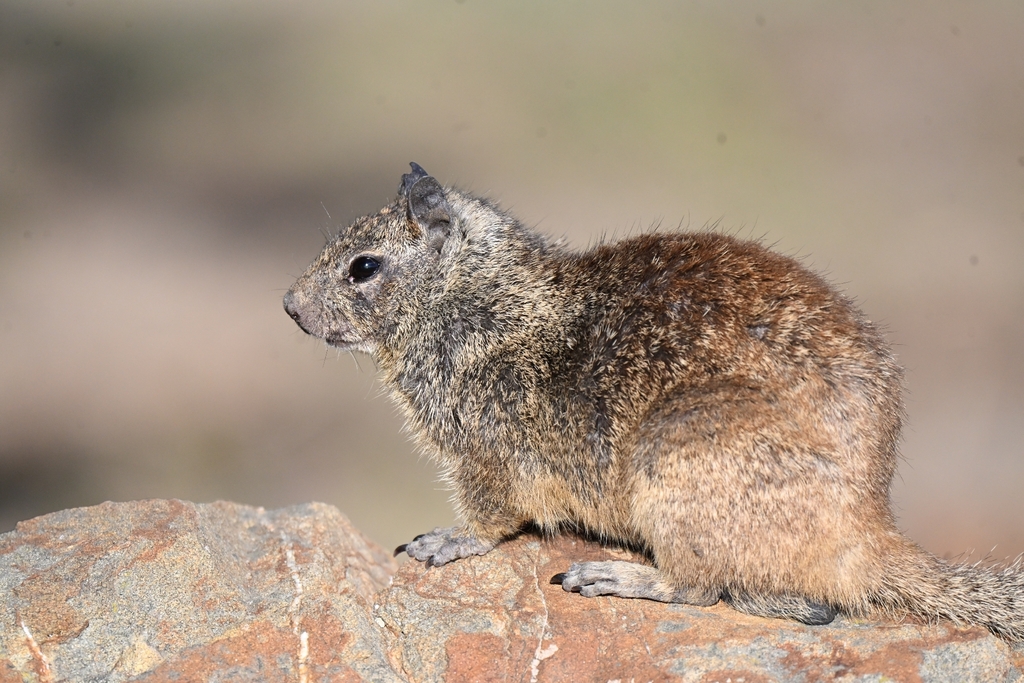
Yes, squirrels can and sometimes do eat rat poison pellets, though they’re not as naturally drawn to them as rats are. Pellets are usually made from grain, cereal, and fat based ingredients formulated to appeal to a rat’s diet, not a squirrel’s. Still, a curious or hungry squirrel can eat pellets it finds, and enough of them can be deadly.
The shape and texture of a pellet doesn’t really matter to a squirrel’s decision to eat it.
What matters more is smell, taste, and how hungry the squirrel happens to be.
What Rat Poison Pellets Are Actually Made Of
Rat poison pellets usually combine a small amount of active poison with a much larger amount of filler ingredients.
These fillers are what make the pellet appealing to eat in the first place.
Common fillers include ground grain, cereal, sugar, and fat. Some are mixed with fish or meat flavoring to boost how tempting the bait smells.
Manufacturers spend a lot of effort making sure rats find these pellets hard to resist. It’s a deliberate design choice, not an accident.
The poison itself makes up only a small percentage of each pellet. This is true whether it’s an anticoagulant like diphacinone, or a non-anticoagulant like bromethalin.
The rest is built purely to get the rodent to eat it.
This is part of why squirrels are somewhat less likely to be drawn in.
Rat pellets are built around a rat’s taste for grain and fat, while squirrels lean more toward nuts and seeds.
However, “less likely” doesn’t mean “never.” Some pellet formulas use fish flavoring or sweeteners that can appeal to a squirrel too.
This is especially true if the squirrel hasn’t found much else to eat that day.
Why Some Squirrels Still Go for the Pellets
Squirrels are opportunistic eaters. While their preferred diet leans toward nuts and seeds, they’ll try new foods when the usual options are scarce.
This happens most during a harsh winter or a dry season, when natural food is harder to find. A hungry squirrel becomes a lot less picky.
A squirrel that’s used to raiding bird feeders or digging through compost is already used to investigating unfamiliar food.
A pile of pellets sitting out in the open can easily catch its attention.
Young squirrels are also more likely to explore and taste things indiscriminately compared to adults. Curiosity plays a real role here, not just hunger.
Bait stations placed near squirrel travel routes, like fence lines or trees, naturally increase the odds a squirrel comes across the pellets sooner or later.
How Much Rat Poison Would Hurt a Squirrel?
The exact amount that would harm a squirrel depends on a few things.
It comes down to the squirrel’s size, the specific poison used, and how concentrated that product is.
Squirrels typically weigh somewhere between half a pound and one and a half pounds, depending on the species.
That’s a small body, which means it doesn’t take much poison to cause serious harm.
With second generation anticoagulants like brodifacoum, even a relatively small dose eaten in one sitting can be enough to kill over the following days.
These are the strongest, most persistent poisons on the market.
First generation anticoagulants, like warfarin, usually require repeated feedings over several days to build up a lethal amount.
A squirrel that only nibbles a pellet once might not get a dangerous dose from these.
Non-anticoagulant poisons, like bromethalin, work differently.
They can sometimes be dangerous even in a single, small dose, depending on the concentration.
Signs the Pellets in a Bait Station Have Been Disturbed
If you’re checking a bait station for squirrel activity, there are a few clues worth looking for.
- Pellets that look chewed or cracked, rather than just missing, often point to a smaller animal like a squirrel rather than a rat.
Rats tend to carry bait off or consume it more completely.
- Tooth marks on the plastic bait station itself can also be a clue.
Squirrels have strong front teeth built for constant gnawing, and they’ll sometimes chew at station openings.
Scattered pellets outside the station, rather than neatly consumed inside it, can suggest an animal knocked the station over.
Squirrels are known to do exactly this.
If you notice any of these signs, it’s worth assuming a squirrel may have had access to the poison.
This holds true even if you never actually see one near the station.
What to Do If You Suspect a Squirrel Ate Pellets
If you think a squirrel has eaten rat poison pellets, the most important thing to know is that symptoms usually don’t show up right away.
With anticoagulant poisons, it typically takes one to seven days before any signs of illness appear.
This delay happens because the poison slowly drains the body’s ability to clot blood.
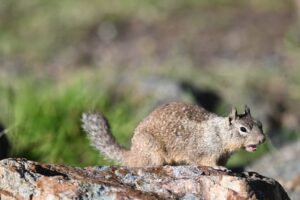
During this window, watch for a squirrel that seems unusually slow, weak, or disoriented.
Healthy squirrels are quick and alert, so a noticeable change in behavior is worth paying attention to.
Other signs include unsteady movement or unusual bruising. Bleeding from the nose or mouth is also common in more advanced cases.
In the later stages, the squirrel may seem extremely lethargic. It might struggle to move much at all.
If you spot a squirrel showing these symptoms, contact a local wildlife rehabilitator. Trying to handle the animal yourself isn’t a good idea.
Poisoning cases need to be treated by someone trained and equipped to do it safely. It’s not something that can be fixed with home remedies.
Do Pellets Pose More Risk Than Other Bait Forms?
Rat poison comes in a few different physical forms: pellets, blocks, and soft bait packets.
Each one carries a slightly different level of risk for squirrels and other wildlife.
Pellets are loose, which makes them easy for an animal to scatter, carry off, or spill outside of a bait station.
This can actually make pellets somewhat riskier than solid bait blocks.
Bait blocks are molded into a single solid shape, usually with a hole in the middle so they can be secured onto a rod inside the station.
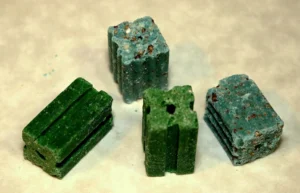
This makes them harder to carry away.
Soft bait packets are sealed in individual plastic pouches that rodents have to gnaw through to access.
These can slow down access for squirrels somewhat, though a determined one can still chew through them.
None of these forms are actually safer for a squirrel that manages to eat a lethal dose.
The real difference comes down to how easily a non-target animal can physically get to the bait.
How to Keep Pellets Away From Squirrels
If you need to use pellet based rat poison but also have squirrels around, there are a few practical steps that can lower the risk.
Always use a locking, tamper resistant bait station rather than leaving loose pellets out in the open.
This is required by law for most consumer products anyway, but it’s worth double checking.
Place the station in a spot squirrels are less likely to visit.
Try to avoid trees, fence lines, and bird feeders, since squirrels naturally spend a lot of time near those.
Check the station regularly, ideally every few days, and clean up any spilled pellets right away.
Spilled bait sitting in the open is often the biggest risk of all, since there’s no barrier stopping any animal from reaching it.
Consider switching to bait blocks instead of loose pellets if squirrel activity is a real concern. Blocks are much harder to scatter or carry off.
Are There Pellets Specifically Marketed as Squirrel Safe?
You may come across products advertised as squirrel safe or wildlife friendly rat poison.
It’s worth understanding what that label actually means before trusting it completely.
In most cases, this labeling refers to the bait station’s design, like a tamper resistant housing that’s harder to get into.
It’s not saying the poison itself is harmless to squirrels.
No rodenticide is actually non-toxic to squirrels if they eat enough of it.
The poison inside doesn’t know or care what species is eating it, no matter how the box is marketed.
If you come across a product labeled this way, it’s still worth treating it with the same caution as any other rodenticide.
Secure placement and regular checking matter far more than the label.
How Rat Poison Pellets Compare to Squirrel Specific Threats
It helps to put this risk in perspective. Squirrels face plenty of natural dangers already, like hawks, owls, and cars.
Rat poison adds a different kind of risk on top of those. It’s one that’s entirely avoidable, unlike a lot of the other dangers squirrels deal with in the wild.
Unlike a predator or a fall from a tree, poisoning isn’t a quick event. It’s a slow process that can take days to actually kill the animal.
This is part of why so many wildlife rehabilitators call rodenticide poisoning one of the more preventable threats squirrels face.
A predator is just doing what predators do.
A poisoned bait station, on the other hand, is something a homeowner has direct control over.
Where it’s placed and how secure it is are both choices within your control.
That’s really the core of why this topic matters so much to wildlife groups.
It’s not that rat poison is uniquely evil. It’s that the risk to squirrels is largely preventable.
What Wildlife Rehabilitators Say About Rodenticide Cases
Wildlife rehabilitation centers across the country regularly report squirrels coming in with symptoms consistent with rodenticide poisoning.
It’s common enough that most rehabbers know the signs on sight.
Cornell’s Wildlife Health Lab, for example, has documented hundreds of rodenticide poisoning cases across multiple species.
That includes squirrels, tracked over roughly a decade of monitoring in one state alone.
Many of these cases likely start the same way, with a squirrel finding an unsecured station or eating spilled pellets.
Rehabbers often point out that by the time a poisoned squirrel is found, the poisoning has usually already progressed quite a bit.
Early stages are hard to spot, since the squirrel still looks and acts mostly normal.
This is exactly why prevention matters so much more than treatment here.
There’s only so much that can be done once symptoms are already showing.
Conclusion
Squirrels aren’t the primary target of rat poison pellets.
They’re generally less drawn to them than rats are, thanks to differences in diet and preference.
Still, a hungry or curious squirrel can eat pellets it finds. And if it eats enough of them, the poison will affect it the same way it would a rat.
The loose, scattered nature of pellets can make them a bit easier for a squirrel to access compared to solid bait blocks.
That’s worth keeping in mind if squirrels are common around your property.
Using a secured, tamper resistant bait station, placing it away from areas squirrels frequent, and checking it regularly are all simple ways to lower the risk.
If squirrel activity near your bait is a real concern, switching to bait blocks or traps instead is often the safer choice.

Hi, my name is Ezra Mushala, i have been interested animals all my life. I am the main author and editor here at snakeinformer.com.